
What a name like Sportsbook.ag or YoPig.ag actually indicates
The string '.ag' in a website name is a country-code top-level domain for Antigua and Barbuda, and it does not act as a corporate suffix like the German or Swiss 'AG'. To put it plainly, seeing '.ag' after a brand name tells you where the domain namespace belongs, not the site's legal structure or licensing status. For the technical delegation and the country association of '.ag', see the IANA domain delegation data for .ag IANA .ag domain data.
Because domain registration and corporate formation are separate systems, a brand using '.ag' may be registered anywhere and could be operated from a different country than Antigua and Barbuda. A domain label alone therefore cannot confirm whether an operator is licensed, authorized, or subject to a particular regulator's oversight.
For readers assessing a site like Sportsbook.ag or YoPig.ag, the important point is this: treat the domain ending as a starting clue, not proof of legitimacy. Always follow up by checking the operator's stated licensing claims against official regulator records rather than relying on the domain name by itself.
Why verifying licensing matters: U.S. and international context
In the United States, legal sports wagering is regulated at the state level, and only operators that appear on a state's official list of authorized operators are permitted to offer regulated services in that state. For an example of a state-level authorized operators list, consult the New Jersey Division of Gaming Enforcement's authorized sports wagering operators page New Jersey authorized sports wagering operators.
Outside U.S. states, other jurisdictions rely on their national or regional regulators to license and oversee operators. That system creates predictable consumer protections where it is active, but those protections do not apply to unregulated or offshore operators that lack recognized oversight.
An ongoing industry analysis shows a persistent illegal and unregulated gambling market in the U.S., which means consumers who use offshore sites can face gaps in dispute resolution, weaker consumer safeguards, and limited recourse compared to regulated options American Gaming Association market overview.

Start with the site itself. Look for a clear regulator name, a stated license number, an explicit jurisdictional disclosure, and visible responsible-gambling information such as self-exclusion or limit-setting options. These elements are the site's basic transparency signals and should be easy to find in footer pages or an About/Legal section.
Next, cross-check any stated license number or regulator against the regulator's public register. Several reputable regulators publish searchable registers where you can match the operator name and license number; for instance, the Malta Gaming Authority keeps a Licensee Register you can use to verify MGA claims MGA Licensee Register. The MFSA also maintains a financial services register for Malta-based authorisations MFSA Financial Services Register.
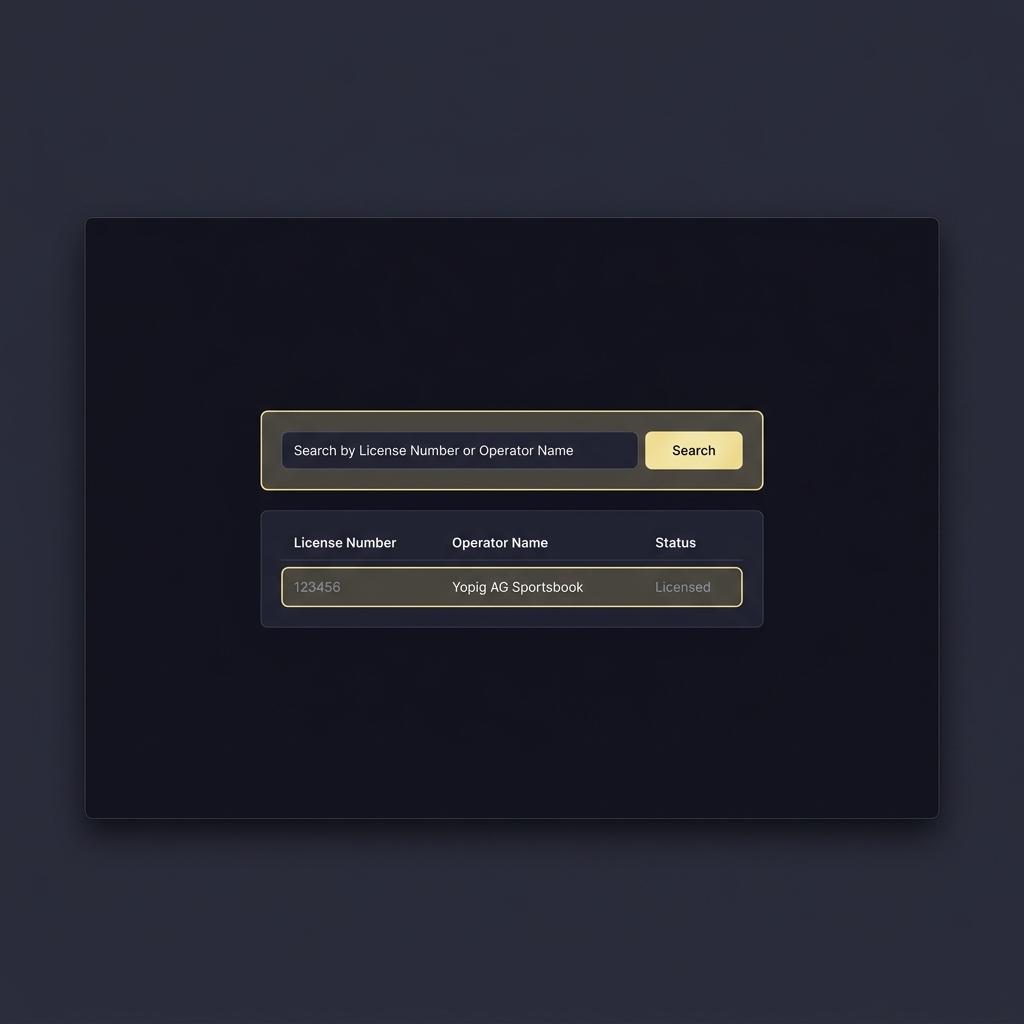
After you note the claimed regulator and license number on the site, use the regulator's search function to locate the official entry. If the regulator has a verification tool or a license lookup page, use it to confirm the corporate name, license status, and any conditions attached to the license.
quick regulator lookup steps for license verification
use official regulator sites only
If you cannot find a matching entry, treat the site's licensing claim as unverified. Regulators advise that a missing or mismatched license entry is a strong reason to regard the operator as unlicensed for that jurisdiction, and to proceed with caution or avoid depositing funds.
Practical legitimacy checklist: matching claims to records
When you use a regulator search, verify these exact fields: the license number shown on the operator site, the licensed corporate name, the current license status, and, where available, issue and expiry dates. These data points provide a clear match-or-mismatch decision basis.
Small differences matter. Typos in a license number, a slightly different corporate name, or a missing status indicator can indicate an incorrect claim or the need for closer investigation. Treat small mismatches as red flags until you confirm the record through the regulator.
Check the site's stated regulator and license number, then confirm that information in the regulator's official public register; if you are in the U.S., also confirm the operator appears on your state regulator's authorized operators list.
If the regulator's public register returns a matching company name and license number with an active status, you have a stronger basis to consider the site as regulated in that jurisdiction. Always rely on the regulator's official record rather than the operator's own statements.
Practical legitimacy checklist: matching claims to records continued
To keep your verification rigid and repeatable, copy the claimed license number exactly from the site and paste it into the regulator's search field. Confirm that the corporate name shown on the register matches the operator's legal name, not just a marketing name. Where available, note the license issue and expiry dates to see if the license is current.
If the register shows the license as suspended, revoked, expired, or otherwise not active, treat that as evidence that the operator is not currently authorized. When in doubt, use the regulator's contact details to ask for clarification and save screenshots of the site claims for later reference.
Practical legitimacy checklist: exact fields to verify and common mismatches
When you compare the operator's claims to the official record, check for these fields explicitly: license number, licensed corporate name, license status, and issue and expiry dates. Verifying all of these reduces the chance of accepting an incorrect claim based on partial matches.
Common mismatches include license numbers with a transposed digit, a corporate name using a trading name rather than the legal name, or a license that appears on a different regulator's database than the one claimed. Those mismatches often require contacting the regulator or the operator for clarification.
Common red flags and typical mistakes when judging a sportsbook
Site-level warning signs to watch for include a missing regulator name or license number, absent responsible-gambling resources, vague jurisdictional disclosures, and contact details that do not match the claimed regulator's jurisdiction. Any of these items should prompt further verification before you deposit funds.
Do not assume that professional design, active social media, or customer testimonials mean a site is legitimate. Those are easily fabricated or purchased; they are not substitutes for an authoritative license check against a regulator's official register. The existence of a sizable illegal and offshore market further reinforces the need for careful checks American Gaming Association market overview.
Another typical mistake is relying on the presence of a license number alone without confirming the licensing regulator. Some operators list license numbers without giving the regulator name or with ambiguous references; a license number only matters when it can be located in the claimed regulator's public record.
Decision checklist: Should you use or avoid this site?
Use this quick pass/fail approach: PASS if the regulator's official register shows a matching license number, corporate name, and an active status; FAIL if you cannot find the entry or if the register shows a non-active status. If you are in the U.S., also confirm that the operator appears on your state's authorized operators list before using it in that state.
If you decide a site is unverified, the next steps are to avoid depositing funds, save screenshots of the site's claims, and report the operator to the relevant regulator or consumer protection agency. These actions help create a paper trail in case others are affected.

When escalation is needed, contact the claimed regulator using contact information from the regulator's official site rather than the operator's contact details, and provide the screenshots, the URL, and any transaction references you have. That gives regulators the information they need to investigate.

Decision checklist: when to escalate or report
If you are in doubt about a site's claims, report the operator to the regulator that should be issuing the license, and to consumer protection authorities in your jurisdiction. Regulators have processes for handling suspected false claims and may advise when a site should be treated as unlicensed.
For U.S. users, state regulators are the authoritative source for determining whether an operator may legally provide services in that state. A state-listed operator has to meet that regulator's licensing and consumer protection requirements, which are not available through unregulated offshore operators New Jersey authorized sports wagering operators.
Scenario examples: interpreting real-world claims
Scenario: the site claims a Malta Gaming Authority license. In that case, copy the claimed licence number and use the MGA's Licensee Register to search for the operator. The MGA register is the authoritative record for any operator claiming an MGA licence MGA Licensee Register. For guidance on verifying account documents and withdrawals, see a walkthrough on account verification verifying your sportsbook account.
If the MGA register returns a matching corporate name and licence number with an active status, you have a baseline confirmation. If it does not, treat the claim as unverified and take the safety steps described earlier.
Scenario: the site states a Curaçao licence. Use the Curaçao Gaming Control Board's validation tool to check whether the claimed licence is genuine, and confirm the corporate details shown by the validator match the operator's legal name Curaçao validate licence.
Scenario: the site lists a Kahnawake permit for interactive gaming. The Kahnawake Gaming Commission publishes a current permit-holders list; verify the operator on that list and confirm the permit details match the site's claims Kahnawake permit holders.
If you cannot verify a site: safer alternatives and next steps
If you cannot confirm a site's licensing, stop short of depositing money or sharing payment details, and do not provide personally identifying financial information. Unverified operators may not meet the consumer protections that regulated operators must provide.
This is a good moment to check for regulated alternatives in your jurisdiction. In the U.S., consult your state regulator's authorized operators list to find licensed options. Regulators' public lists allow you to choose an operator that is subject to consumer protections and dispute-resolution processes New Jersey authorized sports wagering operators.
Check official regulator lists before depositing
Before depositing, check official regulator lists to confirm an operator's licensing and status.
If you believe a site is misrepresenting its licensing, save screenshots of the site and the claimed information, then report the operator to the regulator that should be issuing the license and to consumer protection authorities in your location. That creates a record and helps regulators target investigations.
Summary: key checks to perform before trusting a sportsbook site
Three quick checks to memorize: first, check the regulator and the official register; second, confirm the license number, corporate name, and active status; third, avoid depositing if you cannot verify the entry. These steps cover the essentials and are fast to perform.
Remember that domain endings like '.ag' indicate a domain's country-code assignment but do not signal licensing or corporate form. Treat the domain as informational only and confirm licensing separately using official regulator records IANA .ag domain data.
Finally, the risks associated with unregulated and offshore markets make care essential. When in doubt, choose operators that appear on official regulator lists in your jurisdiction and report suspicious operators if you encounter them American Gaming Association market overview.
Further resources and where to check official registers
Key regulator registers to consult include the Malta Gaming Authority's Licensee Register, the Curaçao Gaming Control Board's license validation tool, and the Kahnawake Gaming Commission's permit-holders list. These are primary sources for verifying international licence claims and should be used in preference to an operator's self-report MGA Licensee Register.
For U.S. users, confirm licensing and authorization through your state regulator's official authorized operators list before using an operator in that state. When you find a mismatch, save evidence and contact the regulator with specifics so they can investigate.
Continue to re-check licensure over time. Operators can change status, and periodic verification is a simple habit that reduces exposure to unregulated services.
The '.ag' is a country-code top-level domain for Antigua and Barbuda; it does not indicate a corporate structure or guarantee licensing.
Look for a regulator name and license number on the site, then verify those details on the regulator's official public register.
Avoid depositing funds, save screenshots of the site's claims, and report the operator to the appropriate regulator or consumer protection authority.
References
- https://www.iana.org/domains/root/db/ag.html
- https://www.sportsbook.ag/kb/verifying-your-account-withdrawals-and-other-instances
- https://www.njoag.gov/sports-wagering/authorized-sports-wagering-operators/
- https://www.americangaming.org/resources/sizing-the-illegal-and-unregulated-u-s-gambling-markets/
- https://www.mga.org.mt/licensee-register/
- https://www.mfsa.mt/financial-services-register/
- https://www.sportsbettingdime.com/guides/deposits-withdrawals/verifying-your-sportsbook-account/
- https://gamingcontrolcuracao.org/validate-licence/
- https://www.gamingcommission.ca/permit-holders/interactive-gaming/
- https://www.fundedplays.com/challenges
- https://www.fundedplays.com/blogs
- https://www.fundedplays.com/blogs/how-fundedplays-evaluations-work
- https://www.fundedplays.com