

What is a parlay and why do people place them
A parlay bundles two or more individual bets into a single wager where every leg must win for the parlay to cash. That basic rule is the starting point for everything that makes parlays appealing and risky at the same time.
People choose parlays for a few straightforward reasons: the potential for a much larger payout from a small initial stake, the emotional uplift of a higher-stakes outcome with limited capital, and sometimes a mistaken sense that combining favorites increases value. Those motivations shape behavior even when the math makes clear the combined probability drops as legs are added. See our blog for related posts.
Quick pre-parlay checklist to assess value and correlation
Use this before you commit funds
In plain terms, each selection in the bundle is called a leg. The parlay's payout depends on the odds attached to each leg. When you see an attractive payout, remember it reflects the lower combined chance that every leg will succeed simultaneously rather than a single outcome.
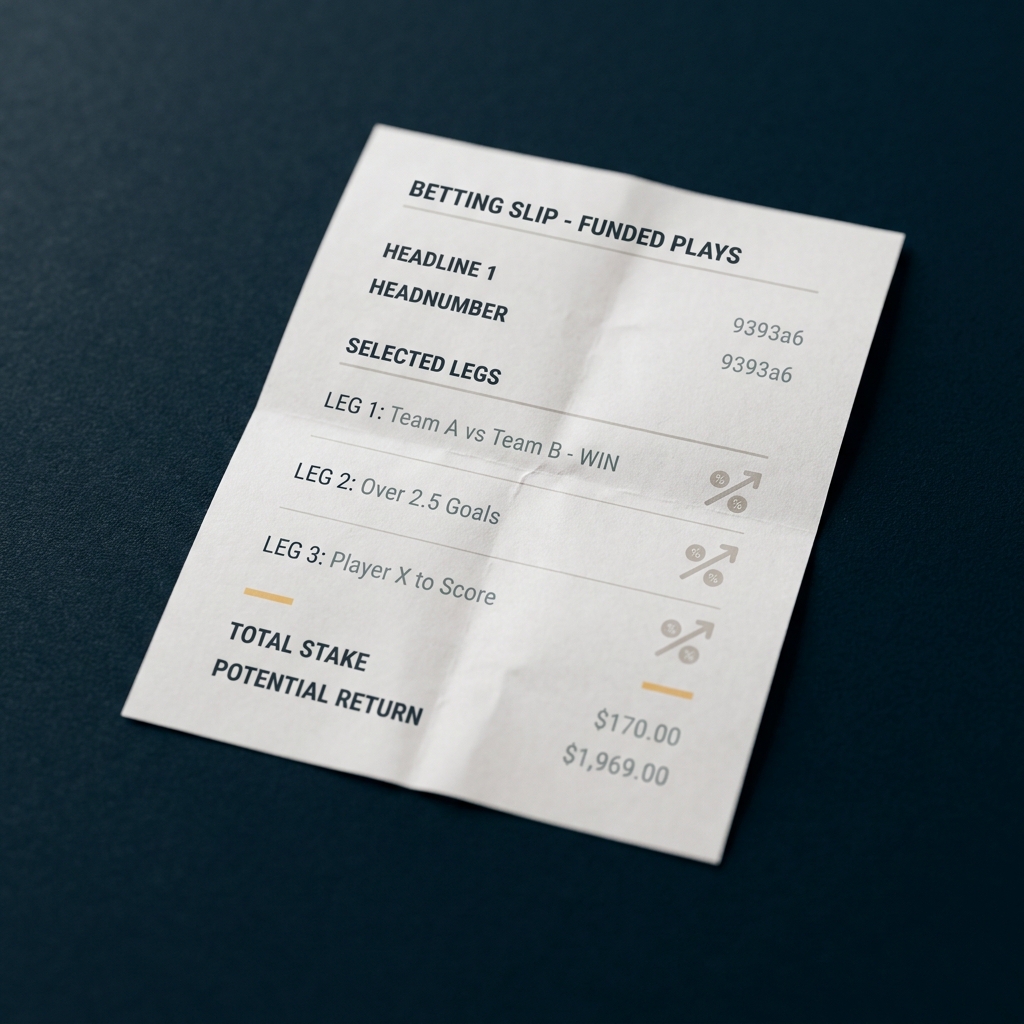
Thinking of parlays as a way to turn a small stake into a large return captures their surface appeal. Behind that idea is the multiplication of probabilities that makes the long shot more remote. That concept is central to sensible parlay play and to knowing when a parlay is worth considering.
How parlay payouts relate to implied probability, winning parlays
Understanding why payouts grow with more legs starts with implied probability. Odds, whether presented in decimal or American formats, encode an implied chance that the event will occur. Converting odds into implied probability is a standard step when you want to compare payoff to likelihood without inventing numbers for outcomes.
When you combine legs, you multiply the implied probabilities for each selection to arrive at the parlay's implied probability. That multiplication reduces the overall chance that the parlay will succeed, and the bookmakers set payouts to reflect this smaller combined probability plus their margin. The mathematics explains why higher payout does not automatically mean better value unless the implied probability understates the true chance.
Try a structured challenge to test parlay approaches with a virtual bankroll
Try recording one parlay in a notebook or a simulator, list each leg's implied probability, and note how the combined chance changes when you add a leg.
For readers who prefer a conceptual example structure to follow, take three independent selections with similar implied chances. As you add a third leg, the combined implied probability falls noticeably compared with two legs. That is a qualitative structure you can expand into numeric checks when you calculate single-leg implied probabilities and then multiply them to see the parlay's implied chance.
Keeping this process in mind helps guard against overvaluing headline payouts. It also clarifies why good parlay strategy begins with assessing whether you have a genuine edge in each leg, not with chasing the biggest possible payout.
The role of correlation and why some parlays are harder or easier
Correlation changes the rules. When legs are correlated, the assumption of independence used by simple multiplication no longer holds. Positive correlation means an outcome that helps one leg is more likely to help another leg, while negative correlation means success in one leg could hurt another. See academic work on correlated parlay betting for more detail.
Common correlated situations include same-game parlays where a team's success on offense affects point totals and spread outcomes, or player props tied to the same game context. In those cases, the true combined probability can be higher or lower than the independent calculation, depending on how the outcomes move together. The mathematics behind same-game parlays illustrates this point.
A practical pitfall is double-counting perceived value. If a single development in a game would plausibly move multiple legs the same way, you cannot treat those legs as independent edges. That mistake can make a parlay look better on paper than it really is.
To manage correlation, identify the shared drivers of each leg and ask whether one event makes another more likely. If the linkage is strong and you lack a reliable edge modeling it, the safer choice is often to break up the parlay or avoid placing it.

Some players will occasionally win parlays. One-off wins happen to many people because variance allows low-probability events to occur. Distinguishing lucky single successes from repeatable skill requires tracking outcomes across enough samples to separate noise from a real edge.
Who can realistically win parlays and under what conditions
Traits that increase the chance of repeatable success include disciplined staking that limits exposure on any individual parlay, strong predictive accuracy on the underlying markets, access to sharp lines or early opportunities, and careful attention to correlation. Without these, repeated profits are unlikely because expected value tends to be negative once bookmaker margin and correlation issues are accounted for.
Bankroll management and record keeping are crucial for anyone testing parlay approaches. Players who can show consistent positive expected value over time are rare, and that consistency is the difference between an occasional lucky parlay and a strategy that produces reliable results. See Funded Plays for tools and resources.
Remember that variance can disguise a lack of edge for many cycles. Keeping a level head and using strict rules for staking and logging outcomes is the practical path toward finding out if you have a scalable advantage.
Practical strategy: how to construct parlays if you choose to play them
If you decide to construct parlays, follow a stepwise approach. First, check market value on each leg and avoid adding selections without independent positive expectation. Second, limit the number of legs, because each added selection multiplies the chance of failure. Third, avoid strongly correlated legs unless you can model the linkage well.
A simple staking plan helps. Size parlay stakes as a small, fixed percentage of your bankroll and cap the maximum exposure for the week. Treat parlays as a higher-variance part of a broader portfolio that includes single bets where you believe you have an edge. Logging every parlay and reviewing performance periodically will reveal whether your entries are skillful or mostly variance-driven.

Other micro-rules to adopt include setting a leg limit by default, for example two to three legs for most players, and requiring at least one leg where you have clearly identified value. Where value is weak or correlation is uncertain, prioritize single bets or smaller multis that reduce compound failure risk.
These steps reduce tail risk and make it easier to learn from outcomes. A conservative parlay strategy focuses on long-term sustainability rather than chasing occasional large wins.
Common mistakes and psychological traps with parlays
Several cognitive biases make parlays tempting and often unprofitable. Hot-hand thinking leads players to assume recent wins increase future chances, and chasing losses pushes people to increase stakes after a bad run. Both behaviors escalate risk without improving expected value.
Another frequent error is misreading juice and vig. The bookmaker margin is built into odds and skews long-term outcomes against combinations of bets even when individual legs look reasonable. Over time, that margin compounds across legs and erodes returns for unsystematic players.
Promotional offers can also create a false sense of safety. Free-bet credits or boosted parlay prices can change expected outcomes marginally, but they do not remove the underlying multiplication of probabilities. Avoid inflating your confidence in a parlay because of temporary marketing incentives.
Finally, overconfidence after a win is dangerous. A single successful parlay does not validate a strategy. Use records and disciplined review to avoid impulsive increases in stake size that exceed your risk plan.
Examples and scenarios: realistic parlay builds and why they succeed or fail
Consider a 2-leg parlay where the legs are largely independent and where you believe you have a small edge on each. In that scenario the parlay can occasionally be a reasonable way to amplify a modest advantage, provided you reduce stake size to reflect the increased variance. The key is independence and a demonstrated edge on the underlying markets.
A 3-leg parlay that mixes independent legs with one correlated leg illustrates how correlation can undermine the combined chance of success. If one event strongly influences another, your independent calculations overstate the parlay's true chance. The result is a payout that looks appealing but is poorer value than implied by the naive math.
Same-game parlays often fail this test because multiple legs depend on the same match dynamics. A shift in tempo or a single injury can swing several legs at once. That makes same-game builds attractive for a small number of speculative plays but risky as a repeatable strategy unless you can reliably model the dependencies.
Use a short checklist before placing a parlay: confirm independence or model correlation, require at least one leg with discernible value, limit the number of legs, and scale stakes to bankroll. Practicing that checklist converts a speculative idea into a repeatable routine for evaluation.
Alternatives to parlays and when to skip them
Parlays raise variance and typically reduce expected return unless you have a clear edge on multiple legs. Single bets offer lower variance and are usually the better choice for building a long-term record of positive expectation when you have limited information. See this parlay betting guide for strategy context.
Small multis and targeted prop bets can deliver middle-ground options. They preserve some upside while keeping the number of multiplied probabilities manageable. Futures and single-game props let you focus on markets where you feel most confident without compounding unrelated uncertainties.
Individuals win parlays occasionally, but consistent success requires documented edges on multiple legs, disciplined bankroll management, correlation control, and thorough record keeping.
Heuristics for avoiding parlays include skipping them when no leg shows clear value, avoiding combinations of strongly correlated legs, and refraining if you lack disciplined stake sizing. If a proposed parlay fails several checklist items, treat it as a signal to step back rather than to proceed.
Practicing parlays responsibly and using challenge platforms
Testing parlays through simulated practice, small stakes, and strict logging helps separate skill from luck. Run trial samples, record outcomes, and analyze whether results reflect an edge or merely variance. That disciplined practice is the best way to learn whether parlays fit your skill set and temperament.
Skill-focused challenge platforms let you test prediction processes with virtual bankrolls and structured objectives. These challenge formats emphasize consistency and disciplined decision-making rather than real-money wagering and can be useful for validating a parlay approach in controlled conditions. For details on how challenges work at Funded Plays, see how Funded Plays evaluations work.

When you use a challenge or simulation, treat outcomes as data. Track how often your parlay checklist items were met, measure return on stakes excluding promotions, and compare results with single-bet performance. Rigorous testing reduces the chance of mistaking luck for skill.
Conclusion: realistic expectations and next steps
Parlays can be won, and individuals will see one-off successes. Winning parlays consistently is difficult because multiplying implied probabilities and managing correlation create a high bar for repeatable positive expected value. The prudent path focuses on testing, record keeping, and cautious stake sizing.
Action plan: test small and log results, focus on identifying edges in individual legs, limit the number of legs and avoid strong correlation, and consider single bets or small multis when no clear advantage exists. Keep expectations realistic and prioritize responsible play.
Making a living from parlays alone is unlikely because the combined probabilities and bookmaker margin make consistent profit difficult; focus on testing and diversified strategies instead.
Same-game parlays often carry stronger correlation risk, which can make them harder to value reliably compared with independent multi-game legs.
Keep parlay stakes small relative to bankroll, use a fixed percentage or flat unit approach, and reduce size as the number of legs increases.