
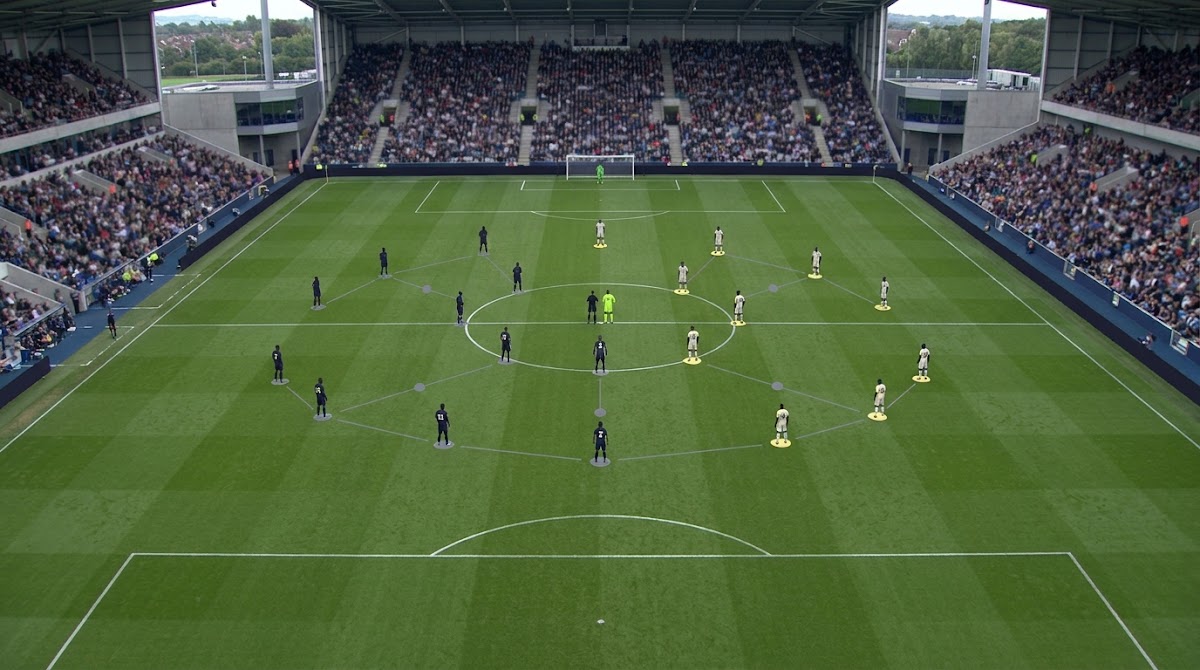
What a starting lineup is and how the Laws of the Game shape it
Why Starting Lineups Matter in Soccer
A starting lineup is the named group of eleven players who begin the match, plus the substitutes registered before kick-off; managers must plan within the legal frame that defines who can be named and how many changes can be made during play, which directly affects selection and match strategy The IFAB Laws of the Game.
In practice the named substitutes are part of an extended match plan, because the rules set minimum player numbers and substitution limits that shape both pre-match choices and in-game adjustments. Coaches use those constraints to decide whether to prioritise cohesion by starting a settled XI or to save minutes for key players who will be used later in the game The IFAB Laws of the Game.
A simple lineup planning checklist to balance rules and fitness
Use before finalising the squad
Because the five-substitution framework is permitted under current match regulations, managers commonly embed a substitution plan into their starting selection, naming cover for tactical phases and potential overloads rather than only reacting to injuries or red cards The IFAB Laws of the Game.
How formations encode tactical intent
Formations are not just numbers on a board; they communicate a manager's blueprint for pressing height, build-up routes and where the team expects to create chances, and this is why managers tailor the starting XI to reflect opponent strengths and match context UEFA EURO 2024 technical report.
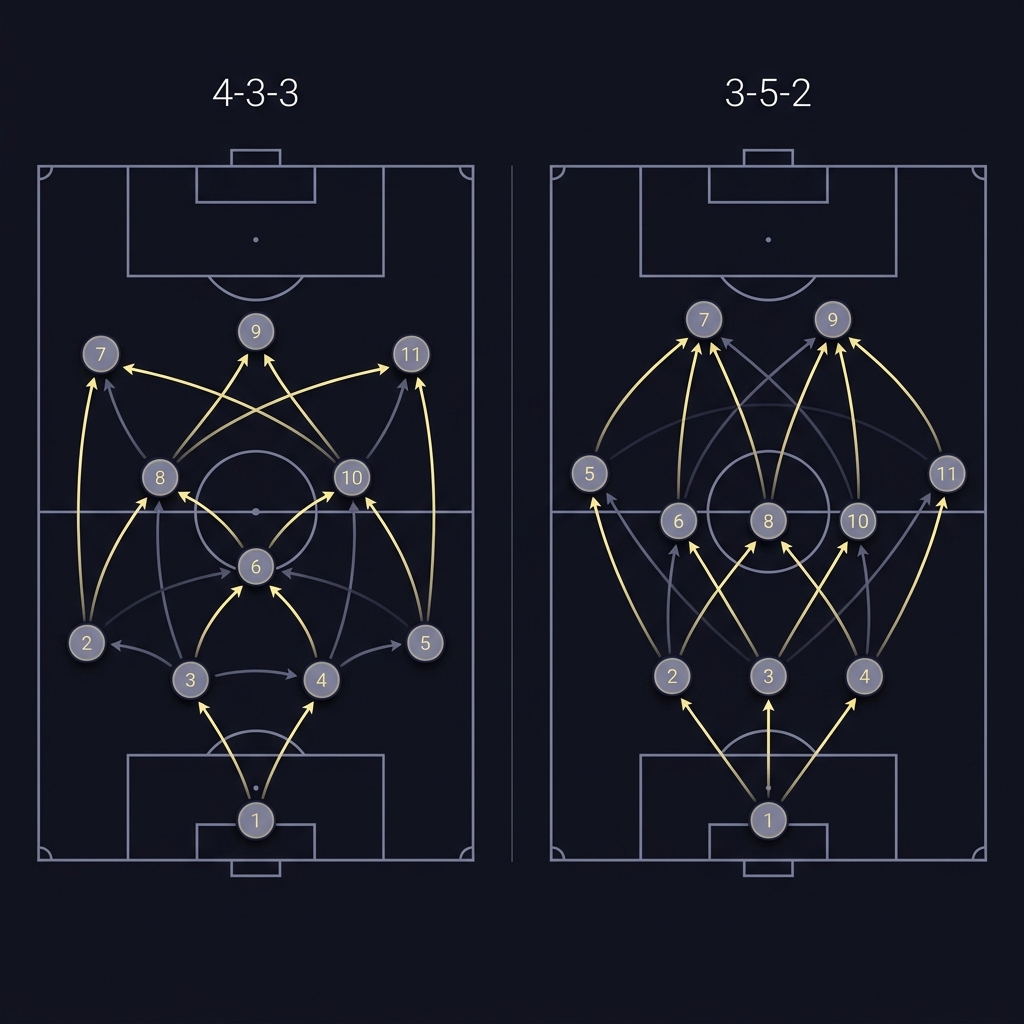
Choosing a formation signals how space will be occupied and which channels the team will attack or defend. For example, a narrow midfield block changes passing lanes and forces wide defenders to carry different responsibilities compared with a formation that prioritises width; these role assignments inside a formation alter collective behaviour on the pitch Tactical analysis in soccer: a systematic review.
Managers often select personnel whose specific strengths match the formation's demands. A wing-back in a five-man defence is an offensive outlet and a defensive duty in one role, so naming that player in the starting XI tells the team and opponent how the flank will be used that day UEFA EURO 2024 technical report.

Planning substitutions: how the substitution framework reshapes the starting XI
The five-substitution era makes the starting XI one part of a staged match plan, allowing managers to assign phases of play to starters while reserving fresh legs for late-game intensity or tactical shifts The IFAB Laws of the Game.
Named substitutes are chosen to cover both likely tactical switches and predictable workload spikes, so managers commonly name players who can change the formation or sustain pressing at key moments without breaking the squad balance UEFA EURO 2024 technical report.
Try challenge-based lineups and performance tracking on FundedPlays Challenges
When you set your starting XI, note two planned substitution windows and one contingency for extra intensity late; this keeps the match plan clear and helps manage minutes without overcomplicating the initial selection.
In busy schedules, some managers opt for early, pre-planned substitutions to manage accumulated minutes across competitions, while others reserve the changes for reactive responses to unfolding match states; both approaches change how the XI is assembled before kick-off The IFAB Laws of the Game.
How formations shape team behaviour: spacing, passing networks and pressing
Formation choices change spatial occupation on the pitch, shifting where players gather and which passing lanes open; this in turn alters measurable passing network patterns and the avenues through which chances are created Identifying team tactical formations in association football.
For example, a formation that pushes full-backs higher increases horizontal passing options in the opponent half and can create overloads down the flank, while a compact midfield compresses vertical passing lanes and encourages play out wide Tactical analysis in soccer: a systematic review.
Role interactions matter: a defensive midfielder who drops between centre-backs changes the geometry of build-up and alters pressing triggers, which affects where and when teammates need to move to maintain balance Identifying team tactical formations in association football.
Workload, fixture congestion and why rotation matters
Player workload and fixture congestion are central reasons managers rotate the starting XI, because short recovery windows are linked with performance declines and higher injury risk in professional squads 2024/25 Men’s Player Workload Monitoring Report.
Rotation preserves both availability and match intensity by limiting excessive minutes for individuals across sequences of games, and monitoring data increasingly informs which players should be rested or managed in the starting XI 2024/25 Men’s Player Workload Monitoring Report.
Starting lineups set the tactical shape, determine initial workload distribution and provide the framework within which substitutions and in-game adjustments unfold; these elements together influence how a match develops.
When fixture lists compress, the balance between keeping a settled XI for cohesion and rotating to avoid overload becomes a central selection trade-off; managers use recovery metrics and recent minutes to tip that balance rather than relying on raw reputation alone 2024/25 Men’s Player Workload Monitoring Report.
Decision criteria: a manager's checklist for naming the starting XI
Before naming the XI, evaluate match context: opponent profile, match importance and venue. A manager who understands opponent pressing style and likely formation can pick players who reduce known weaknesses and amplify strengths UEFA EURO 2024 technical report.
Player-level checks should include fitness and recent minutes, plus tactical fit for the assigned role. Using workload monitoring to exclude a player who has logged unusually high minutes in the last seven days is a straightforward safeguard against overuse 2024/25 Men’s Player Workload Monitoring Report.
Integrate your substitution plan and squad depth into the final choice: if your bench lacks natural wide players, the starting XI should account for that by selecting a more versatile wide starter or adjusting the formation to keep options open The IFAB Laws of the Game.
A practical checklist: 10 questions to ask before you name your XI
1. What formation will the opponent most likely use, and which of our players neutralise their strengths? 2. Which starters have heavy recent minute loads and need rest? 3. Are there match phases where a specific substitute will be decisive? 4. Do pitch and weather conditions favour width or compact play? 5. Is the match priority part of a congested run requiring rotation? 6. Who offers tactical versatility on the bench? 7. Which players’ roles fit the planned pressing and build-up? 8. Can the substitution windows be used to protect players from overload? 9. How will changes affect squad morale? 10. What are the clear contingency switches for expected scenarios?

Translate answers into a concrete XI by mapping each role to a specific player, noting minute limits and marking two planned substitution windows. This approach converts tactical intent and fitness checks into a reproducible routine rather than an improvised choice The IFAB Laws of the Game.
Common mistakes and lineup pitfalls to avoid
Overusing a fixed XI despite warning signs from workload monitoring is a predictable error that raises injury risk and usually reduces performance in congested periods; rotating proactively can protect key players and sustain team intensity 2024/25 Men’s Player Workload Monitoring Report.
Forcing players into roles the formation does not support weakens team coherence. If the tactical plan requires inverted full-backs, do not select full-backs who lack the carrying capacity to execute that role effectively Tactical analysis in soccer: a systematic review.
Another common pitfall is failing to plan substitution contingencies for predictable match phases, which leaves teams unable to respond to opponent shifts or to manage accumulated player fatigue during the second half The IFAB Laws of the Game.
Practical scenarios: building lineups for different match types
Facing a high-pressing opponent often means selecting technically composed centre-backs and midfielders who can play under pressure, and naming substitutes who can either increase tempo or provide relief in tight spaces UEFA EURO 2024 technical report.
When playing against a deep defensive block, managers usually favour quick, interchangeable attackers and a full-back who can supply overlapping runs; the starting XI is assembled to create overloads and to stretch compact lines Tactical analysis in soccer: a systematic review.
During a congested cup run, rotate early in less critical fixtures to preserve core starters for priority matches, and plan substitution windows to protect central midfielders whose minutes accumulate quickly across competitions 2024/25 Men’s Player Workload Monitoring Report.
Using data, scouting and models to inform lineup choices
Key metrics that matter include workload and recent minutes, pressing success rates and passing lane occupation; these indicators help rank which starters are most suitable for the planned formation and match task Tactical analysis in soccer: a systematic review.
Scouting inputs modify model outputs by adding context: a model may prefer a high-pressing midfielder, but scouting might reveal recent knocks or poor recovery, which persuades the coach to pick a more robust alternative Identifying team tactical formations in association football.
Remember the limits of models: data and algorithms inform choices but do not replace coach judgement about role fit and squad morale when finalising the starting XI Tactical analysis in soccer: a systematic review.
Managing squad psychology: what the starting XI signals
Starting a player conveys trust and role clarity, while consistent rotation must be communicated positively so players understand the long-term plan rather than feeling sidelined.
Simple communication practices include private conversations explaining the minutes plan, group briefings that emphasise collective goals and clarity on substitution expectations to reduce rumours and friction.
Post-match review: what to learn from the starting XI outcome
After the match, check post-match metrics such as distance covered, high-intensity minutes and recovery data to see whether the starting choices met the plan and whether players need rest for the next fixture 2024/25 Men’s Player Workload Monitoring Report.

Translate those signals into clear adjustments: if a starter showed signs of acute overload, move them to the bench for the next match and alter substitution windows to protect similar players.
Conclusion: practical takeaways on why starting lineups matter in soccer
Starting XIs matter because Laws, formations and workload constraints directly structure what is possible on matchday; obeying Law 3 and the substitution framework, matching formation to opponent, and managing minutes are the three pillars of sound selection policy The IFAB Laws of the Game.
Practical rules: plan substitutions alongside the XI, use workload data to rotate proactively, and pick players for clearly defined roles that the formation supports. These practices raise the probability of consistent performance across a season without promising specific results.
Law 3 sets the legal framework for naming a starting XI and named substitutes, including minimum player requirements and permitted substitution procedures; managers must respect these rules when selecting the squad.
Not necessarily; planned rotation that protects key minutes and is explained to the squad can preserve cohesion while reducing injury risk, whereas ad hoc rotation without communication may harm morale.
Workload and recent minutes, pressing success, and role-specific scouting are especially helpful, combined with coach judgement about tactical fit and match context.
References
- https://www.theifab.com/laws/latest/the-players/
- https://www.uefa.com/insideuefa/football-development/technical/technical-report/uefa-euro-2024/
- https://www.frontiersin.org/articles/10.3389/fpsyg.2014.00493/full
- https://www.frontiersin.org/articles/10.3389/fspor.2024.1345678/full
- https://fifpro.org/en/research/player-workload-monitoring/2024-25-men-s-player-workload-monitoring-report/
- https://www.fundedplays.com/challenges
- https://inside.fifa.com/media-releases/ifab-introduces-further-measures-improve-match-flow-player-behaviour
- https://www.theifab.com/law-changes/latest/
- https://www.thefa.com/football-rules-governance/lawsandrules/laws/football-11-11/law-3---the-players
- https://www.fundedplays.com
- https://www.fundedplays.com/blogs
- https://www.fundedplays.com/blogs/how-fundedplays-evaluations-work