
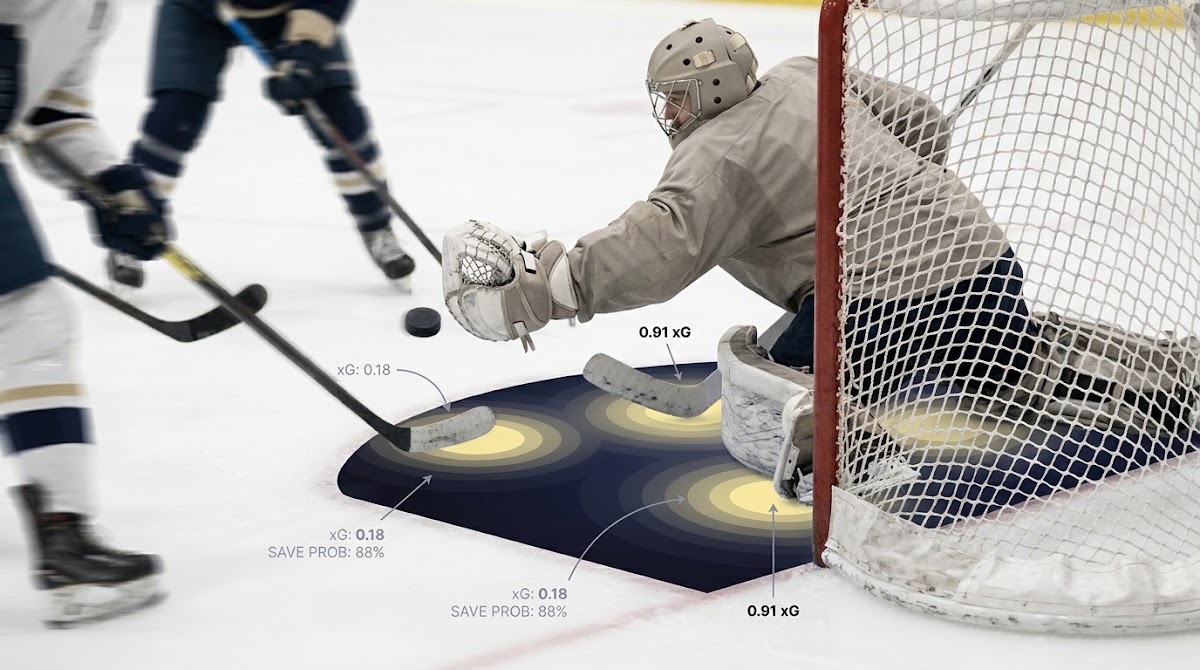
Why Starting Goalies Matter So Much: definition and quick context
What we mean by a starting goalie and why the label matters
In NHL rosters a starting goalie is the netminder that the team intends to play the bulk of minutes in a given game, while the backup is a planned short appearance or emergency replacement. Why Starting Goalies Matter So Much is not just a headline, it is a practical distinction: a confirmed starter drives minutes, faces more shots, and becomes the single biggest determinant of goals against in a match.
Teams and analysts treat the starter label as a signal for expected workload and decision impact because minutes correlate with opportunity to influence outcomes through saves, rebound control, and penalty kill handling, all of which feed into win probability and fantasy scoring in formats that reward saves and net goals against. See the Funded Plays blog for related workflow ideas.
Sign up for starter alerts and download the pre-lock checklist
Sign up for starter alerts or download a concise pre-lock checklist to make faster, evidence based lineup decisions without chasing noise.
Short summary of how goalies influence game outcomes and fantasy scoring
Goalies affect games across three channels. First, shot stopping reduces goals against and directly alters win probability. Second, rebound and puck control influence second chances and sequence scoring. Third, when fantasy rules award saves and goals against penalties, a starter with high expected workload can produce strong fantasy totals even in a loss. Analysts now combine these practical channels with adjusted metrics that account for shot quality rather than raw counts.
Using clear labels for starters versus backups matters to roster construction, cash game risk, and tournament targeting, because the identity of the netminder determines exposure to volume, quality of chances faced, and late news risk on confirmatory reports.

Core goalie metrics you need to understand
Save percentage and its limitations
Save percentage, or SV%, is the simple ratio of saves to shots faced and has long been the default shorthand for goaltender quality. SV% is easy to read and communicates immediate performance, but it does not separate the quality of shots a goalie faces from the quantity, which can mislead in small samples or unusual defensive contexts.
For definition and context around commonly used terms consult league and public glossaries that document how basic measures are collected and reported.
Goals saved above expected (GSAx)
Goals saved above expected, commonly abbreviated GSAx, measures the difference between actual goals allowed and expected goals against based on shot location and situation. A positive GSAx suggests a goalie has prevented more goals than an xG model predicted, while a negative value implies they allowed more goals than expected. This metric helps isolate the goalie contribution separate from team defense and shot quality.
Public analytics resources provide glossaries and methodological notes that explain how GSAx is calculated and why it is considered more informative than raw SV% for skill evaluation.
Evolving-Hockey glossary and methods
High danger save percentage and situational splits
High danger save percentage, HDSV%, focuses on shots from close range and high probability scoring areas. Plotting HDSV% alongside overall SV% and GSAx gives a clearer picture of a goalies ability to handle the toughest chances and perform under pressure, including penalty kills and late game situations.
Understanding these splits is essential because a goalie who performs well on high danger attempts can sustain better outcomes than raw numbers suggest, especially when facing teams that generate fewer low quality shots but more high danger chances.
The Athletic explainer on goaltending analytics
Why shot quality and expected goals change how you read a goalie
How expected goals against separates shot volume from shot quality
Expected goals against, often called xGA, assigns a probability to each shot based on location, shot type, and other contextual features to estimate how many goals a goalie should have conceded given the shots they faced. Comparing actual goals allowed to xGA reveals whether a goalie outperformed or underperformed expectation, which is more reliable across samples than raw SV% alone.
Journal of Sports Analytics discussion on xG and goalie reliability
A confirmed starting goalie alters short term win probability and fantasy value by determining minutes faced, expected shot quality exposure, and save opportunity. Adjusting for shot quality with metrics like GSAx and HDSV% and checking rest and day of confirmations offers a more reliable assessment than raw numbers alone.
Practical implications when a goalie faces many low quality shots versus fewer high danger chances
When a starter faces many low probability shots their SV% can look strong while underlying danger metrics indicate a more average performance. Conversely, a goalie facing fewer shots but with a higher share of high danger chances may post an ordinary SV% while saving more goals than expected according to GSAx. Reading both counts and quality together prevents common misreads of performance.
Analysts and projection systems have incorporated xG frameworks as standard practice because they better separate team defensive effects from the individual contribution of the goalie.
Moneypuck goalie advanced stats
How matchup context alters a starter's outlook
Opponent shooting talent and power play threats
Opponent shooting talent and special teams efficiency are strong predictors of the quality of chances a starter will face. A team that generates frequent high danger chances or fields a potent power play will raise a goalies expected goals against even if shot volume is moderate.
Projection models fold opponent tendencies into expected goals totals to provide a more complete forecast for a given starter on a given night.
Moneypuck expected goals methodology
Projected shot volume and team defensive structure
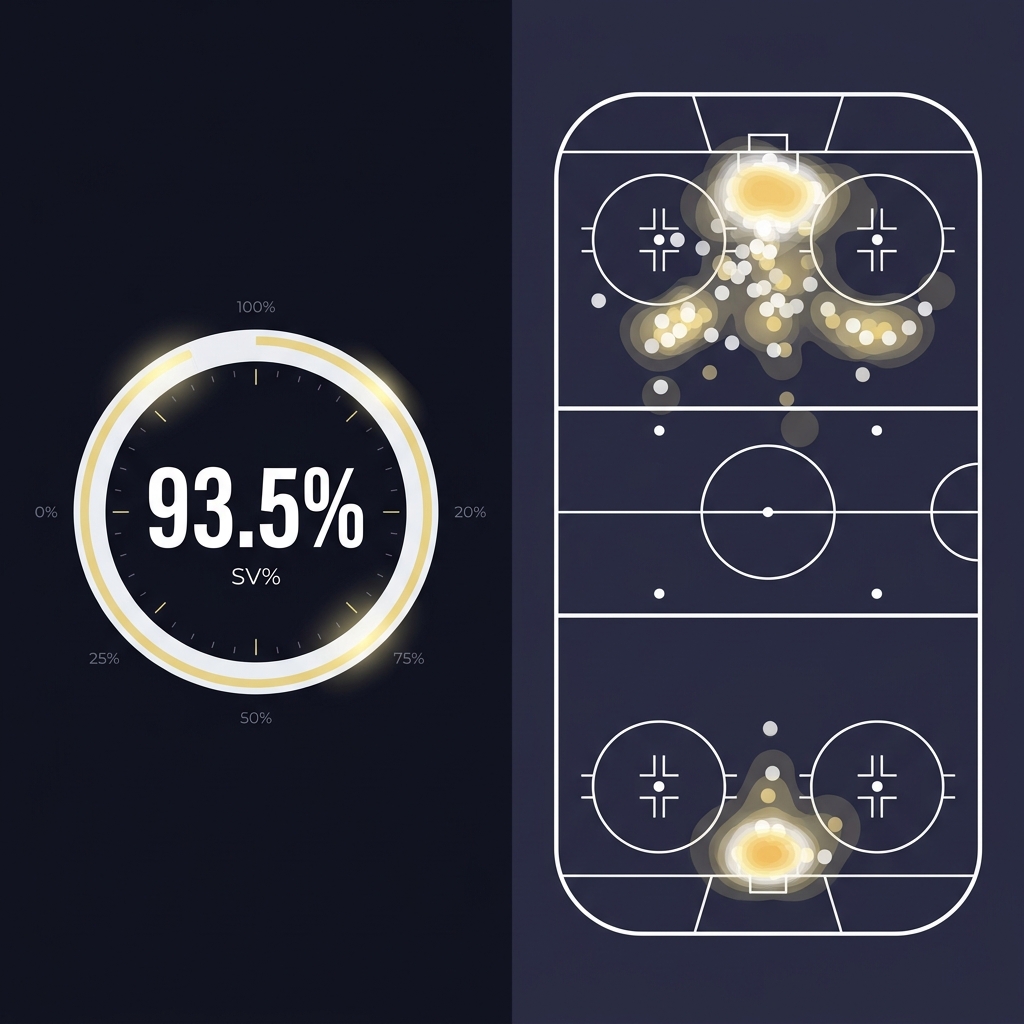
Projected shot volume matters because saves accumulate in scoring formats that reward them, and volume can create ceiling value for DFS lineups. Team defense, measured by shot suppression, gap control, and transition defense, changes how many shots and what quality get through to the goalie, altering both raw opportunity and xG expectations.
Because matchup context modulates both volume and quality, two goalies with similar historical numbers can present different short term prospects depending on opponent and venue.
Workload, rest and the timing of confirmation: day of effects
Back to back starts, rest days and historical performance patterns
Workload and rest influence short term performance. Historical analyses indicate that back to back starts and limited rest correlate with small declines in save efficiency and higher variance in outcomes, making rest context an important factor for lineup and betting choices on game day.
Adjusting for these workload patterns can help avoid late surprises and reduce exposure to volatility when rostering a starter who is on short rest.
Journal of Sports Analytics study on workload and goalie reliability
Why day of starter confirmations move lines and ownership
Day of confirmation of a starter is a common market moving event because it finalizes who will take the majority of minutes and therefore clarifies projected saves and goals against exposure. Reliable confirmation trackers are standard tools for projections and lineup updates, and markets react quickly to that information.
Using a confirmation tracker reduces the risk of late lineup changes and can be the difference between a confident cash game entry and an avoidable elimination line up decision. See Funded Plays for related tools and resources.
Daily Faceoff starting goalies page
A practical decision framework for fantasy and DFS lineups
Step by step: pre-lock checklist
Before locking lineups use a short ordered checklist: confirm the starter, evaluate GSAx and HDSV% for the goalie, check projected shot volume and opponent xG, note rest and back to back status, and consider ownership and contest type. This ordered approach helps prioritize the signals that historically matter most for outcomes. See our blog for more on checklist workflows.
For each item above, give more weight to quality adjusted metrics like GSAx and high danger splits when you want stability, and lean into projected volume when targeting ceiling potential in tournaments.
Quick pre-lock goalie checklist for lineup decisions
Use as a guide not a guarantee
When to prefer volume upside versus stability in cash games
Choose volume upside in single entry tournaments or large field GPPs where a high saves total can pay off, and prefer stability for cash games where consistent floor and low variance are more important. Elite GSAx profiles provide a predictable base that is attractive in cash games, while a starter with a weak GSAx but a high projected shot workload can be an effective contrarian tournament pivot.
Make the choice explicit in your checklist: if the contest is a cash game, default to stability; if a GPP, allow more weight to volume and ownership projections.
Daily Faceoff starter confirmations
How to pick goalies for cash games and GPPs
Traits of reliable cash-game starters
Reliable cash game starters tend to exhibit steady GSAx numbers, strong HDSV% on high danger chances, and favorable matchup context that reduces variance. These goalies deliver a dependable floor that helps protect a lineup against swings that cost head to head or double up cash contests.
Prioritize proven quality adjusted metrics over single game hot streaks and avoid roster churn in cash formats unless a clear matchup advantage emerges.
Traits that make a goalie a good tournament pivot
Tournament targets often combine a high projected shot volume with the chance for low ownership. These situations create upside because the goalie can rack saves while paying off as a differentiator. Look for cases where the starter faces poor defensive opponents or where weathered starters are confirmed to play in busy offensive matchups.
Remember that the same goalie can be a cash play one night and a tournament fade another night depending on matchup and ownership projections.
Betting perspectives: what a confirmed starter does to lines and edge
How sportsbooks react to starting goalie announcements
Sportsbooks frequently move lines when a starter is confirmed or scratched because the change alters expected goals allowed and win probability. A surprise scratch can widen totals or shift money lines, and late adjustments reflect the market incorporating confirmed minutes and expected workload.
Understanding typical market moves helps manage risk and identify when a late market shift offers value for bettors willing to accept additional uncertainty.
Daily Faceoff confirmation tracker
Where bettors can find value after a late confirmation
Edge opportunities often appear in prop markets and live money lines after a late starter confirmation, particularly when public reaction is slow to reprice a goalie with a better quality adjusted profile. However, bettors should apply risk controls because late changes increase variance and information asymmetry.
Use confirmations to reassess assumed goalie quality and to size positions conservatively when the market has yet to fully adapt to the new starter information.
Common mistakes players make when evaluating starts
Over-reliance on raw save percentage
One frequent error is treating raw SV% as a standalone measure of skill. Because SV% confounds shot quality and team defense it can be misleading, especially in small samples or when team defensive context changes substantially between games.
Instead, cross check SV% with GSAx and high danger splits to see if the underlying distribution of chances supports the surface number.
Evolving-Hockey glossary on goalie metrics
Chasing recent results and ignoring regression to mean
Another common mistake is chasing short term streaks without accounting for regression. Small samples can swing wildly, and recency bias drives many poor roster moves. A disciplined multi factor check reduces the chance of overreacting to two or three performances.
Make decisions using a blend of quality adjusted metrics, matchup context, and confirmation timing instead of single game narratives.
Research on goalie evaluation and reliability
Concrete examples: three scenarios and how to act
High volume underdog starter in heavy shot matchup
Imagine a rookie starter confirmed to face a league leader in shot volume. For DFS GPPs the upside is clear: many saves can generate a high score even if goals against occur. For cash games the rookie's uncertain quality adjusted measures create risk, so favor a veteran with steadier GSAx in cash formats.
Apply the pre-lock checklist to verify confirmation, measure projected shot volume, and weigh the decision against contest type before locking.
Moneypuck contextual projections
Elite GSAx starter in a defensive showdown
For a starter with consistently positive GSAx entering a defensive contest, the expectation is lower variance and a reliable floor. This profile suits cash games where protecting bankroll is the priority. In a tournament the same starter might be less attractive if shot volume is low and upside is capped.
Check high danger splits and opponent xG to confirm the floor holds under the matchup specifics.
Late scratch and how to pivot quickly
If a starter is scratched late, use confirmation trackers first, then pivot to the backup only after checking rest, historical backup workload, and projected shot volume. Often a backup receives heavy ownership and volatility, so size exposure conservatively or switch to alternate game stacks if uncertainty is high.
Record the decision and the outcome to refine how you treat late scratches in the future.
Daily Faceoff confirmations and scratch reports
A quick pre-lock checklist every reader can use
Metric checks
Verify: starter confirmed, GSAx trend, HDSV% stability, projected xG against, and rest. These items address the most common drivers of goalie performance and are quick to check with standard public tools.
Matchup checks
Confirm opponent power play efficiency, expected shot volume, and team shot suppression rates. Prioritize the opponent items that shift the expected share of high danger chances.
When time is limited, prioritize starter confirmation, GSAx, and projected shot volume in that order for immediate decision making.
Combining metrics into a simple goalie score
Which inputs to weight and why
A simple composite score can include GSAx, HDSV%, projected shot volume, and rest. Weight GSAx and HDSV% more heavily because they adjust for shot quality and provide a steadier estimate of skill; use projected volume as a multiplier for upside and rest as a volatility penalty.
Treat any composite score as a heuristic and validate it against outcomes over time rather than treating it as a definitive answer. See how Funded Plays evaluations work for an example of evaluation thinking.
A nontechnical example of a composite score
For a quick rank, give GSAx 40 percent, HDSV% 30 percent, projected shot volume 20 percent, and rest 10 percent. Scale each input to a common percentile and compute a weighted sum to get a sortable score. Use this as one input among others when making final roster or betting decisions.
Periodically backtest the scoring weights to ensure they remain predictive under changing season contexts and rule changes.
Final takeaways: practical reasons starting goalies matter
Short recap of the core reasons
Starting goalies matter because they determine minutes, drive save opportunity, control rebound moments that lead to second chance goals, and anchor penalty kill stability. Metrics like GSAx and HDSV% provide better insight into a goalies true contribution than raw SV% because they account for shot quality and context.

Combine metrics, matchup analysis, and reliable day of confirmations to make evidence based decisions rather than relying on headline numbers or short term narratives.
Moneypuck about page on goalie metrics

GSAx compares goals allowed to an expected goals baseline that accounts for shot quality, while save percentage is a simple ratio of saves to shots and does not adjust for shot location or type.
Favor starters with high projected shot volume and a path to a high saves total when ownership or contest structure rewards upside, after confirming the starter and checking matchup context.
Not always, but confirmations often change ownership and betting lines because they finalize the player who will receive the bulk of minutes and shot volume, so they are important to check.