

Introduction: why boundaries still matter in simulated trading
Why Simulated Trading Still Requires Healthy Boundaries is more than a headline. In practice, simulated environments and funded challenge models can teach real skills, but they can also produce misleading signals about how you respond to risk and uncertainty.
Create your one page trading contract for challenges
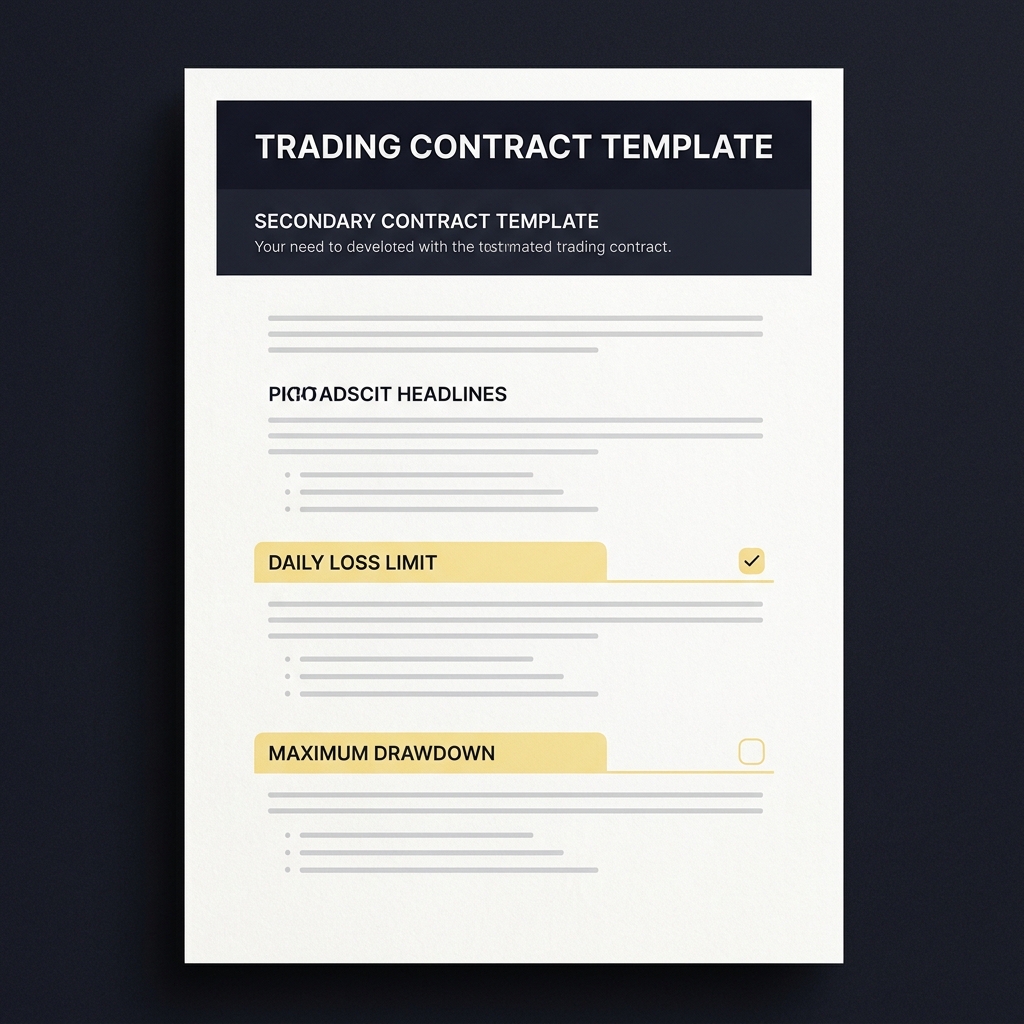
Download or build a simple one page trading contract template that lists bankroll allocation, maximum trade sizes, daily drawdown caps, and a short review cadence to keep practice disciplined.
The value of practice trading lies in repetition and feedback, not in the illusion of zero consequence. Treat virtual bankrolls as structured experiments that should mimic the limits and rules you expect under real conditions.
This article outlines clear steps so you can design practical rules, measure compliance, and know when a funded challenge or live stakes test your skills honestly. It is written for sports predictors and handicappers who want disciplined practice rather than casual play.
Definition and context: what we mean by simulated trading and funded challenges
Simulated trading refers to any practice or evaluation that uses virtual funds and market-like conditions to let a participant test predictions or trades without risking personal capital. In sports prediction contexts this often looks like a virtual bankroll used to place forecasts across events under set rules.
A funded account challenge is a structured evaluation where participants complete an evaluation period and meet objectives to qualify for a funded account. Typical elements include an evaluation period, objective thresholds such as score or profit goals, and rules about position sizing and drawdown.
Platforms that run these challenges focus on skill-based assessments and often emphasize consistent decision making and rule adherence over single big wins. Mentioning FundedPlays here is to clarify model type: it operates as a skill-based challenge platform with virtual bankrolls and defined evaluation rules, not as a sportsbook or investment firm.
Clear definitions help avoid confusion between practice trading, simulation, and live stakes. That clarity makes it easier to design practice trading boundaries that actually train the behaviors you want.
How simulated trading works in practice
At a basic level, simulated trading in a funded challenge environment assigns a virtual bankroll and tracks your predictions or trades against objective metrics. You place entries, the system records outcomes, and progress is measured against rules such as drawdown caps or score thresholds.
Typical mechanics include allocated virtual bankrolls, entry limits per event, and constraints on position sizing. Scoring systems convert individual results into qualification progress, and rules often define a maximum allowed drawdown and a required consistency metric to move to higher funded tiers.
Formal boundaries recreate the discipline and constraints of live stakes, reduce cognitive biases, and produce practice results that are more predictive of future performance.
Evaluation metrics commonly used are win rate, average outcome per selection, and maximum drawdown during the evaluation period. Some platforms also track adherence to predefined sizing rules as part of the assessment.
Understanding these mechanics shows why simulated trading can distort incentives. When the consequence is only virtual, participants may test extreme sizing or ad hoc rules that would be unacceptable under live stakes, which produces a false signal about strategy robustness.
How simulated trading differs from live stakes
Behavioral differences show up quickly. With no real money on the line, many participants show higher risk appetite and weaker exit discipline. Emotional responses to losses and gains are muted in simulation, and that changes decision making.
Operationally, simulations often omit factors like execution slippage, market liquidity, or delays in settlement. Those differences matter because they change the realized outcome of a strategy once real stakes are on the line.
Some strategy elements transfer well from simulation to live conditions, especially pattern recognition and analytic models. Other parts, such as sizing under stress and adherence to stop rules when a drawdown grows, often fail unless practiced with realistic boundaries.
Recognizing the gap between simulated and live outcomes helps you design practice trading boundaries that close that gap rather than widen it.
Why healthy boundaries matter: psychological and operational risks
Simulation amplifies several cognitive biases. Overconfidence is common after a short streak of wins, and recency bias makes participants overweight recent outcomes. Together, these tendencies can lead to risk normalization, where larger position sizes feel acceptable because the losses are not personal.

Removing real consequences also creates operational risk. Without stringent limits, participants may ignore position sizing, exceed drawdown rules, or make late exits. These behaviors are precisely what evaluation rules try to prevent, but simulation without boundaries often encourages them.
Boundaries bring the discipline needed to test whether a strategy will survive emotional pressure and operational friction when stakes are real. They help recreate the constraints that matter under live conditions so practice is predictive of real performance.
A practical framework for designing healthy boundaries
Start with three core principles: explicit limits, clear procedures, and measurable checks. Limits are numerical caps such as maximum trade size or a daily drawdown. Procedures are the entry, sizing, and exit rules you follow. Measurable checks are the metrics and cadence used to verify compliance.
Write procedural rules that remove discretion. Define clear entry signals, exact exit triggers, and a rule for when to stop trading for the day. Procedural clarity reduces the chance that frustration or euphoria will override your plan during the evaluation period.
Finally, set measurable objectives and a review cadence. Decide which metrics matter, how often you will review them, and what adjustments are permitted. A simple weekly review of adherence and outcomes is better than endless ad hoc changes that chase short term performance.
Translating rules into a personal contract
A written trading contract turns abstract boundaries into an enforceable agreement with yourself. Include explicit bankroll allocation, allowed bet sizes, stop conditions for single events and daily sessions, and a fixed review schedule. Keep it one page so it is easy to reference under pressure.
Enforcement mechanisms matter. Maintain a trading journal where every selection and its rationale is logged. Use automated alerts to flag sizing or drawdown limit breaches. Include a cooling off rule that forces a pause when certain thresholds are hit, for example a full day without selections after a 5 percent negative session.
When you commit to a personal contract, revisionist justification becomes harder. The contract creates a baseline you must measure against, and it makes it easier to detect when behavior drifts from your stated standards.
Practically, treat the contract as the rulebook for your funded challenge. If you are using a platform for evaluation, ensure your contract mirrors the platform rules so your personal enforcement supports the official objectives.
When to consider moving from simulated to live challenges
Moving to live stakes or larger funded limits is a decision best guided by measurable criteria rather than confidence or impatience. Look for consistent performance across a defined sample size, and ensure outcomes are not the product of a brief lucky run.
Behavioral readiness is equally important. You should be able to follow your written contract under drawdown and maintain execution discipline. If you find yourself bending rules after a loss or during winning streaks, more practice under tightened boundaries is needed.
Operational readiness includes execution quality, record keeping, and an understanding of liquidity for the events you predict. If you cannot document your process and reproduce your entries and exits reliably, wait and refine your systems.
Typical mistakes and how to avoid them
Common mistakes include ignoring position sizing rules, increasing risk after wins, and changing strategy based on small samples. These errors often begin as small compromises and then become habitual during a challenge.
Spot these mistakes early with objective monitoring. Track adherence rate to your contract, the number of rule breaches, and changes in average position size over time. When metrics drift, take corrective actions immediately, such as reimposing original limits or pausing the challenge to retrain under demo conditions.
Quick fixes are simple but effective. Reapply original sizing limits for a fixed period, require a minimum number of trades before a strategy change, and use cooling off rules after a sequence of losses. These steps restore discipline without requiring a complete restart.
Practical examples and scenarios
Example 1, conservative setup: Allocate a virtual bankroll and limit maximum trade size to 1 percent of that bankroll, with a daily drawdown cap of 2 percent. Use tight procedural rules for entry and exit and review performance weekly. This setup prioritizes steady, low variance progress.
Example 2, moderate setup: Allow a slightly larger maximum trade size, for example 2.5 percent of bankroll, and a daily drawdown cap of 4 percent. Keep strict stop rules and a clear rule for when to reduce sizing after a drawdown. This balances growth ambitions with risk control.
For each scenario, document results and iterate. Log every selection, note why the rule was followed or broken, and update your contract only after a formal review that explains why the change improves expected robustness rather than just retrospective fit to noise.
Tracking, metrics, and review cadence
Essential metrics include win rate, average outcome per selection, max drawdown, and adherence rate to rules. Track these consistently and display them in a simple dashboard or spreadsheet that is reviewed on a regular cadence.

Review cadence should be frequent enough to catch problems early but not so frequent that noise drives changes. A weekly check on adherence and performance combined with a monthly strategic review is a practical starting point.
Use metrics to adjust boundaries carefully. If your win rate and average outcome are stable but drawdown is creeping up, tighten sizing limits rather than overhauling strategy after a small sample.
Tools and automation that help enforce boundaries
Simple tools can reduce friction and improve discipline. Examples include position sizing calculators to keep trade sizes consistent, alert systems that warn when drawdown limits are reached, and structured journals that make record keeping routine.
Automation helps when it enforces rules without removing human oversight. For example, an alert that pauses new entries after a drawdown limit preserves a human in the loop while preventing impulsive further exposure.
quick position sizing based on bankroll and allowed percent
use to convert percent rules into concrete sizes
Be cautious about over-automation. Tools should enforce the boundaries you set, not replace the judgment needed to adapt to unusual conditions or rule exceptions that you preauthorized in your contract.
Maintaining healthy boundaries over the long term
Boundaries must evolve as skill and confidence grow. Increase limits slowly and only after measurable improvements that are consistent across different conditions. A staged increase tied to objective milestones preserves discipline while letting you scale responsibly.
Watch for boundary drift when rules become optional. Common warning signs are frequent justifications for small breaches, a shrinking journal detail, or declining adherence rates. When these appear, restore stricter controls and run a short retraining period in demo mode.
Simple rituals help maintain discipline: a monthly contract review, a quarterly rules audit, and a strict rule that any change must be logged and justified in your journal before it is enacted. These practices keep boundaries active rather than decorative.
Conclusion: disciplined practice beats casual play
Healthy boundaries make simulated trading a productive training ground rather than a misleading playground. By defining limits, writing a clear contract, and measuring adherence, you turn virtual practice into a reliable way to test skill and readiness.
Use the framework in this article to design practice trading boundaries that mirror live constraints, and review progress with objective metrics. Treat funded challenges as disciplined training, and rely on consistent evidence rather than short term results when you decide to increase stakes.

Simulated trading uses virtual funds and omits some real-world frictions like execution slippage and personal financial consequences, which can change behavior and outcomes compared with live stakes.
Start with a maximum trade size as a percent of bankroll, a daily drawdown cap, clear entry and exit rules, and a cooling off rule that pauses activity after breaches.
Look for consistent performance across a defined sample, documented adherence to your contract under drawdown, and operational readiness such as reliable execution and record keeping.