
Introduction: What this article covers and why it matters
Scope and intended readers
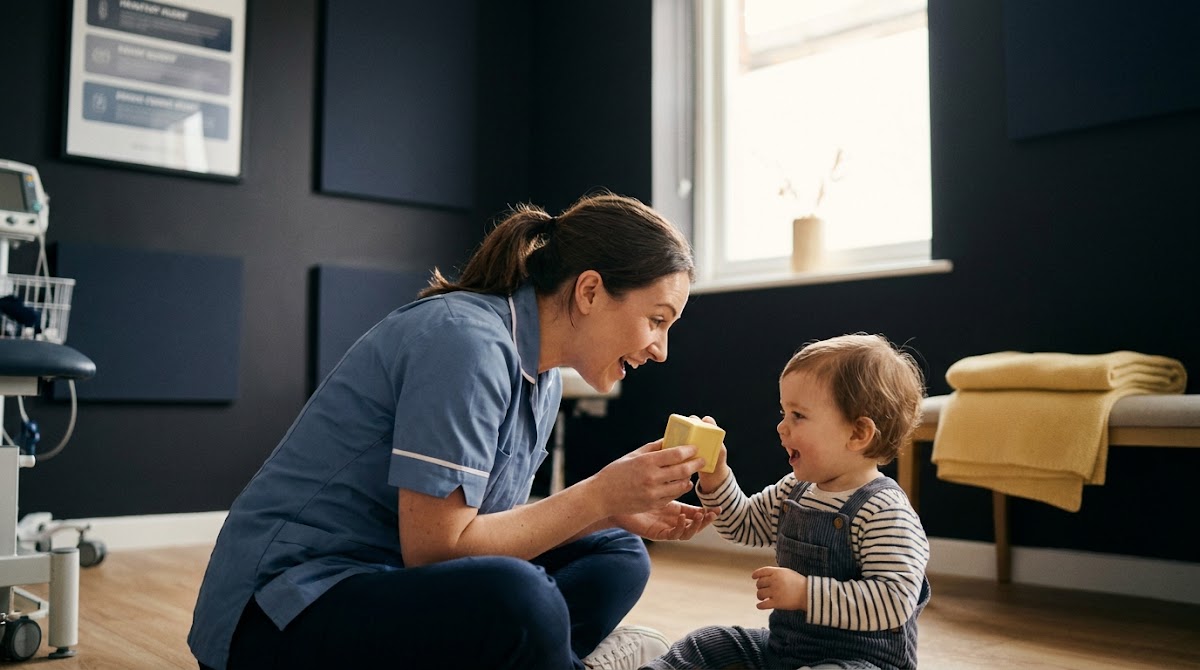
This article explains why serve and return metrics matter for early childhood programs and practitioners who monitor responsive caregiving. Serve and return refers to contingent, back-and-forth caregiver-child exchanges that public health guidance links to early brain development and healthy child outcomes, and this piece treats measurement as a practical program tool rather than a guarantee of specific results CDC early brain development page.
Readers include health professionals, early childhood program managers, researchers, and informed caregivers who need clear, implementable approaches for tracking conversational turns, caregiver responsiveness, and response latency. The guidance here keeps technical detail focused on real-world decisions: what to measure, how to observe it reliably, and how programs can use results to guide coaching and monitoring.
How metrics link to program monitoring and caregiving support
Measuring serve and return supports program monitoring by turning interaction quality into observable indicators that teams can track over time. This article outlines three commonly used indicators, provides coding rules to improve reliability, and shows how short repeated observations and audio sampling can make measurement feasible at scale.
Across the sections you will find operational definitions, practical protocols, and examples for clinic and home-visiting settings so teams can start measuring consistently without overclaiming impact.

Definition and context: What serve and return means in public health
Core definition and how it fits within Nurturing Care
In public-health guidance, serve and return is framed as a central element of responsive caregiving, meaning contingent, back-and-forth interactions between caregivers and young children that support learning and development; global program guidance places this concept within the Nurturing Care framework for early childhood programs WHO Care for Child Development.
Framing serve and return as part of responsive caregiving helps programs design coaching and monitoring approaches that focus on interaction quality rather than only on isolated child outcomes. That program focus is useful for training, supervision, and practical measurement because it centers observable behaviors people can change through feedback and practice.
Key developmental domains supported by responsive exchanges
Contingent interactions scaffold multiple developmental pathways. Repeated, timely responses from caregivers create opportunities for language learning through conversational turns, support emerging social-emotional regulation by modeling co-regulation, and provide the contingent feedback loops that underlie early cognitive skill building.
Programs should keep a clear caveat in communications: responsive interactions support development but do not guarantee specific outcomes, which depend on multiple biological and environmental factors and the broader caregiving context.
What the evidence shows: links between responsiveness and child outcomes
Systematic review and meta-analytic findings
High-quality syntheses find that greater caregiver responsiveness relates to improvements in child language and broader developmental outcomes across diverse settings; these meta-analytic results form the strongest evidence base for why programs measure interaction quality Responsive caregiving and child developmental outcomes, JAMA Pediatrics. For a related systematic review and meta-analysis, see systematic review and Bayesian meta-analysis.
Effect sizes vary by study design, age group, and measurement approach, so programs should treat the evidence as directional and robust rather than as a one-size-fits-all prediction for every community.
Measuring serve and return interactions gives programs observable indicators of caregiver responsiveness and conversational engagement that can guide coaching, document change over time, and help focus resources where families show consistent needs, while recognizing that metrics are one input among many in child development.
Audio and naturalistic evidence on conversational turns
Naturalistic audio studies show that counts of adult-child conversational turns correlate with child language outcomes, which supports using audio-based measures as a scalable proxy for serve and return frequency when video observation is impractical Adult-child conversational turns and child language outcomes, Pediatrics. LENA has published work on conversational turns and measurement approaches that teams may review Language Development Through Conversational Turns.
Those audio measures capture frequency and timing of exchanges well, but they have limitations for assessing contingency and the quality of responses; programs should interpret audio counts as one part of a mixed-method monitoring strategy that includes direct observation for more nuanced coding.
Core metrics and a practical measurement framework
Operational definitions: frequency, contingency, latency
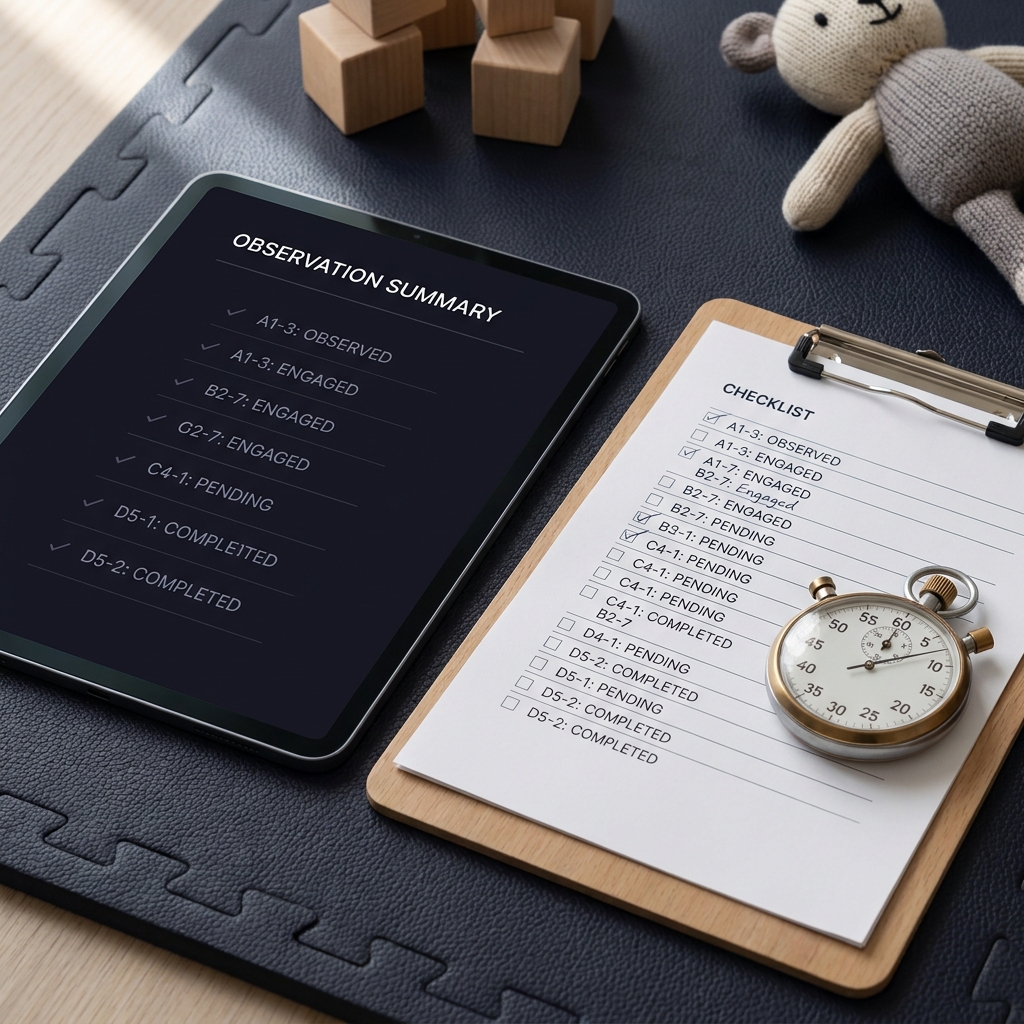
Define three core indicators clearly before data collection: frequency of turns, meaning the number of conversational turns in a timed sample; responsiveness or contingency, meaning whether a caregiver response follows the child's cue in a way that acknowledges intent or content; and response latency, meaning the time between the child cue and the caregiver reply.
Keeping short, standardized definitions for each metric helps reduce ambiguity during coding and makes results comparable across observers and over time.
Recommended observation length, coding rules, and rubrics
Practical program guidance recommends short repeated observations of 5 to 10 minutes, consistent coding rules for what counts as a turn, and validated rubrics to improve inter-rater reliability; these practices emerge from program manuals and field studies that balance feasibility and reliability PICCOLO checklist and user guide.
Below are compact coding rules teams can use as the start of a checklist, then expand into a formal rubric for training observers:
- Turn definition: a child vocalization or communicative gesture followed by a caregiver vocal or gestural reply within the observation window.
- Responsiveness: code as contingent when the caregiver reply matches the child’s focus or affect, not only when the caregiver talks.
- Latency: record prompt responses (under roughly 2 seconds), delayed responses, or no response; use direct observation for precise timing.
- Overlapping speech: count both contributions as separate turns if they are clearly responsive.
- Exclusions: background adult speech not directed to the child should be excluded.
Train observers on these rules with short video exemplars and calibration sessions to reduce drift.
Short PICCOLO-style checklist for a single 5 to 10 minute observation
Use for spot-check observations
Measurement tools, scales and scalable options for programs
When to use observation vs audio recording
Programs must balance precision, cost, and scale. Live or video-coded observation gives more detail on contingency and latency but requires trained coders and greater time per sample; passive audio devices and automated turn counts are scalable and useful for tracking frequency trends over time Adult-child conversational turns and child language outcomes, Pediatrics.
For many programs, a hybrid approach works well: use short direct observations for detailed coding and periodic audio sampling to monitor population-level changes in conversational turns. Evidence also shows that parent coaching increases conversational turns in many contexts parent coaching increases conversational turns.
Low-cost and privacy considerations
Audio recording in home settings raises privacy and consent issues, so obtain explicit informed consent, explain how samples will be used, and prefer short, periodic recordings that minimize continuous capture. When feasible, anonymize or process audio locally to extract turn counts rather than storing raw audio long-term.
Product teams and program managers can create downloadable observation forms and consent templates to standardize practice across sites; a concise example resource and an observation checklist can help field teams start quickly. See an example observation checklist on our blog, and visit the Funded Plays homepage for additional resources.

Interpreting results: decision criteria and program use
What counts as meaningful change and current evidence gaps
No universally accepted thresholds exist for serve and return indicators across ages and contexts, so programs should use baseline comparisons, repeated measures, and trend analysis to identify meaningful change rather than relying on a single cutoff; this approach aligns with recommendations in recent reviews and program guides Responsive caregiving and child developmental outcomes, JAMA Pediatrics.
As a practical rule, focus on consistent upward trends across multiple short observations and use mixed methods to validate changes before shifting program strategy.
Using metrics for coaching, monitoring, and evaluation
Teams can triangulate metrics with coaching by linking specific patterns to coaching actions: low conversational turns suggest prompts to increase open-ended caregiver talk; low contingency scores suggest coaching on following the child's lead; long latencies suggest practicing quicker acknowledgements.
A simple decision table helps staff turn numbers into actions: persistent low frequency triggers a group session on conversational prompts, low contingency triggers one-on-one coaching with video feedback, and mixed patterns trigger combined strategies.
Implementation checklist and brief training for observation-based monitoring
Sign up for an implementation checklist or short training resource to help your team pilot short observations and basic coding rules in the next month.
When using audio-only counts, caution is warranted: audio can flag frequency changes quickly, but it cannot fully replace direct observation for assessing response quality or precise latency, so pair audio monitoring with occasional direct checks.
Common mistakes and pitfalls to avoid
Misreading audio counts as full responsiveness
One common error is treating higher audio-based turn counts as proof of responsive caregiving; frequency alone does not capture whether responses were contingent or supportive, and audio cannot reliably time short latencies or interpret nonverbal contingency cues WHO Care for Child Development.
To avoid this mistake, always pair audio indicators with spot-check direct observations that code contingency and latency at least periodically.
Inconsistent coding and observer drift
Inconsistent training and infrequent recalibration produce observer drift and unreliable data. Regular coder calibration with shared video examples, inter-rater reliability checks, and refresher trainings help maintain consistent coding over time PICCOLO checklist and user guide.
Also, beware of short one-off snapshots; use repeated short observations and avoid program decisions based on single samples whenever possible.
Practical examples and scenarios: applying metrics in programs
Short clinic observation protocol example
Example protocol for a clinic setting: schedule a 5 minute, in-room observation during a routine visit, record conversational turns and responsiveness using the checklist, and log latency as prompt, delayed, or none. Train two staff to alternate observations and run weekly calibration to maintain reliability CDC early brain development page.
Interpretation guidance: compare each family's scores to their baseline from the first visit and flag families with consistent low contingency scores for a brief coaching session focused on following the child's lead.
Home visiting scenario combining audio sample and coaching
In a home-visiting model, collect a 10 minute audio sample every 4 to 6 weeks to track conversational turn trends, and pair each audio sample with a 5 minute video spot check every quarter to code contingency and latency. Use audio trends to prioritize which families receive immediate follow-up coaching visits.
Adapt protocols by age and culture: for younger infants, focus on vocal turn-taking and short latencies; for toddlers, include gesture and joint attention behaviors in contingency coding. Consistent coding rules make these adaptations comparable over time.
Conclusion: practical next steps for programs and practitioners
Quick checklist to start measuring
Why Serve and Return Metrics Matter in practice: they provide observable, actionable indicators that programs can use to support coaching and monitor changes in caregiver-child interactions over time WHO Care for Child Development.
Starter checklist: obtain informed consent and document privacy steps, select a 5 to 10 minute observation protocol, train observers on turn, contingency and latency rules, run regular coder calibration, and combine audio sampling with periodic direct observations to validate changes.

Research gaps and recommended priorities
Open questions remain about standardized thresholds for “adequate” frequency and latency across ages and contexts, and about developing low-cost, privacy-preserving tools that measure latency reliably. Programs should monitor ethically, iterate on their protocols, and contribute de-identified data or implementation lessons to collective learning efforts.
A conversational turn is a child vocalization or communicative gesture followed by a caregiver reply; it is commonly counted in short timed samples to estimate interaction frequency.
Practical guidance recommends short repeated observations of 5 to 10 minutes, combined with periodic audio sampling for broader monitoring.
No. Audio counts are a scalable proxy for frequency but cannot fully capture contingency or precise latency; pair audio with occasional direct observation.
References
- https://www.cdc.gov/ncbddd/childdevelopment/early-brain-development.html
- https://www.who.int/teams/maternal-newborn-child-adolescent-health-and-ageing/child-health/care-for-child-development
- https://jamanetwork.com/journals/jamapediatrics
- https://pmc.ncbi.nlm.nih.gov/articles/PMC12627207/
- https://publications.aap.org/pediatrics
- https://www.lena.org/cornerstones/conversational-turns/
- https://products.brookespublishing.com/PICCOLO-P644.aspx
- https://www.pnas.org/doi/10.1073/pnas.1921653117
- https://www.fundedplays.com
- https://www.fundedplays.com/blogs
- https://www.fundedplays.com/blogs/how-fundedplays-evaluations-work
- https://www.fundedplays.com/challenges