

What revenge trading means and why the term matters
Why Revenge Trading Is Dangerous is a practical question many traders and sports prediction participants ask after a losing streak. At its core, revenge trading describes rapid, emotion-driven attempts to recover losses instead of following a planned strategy. This behavior is also called chasing losses or loss-recovery behavior in clinical and regulatory documents, and it matters because the motivation is recovery rather than analysis.
In plain terms, revenge trading shows up when the goal of a trade shifts from testing a hypothesis to recouping a setback. That shift degrades decision quality and makes otherwise sound methods brittle under pressure. For people using skill-based prediction platforms, the change is important because it converts long-term testing and discipline into impulsive short-horizon bets, a dynamic clinicians and regulators flag as harmful NICE harmful gambling guideline.
Consider two short examples. A competent forecaster who normally runs small, evidence-based positions widens stakes after a loss in hopes of an immediate recovery. Another participant breaks a pre-set rule about maximum stake size after a string of poor results because the pain of loss creates urgency. Both examples show the same pattern: emotion leads to increased exposure and worse outcomes compared with sticking to the plan.
Why revenge trading is dangerous: financial and cognitive harms

Revenge trading becomes dangerous because emotional arousal after losses changes how people assess risk. Immediate reactions to setbacks can cause a trader to accept larger stakes, ignore stop-losses, or shorten analysis time; that combination amplifies exposure and raises the probability of further losses. Regulators have highlighted that short-horizon speculative behavior raises retail investor risk, which explains why chasing losses often ends poorly ESMA Trends, Risks and Vulnerabilities report. ESMA has also published other communications on retail risks that provide complementary context ESMA highlights risks to retail investors.
When trades are placed in quick succession the decision loop compresses. Compressed decision loops reduce time for deliberation and increase reliance on intuition and emotion. Rapid, concentrated positions become especially dangerous under leverage because losses compound far faster than in unleveraged contexts. FINRA cautions that rapid post-loss trading can quickly magnify losses and that predefined risk limits matter more than ad hoc choices FINRA day trading guidance.
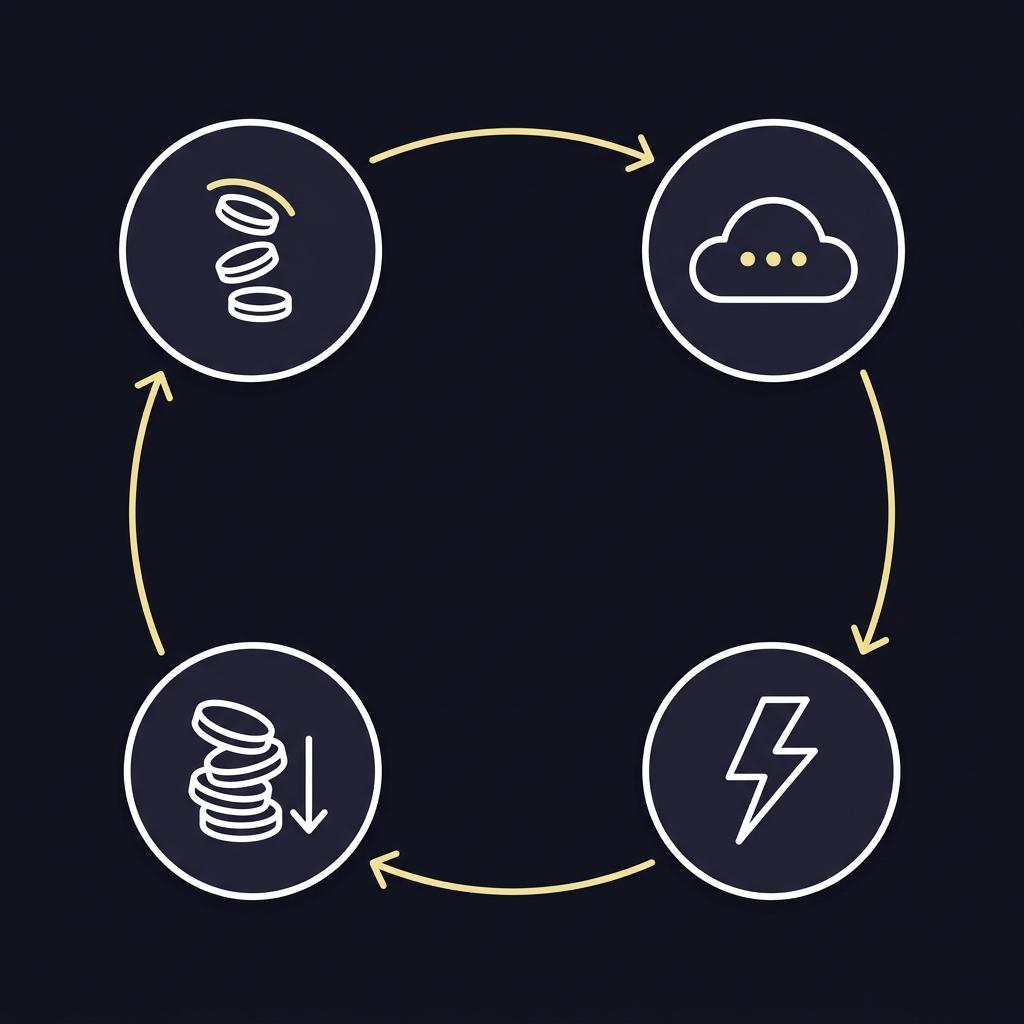
The causal chain is straightforward: a loss triggers emotional arousal, arousal biases judgment, biased judgment drives larger or more frequent positions, and increased exposure magnifies losses. That stepwise link is why many finance professionals emphasize pre-commitment rules and stop-loss discipline as primary defenses. The practical implication is the same across prediction environments, including skill-based challenge platforms: discipline reduces the chance that a single setback becomes a spiral.
Get the Checklist and Guide for Disciplined Challenges
Download the one-page checklist to embed simple pre-trade rules and cooldown steps into your challenge routine without changing your overall strategy.
Behavioral signs and common triggers of revenge trading
Recognizing the signs early makes intervention possible. Observable markers include a sudden rise in trade frequency, abandoning previously followed rules, increasing stake sizes after a loss, and fixating on a short-term recovery goal rather than the original edge. These behaviors are practical cues you can monitor in real time.
Common triggers that push someone toward loss-chasing include consecutive losses in a short window, deadlines or time pressure that force faster decisions, social pressure from peers or chat environments, and emotional stress outside the trading session that lowers patience. Clinical descriptions of chasing losses use similar language when advising monitoring and timeout strategies to prevent escalation NICE harmful gambling guideline.

What regulators and clinical guidelines say (quick evidence summary)
To make the signs actionable, turn each marker into a concrete rule. For example, treat two breaches of a stake-size rule within one session as a signal to stop. Or set a maximum number of trades after a loss to prevent frequency escalation. These small, binary rules reduce ambiguity when emotions rise and help preserve decision quality.
What regulators and clinical guidelines say (quick evidence summary)
European and UK regulators have flagged short-horizon speculative trading as a source of elevated retail risk. ESMA’s 2024 report highlights how rapid, speculative activity can produce poor outcomes for non-professional participants, which aligns with observed patterns of loss-recovery behavior in markets ESMA Trends, Risks and Vulnerabilities report. A central bank summary echoes these concerns and provides an accessible recap of ESMA messaging central bank summary of ESMA risks.
The FCA’s multi-firm review of contracts for difference shows persistent consumer harm and points to weaknesses in firm controls for leveraged products. That review signals that chasing losses in leveraged contexts is especially dangerous for retail clients and that stronger pre-trade protections are warranted FCA multi-firm review.
Use pre-commitment rules, stop-losses, forced cooldowns, brief journaling, and an accountability partner to interrupt emotional reactions and preserve decision quality.
Clinical guidance on harmful gambling explicitly identifies chasing losses as a core indicator of harm and recommends cognitive-behavioral techniques such as journaling, forced time-outs, and limit-setting to interrupt impulsive cycles NICE harmful gambling guideline.
Consumer advice in the UK also promotes practical tools like cooldowns and spending limits that map to trading contexts where emotional arousal can drive rule-breaking. These measures are simple harm-reduction strategies you can adapt to any prediction routine Gambling Commission guidance on tools.
Finally, FINRA’s investor education material underscores the danger of rapid trading after a loss and recommends planning with predefined risk limits, which aligns with financial professionals who promote precommitment devices and accountability to curb bias-driven decisions FINRA day trading guidance.
A practical five-step prevention plan to stop revenge trading
This five-step plan is grounded in behavioral and regulatory recommendations and is meant to be practical. The steps are: pre-trade rules, stop-loss discipline, cooldown routines, journaling and self-monitoring, and accountability or pre-commitment. Each step is short, repeatable, and designed to be used before, during, and after sessions.
Step 1: Pre-trade rules. Write down simple, binary entry criteria before you trade. Examples include a maximum stake percentage of your virtual bankroll, a clear signal threshold for taking a position, and a rule that you will not increase stakes for three trades after a loss. Pre-commitment devices such as written rules reduce the chance of in-session rule changes and are endorsed by finance professionals as useful guards against bias.
Step 2: Stop-loss discipline and maximum daily loss thresholds. Use stop-loss orders or explicit exit rules and set a maximum daily loss that you will not exceed. A maximum daily loss serves as a circuit breaker: if it is reached, you stop for the day and review. FINRA and professional commentary support having predefined limits that trigger a pause rather than making ad hoc decisions after a loss FINRA day trading guidance.
Step 3: Cooldown routines. When a rule is breached or emotions spike, implement a forced timeout. A typical cooldown might be a 30 to 60 minute break for intraday work or a full session pause for longer strategies. UK consumer guidance suggests cooldowns and time-outs as effective harm-reduction measures that translate directly to trading sessions Gambling Commission guidance on tools.
Step 4: Journaling and self-monitoring. Keep brief session notes about the reason for each trade, emotional state on a simple scale, and the outcome. Journaling is central to cognitive-behavioral approaches for chasing losses because it externalizes thought patterns and makes recurring biases visible. NICE recommends self-monitoring as a practical technique to interrupt chasing behaviors NICE harmful gambling guideline.
Step 5: Accountability and pre-commitment. Share limits with a trusted accountability partner or set automated constraints where available. The CFA Institute and professional finance sources discuss precommitment devices as a behavioral tool to lock in better decisions, and combining written rules with accountability increases adherence over time CFA Institute discussion on precommitment devices.
Quick, printable checklist and templates you can use today
Use this short pre-trade checklist to make decisions before you act; see our blog for a downloadable version Funded Plays blog. Copy it into a one-page document you keep next to your screen: 1) Objective for trade, 2) Stake percent or max units, 3) Stop-loss level, 4) Exit criteria, 5) Maximum trades after loss allowed. These items convert fuzzy intentions into binary checks you can run quickly.
Here is a compact journaling template you can paste into a note app: Reason for trade, Emotional level 1-10, Pre-trade rule followed Y/N, Stop-loss set Y/N, Result, Lesson learned. Brief entries are enough to reveal patterns and reduce repetition of impulsive choices.

For a cooldown plan, pick a forced break that fits your time horizon. Intraday participants often benefit from a 30 to 60 minute pause after a rule breach. For multiday strategies a full-session pause and review the next day is usually preferable. Add an accountability step: record the break and share the review with a peer or mentor to increase follow-through. Visit the Funded Plays homepage for more resources.
Decision rules: when to stop trading and when to seek help
Set objective stop criteria before you begin a session. Examples include hitting a maximum daily loss, three consecutive violations of rules, or feeling emotionally overwhelmed to the point decision quality is clearly impaired. Treat any of these triggers as automatic stops that require a documented review before resuming.
If chasing behavior persists over multiple sessions despite using rules and cooldowns, escalate gradually. First increase accountability, then take a longer multi-day break, and if the pattern continues consider seeking behavioral support. Clinical guidance notes that persistent chasing is a marker of harm and suggests structured interventions when self-help strategies do not reduce the behavior NICE harmful gambling guideline.
When in doubt, prefer a longer pause. Decisions made under stress are more likely to create further losses than to recover them. Planning for an escalation path in advance reduces the need to make hard choices in the heat of the moment.
Common mistakes, recovery steps and how to rebuild discipline
After a revenge-trading episode, traders commonly make a set of predictable errors. These include resetting or weakening rules mid-session, attempting to double down to recover losses, and increasing leverage or position size beyond usual limits. Recognizing these errors is the first recovery step.
Recovery actions begin with an immediate cooldown, followed by writing a short post-session review. Use your journal to record what happened, which rules were broken, and why. Then reset your pre-commitment rules and reduce position sizes for a defined recovery period to rebuild confidence without risking further large losses. Behavioral finance guidance supports precommitment and accountability to reduce relapse risk CFA Institute discussion on precommitment devices.
short recovery and decision checklist for post-tilt reviews
Use after any rule breach
Do not rush to trade again to chase losses. Instead, follow the checklist above and give yourself permission to trade with smaller sizes for a period. Rebuilding discipline is gradual; the goal is consistent adherence to rules rather than a fast numerical recovery.
Scenarios and examples: how the five-step plan is applied in practice
Low-risk scenario. You are running a multiday prediction with modest position sizes. After an unexpected loss you check the pre-trade rule, confirm the stop-loss remained within limits, and proceed only if the loss did not violate the maximum daily loss. If the daily limit was exceeded you take a session pause and a short review the next morning. This adaptation preserves the edge while limiting impulsive escalation.
Mid-risk scenario. You trade intraday and feel pressure after two quick losses. Your rule says two rule breaches triggers a 60 minute cooldown. You take the break, write two quick journal lines about emotion level and what went wrong, then resume only with half your normal position size. The accountability of a short journal entry changes behavior and lowers the chance of immediate repetition.
High-pressure scenario. A sequence of losses coincides with personal stress and chatroom messages urging recovery trades. You rely on a written maximum daily loss and an accountability partner who must sign off on any resumed session. The combination of stop-loss discipline, cooldown, and external accountability prevents a single emotional session from cascading into larger harm.
Conclusion: key takeaways and next steps
Revenge trading is dangerous because it amplifies exposure and degrades decision quality. That conclusion is supported by recent regulatory and clinical guidance that recommends structured safeguards instead of ad hoc loss-recovery attempts ESMA Trends, Risks and Vulnerabilities report. Independent commentary highlights key takeaways from ESMA analysis for practitioners Ropes Gray: ESMA report key takeaways.
Three immediate actions you can take are: set a clear pre-commitment rule, implement a stop-loss and maximum daily loss, and begin brief journaling after each session. These steps are practical, scalable, and consistent with both investor education and harm-minimization guidance NICE harmful gambling guideline. Learn more about how Funded Plays evaluations work here.
Revenge trading, or chasing losses, is when you trade to recover losses instead of following a plan. It can impair decision quality quickly, often within the same session, so immediate safeguards like stop-losses and cooldowns are recommended.
Stop-losses are an important defense but work best with other measures such as pre-commitment rules, cooldown routines, and journaling to address the emotional drivers behind chasing losses.
If loss-chasing persists despite using structured tools and accountability, or if trading causes significant distress or functional problems, consider seeking behavioral support from a qualified professional.
References
- https://www.nice.org.uk/guidance/ng215
- https://www.esma.europa.eu/press-news/esma-news/esma-publishes-trends-risks-and-vulnerabilities-report-2024
- https://www.esma.europa.eu/press-news/esma-news/esma-highlights-risks-retail-investors-social-media-driven-share-trading
- https://www.finra.org/investors/learn-to-invest/advanced-investing/day-trading
- https://www.centralbank.ie/regulation/markets-update/esma-guidelines-and-recommendations/markets-update-issue-3-2021/european-securities-and-markets-authority-(esma)/esma-highlights-risks-to-retail-investors-of-social-media-driven-share-trading
- https://www.fca.org.uk/publications/multi-firm-reviews/appropriateness-assessments-contracts-difference-cfds
- https://www.gamblingcommission.gov.uk/guidance/managing-your-gambling
- https://www.cfainstitute.org/en/research/enterprising-investor/precommitment-devices-better-decisions
- https://www.fundedplays.com/challenges
- https://www.fundedplays.com
- https://www.fundedplays.com/blogs
- https://www.fundedplays.com/blogs/how-fundedplays-evaluations-work
- https://www.ropesgray.com/en/insights/viewpoints/102mqx7/esma-report-on-the-retail-investor-journey-key-takeaways