
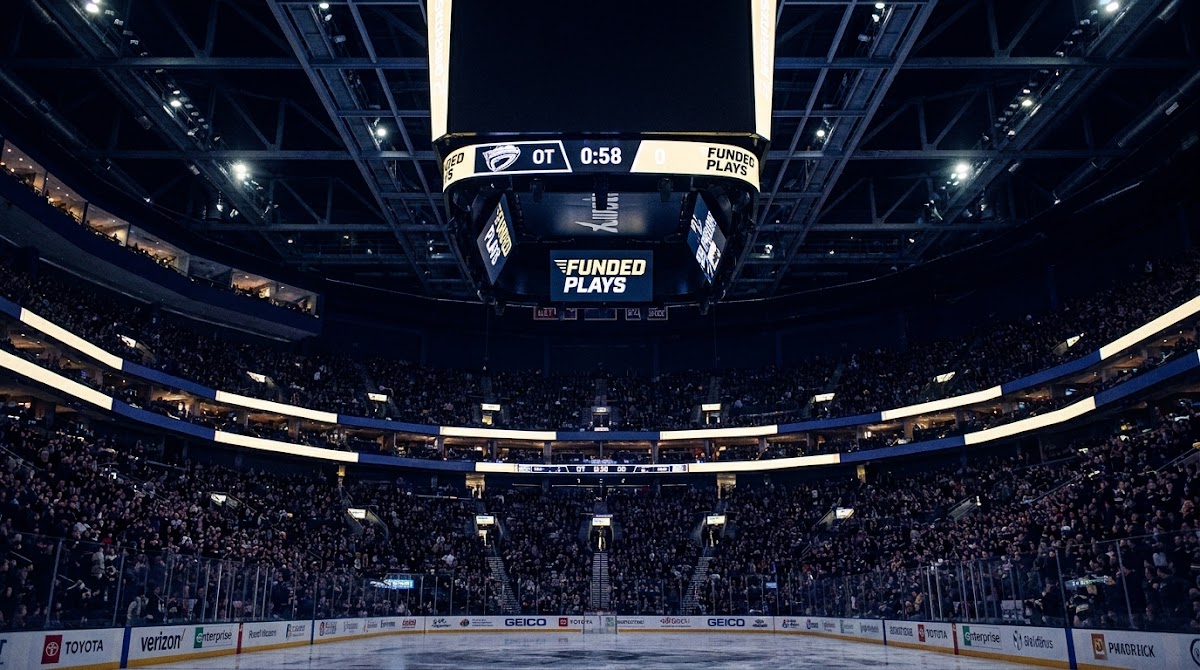
What makes playoff hockey markets different: definition and context
Why Playoff Hockey Markets Are Different
At a high level, what separates playoff hockey markets from regular-season lines is a combination of fixed rule mechanics and altered information flow around games. The playoff structure changes how outcomes are decided once regulation ends, and public attention, lineup opacity, and game-state incentives shift the sources of pricing input for books and bettors alike. Those differences change where value concentrates and how you should think about derivatives tied to regulation outcomes.
One clear structural change is the way overtime is played in the Stanley Cup Playoffs. Playoff overtime uses repeated 20-minute 5-on-5 sudden-death periods with no shootouts, which means games that are tied after regulation are resolved only by an additional full period of play and then more 20-minute periods as required, rather than by a shootout or a shorter overtime format NHL official rules.
OT sensitivity and model input checklist
Use as a one-page guide when pricing playoff games
Playoff games also tend to feature a higher share of true 5-on-5 minutes and fewer special-teams opportunities compared with regular-season baselines. That shift matters because many scoring models rely on separate estimates for even-strength and power-play scoring rates, and a heavier even-strength share reduces the relative influence of special-teams parameters in a game model Hockey-Reference 2024 playoffs summary.
Finally, public attention and regulated betting liquidity increase markedly in the postseason, which can change how quickly and how far lines move on high-profile matchups. Higher TV audiences and expanding regulated markets bring more recreational action into marquee games, and that can amplify moves around storyline events or late lineup news SportsMediaWatch ratings summary.

How playoff format differs from regular season
The immediate effect of the playoff format is that outcomes beyond regulation are resolved by full-length sudden-death periods, not by shootouts or abbreviated overtime sessions. For market participants this means markets that depend on margins established in regulation will behave differently than full-game markets that include OT scoring possibilities NHL official rules.
Because overtime in the playoffs is 5-on-5 and allows goals to end the game at any moment, the distribution of final scores and the probability mass in the tails of the outcome distribution shift when a contest goes beyond regulation. That simple fact underpins several of the tactical adjustments covered later in this article.

Understanding these structural differences is practical, not academic. If you model totals or puck lines using regular-season averages without adjustment, you may systematically misprice games where OT or reduced power-play minutes materially changes expected outcomes. This is particularly true for derivatives that pay only on regulation outcomes, and for puck line rules where OT cannot generate a larger regulation margin.
As the postseason concentrates attention, the timing of information becomes more important. Morning skate reports, starter confirmations, and injury updates tend to move prices further than during the regular season, so incorporating a timing plan into your workflow is a straightforward way to capture pre-game edges.
At-a-glance: key rule changes that shift prices
Overtime format and payout implications
The single most important rule for price effects is that playoff overtime is repeated 20-minute 5-on-5 sudden-death play with no shootout, and that OT goals decide series games. This rule changes how moneylines, totals, and spreads should be thought about because games that reach OT will be resolved in live play rather than by shootouts or abbreviated overtime sessions NHL official rules.
For bettors this means market-makers price the expected extra period differently than they would price a regulation-only market, and the marginal value of an extra goal in OT is not the same as an extra goal in regulation because OT ends on the first goal.
One concrete consequence is that a favorite cannot cover a regulation-dependent puck line such as -1.5 if the game enters OT. Because OT stops on the first goal, scenarios where a favorite builds a more-than-one-goal lead after 60 minutes but then concedes in OT are rare in the sample of completed games, and the payout structure should account for that elimination of certain outcomes NHL official rules.
That means spreads and puck lines priced as if regulation could widen margins are mis-specified for full-game outcomes. Where possible, consider choosing regulation-only derivatives if your view concerns a regulation margin, or adjust your model to account for the missing tail mass that OT truncates.
How overtime and game-ending rules change outcome tails
Probability shift when games reach overtime
When a game goes to overtime in the playoffs, the conditional probability distribution for final score changes because the match can end on the next scoring event. This compresses the range of post-regulation outcomes and reduces the probability of larger regulation margins that a favorite might otherwise achieve. That shift in tail behavior matters for sizing and for markets such as puck lines and regulation-only spreads NHL official rules.
Practice playoff timing and lineup decisions on FundedPlays Challenges
Please consider this article's practical checklist and timing guidance when sizing playoff positions or choosing regulation-only markets; it is intended to help you make more disciplined, model-informed decisions.
Because OT goals end the contest instantly, an underdog that hangs close through 60 minutes benefits from the fact that a single chance in overtime can decide the game, which changes the expected payout calculus for moneylines and for options that depend on the final margin.
Examples: how OT suppresses certain spread outcomes
Think of a puck line -1.5 on a heavy favorite. Under normal regulation assumptions the favorite has some nonzero probability of winning by two or more goals. In playoffs those two-plus regulation-margin outcomes cannot be increased by OT, since OT ends on the first goal, so the effective tail probability that the favorite wins by two or more is truncated at the regulation horizon. That effect reduces the expected value of wagers that require a larger regulation margin.
Similarly, full-game moneylines can embed extra OT value because a game that would otherwise be a tie in regulation becomes a win or loss in OT. If your models are focused on regulation outcomes, be explicit about whether the line you trade includes OT scoring and adjust the implied probabilities accordingly Hockey-Reference 2024 playoffs summary.
Why special-teams and 5-on-5 time matter for totals and puck lines
Fewer power-play minutes in playoffs and its effect
Recent postseason data and reporting show a heavier share of 5-on-5 minutes and fewer special-teams opportunities compared with regular-season baselines. That trend lowers the overall expected power-play goals in playoff contests and makes even-strength scoring assumptions more important to totals modeling Hockey-Reference 2024 playoffs summary.
Analyses of penalty trends during the 2024 playoffs also suggested fewer penalties were called than typical, which both reduces power-play minutes and changes the scoring composition of games. Reduced penalty rates shift expected goal models away from special-teams components and toward refined even-strength estimates Scouting The Refs analysis.
How more 5-on-5 time changes scoring models
When the share of 5-on-5 play rises, models that previously relied on separate power-play and even-strength weights must be re-weighted. That typically reduces the impact of a team s power-play conversion rate on a game total and increases the relative importance of possession, shot quality, and expected goals at even-strength.
Practically, this means you should re-benchmark totals models for playoff contexts and avoid heavy reliance on regular-season special-teams parameters without adjustment. Use recent playoff snapshots for calibration rather than rolling regular-season averages Hockey-Reference 2024 playoffs summary.
Public attention, liquidity and how lines move in the postseason
TV audiences, recreational bettors, and price pressure
The postseason draws larger audiences, and recent finals have posted multi-year highs in viewership, which typically coincides with an influx of recreational liquidity in regulated markets. Larger audiences tend to produce outsized betting volumes on marquee matchups and narrative-driven lines SportsMediaWatch ratings summary.
At the same time, the regulated U.S. betting market continued to expand in 2025, increasing the number of accessible platforms for recreational bettors and changing the market microstructure around playoff games. Greater access tends to concentrate fast-moving action on storylines that the public follows closely AGA State of the States 2025.

challenge platforms and simulated funded account environments can be useful practice grounds for timing-driven decision-making, because they let participants test approaches to lineup news and goalie confirmations without conflating those tests with traditional wagering. Practicing structured workflows around morning skate and confirmation news helps refine execution when real liquidity matters.
When large volumes and recreational bettors converge on a game, books sometimes shift lines to balance risk rather than to reflect small model-led edges. That behavior creates contrarian opportunities for disciplined bettors who can wait for confirmations or access less impacted exchanges. Timing and patience are valuable, and models should include a rule set for when to act early and when to wait for clarifying news AGA State of the States 2025.
Injury reporting and information asymmetry in playoff series
Why upper- and lower-body designations matter
NHL teams often use vague descriptions such as upper-body or lower-body when listing injuries in the playoffs, and that reduced specificity creates information asymmetry for bettors who need to assess lineup risk. Less precise tags make it harder to estimate expected minutes or to predict whether a starter, particularly a goalie, will play ESPN explanation of injury tags.
Because goaltender starts are such an important determinant of prices, any uncertainty around a starter will often create larger pre-game moves once confirmations arrive. Treat vague injury tags as added variance in your models and plan for position sizing accordingly.
Playoff rules like 20-minute 5-on-5 sudden-death overtime, combined with reduced special-teams minutes and less specific injury reporting, shift outcome distributions and increase the value of timing and confirmation information for bettors.
To manage that uncertainty, monitor morning skate notes, trustworthy beat writers, and official confirmations; use conservative sizing until a team confirms its starter and be aware that last-minute lineup shifts are routine in playoff series ESPN explanation of injury tags.
When a confirmed goalie is announced late, the market can move sharply because goaltender quality is highly value-relevant. A late switch to a backup can remove perceived edge for a favorite and add value to the underdog, so incorporate specific rules for executing around goalie confirmations in your trading playbook ESPN explanation of injury tags.
A practical framework: how to adjust models and spot edges
Re-benchmarking totals and scoring rates
Step one for playoff modeling is to re-benchmark totals and scoring-rate inputs using the latest postseason snapshots rather than relying on rolling regular-season averages. Playoff scoring environments can differ materially, and models that fail to update will inherit bias from mismatched baselines Hockey-Reference 2024 playoffs summary.
A practical routine is to snapshot playoff-wide even-strength and power-play rates each spring and then adjust team-level priors toward those playoff baselines before running game-level simulations. That process keeps your expected goals and totals estimates aligned with the actual playoff scoring mix.
When to prefer regulation-only derivatives versus full-game markets
Use regulation-only markets when your edge specifically targets the 60-minute margin because OT mechanics truncate regulation tails and can invalidate margin-based views. Conversely, if your model captures OT scoring ability or you believe a team is better in extended play, full-game markets may be more favorable NHL official rules.
Decision rules you can automate include a regulation-sensitivity flag that checks whether the puck line or spread depends on a regulation margin and then routes execution to regulation-only products if the model shows a clear advantage in that horizon.
When recreational liquidity is high and lines move on narratives, reduce position sizing relative to your normal stake unless you have a timing plan that captures confirmations. Diversify across unrelated markets to avoid correlated losses during volatile, narrative-driven stretches.
Also set explicit rules for acting on morning skate and injury confirmations. For example, require a confirmed starter before placing wagers above a defined threshold, or scale into positions after a confirmation while capturing pre-confirmation mispricings where risk is acceptable AGA State of the States 2025.
Common mistakes and how to avoid them
Over-relying on regular-season averages
A frequent error is using unadjusted regular-season totals or special-teams rates for playoff games. Playoff scoring mixes can differ; failing to re-benchmark leads to predictable model bias. The corrective is to re-weight your priors toward playoff snapshots before running game simulations Hockey-Reference 2024 playoffs summary.
Another mistake is ignoring the reduction in penalty minutes that some postseasons show. If your model over-weights power-play scoring you may overstate totals or the favorite s chance to win by a wide regulation margin Scouting The Refs analysis.
Misreading OT and puck line interactions
Misinterpreting how OT affects puck line outcomes is common. Remember that OT ends on the first goal and cannot add to regulation margins, so any view that depends on a favorite widening the regulation gap should be directed at regulation-only markets or adjusted to exclude the OT effect NHL official rules.
Finally, do not treat vague injury tags as neutral. Upper-body and lower-body descriptions introduce extra uncertainty; treat them as friction in your models and incorporate conservative sizing or wait-for-confirmation rules to manage that risk ESPN explanation of injury tags.
Practical scenarios and a checklist for live decision-making
Worked scenarios: pre-game goalie uncertainty
Scenario one, pre-game goalie uncertainty: a team lists a starter as probable with an upper-body tag and the morning skate indicates the goalie may be limited. In this case, flag the game as higher variance, reduce stake size, and plan to act if a confirmed starter appears. If your model had a small edge before confirmation, prefer regulation-only or small, hedged positions until confirmation reduces uncertainty ESPN explanation of injury tags.
Execute a stepwise plan: check trusted reporters, watch for official confirmations, and scale into a position after the starter is announced or accept a smaller stake if you act earlier. This process converts vague tags into a controllable workflow.
Worked scenarios: totals with low penalty expectation
Scenario two, totals with low penalty expectation: your model shows that both teams typically draw few penalties and recent playoff snapshots confirm lower penalty rates. In that situation reduce the weight of power-play goal estimates and raise the influence of even-strength expected goals. That adjustment may lower your projected total and change your decision between taking the over or under Scouting The Refs analysis.
Before placing the wager, run a quick sensitivity test around special-teams minutes and confirm no late injury will alter either team s penalty profile. If the market price still reflects regular-season power-play assumptions, you may have an exploitable discrepancy.
Pre-bet checklist: check OT sensitivity for puck lines, confirm goalie and key lineup items, re-benchmark totals to playoff snapshots, evaluate likely recreational liquidity and narrative risk, and choose regulation-only products when your view targets the 60-minute margin NHL official rules.
Conclusion: quick checklist and next steps
One-paragraph summary
Why Playoff Hockey Markets Are Different because playoff rules, reporting opacity, and elevated public attention change the distribution of outcomes and the timing of price-moving information. The main takeaways are to respect OT mechanics, re-benchmark totals each spring with playoff snapshots, monitor goalie and injury confirmations closely, and size positions with higher volatility in mind Hockey-Reference 2024 playoffs summary.
Resources to re-benchmark next season
Begin each playoff season by compiling a small dataset of recent postseason games to re-calculate even-strength and power-play rates. Combine those snapshots with a timing plan for confirmations and a regulation-sensitivity flag in your execution rules. That routine keeps models aligned with the playoff environment and reduces predictable mispricing.
Playoff overtime is repeated 20-minute 5-on-5 sudden-death periods with no shootout, so games tied after regulation are resolved by full extra periods rather than a shootout.
No, re-benchmark totals and scoring-rate inputs with recent playoff snapshots because special-teams and even-strength mixes can change significantly in the postseason.
Treat upper- or lower-body tags as added uncertainty, monitor confirmations, reduce sizing when starters are uncertain, and prefer waiting for official announcements when possible.
References
- https://www.nhl.com/info/official-rules
- https://www.hockey-reference.com/playoffs/NHL_2024.html
- https://www.sportsmediawatch.com/2024/06/stanley-cup-final-ratings-nhl-2024/
- https://www.hockey-reference.com/playoffs/NHL_2024.html
- https://scoutingtherefs.com/2024/05/nhl-penalties-down-2024-stanley-cup-playoffs/
- https://www.americangaming.org/resources/state-of-the-states-2025/
- https://www.espn.com/nhl/story/_/id/40123456/nhl-injury-reporting-upper-lower-body-explained
- https://www.fundedplays.com/challenges
- https://www.fundedplays.com
- https://www.fundedplays.com/blogs
- https://www.fundedplays.com/blogs/how-fundedplays-evaluations-work
- https://www.livescore.com/en-us/betting-sites/strategy/nhl-playoffs/
- https://sportsbook.fanduel.com/navigation/nhl
- https://www.gamblingsite.com/blog/nhl-playoff-overtime-betting-explained/