

What narrative-based props are and why they can behave differently
Definition: narrative-driven props versus core market lines
Narrative-based props are derivative betting markets where the odds often move on stories rather than purely on observable fundamentals. Typical examples include individual player outcomes, quirky novelty propositions and correlated derivatives that depend on multiple events. These markets differ from core sides and totals because they require more granular information and often attract attention-driven money that prizes a storyline as much as a probability model.
The term captures a range of markets, from player props that hinge on a short sequence of plays to novelty props whose payoff depends on rare, attention-grabbing events. Because these instruments are typically thinner and more complex, pricing can reflect bettor preferences and stories in addition to the underlying probability.
Apply a disciplined approach to narrative-driven markets
Curious to apply the next section's pricing workflow to your own ideas? Read on for a practical method to convert stories into testable probability estimates.
Regulatory attention has highlighted that these markets pose distinct risks compared with core lines. For example, the NCAA requested state-level restrictions on prop bets involving college athletes in 2024, a move that underscores integrity and harassment concerns specific to player-focused markets NCAA media release. See the IMGL analysis on prop betting policy Prop Betting in College Sports.
The expansion of U.S. sports wagering through 2025 has brought more public participants and greater potential for sentiment-driven flows that can pressure popular props. As more casual and social money enters derivative markets, short-term shifts away from model-consistent pricing become more likely American Gaming Association survey. For additional context see a Sportico analysis of NCAA betting policy Sportico.
Why narratives matter: media, social sentiment and attention
Media framing and social amplification turn isolated events into narratives, and that attention can concentrate bets in a short window. On fast-moving platforms, a viral post or a themed marketing push can cause a sudden influx of volume on a particular prop, which moves a price before objective signals can be fully assessed. That channel is one reason reason-based mispricing can appear persistent in certain prop markets.
When traders and handicappers evaluate narrative-driven markets, they should note the typical culprits: limited public data, event-level variance that is hard to model, and bettor demand anchored to stories. All of these increase the chance that market-implied odds reflect preferences as well as probabilities, making it essential to treat headline-driven moves with skepticism.
How prices form in prop markets: market microstructure and behavioral channels
Bookmaker pricing goals and liquidity differences
Bookmakers set prices to manage liability and deliver a desired margin, not to produce perfect probability forecasts. In core markets with deep liquidity, this goal usually aligns with narrow spreads and efficient pricing. In contrast, props often have thinner liquidity and more complex payoff structures, so quoted prices can reflect the bookmaker's exposure and the pool of bettors as much as the true event probability.
Economic research shows that gambling markets are organized differently from financial markets, which helps explain why bookmaker incentives and the available information set can lead to persistent differences between quoted prices and objective probabilities The Economic Journal working paper.

Behavioral channels: attention, framing and favorite-longshot tendencies
Behavioral channels link narratives to mispricing. Attention biases make vivid outcomes feel more likely, framing can change perceived value, and a well-documented longshot preference means bettors pay a premium for low-probability, high-payoff events. In niche prop markets those distortions can be amplified because a small number of participants can move prices materially.
Meta-analyses of the favorite-longshot pattern find that distortions persist in specialized markets, so the risk of paying too much for narrative-driven longshots is real and repeatable Journal of Economic Surveys meta-analysis.
Translate the narrative into explicit priors, remove the bookmaker margin to get a fair market probability, weight objective signals more heavily than narrative adjustments, compute expected value, and use conservative sizing while logging all assumptions for later backtesting.
Liquidity is one of the clearest practical constraints. Imagine a player receiving a sudden spike of attention after a highlight reel play. If only a few hundred dollars change hands on that player prop, odds can swing meaningfully even though the underlying probability has not changed much. That simple example shows why a low-volume market can be more responsive to stories than to rigorous probability updates.
Social platforms and targeted marketing campaigns provide plausible channels for concentrated flows in short windows. Research into gambling-related content on social channels shows frequent, sentiment-bearing posts that can amplify narratives and attract short-term betting attention Addictive Behaviors Reports study.
A practical workflow to price narrative-heavy props (convert narratives to probabilities)
Step 1: extract the narrative signal and assign priors
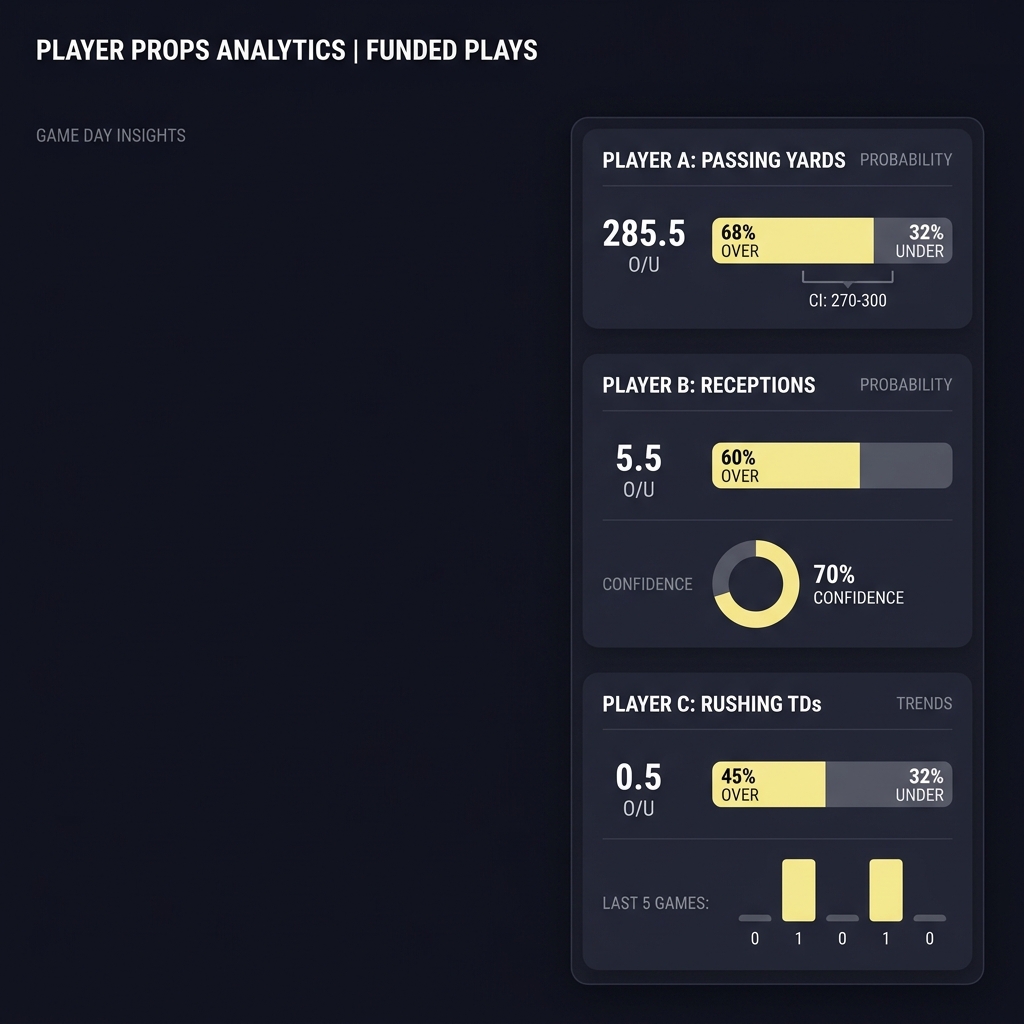
The first step is to define the narrative in concrete terms. Translate a story into one or more explicit claims that affect probability. For example, if the narrative says a running back is 'locked in' and likely to get more touches, restate that as a prior probability change for target count or yards. Record the assumptions that drive the claim, noting source quality and timing.
When assigning a prior, be conservative. Narrative claims should never override robust objective signals unless there is clear, verifiable information. Assign a small adjustment to the baseline model probability if the information is noisy or comes from social sentiment rather than direct evidence.
Step 2: convert market odds to fair probabilities and remove the vig
Convert bookmaker odds into fair probabilities by removing the margin, also known as the vig. Standard methods redistribute the implied probabilities proportionally so that the sum equals one. Practitioners commonly use established vig-removal approaches as a baseline to compare market-implied probabilities to model estimates Journal of Gambling Business and Economics article.
After vig removal, you have a market-implied probability you can compare directly against your model-adjusted probability. The difference, adjusted for transaction costs and sizing rules, is the starting point for any expected value assessment.
Step 3: combine objective signals and compute expected value
Combine your adjusted prior with objective data such as matchup splits, usage rates, and variance profiles. Weight objective signals more heavily than narrative adjustments, and document the weights so you can backtest them later. The conservative guidance here is intentional: when information is asymmetric and markets are thin, small estimation errors can produce outsized losses.
Compute expected value by comparing your adjusted probability to the vig-adjusted market probability. If the difference exceeds your minimum edge threshold after conservative sizing, you may consider a small allocation. Always record the decision inputs so you can evaluate the hypothesis over time.
Decision criteria: when narrative-based props may be worth playing
Objective signals that reduce narrative uncertainty
Not all narrative-driven props are equal. Objective criteria that increase conviction include a reliable sample of relevant historical data, low single-event variance for the outcome in question, and independent confirmation of the narrative from verifiable sources. When these conditions exist, the narrative component becomes an incremental input rather than the dominant signal.
Look for evidence such as consistent usage patterns, stable matchup effects and corroborating information from team reports or verified data feeds. These signals reduce the chance that a headline or viral post is driving price moves detached from fundamentals.
Sizing and bankroll rules for narrative-driven edges
Because mispricing risk is higher in niche markets, apply conservative sizing. Use a modest fraction of your active bankroll for any single narrative-driven prop and limit correlated exposure across bets that depend on the same story. That approach reduces volatility and the chance that a single narrative reversal produces outsized drawdowns.
A practical rule is to cap any single narrative prop at a small percentage of a strategy's active bankroll and to enforce lower limits when markets are thin or when regulatory or integrity concerns exist. See our evaluation methodology how Funded Plays evaluations work. The higher mispricing risk in niche contexts supports tighter position limits, informed by evidence that favorite-longshot distortions can be stronger in these markets Journal of Economic Surveys meta-analysis.
Common mistakes, cognitive traps and risk controls
Typical errors: story-chasing, overconfidence, correlated exposure
Story-chasing is a major cognitive trap. When a narrative becomes socially amplified, less-disciplined participants may overcommit to the story and chase short-term moves. That behavior often leads to buying into an inflated price just before the market corrects.
Social media momentum can create transient mispricing that traps bettors who accept headline claims without verification. Research into gambling-related social content documents frequent sentiment-bearing posts that can drive short-term attention flows Addictive Behaviors Reports study.
Platform and regulatory risks to monitor
Platform rules and regulatory developments are practical risks to monitor. The 2024 calls to restrict college athlete props illustrate how markets can change due to integrity and harassment concerns, and participants should check allowed markets and platform rules before placing narrative-driven wagers NCAA media release. For related reporting on state-level decisions see coverage of Missouri regulators ESPN.
Also be mindful of platform-level limits and product availability. Expansion of the U.S. market means more products and variable operator policies, so confirm the market is offered and that you understand the platform's reporting and settlement rules before committing capital American Gaming Association survey.
Worked examples and scenarios: spotting mispricing in practice
Illustrative scenarios (no proprietary data): low-liquidity player prop
Scenario one, low-liquidity player prop: imagine a niche player prop with a shallow market where a viral clip leads to a sudden inflow of attention. The market moves sharply but volume remains light, so the quoted price may overstate the true probability. In such cases, the vig-adjusted market probability can be compared to a conservatively adjusted model prior to identify potential overpricing.
Apply the vig-removal method and your conservative prior and record the gap between model and market. That gap, together with a strict sizing rule, is the basis for any experimental allocation. Use a small stake and log the outcome for later review. See Funded Plays Challenges for similar experimental setups Funded Plays Challenges page.

Illustrative scenarios: correlated market stress and social-media-driven momentum
Scenario two, correlated market stress: correlated bets magnify risk. If multiple props hinge on the same player or the same sequence of events, stacking them increases exposure to a single source of error. Manage this by limiting correlated positions and by testing how much a single event shift would affect your portfolio.
Scenario three, social-media-driven momentum: a rapid attention spike can push short-term prices away from fundamentals. Keep a log of narrative sources and treat social sentiment as a noisy signal. Where possible, wait for corroborating evidence before scaling positions, and always treat initial narrative-driven edges as hypotheses to be tested rather than facts.
Documenting each scenario in a trade log helps build a backtest dataset and refines how you treat narrative adjustments over time. As industry participation grows, market corrections can happen more quickly, which means timely documentation matters for learning American Gaming Association survey. Additional resources and examples are available on the Funded Plays blog Funded Plays blog.
Takeaways and a compact checklist for disciplined action
Three core takeaways
First, narrative-based props often behave differently from core lines because attention, thin liquidity and operator incentives can push prices away from model-consistent values. Recognize the higher structural mispricing risk and adjust expectations accordingly.
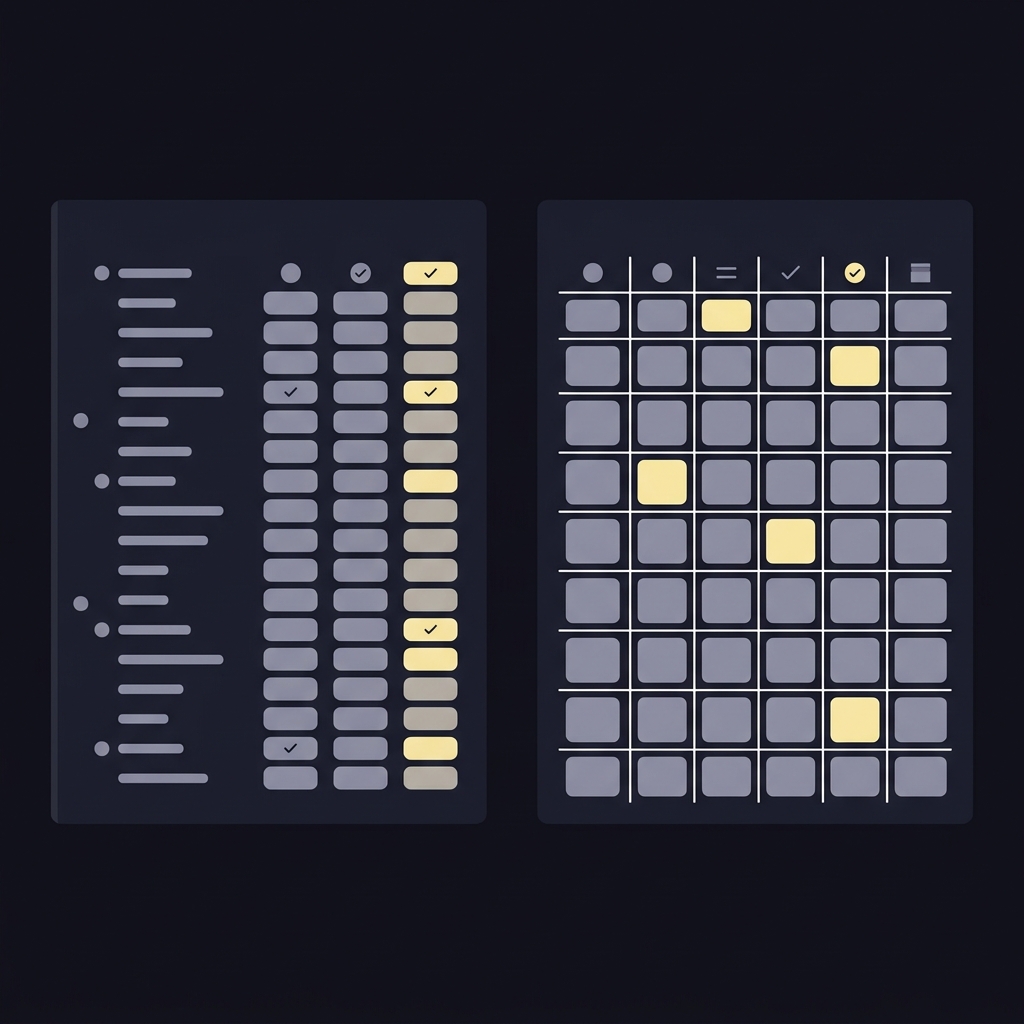
Second, a rigorous vig-removal workflow and conservative prior adjustments let you convert narrative claims into testable probability estimates. Using an established vig-removal method helps produce comparable market-implied probabilities for robust decision making Journal of Gambling Business and Economics article.
spreadsheet template to record narrative priors, market probability and sizing
Keep entries concise
Third, disciplined sizing, portfolio-level controls for correlated exposure and a habit of documenting assumptions are essential controls. Regulatory and platform risks mean you should also confirm market availability and rules before acting NCAA media release.
A 10-item quick checklist to use before placing a narrative-driven prop
1) Confirm the market is allowed on your platform and note any special rules.
2) Remove the vig and compute the market-implied probability.
3) Translate the narrative into one or more explicit priors and document sources.
4) Weight objective signals higher than narrative adjustments.
5) Check sample size and variance for the outcome; avoid single-event high-variance bets when possible.
6) Apply conservative sizing limits for single props and stricter caps for correlated exposures.
7) Set a clear hypothesis, expected value threshold and exit criteria.
8) Log each decision with timestamps and source notes for backtesting.
9) Watch for rapid social amplification and be prepared to reduce sizing if sentiment becomes dominant.
10) Review platform rules and regulatory guidance before requesting any settlement or withdrawal.
Narrative-based props depend more on event-level detail and public attention, which can produce thin liquidity and price moves driven by stories rather than robust probability signals.
Convert the implied probabilities from the odds to a normalized set that sums to one by proportionally redistributing the bookmaker margin, then compare that fair probability to your model estimate.
Avoid when sample data are thin, variance is high, social sentiment dominates without corroborating facts, or when platform or regulatory rules raise integrity concerns.
References
- https://www.ncaa.org/news/2024/3/20/media-center-ncaa-asks-states-to-ban-prop-bets-on-college-athletes.aspx
- https://www.americangaming.org/resources/state-of-the-states/
- https://academic.oup.com/ej/article/114/495/223/5079924
- https://onlinelibrary.wiley.com/doi/full/10.1111/joes.12241
- https://www.sciencedirect.com/science/article/pii/S2352853224001234
- https://www.ubplj.org/index.php/jgbe/article/view/945
- https://www.imgl.org/publications/imgl-magazine-volume-3-no-3/prop-betting-in-college-sports-predict-the-unpredictable/
- https://www.sportico.com/law/analysis/2025/ncaa-pro-sports-betting-1234873221/
- https://www.espn.com/college-sports/story/_/id/47696528/missouri-regulators-reject-ban-college-athlete-prop-bets
- https://www.fundedplays.com
- https://www.fundedplays.com/blogs
- https://www.fundedplays.com/blogs/how-fundedplays-evaluations-work
- https://www.fundedplays.com/challenges