

Quick overview: what this article will explain
Why this topic matters
What readers will learn and how to use it, - Why Historical Profit Does Not Guarantee Future Results
Past returns look impressive on spreadsheets, but they do not make a promise about tomorrow. The core idea, Why Historical Profit Does Not Guarantee Future Results, is simple: historical profit is an observation, not a guarantee, and interpreting it as a forecast requires careful validation.
This piece gives a short roadmap and practical takeaways. You will get a legal context for the standard disclaimer, a nontechnical explanation of how backtests mislead, an overview of market regime and liquidity risks, and a stepwise validation workflow you can apply to sports prediction strategies and other quantitative rules.
The article uses research and regulatory sources to support key points while avoiding technical overclaim. Expect a mix of plain language, concrete examples, and an actionable checklist you can follow before risking time or exposure.
Definition and legal context: what "past performance is not indicative of future results" means
The legal origin of the disclaimer
The phrase that past performance is not necessarily indicative of future results appears in U.S. commodities advertising rules to prevent misleading extrapolation from historical gains, and its presence signals a legal minimum for disclosure rather than a technical guarantee about outcomes 17 CFR § 4.41.
In practice the disclaimer functions two ways: it reduces the chance that marketing will present a one sided view, and it reminds readers that the data generating process can change. That warning should be read as a nudge for further analysis, not as a substitute for it.
Try structured challenge validation
The legal warning matters, but it is only the first step. Continue to the validation framework to learn concrete checks you can run before trusting historical gains.
How historical results can mislead: backtest overfitting and selection bias
What backtest overfitting is, in plain language
Backtest overfitting happens when a model or rule is tuned to noise in historical data rather than to a real, generalizable signal. When a strategy is optimized on the same dataset used to measure success, metrics such as the Sharpe ratio can be inflated and the apparent edge is often a false discovery The Probability of Backtest Overfitting. For practical backtesting guidance, see a walk-through on backtesting machine learning models How To Backtest Machine Learning Models for Time Series.
A simple analogy helps: if you test a dozen different ways to rank games and then only show the single method that worked best historically, you have not demonstrated a durable ability. You have shown a lucky alignment between your method and that particular sample.

Selection bias appears when results are reported for winners only, without showing the full population of trials. Multiple-testing bias arises when many variants are tried and only the top performers are reported. Both effects make historical profits look more robust than they are.
Inflated performance statistics are common when researchers or practitioners do not control for the number of hypotheses tried. The right corrective is transparent reporting of the full testing universe and conservative adjustments to account for multiple comparisons.
Market regime, liquidity and changing structure: why relationships break
How market cycles and liquidity affect strategy performance
Strategies that worked under one set of market conditions can weaken or fail when liquidity, policy or broad market dynamics change. Shifts in interest rates, trading volumes, and participant behavior can change the effectiveness of previously reliable relationships BIS Quarterly Review, June 2024.
Require out-of-sample evidence, run walk-forward validation, estimate execution costs conservatively, and scale gradually while monitoring live performance.
Think of a rule that profited when markets were deep and volatile; that same rule can underperform when liquidity dries up or when hedging conventions shift. The key point is that historical edges are often conditional on regime features that are not permanent.
This idea translates to sports prediction and betting pools as well. Changes to contest rules, how lines are set, or the composition of participants can alter odds and make previously effective forecasting signals less useful.
Execution costs and implementation shortfall: the gap between paper and reality
What implementation shortfall captures
Implementation shortfall measures the difference between hypothetical returns shown in a backtest and the realized returns after execution frictions are applied. Execution costs include spreads, delays, market impact, and slippage, all of which systematically reduce live performance relative to paper results The Implementation Shortfall: Paper Versus Reality.
For anyone moving from simulation to live activity, asking how orders will be executed and how long fills take is crucial. Simple backtests that assume frictionless execution typically overstate achievable net returns.
Common execution frictions that erode paper performance
Typical frictions include bid-ask spreads that widen during stressed periods, delays between decision and execution, and market impact when the act of placing a wager changes the odds. Each of these reduces the surplus available to capture, and their effects compound when turnover is high.
Measuring execution cost requires a conservative implementation model. Even basic estimates of average spread, fill rate, and latency will improve realism and help avoid overconfidence in backtested profits.
A robust validation framework: out-of-sample testing, walk-forward and time-series cross-validation
Principles of out-of-sample and walk-forward testing
Out-of-sample testing partitions data so that a strategy is developed only on one segment and evaluated on a later holdout. Walk-forward, or rolling, validation repeats that process over successive windows to approximate how a rule performs as conditions evolve. See a concise walk-forward introduction for additional context Walk-Forward Optimization: How It Works.
These methods reduce look-ahead bias and give a clearer view of persistence across time. Properly applied, they lower the chance that a strong historical result is a product of overfitting.

How to set up time-series cross-validation and sensitivity checks
Time-series cross-validation treats data as an ordered sequence and preserves temporal structure during testing. Rolling windows, expanding windows, and blocked resampling are common patterns that let you measure how stable a strategy is under shifting data slices Time series cross-validation.
Sensitivity checks include varying key parameters, testing on different subsamples, and measuring the distribution of outcomes rather than just point estimates. Track stability metrics like median performance, drawdown percentiles, and turnover across validation runs.
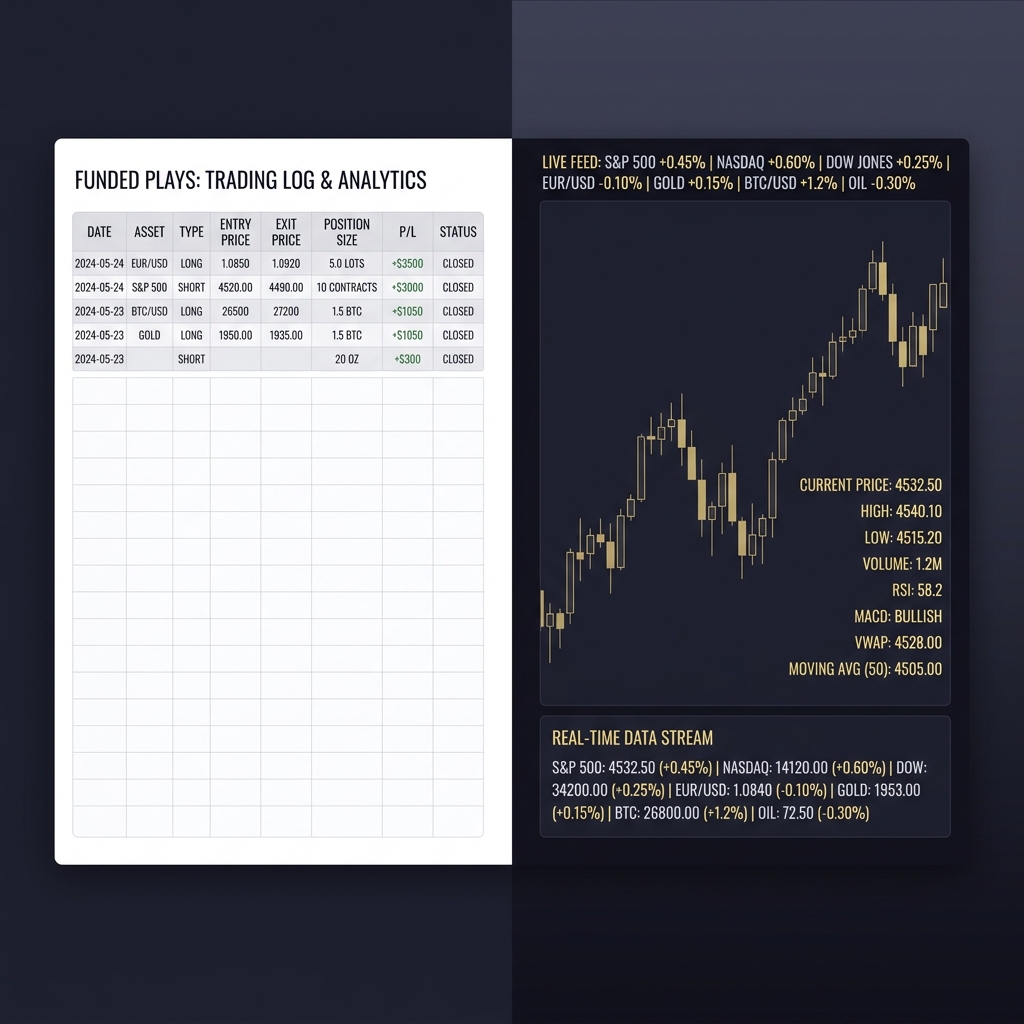
Look beyond single-number summaries. Measure how performance changes with market state, how often positions turn over, and how much execution cost would subtract from gross gains. These dimensions matter for whether historical profit can be plausibly realized live.
Finally, document the validation process and treat model selection as part of risk management. Transparent records make it easier to distinguish genuine signals from artifacts of the testing process.
Decision criteria and a practical checklist for trusting historical gains
Quantitative criteria to require before deployment
Before you scale a strategy, demand persistence across out-of-sample windows, low sensitivity to minor parameter tweaks, and reasonable turnover that keeps execution costs manageable. Also require that results replicate on multiple subsamples and market regimes so you are not depending on a single lucky interval SPIVA U.S. Persistence Scorecard.
Operational checks should verify that the implementation model is realistic and that the data used for backtesting is clean and free of look-ahead bias. Independent replication or peer review is a strong governance signal.
A compact validation checklist for moving from backtest to live
Run these before any live allocation
Qualitative checks and governance questions
Ask who documented the data pipeline, whether there were ad hoc manual adjustments, and whether anyone independently audited the backtest. Governance means limiting live exposure, documenting stop rules, and requiring revalidation when market conditions change.
Use conservative scaling: start small and require that live performance match validated expectations before increasing exposure. Treat initial live results as new data for further validation rather than as definitive proof of robustness.
Lists that highlight top historical performers are tempting but misleading. Focusing solely on winners hides the broader testing history and creates an illusion of consistent skill where there may be none.
Avoid selection-chasing: require full disclosure of the testing universe or reconstruct it with a reproducible protocol. Insist on transparency about how many variants were tried and how the winners were chosen.
Ignoring transaction and opportunity costs
Not accounting for execution costs and the opportunity cost of capital will overstate net returns. Short sample windows intensify this risk because they accentuate noise and lucky streaks.
Mitigations include extending evaluation windows, using holdout sets, and applying conservative scaling rules that reduce leverage and frequency until live stability is proven.

Practical examples and scenarios: applying the framework (including platform context)
Scenario A: a strategy that failed after a regime shift
Imagine a predictive rule that historically profited by exploiting a pricing inefficiency when market liquidity was high and participant behavior was predictable. After a tightening cycle and shifts in participation, the inefficiency disappears and the rule underperforms. This kind of regime-dependent failure is exactly why historical profit cannot be read as a promise.
When you see rapid decay in performance after a policy or liquidity change, trace the signal to its underlying assumptions. If those assumptions no longer hold, the historical profit stops being informative for forward-looking decisions.
Scenario B: a backtest that survived robust validation
Contrast that with a rule that was developed on one period, validated with a walk-forward routine across multiple holdouts, stress-tested on different subsamples, and whose performance remained reasonably stable after execution cost adjustments. While nothing is certain, the cumulative evidence in this case gives cautious confidence that the historical edge may persist.
Even so, scale conservatively and continue to monitor. Robust validation lowers the chance of surprise, but it does not eliminate model risk or regime risk.
How a funded challenge platform frames evaluation
Structured environments that use simulated or funded challenge accounts can help expose selection bias and execution assumptions by running rules in a controlled setting. These platforms let participants demonstrate consistency across defined objectives without implying guaranteed earnings. Learn more on the Funded Plays homepage Funded Plays.
For example, a funded sports prediction challenge can provide performance targets, transparent rules, and simulated bankrolls that reveal whether a method achieves repeatable results in practice. Such frameworks are useful as part of a broader validation process, though they do not remove the need for careful statistical testing. See our blog overview Funded Plays Blog and an explanation of how Funded Plays evaluations work how Funded Plays evaluations work.
Conclusion: practical next steps and disciplined habits
Three immediate actions readers can take
First, require credible out-of-sample evidence before trusting historical profit. Second, model execution costs and be conservative about turnover. Third, run sensitivity tests and document the process.
Remember the legal warning: a past profit is an observation that needs further scrutiny to be a useful guide. Robust testing reduces the probability of failure, but does not eliminate it entirely Time series cross-validation.
Adopt disciplined habits: keep transparent records, insist on independent review, and use conservative scaling when moving from simulation to live exposure.
It signals that historical returns are not a guaranteed indicator of future outcomes and that additional validation is needed before relying on past results.
Use out-of-sample testing, walk-forward validation, and sensitivity checks, and disclose the full set of variants tested to avoid selection bias.
A strategy that does well in a structured challenge provides useful evidence, but you should still require independent validation, execution cost estimates, and cautious scaling before treating results as reliable.
References
- https://www.ecfr.gov/current/title-17/chapter-I/part-4/section-4.41
- https://papers.ssrn.com/sol3/papers.cfm?abstract_id=2326253
- https://www.machinelearningmastery.com/backtest-machine-learning-models-time-series-forecasting/
- https://www.bis.org/publ/qtrpdf/r_qt2406.htm
- https://jpm.pm-research.com/content/14/3/4
- https://blog.quantinsti.com/walk-forward-optimization-introduction/
- https://otexts.com/fpp3/tscv.html
- https://www.fundedplays.com/challenges
- https://www.spglobal.com/spdji/en/research-insights/spiva/us-persistence-scorecard-year-end-2023/
- https://www.fundedplays.com
- https://www.fundedplays.com/blogs
- https://www.fundedplays.com/blogs/how-fundedplays-evaluations-work
- https://papers.ssrn.com/sol3/Delivery.cfm/SSRN_ID4686376_code4361537.pdf?abstractid=4686376&mirid=1