
Why Garbage Time Matters for NBA Spreads: quick overview
Why Garbage Time Matters for NBA Spreads because late, low-leverage minutes can skew point margins and inflate box-score rates in ways that mislead spread and total models. Modelers commonly treat these moments as low-leverage minutes that should be excluded or down-weighted to avoid introducing noise into team ratings and per-minute statistics, an approach grounded in win-probability thinking and analytics practice Introducing NBA Win Probability
The practical cost is simple: unfiltered late-game scoring can push team margins and on-off metrics away from the underlying competitive balance, producing higher variance in rating outputs and unstable spread projections.
Late, low-leverage minutes tend to inflate margins and per-minute rates while having little effect on win probability; this creates noisy inputs for ratings and spread models, so modelers often exclude or down-weight those minutes to improve stability.
This article summarizes why modelers call these minutes garbage time NBA, how to detect them with a win-probability lens, and what filters or weights to apply in production models.
What readers will learn
Expect clear definitions, a short diagnostics checklist, and three implementable options: hard filters, percentile cutoffs, and continuous leverage weights tied to win-probability curves. The guidance focuses on stabilizing spread and total projections rather than promise of guaranteed gains.
How this fits into model and betting workflows
Handling garbage time sits between data cleaning and feature engineering: decisions you make here change the inputs for ratings, on-off metrics, and live in-play models. Treat this step as part of model instrumentation and validation rather than an afterthought.
Defining garbage time versus clutch and why the distinction matters
Modelers define garbage time as late-game minutes in decided contests where win probability has saturated and additional possessions have minimal effect on the final outcome. These minutes often feature bench lineups, altered pace, and strategic behavior that produce box-score noise rather than meaningful competitive signals.
By contrast, the NBA's official clutch definition captures high-leverage minutes: the last five minutes with the score within five points, a window that typically requires specific model treatment because possessions materially affect win probability Clutch performance: 2023-24 season by the numbers
For modelers this means two different operational rules: treat clutch minutes as high-leverage inputs to emphasize, while treat garbage time minutes as candidates for exclusion or down-weighting to reduce variance.
- Garbage time: late, decided-game minutes where win probability is near-saturation, low leverage on final outcome.
- Clutch: last five minutes with score within five, high-leverage and should be modeled distinctly.
- Practical tag: use win-probability and margin thresholds to label minutes in datasets.
How win-probability shows low leverage and why modelers down-weight late minutes
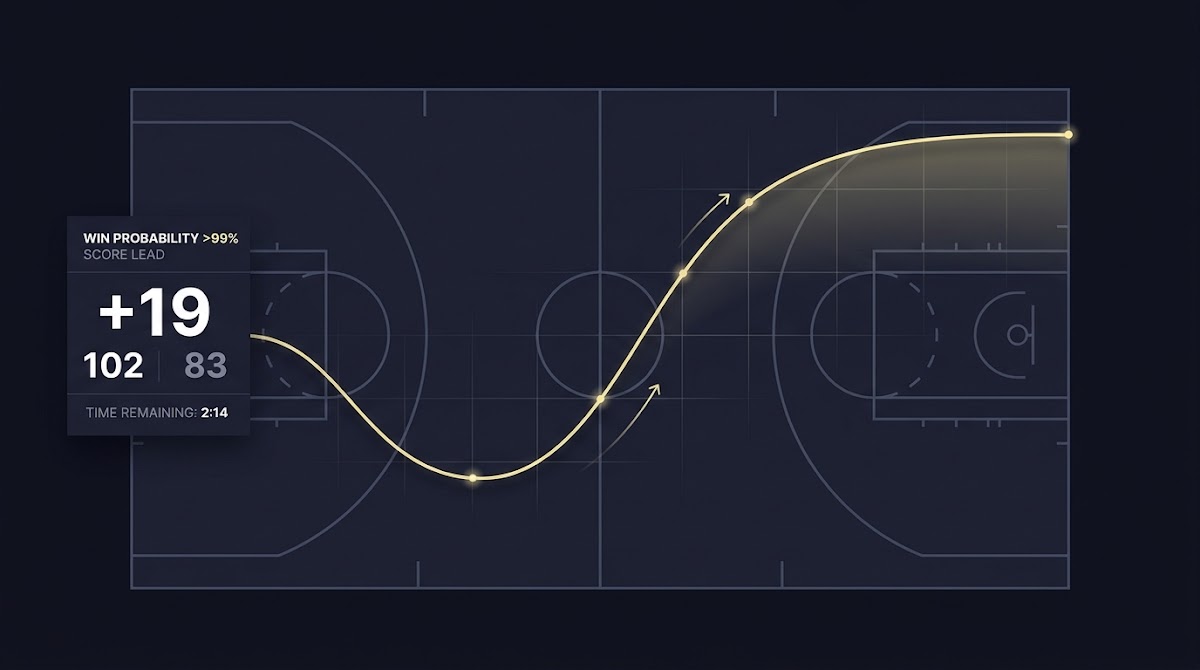
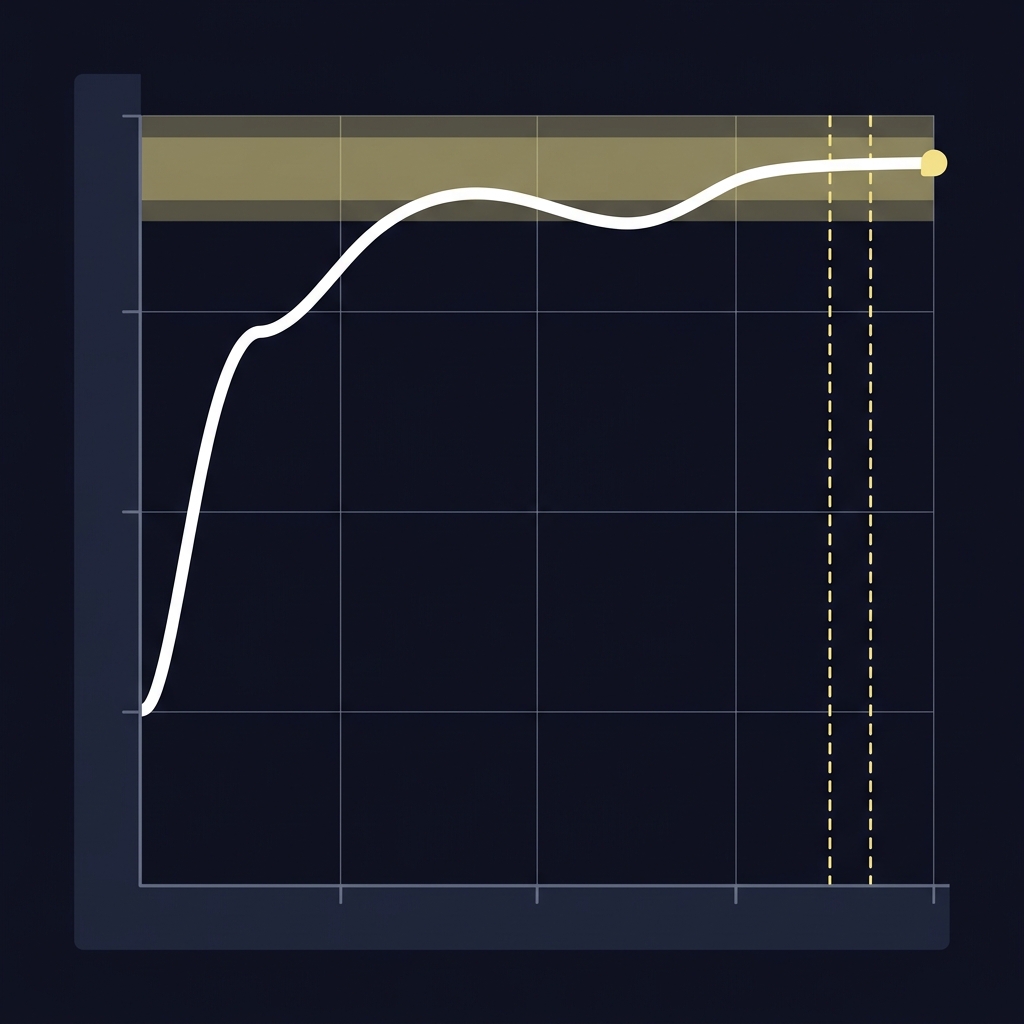
A win-probability curve typically flattens near the end of a lopsided game, making additional scoring events have little effect on the probability of the eventual winner. That visible saturation is why many practitioners use win-probability to decide whether a possession should carry full weight in a ratings calculation Introducing NBA Win Probability
When you include those flattened minutes unchanged, per-minute and on-off metrics can be inflated by bench scoring and by altered substitution patterns, destabilizing team ratings over time. Analytics teams that document a garbage-time treatment report more stable year-to-year ratings after applying filters or leverage weighting Dunks And Threes methodology
In practice, a simple chart showing win-probability versus minutes remaining for a set of decided games makes the effect obvious: near the end the curve clusters at very high or very low win probabilities, and per-possession changes have minimal impact on expected outcome while still altering raw margins.
Estimate a per-minute leverage proxy from win-probability swings
Use as a simple leverage check for late minutes
How garbage time affects live betting and in-play spreads
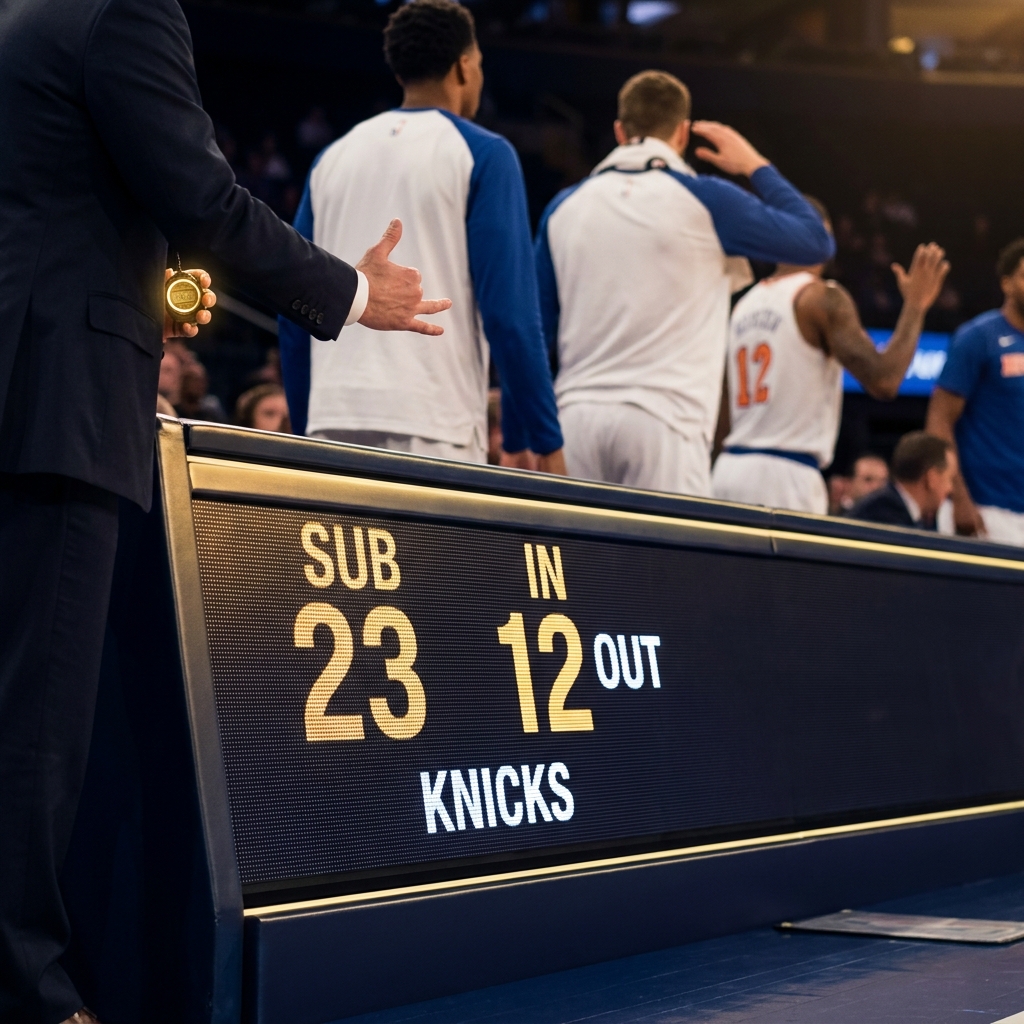
Live markets price rotation changes, foul trouble, and pace shifts. Even when the win probability is nearly certain, bench-heavy minutes and sudden fouls can change scoring rate or expose different matchups, which in turn moves live spreads and totals quickly NBA live betting strategy: in-play dynamics
For live-betting modelers the core implication is that a low win-probability does not guarantee flat prices. Market makers and in-play models react to short-term pace and personnel changes, so a decided game can still present profitable edges if you correctly anticipate rotation-driven tempo changes or strategic foul behavior.
Short actionable checklist for live reads:
- Watch substitution patterns for bench defensive/ offensive mismatches.
- Monitor foul counts and immediate lineup responses after fouls.
- Track possession-level pace shifts for a few possessions before placing a live spread or total wager.
Backdoor covers and the bench-closing phenomenon
A backdoor cover happens when a trailing team scores late in a decided game and beats the spread while still losing the match. This pattern often emerges from bench-heavy closing stretches where late points alter margins without changing the outcome, creating moralities for spread modelers to address The Art of the Backdoor Cover
Industry analyses and educational pieces document how these covers arise and why they matter to margin-based models. Recognizing the backdoor dynamic helps prevent a model from treating late margin changes as predictive signals for future close-game outcomes What is a Backdoor Cover? Definition & examples

As a practical aside, skill-focused prediction challenge platforms let users test filters and live strategies with virtual accounts and clear rules that emphasize disciplined forecasting rather than wagering.
Practical framework: filtering and leverage-weighting for spread models
There are three common options modelers use when handling garbage time NBA minutes: a binary filter that excludes flagged minutes, a percentile-time cutoff that removes the most extreme late segments, and continuous leverage weights that scale each possession by its marginal impact on win probability. Each approach has trade-offs between bias, variance, and sample size.
Binary filters are simple to implement: mark minutes where win probability is above a threshold (for example, 95 percent) and exclude them. This reduces noise quickly but can remove useful information in rare strategic cases. Many teams prefer a soft approach that preserves minutes but down-weights them according to a leverage function derived from win-probability deltas Introducing NBA Win Probability
Percentile cutoffs are useful when you lack a calibrated win-probability model. For example, remove the top X percent of minutes by absolute margin or by minutes played in decided games. Continuous weighting using a simple function of win-probability delta avoids hard exclusions and maintains transparency; a common choice is a logistic or piecewise linear mapping from probability distance to weight.
Short pseudo-code for a continuous approach:
# compute WP_distance = abs(0.5 - win_probability)
# weight = max_weight * (1 - WP_distance/threshold) clipped to [min_weight, max_weight]
# use weight to scale per-minute box-score contributions
Validation checks after applying any method should include changes in rating variance, RMS error against a holdout set, and the number of games affected. Log the proportion of minutes removed or down-weighted so you can monitor data drift across seasons Dunks And Threes methodology
Decision criteria: when to exclude, down-weight, or keep late minutes
Set reproducible rules for automated pipelines: specify win-probability thresholds, margin cutoffs, and minimum sample safeguards. Make decisions deterministic and version-controlled so model changes are auditable.

Suggested business rules:
- Exclude minutes where win probability > 0.95 and minutes remaining < 5.
- Down-weight minutes where win probability between 0.80 and 0.95 using a linear taper.
- Use percentile cutoffs for seasons with incomplete probability data.
Test the garbage-time checklist in a controlled challenge
Try the checklist on a small sample season and compare rating variance before and after applying the rules.
Override signals that should keep minutes despite low leverage: sudden rotation changes where starters return, significant injuries that change matchup balance, or strategic late fouling that alters expected possessions. Log override occurrences and re-run validations to measure their effect on predictive accuracy Dunks And Threes methodology
Instrument pipelines to report how often rules trigger and how they affect key metrics. That discipline prevents silent model drift caused by silent changes in late-game coaching behavior or substitution patterns.
Common mistakes and modeling pitfalls to avoid
A frequent error is bluntly removing all bench minutes, which removes legitimate data from games that are competitive in different leverage windows. Instead, use win-probability checks or rotation-aware filters to decide which bench minutes to treat as garbage time The Art of the Backdoor Cover
Another pitfall is confusing clutch and garbage contexts. Clutch windows are defined by narrow score margins and late time and should not be treated as garbage; mixing them up introduces bias and reduces model sensitivity to actual high-leverage moments Clutch performance: 2023-24 season by the numbers
Finally, avoid overfitting to rare late-margin events by checking out-of-sample performance and by limiting the degrees of freedom in your leverage-weighting function. Cross-validation and clear logging of rule impacts are practical defenses.
Practical examples and short case studies
Worked example: take a season slice and apply a binary win-probability filter excluding minutes where WP > 0.95 with fewer than five minutes remaining. Measure rating variance before and after, and track RMS error against a holdout of close games. Many practitioners report reduced year-to-year volatility after this change Introducing NBA Win Probability
Live-betting scenario: imagine a 20-point game with starters rested and a string of fouls that forces a restart of pace and substitutions. Even with near-certain win probability, the market can move on expected scoring rate and matchup changes; reacting to rotation patterns and immediate pace shifts is often more profitable than treating the game as inert NBA live betting strategy: in-play dynamics
Metrics to track in these examples include rating variance, the share of minutes filtered, RMS error against an unfiltered baseline, and frequency of backdoor covers in the validation set.
Conclusion: applying these rules in modern 2026 workflows
Treat garbage-time filtering and leverage-weighting as part of your model's core data hygiene steps. Properly implemented, these rules stabilize spread and total projections by reducing noisy late-minute margin effects without discarding important competitive information.
Quick checklist for deployment: define the rule set, implement the filter or weight, validate on a holdout, instrument triggers and overrides, and monitor metric drift. Remember that historical filtering is a tool for cleaner inputs, not a guarantee of future returns.
Garbage time is typically late-game minutes in decided contests where win probability has saturated and additional possessions have minimal effect on the final outcome; modelers use win-probability or margin thresholds to label these minutes.
Not always; removing or down-weighting garbage time generally reduces variance but can introduce bias if overrides and validations are not in place, so test changes on holdout data before deploying.
Live bettors should monitor rotation patterns, fouls, and immediate pace changes because bench-heavy minutes can still move live spreads and totals despite low win-probability leverage.
References
- http://www.inpredictable.com/2015/12/introducing-nba-win-probability.html
- https://www.nba.com/news/clutch-performance-2023-24
- https://dunksandthrees.com/about#methodology
- https://www.pinnacle.com/en/betting-resources/basketball/nba-live-betting-strategy
- https://www.theringer.com/2016/10/27/16077604/the-art-of-the-backdoor-cover
- https://www.actionnetwork.com/education/backdoor-cover
- https://www.fundedplays.com/challenges
- https://hoopsjunkie.io/methodology/garbage-time
- https://www.cannonstats.com/p/introducing-garbage-time
- https://aws.amazon.com/blogs/media/how-the-nba-and-aws-built-an-ai-system-to-measure-what-actually-wins-basketball-games/
- https://www.fundedplays.com
- https://www.fundedplays.com/blogs
- https://www.fundedplays.com/blogs/how-fundedplays-evaluations-work