
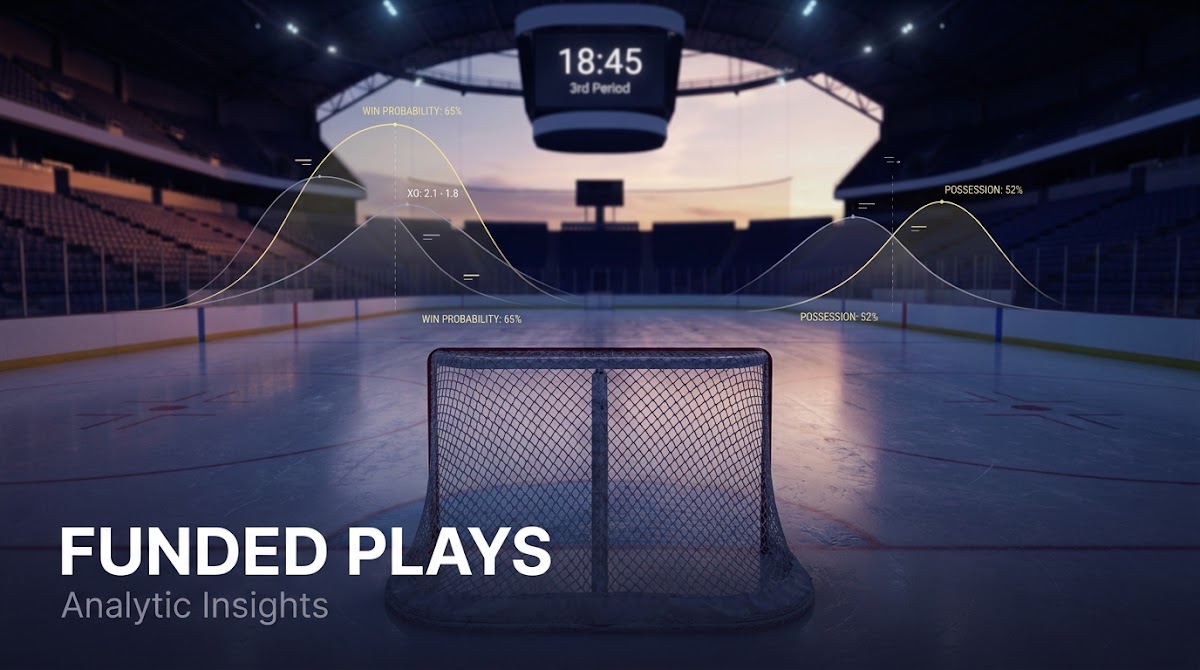
Why Empty-Net Goals Matter for Puck Lines: Definition and context
Why Empty-Net Goals Matter for Puck Lines starts with a simple rule: under the NHL 2024-25 rule set, a team may legally replace its goalkeeper with an extra attacker at any time, and any goal that follows counts the same as a standard goal in the final score.
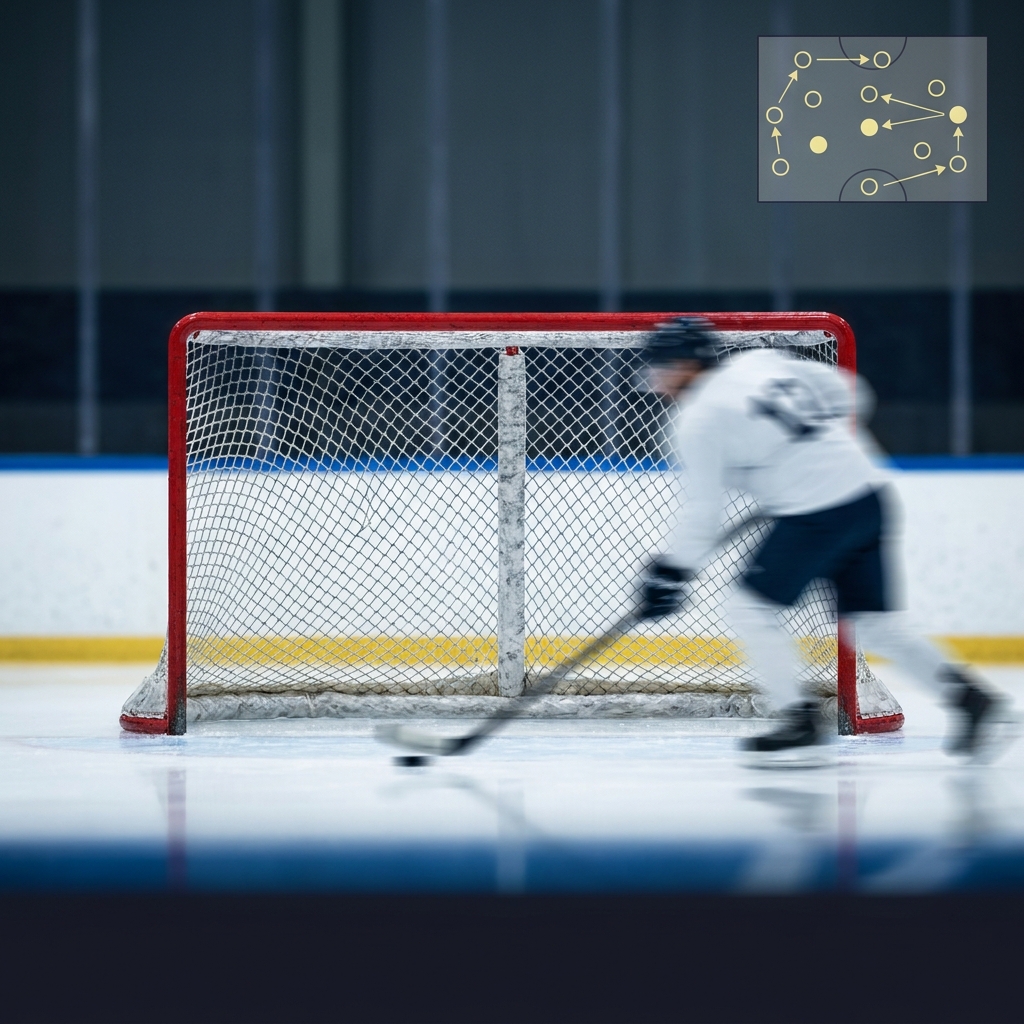
In box scores and player statistics, empty-net goals are tracked like other goals and are commonly shown in the ENG column of skater stat tables, which makes them visible when you check season totals and late-game scoring patterns, a detail that matters when evaluating puck-line outcomes in close matches NHL Official Rules, see NHL Stats.
For puck-line thinking, the key practical point is how a single empty-net goal can change the result for a -1.5 puck line. A one-goal game that ends with an ENG can move the match from a one-goal margin into a two-goal final, which turns many potential covers into pushes or losses for the -1.5 side. This mechanical effect is what makes ENGs disproportionally important for puck-line strategies.
Because ENGs are recorded in standard scoring columns, you can combine game logs and season ENG counts to see which teams and players regularly figure in late open-net scoring, and then use that as a check when you evaluate a -1.5 line late in the week or live in-play 2024-25 skater stats with the ENG column.

Why Empty-Net Goals Matter for Puck Lines: Rules and common late-game pulls
The legal mechanism for ENGs is straightforward: a coach replaces the goalie with an extra skater and any subsequent scoring into the vacant net counts normally under NHL rules, which means coach decisions about pulling the goalie directly create ENG situations NHL Official Rules.
Coaches commonly pull the goalie when trailing late in a game to increase scoring opportunities, and academic optimization research shows a clear trade-off: pulling earlier can improve the probability of tying or winning, but it raises the chance of conceding an ENG that increases the final margin and harms puck-line covers in the other direction Pulling the Goalie: Hockey and Investment Implications.
Optimization work also makes an important conceptual point, which is that the optimal pull timing depends on two joint inputs, the size of the deficit and the remaining clock time. As the deficit grows, the model suggests earlier pulls are rational, which mechanically produces more time after the pull and therefore a higher ENG risk for the trailing team A method for optimizing when to pull the goalie.
The practical upshot is simple: adjustments to puck-line expectations should start from a coach decision model, not from an assumption that pulls always follow the same pattern. Teams differ in their willingness to pull and in the typical timing, and those differences matter for ENG exposure.
Quick checklist for pull-window inputs
If you want a ready example, view or download an editable checklist that lists pull-window inputs and opponent 6-on-5 rates to use for quick pregame and live checks.
How empty-net goals change puck-line math
Empty-net goals act like a multiplier on final margins because they add a late scoring event that is not tied to typical even-strength scoring patterns; when a trailing team pulls, the added attacker raises scoring probability but also increases the chance the opponent scores into an unguarded net, which moves a one-goal game to a two-goal game and directly affects puck-line outcomes A method for optimizing when to pull the goalie.
Put another way, ENGs inflate the observed frequency of two-goal final margins relative to what even-strength play would suggest, and that inflation is precisely why -1.5 puck lines are more sensitive to late-game dynamics than moneylines or totals. The longer the clock runs after a pull, the larger the window for an opponent ENG and the bigger the margin effect Pulling the Goalie: Hockey and Investment Implications.
Player-level ENG totals from the 2024-25 season show that empty-net scoring is a persistent component of season tallies, meaning ENGs are not one-off flukes but a recurring share of offense late in games; treating them as a routine contributor to late scoring lets you plan adjustments rather than react to surprises 2024-25 skater stats with the ENG column.
For a quick numeric illustration, consider a hypothetical close game where a single ENG changes the ending margin by one goal. That single event can flip a puck-line cover to a push or loss, especially when the betting line sits at -1.5, which is why even modest ENG probabilities should be folded into your puck-line probability model before you stake sizeable exposure.
Using team 6-on-5 rates to adjust puck-line expectations
Team 6-on-5 splits from the 2024-25 season vary materially, and that variation gives a practical lever: teams that generate more 6-on-5 goals or concede fewer are either more likely to score an ENG when they pull or less likely to concede one when defending a pulled opponent, which changes the expected shift in final margins Team 6-on-5 results, 2024-25. For complementary team-level context see Moneypuck team stats.
Before you run an adjustment, collect three core inputs for the matchup: the opponent 6-on-5 goals for and goals against rates, a plausible pull window and the probability the trailing coach will pull in that game state, and a reasonable ENG conversion rate to map a pull into a finishing goal. These inputs are the minimal data you need to convert team-specific behavior into a puck-line shift.
Empty-net goals increase the probability of two-goal final margins by adding late scoring that is tied to goalie pulls; that shift moves probability mass away from one-goal finishes and materially affects -1.5 puck-line outcomes.
With those inputs in hand, use a short checklist to run a quick adjustment: first, estimate the baseline puck-line probabilities from your preferred source; second, calculate the expected additional probability mass that will move from a one-goal outcome to a two-goal outcome based on the opponent 6-on-5 scoring rate and the likely pull window; third, reduce the baseline cover probability by that mass and treat the result as a range rather than a point estimate. Natural Stat Trick team splits provide the situational rates you need to start this calculation Team 6-on-5 results, 2024-25.
Keep the adjustment conservative. Team 6v5 numbers are useful, but their practical effect depends on coach tendencies and live-game signals, so use the adjusted probability to inform smaller position sizes or to decide when to avoid large pregame stakes on a -1.5 line.
Player-level ENG patterns and what to watch
Player ENG totals from 2024-25 confirm that empty-net goals are a regular part of scoring, and those totals are helpful when you perform matchup-level checks in a few minutes before lock or in live play 2024-25 skater stats with the ENG column. For team-level empty net performance see empty net performance stats.
Practical filters include watching which power-play units still see ice time late, which depth forwards are used to finish games, and which skaters are habitual finishers who get shifts on an empty net. Those tendencies are often visible in line deployment minutes and can be used as a secondary check that increases or decreases your ENG adjustment.
Remember that player ENG tendencies are supportive evidence, not deterministic forecasts. A player who scored multiple ENGs in 2024-25 may still be irrelevant if he is healthy scratched or if the coach changes end-of-game deployment, so treat player-level patterns as a filter that tilts your probability estimate modestly rather than as a decisive input.
A simple 2026-friendly adjustment model to include ENG risk
Minimal inputs for a practical model are straightforward: a baseline puck-line probability, the opponent 6-on-5 goals for and goals against rates, an estimated pull probability for the trailing team, an estimated pull window, and an ENG conversion rate that maps the pull window into a finishing goal probability. These inputs let you move probability mass from one-goal outcomes into two-goal outcomes in a transparent way.
Quick spreadsheet formula to shift one-goal to two-goal probability when ENG risk present
Use conservative ranges and update in season
To apply the model, use these numbered steps: first, set a baseline cover probability for the -1.5 line from your usual source; second, estimate Pull probability based on game state and coach tendencies; third, pick an ENG conversion rate that reflects how many pulls turn into a conceded or scored ENG given the pull window; fourth, calculate the probability mass that shifts from a one-goal finish to a two-goal finish using the worksheet formula; fifth, adjust the baseline cover probability down by that mass to get a revised cover probability and then check sensitivity across a plausible range of pull probabilities and ENG conversion rates A method for optimizing when to pull the goalie. For an example of how we evaluate methodologies see how Funded Plays evaluations work.
The worked example can live in a two-column spreadsheet where one column holds conservative inputs and the other holds aggressive inputs, producing a small range of adjusted cover probabilities that you can compare to available market prices before you decide to stake. Treat the output as an evidence-informed estimate, not a guarantee.
Common mistakes, limitations, and when not to adjust
Common errors include overfitting to tiny 6-on-5 samples and assuming every team will pull identically; small sample counts of 6-on-5 events can create noisy rate estimates that lead to poor adjustments if you treat them as precise Team 6-on-5 results, 2024-25.
Another frequent mistake is ignoring coach-specific heuristics. Public season stats rarely capture a coach's specific threshold for pulling the goalie, so if you have limited or conflicting data on that coach, it is safer to use wider ranges or to avoid a large adjustment entirely rather than to overcommit to a single number based on a short sample Pulling the Goalie: Hockey and Investment Implications.
Finally, be cautious when a single-game ENG event drives your impression of a team. One late empty-net goal is not enough reason to change long-run views on a team; instead, look for consistent in-season patterns and update gradually as more data accumulates A method for optimizing when to pull the goalie.
Conclusion: How to use ENG-aware puck-line thinking responsibly
ENG-aware puck-line thinking brings together the rulebook fact that pulls can occur at any time, the recurring presence of ENGs in season scoring, and optimization insights that tie pull timing to deficit and clock time. Folding these points into a simple adjustment model helps refine probability estimates for -1.5 and +1.5 lines without promising outcomes 2024-25 skater stats with the ENG column. See Funded Plays for more resources.

For ongoing monitoring, update opponent 6-on-5 splits early in the season and track coach behavior patterns; treat adjustments as probabilistic ranges that inform stake sizing and avoid large moves based on a few events. Responsible, evidence-based updates will keep you aligned with the underlying uncertainty rather than overconfident in a small sample. See our blog for related posts.
ENG risk increases with the amount of clock time remaining after a pull; longer windows raise the chance an opponent scores into an empty net, so both deficit size and remaining time matter.
No. Team 6-on-5 rates provide useful situational context but do not capture coach-specific pull heuristics or in-game tactical shifts, so treat them as part of a wider evidence set.
Not always. Apply adjustments when team and coach data support a meaningful ENG probability increase, otherwise keep stakes small or skip large pregame bets.
References
- https://www.nhl.com/info/official-rules
- https://www.nhl.com/stats
- https://www.hockey-reference.com/leagues/NHL_2025_skaters.html
- https://papers.ssrn.com/sol3/papers.cfm?abstract_id=2357820
- https://arxiv.org/abs/1503.01538
- https://www.naturalstattrick.com/teamtable.php?fromseason=20242025&thruseason=20242025&sit=6v5&score=all
- https://www.fundedplays.com/challenges
- https://morehockeystats.com/teams/en
- https://moneypuck.com/teams.htm
- https://www.fundedplays.com
- https://www.fundedplays.com/blogs
- https://www.fundedplays.com/blogs/how-fundedplays-evaluations-work