
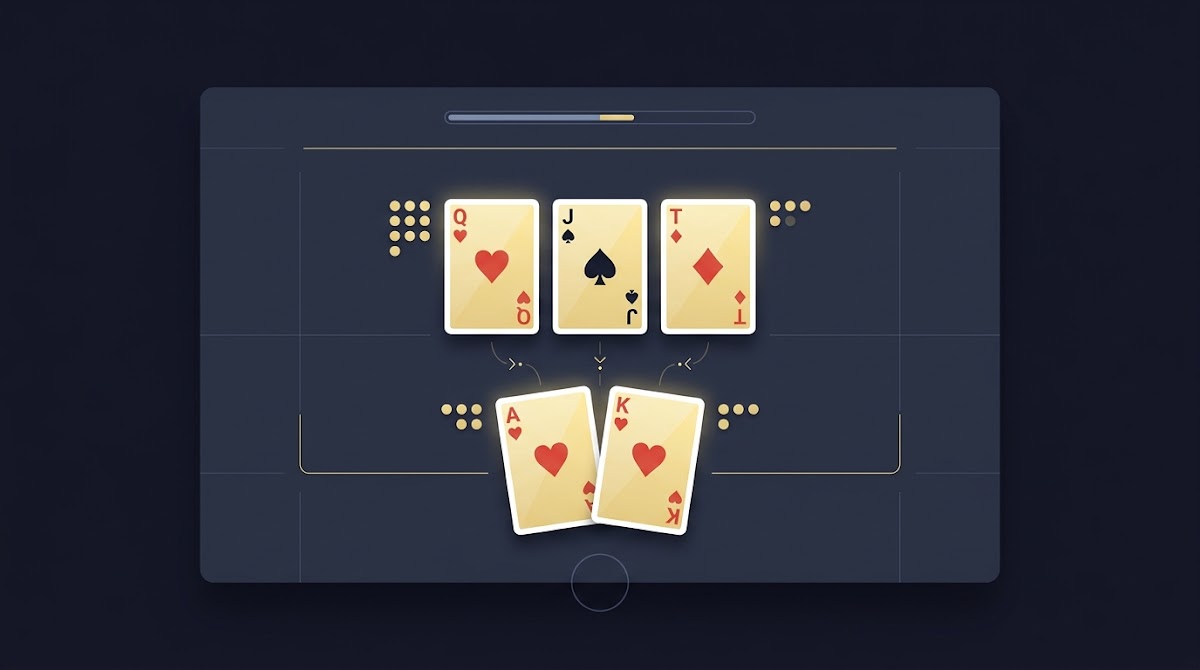
Why Draw Probability Matters
What we mean by draw probability
At a crowded table the moment you see a flush or straight draw you face the same question every pro and student asks: is this worth continuing? In practical terms, draw probability is the chance a hand improves on later streets based on the number of outs and the unseen cards. That simple idea is the backbone of equity based decision making in poker, and learning to estimate it quickly changes many marginal calls into correct ones.
Players rely on quick estimates because live and online play move fast and perfect combinatorics are not always necessary to make a sound choice. Quick approximations let you compare your chance to hit versus the price to continue, which is the same principle modern training resources use when explaining in hand equity assessments 888poker Magazine. For more reading on training and drills see the Funded Plays blog.
How draw probability affects real decisions at the table
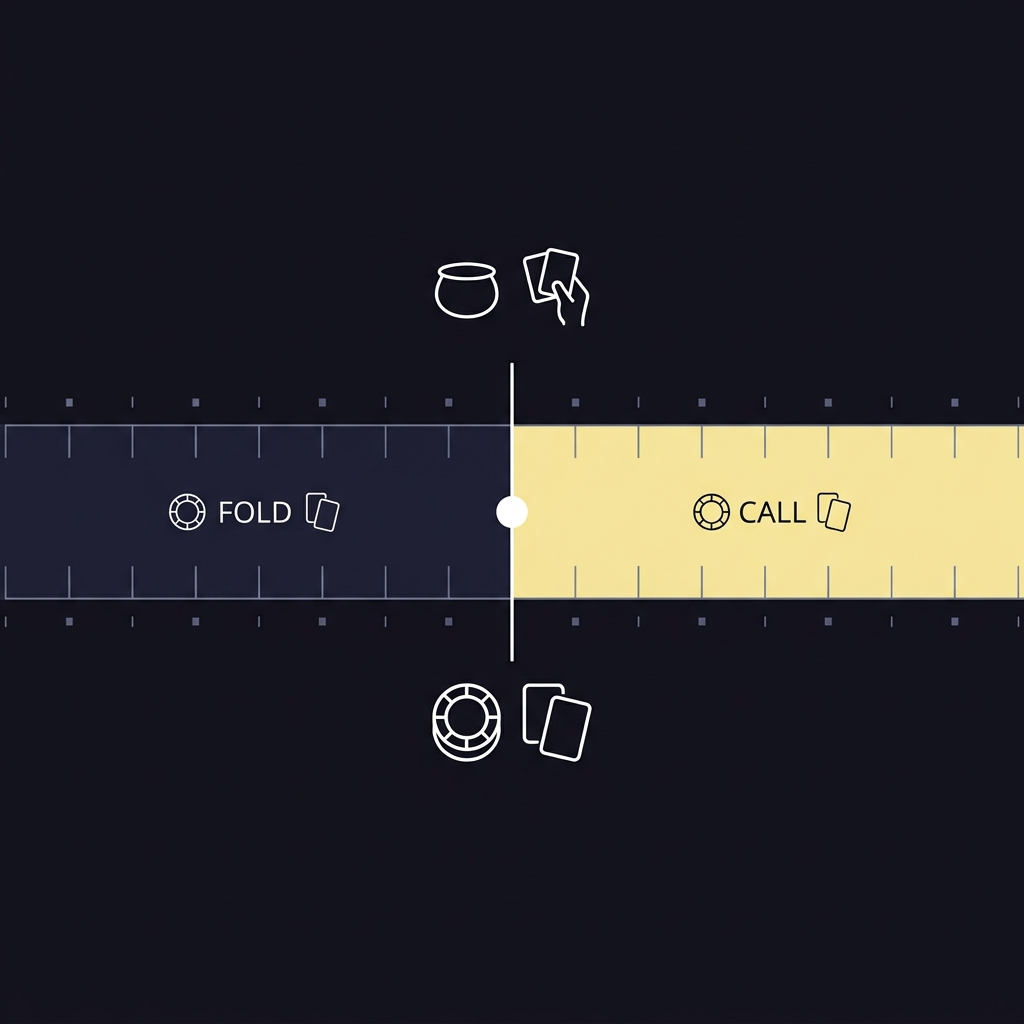
When you know roughly how often your draw completes, you can translate that probability into expected value by comparing it to the pot price. That comparison determines whether a call, fold or semi-bluff is justified, and it applies across cash games and tournaments as a core decision framework.
quick outs to equity conversion for practice
Use as a quick check not a replacement for range thinking
How Outs, Equity and Basic Probabilities Work
Counting outs
An out is any unseen card that makes your hand better on a later street. For example a nine card flush draw on the flop means nine remaining cards complete your suit by the river, and an open ended straight draw usually has eight outs that make the straight by the river. Those are the common, easy to identify cases that beginners use to start counting equity Wizard of Odds.
Counting outs is straightforward for single opponent spots, but you must be careful not to include cards that give opponents a better hand or that are blocked by cards you and the board already show. Treat the raw out count as a starting point and refine it when you suspect dominated or dirty outs.
Translating outs to equity: exact vs approximate methods

Exact probabilities come from combinatorics and standard tables that tell you how often a given set of outs will hit across the remaining streets. Those tables remain useful reference material in training and analysis because they give precise river and turn hitting rates for common draw counts Wizard of Odds.
In play, many players use faster, approximate conversions that are close to exact values for typical draw sizes. The trade off is speed for perfect precision; approximations are usually accurate enough for most decisions, while exact counts are preferable when the price or stacks make a single percent of equity decisive.
The Rule of 2 and 4: Fast Estimates and Their Limits
How the Rule works on flop and turn
The Rule of 2 and 4 is a simple mental shortcut: multiply outs by 4 on the flop when two cards remain, or by 2 on the turn when one card remains. It gives a fast estimate of draw equity without needing charts or a calculator, and it is commonly taught in modern strategy resources because of its practical accuracy 888poker Magazine.
Try this: on a flop with a nine out flush draw the Rule of 4 gives about 36 percent to make the flush by the river, which tracks closely with exact tables. That proximity to real probabilities explains why the shortcut remains so widely used.

When the Rule is accurate and when it is not
The Rule performs well for common mid sized draws but it has limits. Small numbers of outs and situations with overlapping outs across multiple streets can push the approximation away from exact values. For spot checks it is reliable, but when pot sizes, stack depths or tournament considerations hinge on a couple of percentage points you should switch to exact counting or a reference table Upswing Poker.
Using Pot Odds to Turn Probability into Action
Calculating break-even equity
To decide whether to call you need the break even equity, which equals the call amount divided by the pot plus the call amount. That fraction tells you the minimum share of the time your draw must complete for a call to be profitable given just the current pot and call size. Thinking in these terms converts raw draw probability into a direct comparison with price, and it is a core step in equity based decisions PokerStars Learn. For another guide to calculating pot odds and equity see Calculate Pot Odds and Equity.
For example, when the call is small compared to the pot the break even equity is lower, so weaker draws become playable. Conversely, a large call requires a higher hit probability to justify continuing. This simple check is why pot odds and draw probability are discussed together in nearly every introductory and intermediate resource.
Call, fold or semi-bluff decisions
After you compare estimated equity to the pot price, decide among folding, calling for the price, or betting as a semi-bluff. Semi-bluffs combine immediate fold equity with future potential to make the best hand; when you have reasonable draw probability and the chance your opponent folds, betting can be more profitable than calling.
Use draw probability to set a baseline and then fold in fold equity and opponent tendencies. In many cases a semi-bluff is justified when your combined chance to win by fold or by hitting exceeds the cost of betting, but estimating fold equity is often qualitative rather than an exact calculation PokerStars Learn.
Counting Outs Correctly: Blockers, Dirty Outs and Combinatorics
Avoiding double-counting
Not every card that could complete a made hand counts cleanly as an out. Some outs are dirty because they also help an opponent, and other combinations double count the same concrete card when considered across multiple routes to the same made hand. Using basic combinatorics helps you avoid those errors and keeps your equity estimates grounded in real counts Red Chip Poker.
Range thinking rather than single hand thinking also changes how you count outs. Against a single specific opponent holding a narrow range, some of your outs may be blocked or smaller in effect. Against multiple players with wider ranges, your outs may be effectively cleaner or dirtier depending on shared suit and rank coverage.
Blockers and dirty or dominated outs
Blockers are cards in your hand or on the board that reduce the number of unseen cards that complete a rival hand. A common example is holding a card of the same suit as part of a flush draw that also denies your opponent certain flush combinations. Discounting outs when blockers make them less likely is a conservative and often correct adjustment in practice Upswing Poker.

Practicing counting outs against ranges in a simulated environment helps develop good habits before applying them for real money. FundedPlays offers structured challenge formats where players can run hands and test counting under timed conditions consistent with evaluation challenges and skill development described on the platform. Learn more about those evaluations here and visit FundedPlays for the main site.
Common Mistakes and Cognitive Traps
Overcounting outs
One of the most common mistakes is treating all outs as clean. Players routinely include cards that complete worse hands for them or that are blocked by the board. Double counting the same physical card via different routes is another frequent error that inflates your estimated equity; simple combinatorics checks stop this from happening and are worth learning early Red Chip Poker.
Another trap is over relying on the Rule of 2 and 4 in multi way pots where the effective odds shift because more players can make better hands from the same cards. In multi way spots you need to think about how the pot will grow and how many opponents could beat your completed hand before you value a marginal draw as profitable.
Misusing the Rule in multi-way pots
In multi way pots a single out might give an opponent a better hand more often than it helps you, or the payout when you do hit is split across winners. This reduces your effective equity for that out compared to heads up spots. The mental check to run is simple: if more than one opponent can have a competing made hand, pause and re-evaluate your outs and expected value before committing chips Upswing Poker.
Practical Examples and Step-by-Step Hand Walkthroughs
Single opponent call example
Picture a common heads up spot: you hold a heart flush draw on the flop with nine outs and a pot that offers a clear call price. Start by counting outs, then use an approximate conversion or a quick table to get your hit probability. If the call amount implies a break even equity lower than your hit chance, a call is justified purely on pot odds; if not, consider folding or semi-bluffing depending on fold equity and stack context.
Using exact tables, a nine out flush draw on the flop converts to roughly 35 percent to hit by the river, which aligns with quick estimates used in play. That proximity makes the decision fast: if your effective break even equity is below 35 percent, calling is reasonable on raw equity alone Wizard of Odds.
Now imagine the same flush draw but in a three handed pot. The same nine outs are present, but the chance an opponent already has a better made hand rises, and the pot may pay differently if multiple players reach the same result. In this situation you must check for blockers and the likelihood that one of your outs helps opponents more than it helps you. That refinement can turn what looked like a marginal call into a fold.
Because effective odds change in multi-way pots, the raw hit percentage is not the only input. Ask how likely it is that hitting completes a worse or better hand relative to opponents, and whether the pot will pay off sufficiently when you convert. Those practical cross checks prevent typical mistakes in crowded pots Red Chip Poker. If you want a tool to run scenarios try the CardPlayer odds calculator.
Try structured challenge formats that mirror real play and let you test outs, equity, and pot odds
Try these examples at a steady pace and compare Rule estimates to exact counts to build quick judgment. Practice under timed conditions to mimic the pace of real play.
Semi-bluff scenario and fold equity consideration
In another scenario you might have a strong draw but a weak current made hand. Betting as a semi-bluff adds fold equity to your chance to win by hitting. Combine your draw probability with a realistic fold rate to see whether the wager is profitable; if the combined chance to win by fold or by hitting outweighs the cost then a semi-bluff becomes attractive.
Always keep in mind that fold equity is context dependent and opponent specific. Against players who rarely fold to pressure, rely more on raw draw probability and pot odds. Against more fold prone opponents, the same draw can be a stronger candidate for aggressive action PokerStars Learn.
Adapting Draw Probability Across Formats and Opponents
Cash game versus tournament considerations
Format changes can alter how you value the same draw probability. In cash games deep stacks and the ability to reload change implied and future value, while tournament factors such as ICM and shorter stacks can make the same raw equity less attractive in practice. Adjust the weight you give to a draw accordingly when stacks or payout structure make survival or laddering important PokerStars Learn.
Stack size matters because it influences the implied odds available if you hit. Deep stacks let you realize more value after the draw completes, which can justify calls that would be wrong with shallow stacks. Conversely, short stacks reduce implied value and shift the correct play toward preserving tournament life.
Adjusting for aggressive or passive opponents
Opponent tendencies change how many outs you can realistically expect to cleanly realize. Against aggressive opponents who apply pressure, fold equity from semi-bluffs rises but so may the immediate cost to chase draws. Against passive callers you are more likely to see extra cards and realize implied odds, but you also face larger split pots and fewer fold scenarios on later streets.
In practice, give more weight to raw draw probability when you face passive players and tilt your strategy toward fold and value exploitation when players are weak. Against frequent raisers, be cautious and discount outs that are likely to be counterfeited or that play poorly against their range Upswing Poker.
Conclusion: Clear Rules to Use at the Table and Next Steps
Three quick rules to remember
First, count outs carefully and be conservative when blockers or dirty outs are present. Second, use the Rule of 2 and 4 as a rapid check but switch to exact counts for high leverage spots. Third, always compare estimated equity to pot odds before committing chips.
Suggested practice exercises
Practice drills include running quick spot checks with a reference table, simulating multi way pots to see how effective odds change, and timing yourself to convert outs to equity without tools. Structured practice builds the mental pattern recognition that makes in-hand decisions both faster and more accurate.
These steps convert the abstract idea of draw probability into reliable, repeatable decisions at the table. Keep practicing, refine your range thinking, and use simulated challenge environments to test adjustments before applying them in live play. For more on counting outs see How to Count Poker Outs.
Use the Rule of 2 and 4 as a fast mental shortcut: multiply outs by 4 on the flop or by 2 on the turn, then compare the result to the break even pot equity.
Dirty outs are cards that complete your hand but also give opponents better hands or are blocked by cards already seen; they reduce effective equity and should be discounted.
Switch when a few percentage points change the decision's profitability, such as near pot commitment, short stacks, or tournament ICM sensitive spots.
References
- https://www.888poker.com/magazine/strategy/rule-of-2-and-4-in-poker
- https://wizardofodds.com/games/texas-hold-em/
- https://upswingpoker.com/rule-of-2-and-4-poker/
- https://www.pokerstarslearn.com/articles/pot-odds-and-equity/
- https://redchippoker.com/combinatorics/
- https://www.fundedplays.com/challenges
- https://www.fundedplays.com/blogs
- https://www.fundedplays.com/blogs/how-fundedplays-evaluations-work
- https://www.fundedplays.com
- https://www.pokerlistings.com/poker-strategies/texas-holdem/how-to-calculate-pot-odds-and-equity-equity
- https://www.cardplayer.com/poker-tools/odds-calculator/texas-hold-em
- https://pokercoaching.com/blog/outs-in-poker/