
Why Different Platforms Show Different Odds: quick definition and why it matters
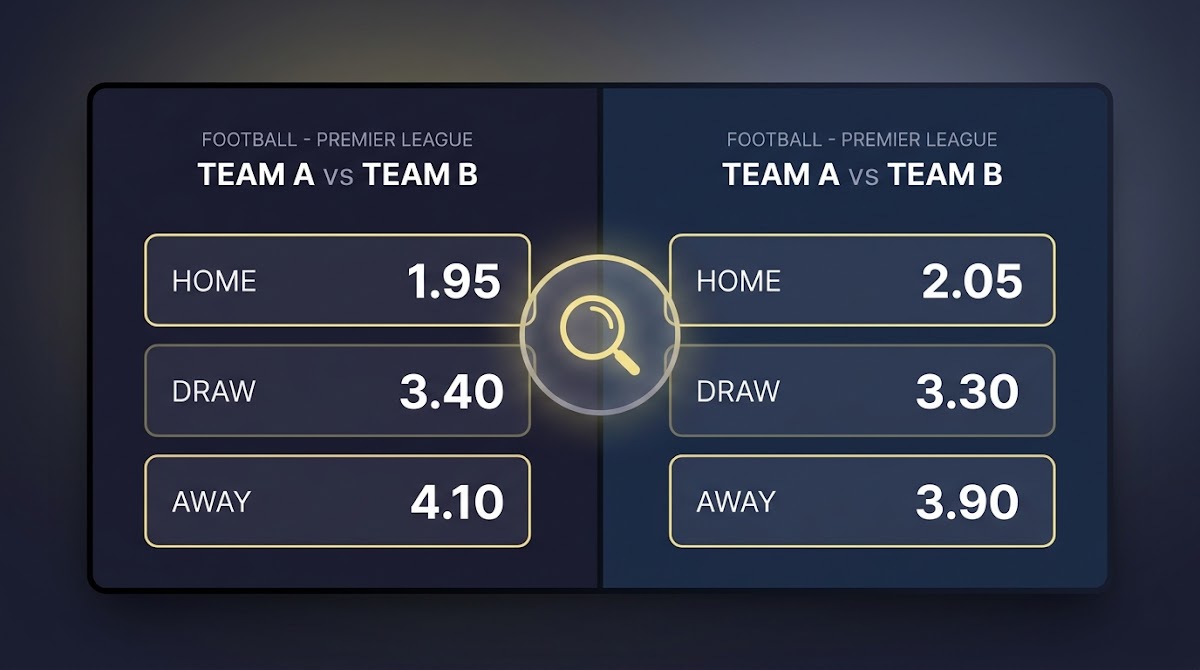
Why Different Platforms Show Different Odds is an observation every serious sports follower sees when comparing markets at the same moment. Odds differences describe cross-platform price dispersion for the same event and market, and they can be both small and economically meaningful depending on timing and market depth.
At the baseline, bookmakers embed a margin so the sum of implied probabilities exceeds 100 percent, which creates consistent offsets between posted prices and true probabilities; understanding that margin helps explain why two sites rarely show identical odds in practice Pinnacle guide on bookmaker margin.
Check multiple platforms and compare responsibly
Compare odds responsibly by converting prices to implied probability, accounting for margin, and checking promotional terms before acting.
Why this matters to you is simple: even small gaps in posted odds change implied probability and expected value, and, over many decisions, those gaps affect long-term performance. If you are tracking forecasts or testing strategies, knowing why prices differ helps you pick the best available price at the right moment on Funded Plays.
Sportsbook odds differences are time-sensitive, so snapshots can mislead. A price that looks best on one site may be transient, especially around news events or promotional windows.
Why Different Platforms Show Different Odds: the math behind odds, implied probability and margin
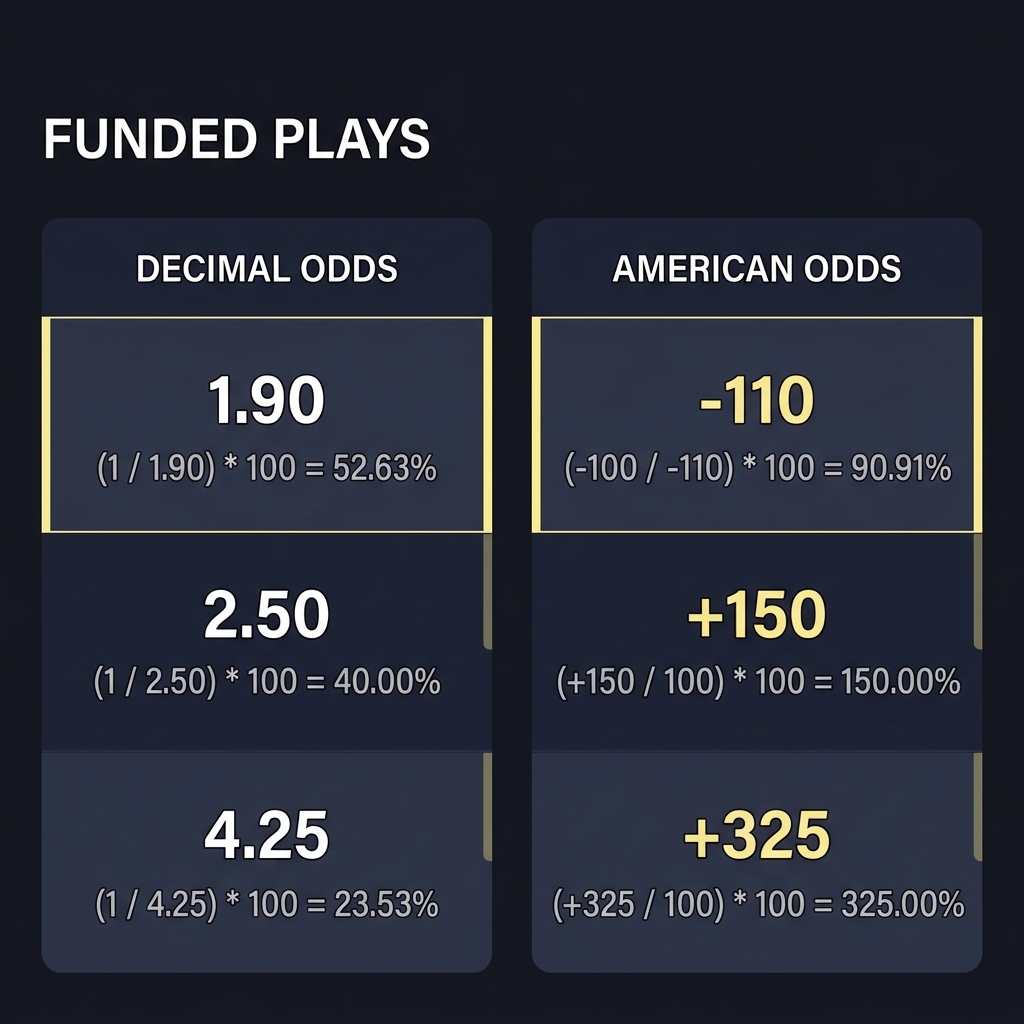
Converting odds formats to implied probability is the first step to objective comparison. For decimal odds, implied probability equals 1 divided by decimal odds. For American odds, positive and negative conventions differ, but both convert into the same probability framework. Clear conversion lets you compare apples to apples Investopedia on implied probability.
Simple worked examples help. If a decimal price is used, apply the one-line formula. For American prices, use the positive or negative branch of the conversion. When markets are tight, rounding differences matter, so keep at least three decimal places during calculations before presenting final percentages.

To measure margin, calculate the overround by summing the implied probabilities for all outcomes in the market and subtracting 100 percent. The result is the operator margin, often called the house buffer or hold. A larger overround means the operator has more built-in revenue cushion and typically shows slightly worse prices for customers. See a detailed explainer on overround here.
Two sites can have near-identical assessments of a match yet show different posted odds because their overrounds differ. That means you should compare normalized probabilities rather than raw prices when hunting for value. A related discussion of market structures is available here.
How market structure and liquidity make odds differ between platforms
Liquidity in betting markets refers to the amount of money or matched volume available at given prices. Deeply traded markets, for example major league matches, generally show tighter spreads and faster price discovery because many participants and larger stakes smooth out idiosyncratic differences Betfair Exchange explanation of liquidity.
By contrast, niche markets or proposition markets often have lower liquidity, meaning fewer bets and wider spreads. Those conditions let different pricing models or risk limits create persistent discrepancies across platforms, sometimes lasting for hours.
Odds differ because operators embed margins, face different liquidity and risk exposure, use varied data feeds and trading workflows, and sometimes post promotional prices; converting and normalizing probabilities lets you compare value objectively.
Operator risk management also matters. Firms set exposure limits and adjust prices to balance books. If a trader or automated engine wants to limit potential liability, they may move odds more aggressively on one platform than on another, producing observable cross-platform gaps that reflect internal risk tolerances rather than pure probability differences.
For users, the practical result is that market context matters: the same headline price in a major match is not the same as in a thin prop market, because liquidity and execution risk differ.
Data sources, trading workflows and asynchronous line updates
Operators rely on a mix of official data feeds and proprietary models to power price updates. Differences in those inputs and how feeds are processed result in asynchronous updates across platforms, with some sites adjusting faster after events such as injuries or lineup announcements Genius Sports annual report.
Some platforms use more automated pipelines that push changes instantly, while others layer manual trader review on top of automated signals. That combination of automatic and manual workflows produces short-lived price gaps that skilled users can spot, provided they account for the risk that the slower platform will catch up.
Because feeds differ in latency and content, two operators can start from different source data for the same event. That difference is especially visible when official data changes, such as last-minute actionable news. The result is temporary dispersion in posted odds across otherwise similar markets.
Promotional pricing, odds boosts and house rules that intentionally shift odds
Promotions and odds boosts deliberately change prices to attract attention. Boosted odds increase potential payout for a short time, which shifts implied probability away from the operator baseline and widens dispersion versus ordinary prices.
These promotional actions are governed by house rules and by regulations in the operator's jurisdiction. Promotional settlement clauses, playthrough conditions, and time windows can all influence whether a boosted price is genuinely better for your intended use New Jersey Division of Gaming Enforcement on house rules and regulations.

Because boosted prices can be temporary or conditional, always read the promotional terms before treating a boosted line as a superior price. The headline payout alone does not guarantee the same settlement treatment as the standard market.
How to compare odds and identify value in practice
Start with a simple workflow: convert odds to implied probability, sum outcome probabilities to determine overround, then normalize each outcome's probability by dividing by the summed total. This normalization reveals the de-marginized probability you can compare across platforms Pinnacle guide on bookmaker margin.
Step-by-step checklist: one, capture simultaneous snapshots across platforms; two, convert odds to implied probabilities; three, compute market overround and normalize; four, compare normalized probabilities to see which platform offers the best value after margin removal.
Timing matters. For live markets or during promotional windows, take snapshots within the same second where possible. If you cannot capture the exact same moment, note the timestamp and check whether recent news or volume explains the gap.
Monitoring line movement helps distinguish transient opportunities from structural differences. A steady price advantage that persists after normalization often indicates a lower overround or a different liquidity profile, while a sudden favorable price that reverts quickly is usually a short-term inefficiency. For ongoing updates and commentary, see our blog.
Real tools and workflows for live odds comparison
There are a few tool types that make practical comparisons faster: odds converters that instantly compute implied probabilities, snapshotters that capture prices across multiple sites at once, alerts that notify you of significant movement, and exchange monitors that show available liquidity at each price level Genius Sports report on data and market connectivity. A useful guide on liquidity versus odds accuracy is available here.
Set up a sensible workflow: focus on markets you understand, limit how often you poll live prices to avoid chasing noise, and use alerts for moves above a threshold you choose. For many users, targeted alerts are better than constant manual checking.
quick checklist to compare odds across platforms
Use this checklist for quick pre-bet checks
Free or demo tools can be useful for learning, but verify data freshness before making decisions. Paid services often provide lower-latency feeds and richer historical context, which matter for professional workflows.
Settlement conventions and jurisdictional differences that alter which odds give better value
Settlement rules can change the effective value of a posted price. Examples include how operators treat events delayed past a scheduled start time, what constitutes an official result, and how variant outcomes are applied under special match conditions.
Different jurisdictions require operators to publish clear house rules and follow local settlement conventions. Those differences mean a promoted price in one jurisdiction could have different settlement outcomes than a similar price elsewhere, so you must check the terms for the operator you plan to use New Jersey Division of Gaming Enforcement guidance.
When comparing prices across platforms, consider whether settlement conventions favor or reduce your expected value. If a platform voids certain outcomes under conditions another platform pays, that preference can overturn a superficially better headline price.
Common mistakes and pitfalls when comparing odds across platforms
A frequent error is snapshot bias: using stale or mismatched timestamps to compare prices. Because markets can move quickly, base comparisons on simultaneous snapshots or on stable, normalized measures.
Another common mistake is ignoring margin. Treating raw prices as directly comparable without calculating overround produces misleading conclusions about where value lies Pinnacle guide on bookmaker margin.
Promotions and boosted odds present a third pitfall. Failing to account for promotional terms, settlement differences, or conditional play requirements turns what looks like a price advantage into an execution problem.
Practical scenarios: three example comparisons without numeric claims
Major-market match with deep liquidity: for a widely followed professional match, many participants and larger stakes compress spreads. Differences across platforms are small and tend to disappear quickly as prices update, so the practical benefit of arbitraging tiny gaps is limited to users with fast access and execution.
Niche prop market with wide spreads: in a thinly traded proposition market, distinct models and low liquidity create persistent gaps. A price advantage here can last longer, but execution risk and settlement quirks are higher, so validate the market rules before acting.
Late-breaking news and rapid line movement: when a key injury or lineup change is reported, platforms update at different speeds depending on feeds and workflows. Short-lived opportunities can appear, but they carry a higher risk that the slower platform will reconcile and the window will close.
Decision checklist: which platform gives the best price for your goal
Use this compact checklist before you act: one, convert prices to implied probability; two, calculate and remove overround to normalize probabilities; three, review liquidity and execution risk; four, read settlement and promotional terms; five, consider account limits and verification friction. Learn more about how we evaluate markets in how Funded Plays evaluations work.
If your goal is small, frequent bets, prioritize platforms with lower margins. If you are a professional trader or need reliable execution, prioritize liquidity and execution quality even if the headline prices are similar.
Always weigh non-price factors, such as platform reliability and customer rules, because these influence whether a slightly better price is truly better in real terms.
Quick formulas and reference conversions
Decimal to implied probability: implied probability = 1 / decimal odds. Remember to retain extra decimal precision when comparing tight markets Investopedia on implied probability.
American to implied probability: for positive American odds, probability = 100 / (american + 100). For negative American odds, probability = -american / (-american + 100). Keep track of sign conventions to avoid mistakes.
Overround calculation and normalization: sum the implied probabilities for all outcomes, call that total T, overround = T - 100, normalized probability for outcome i = implied_i / T. Normalized probabilities let you compare value after removing operator margin.
Why operator hold and industry reporting explain persistent differences
Operator hold is a long-run feature of the industry. The persistence of a sportsbook hold means margins are structural rather than accidental, which explains why identical odds across platforms are uncommon American Gaming Association commercial gaming revenue tracker.
Industry reports show that operator revenue and hold do not vanish in efficient markets. That implies you should expect platform-specific margins and treat them as a primary variable when comparing prices rather than as an outlier.
Conclusion: practical takeaways and how to verify prices in real time
Top takeaways: convert odds to implied probabilities, calculate and remove overround, compare normalized probabilities, check liquidity and settlement terms, and watch for promotional conditions that alter payouts. These steps help you find the best available expected value across platforms.
Before you act, verify live prices with simultaneous snapshots and read the operator house rules for any promotional prices. Responsible comparison and timely verification are the best defenses against misleading apparent bargains.
Overround calculation and normalization: sum the implied probabilities for all outcomes, call that total T, overround = T - 100, normalized probability for outcome i = implied_i / T. Normalized probabilities let you compare value after removing operator margin.

Bookmaker margin increases the summed implied probabilities above 100 percent, so platforms with larger margins typically post worse raw prices; normalizing for margin lets you compare true value.
Promotional odds are often temporary and governed by specific house rules, so check settlement and promotional terms before treating boosted prices as better value.
Prioritize liquidity when execution speed and matching size matter, such as for professional or large-stake trades, because a slightly worse price with reliable execution can be preferable.
References
- https://www.pinnacle.com/en/betting-resources/betting-strategy/what-is-margin-overround
- https://www.investopedia.com/terms/i/implied-probability.asp
- https://www.pinnacleoddsdropper.com/blog/overround
- https://www.lsports.eu/blog/prediction-markets-vs-sports-betting/
- https://support.betfair.com/app/answers/detail/a_id/405/~/what-is-liquidity-and-how-does-it-affect-prices%3F
- https://investors.geniussports.com/static-files/annual-report-2024.pdf
- https://www.nj.gov/oag/ge/sports.html
- https://www.fundedplays.com/challenges
- https://www.fundedplays.com
- https://www.fundedplays.com/blogs
- https://www.webopedia.com/crypto-gambling/sportsbooks/how-to/betting-liquidity-vs-odds-accuracy-a-complete-guide/
- https://www.americangaming.org/research/commercial-gaming-revenue-tracker/
- https://www.fundedplays.com/blogs/how-fundedplays-evaluations-work