

What does 'course fit' mean in golf?
Definition in plain terms
Course fit is simply the match between what you do well as a player and the courses you play. It is about putting your typical shot shapes, short-game comfort, and risk tolerance into the context of a layout's fairways, greens, and hazards. A good fit reduces variance in scores by letting your strengths handle the holes you face while minimizing the situations that expose your weaknesses.
Think in plain language: if you hit controlled, accurate tee shots, a course with narrower corridors and penal rough is more forgiving of your strengths than a layout that rewards extreme distance. If you prefer scrambling and chipping around small targets, then green complexes and bunker placement matter more than driving distance.
Why fit matters even for non-expert players
Why Course Fit Matters in Golf is important whether you play for fun or compete. Recreational players benefit from choosing strategies that cut down on big mistakes, while competitive amateurs use fit to set realistic goals for a round. The core point is consistency: the right fit helps you produce steady scores more often, instead of relying on occasional great shots.
Get a course-fit checklist and plan
Subscribe for a simple course-fit checklist that helps you prepare the right goals before your next round.
Why Course Fit Matters in Golf
Playing with a plan that reflects your abilities means you can aim for steady rounds rather than chasing a single low score. Focus on the parts of a course that either reward or punish your usual misses, and plan how to handle them before you tee off.
How course characteristics change shot selection and priorities
Hole-by-hole factors that alter decisions
Fairway width and rough severity change where you want your ball to land. On a wide fairway you can aim at more aggressive targets and accept longer approach shots. On a narrow corridor you instead prioritize landing areas that set up straightforward approaches. Green size and contour change how precise your approach needs to be; small or undulating greens demand conservative targets that avoid difficult recovery shots.
Tee boxes, elevation changes, and prevailing wind together change club selection and aim points. An uphill approach may demand a different club choice than a similar distance on flat ground, while a steady crosswind shifts the preferred aim. Knowing these patterns before you play lets you decide whether to attack pins or play for safe misses.

When to prioritize accuracy over distance
Prioritize accuracy when missing the short grass leads to punitive lies, when green complexes are small, or when hazards guard the ideal landing areas. Conversely, accept distance-first play on holes where the landing zones are wide and approach shots allow for larger margins. The strategic shift usually answers a single question: do I reduce the chance of a big number, or do I chase a birdie with more variance?
Shot selection is therefore a function of course management and of what the hole asks. When a course consistently penalizes you for long but offline tee shots, choose clubs and lines that keep you in play more often, even if that means laying up and relying on a skilled short game to save par.
Assessing your game: honest self-check to find your best fit
Key performance traits to inventory
Start with a short checklist of traits: your typical miss direction, shot dispersion off the tee, how comfortable you are from the rough, your short-game confidence, and putting tendencies. Use recent scorecards to spot where you save strokes and where you lose them most often. That inventory helps you decide which course features will amplify strengths or expose weaknesses.
Decide by honestly inventorying your strengths and weaknesses, testing them in practice and a few rounds, and using simple pre-round checks to select targets and strategies that reduce your most common mistakes.
Be conservative in your self-assessment. Overstating your distance or underestimating a preferred miss leads to poor course choices. Honest notes are far more useful than wishful thinking when you pick a tee box or a target line for the round.
Simple drills and questions to reveal tendencies
Use two basic drills at the range: hit clusters to see your dispersion, then play a short-game circuit that alternates chip, pitch, and bunker recovery. After each session, record one clear observation on a scorecard or in your phone, such as your most common miss and which club you used when you felt comfortable. Those short records reveal repeatable patterns.
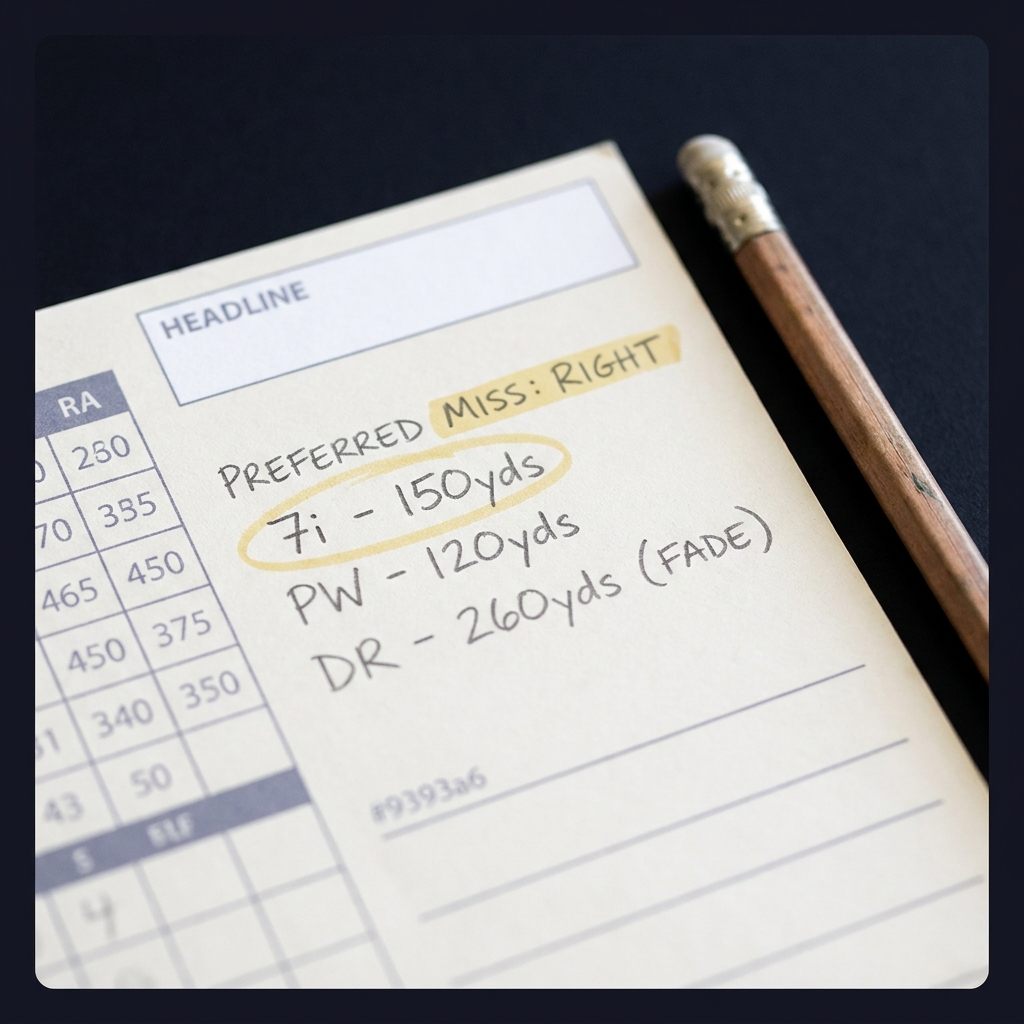
Ask yourself questions after practice and rounds: What is my preferred miss? Which club do I pick when I want to be safe? How often do I scramble from thick rough? Simple answers to these items point you toward courses where those traits matter less, or where you can lean on strengths instead of fighting course design.
A step-by-step framework to build a course-fit strategy
Step 1: Pre-round research and goals
Before you play, note the course length, fairway width, green size, and where hazards cluster. Decide one or two matchable goals, for example to prioritize fairways or to accept more putts inside ten feet rather than attacking certain flags. Pre-round goals should align with your honest assessment so you can start with a plan that fits your game.

Use warm-up time to confirm your pre-round decisions, testing one or two clubs that you plan to rely on. The warm-up should validate feel and distance, not create pressure to change the plan at the last minute.
Step 2: In-round application and adjustments
Begin the round with conservative targets for the first few holes, treating them as live practice. If your opening holes confirm the fit, maintain the plan. If early evidence shows a misfit, make a single clear adjustment, for example moving up a tee box or deciding to lay up on the first risk-reward hole.
In-round rules of thumb help: aim at corridors that reward your preferred misses, pick approaches that leave manageable recoveries, and adjust your aggression only when you see reliable patterns that support it. Course management here means using the plan to reduce surprise and unnecessary variance.
Step 3: Post-round review and refinement
After the round, review two things: where you saved strokes and where you lost them. Note one practice focus for the week that addresses the largest recurring weakness. Over time, these small adjustments compound into clearer evidence about which courses feel like a fit and which ones do not.
Repeat the pre-round research and in-round checks as a routine. Treat each round as a data point in a longer journey, not as a final judgment of your ability or the course.
Common mistakes players make about course fit
Overvaluing distance and ignoring dispersion
One common mistake is assuming that longer clubs always help. If extra distance comes with poor direction, it often increases the chance of a big number. Prioritize consistent contact and a comfortable dispersion pattern over raw length when the course punishes misses.
Another error is copying professional lines without considering your own tendencies. Pros tolerate different variance because of elite skill, not because the line is universally better. Play what your game allows, not what looks bold on a scorecard.
Failing to adapt when conditions change
Weather, green speed, and wind alter fit. Some players stick to a rigid plan and keep taking the same risks even when the conditions change. Instead, build small adaptive habits: pick a safer line when wind picks up, or aim for the flatter part of a green when speeds are high. These shifts protect your score and align with playing to strengths.
Corrective habits are simple: choose conservative tee placements, aim toward your preferred miss, and select clubs that create comfortable lies more often. These habits reduce variance and make course management a tool for steady improvement.
Practical scenarios: how to change your plan for common course types
Tight tree-lined courses
On tree-lined fairways, use a tee strategy that emphasizes control. I often pick a fairway metal or a three wood when the corridor feels narrow, accepting a longer approach for a cleaner lie. Hole-by-hole, mark the holes where a missed tee shot goes out of play and treat those as par-saving holes rather than birdie chances.
In these settings, make short-game emphasis part of your plan. Expect more approaches to finish with difficult angles, so rehearse bump-and-run shots and low chips that keep the ball under tree branches. Your scoring goal should shift toward minimizing bogeys rather than forcing birdies.
Wide links-style courses with wind
Wide, links-style courses reward aggressive angles but punish poor wind reads. When the wind is steady, focus on shot selection that controls ball flight, such as hitting lower trajectory shots and choosing aim points downwind of the hole. On windy days, reduce the number of clubs you rotate through to maintain consistency.
My approach in links conditions is to accept more putts inside ten or twelve feet, rather than attacking pins with high risk. That change in scoring goal moves you from chasing birdies to securing pars and making the most of reachable holes where the conditions favor your game.
Small-target greens and busy hazards
Courses with small greens and many hazards force a short-game-first plan. Off the tee, prioritize positions that leave the simplest angle into the green. Approach shots should aim for the portion of the green that makes a miss recoverable, and your in-round cue is whether the green feels intimidating to leave short or long.
When hazards cluster near greens, play for a conservative angle that lets you get up and down. Change your scoring expectation to par-saving, and use a short-game practice focus after the round to reduce recovery variance on similar holes.
Using data and tools to measure and improve course fit
What simple data to track
Track a few basic metrics: preferred miss direction, comfortable carry distances for three or four clubs, and short-game recovery success. Keep notes on your scorecard or in a compact app entry so that you can see which courses consistently align with your strengths. Simple shot-tracking is often enough for most players to spot meaningful patterns.
A launch monitor or stat app adds value when you want objective distances and dispersion numbers, but they are not required. Many players get usable insight from honest observation, consistent scorecard notes, and the drills described earlier.
quick shot-tracking prompts to inform course-fit choices
Use this checklist after practice or a round
When to use launch monitors or stat apps
Use technology when it answers a question you cannot resolve by feel, for example when you are unsure whether a carry difference is real or imagined. Otherwise, avoid overfitting your decisions to precise numbers; conditions and feel still matter. Data should guide choices, not replace the judgment you build on the course.
Balance is the goal: combine a few objective metrics with consistent self-notes so the data reinforces practical decision making rather than constraining it.
How to practice so your game fits more course types
Practice drills that build preferred misses and recovery shots
Do three short drills regularly. First, controlled distance clusters at the range to learn dispersion. Second, target-based short-game sessions that force you to get up and down from different lies. Third, pressure putting routines that simulate the stress of a two-putt par or a must-make three-footer. These drills build the repeatable skills that increase the number of courses where your game fits.

Split practice time between sharpening strengths and shoring up one or two weaknesses that hurt fit. For example, if your preferred miss is to the right, spend some time shaping shots left intentionally so you have a recovery option when a course exposes that tendency.
Keep a weekly micro-plan you can follow on busy schedules: two range sessions focused on club control, one short-game block, and one putting routine that includes pressure scenarios. Make each session 30 to 60 minutes, and tie one session to the most immediate course you plan to play so practice translates directly into better in-round choices.
Small, consistent practice that targets course-fit goals beats occasional long sessions that do not connect to how you actually play on course day.
Conclusion: make course fit part of your long-term improvement plan
Putting it into routine
Make a habit of pre-round notes, a single practice priority, and a conservative opening strategy. Those three steps keep course management practical and repeatable. Over time, this routine builds a clearer sense of which courses suit you and where to invest your practice time.
Next steps for gradual improvement
Start by applying one change at a time, review results after a few rounds, and adjust slowly. Course fit is not a guarantee of lower scores, but it is a reliable way to reduce mistakes and increase consistency. Treat it as a long-term discipline that supports incremental improvement.
Course fit is how well a course's layout and conditions match your shot patterns, short game comfort, and strategic preferences.
Begin with honest scorecard notes and a short checklist: preferred miss, club distances you trust, and short-game recovery success.
No, basic observation and consistent notes often suffice; tech helps when you need precise distance and dispersion data.
References
- https://datagolf.com/course-fit-tool
- https://www.usga.org/content/usga/home-page/course-care/golfer-experience/course-playability-calculator.html
- https://www.fundedplays.com/challenges
- https://www.fundedplays.com
- https://www.fundedplays.com/blogs
- https://www.fundedplays.com/blogs/how-fundedplays-evaluations-work
- https://statz.ai/golf/betting/course-fit-golf-betting-guide