

Why Chasing Losses Destroys Trading Plans: the core idea
Chasing losses describes reactive attempts to recover recent losses by breaking the rules in a trading plan. That can mean increasing stake size, relaxing stop rules, or re-entering trades that fail your stated entry criteria. The behavior is straightforward to define: an emotion-driven departure from pre-established limits intended to return the account to a perceived previous level.
Implement a written session checklist, enforce a max drawdown rule, and use a mandatory cool-down before any additional trades; make re-entry conditional on an objective review.
A trading plan exists to set clear, repeatable rules for entries, position sizing, stop-loss placement, and exit discipline. It defines how much of your bankroll is at risk, how you respond to losing streaks, and under what conditions you pause and review. The plan is a safeguard against impulsive choices; its purpose is to preserve optionality and to make risk outcomes predictable rather than reactive.
When you chase losses you directly oppose the purpose of a trading plan. Chasing replaces rules with hope, turns fixed sizing logic into ad hoc increases, and substitutes discipline with emotional urgency. Over time those shifts compound, turning small drawdowns into larger structural damage to your bankroll and to your ability to follow objective decision-making rules.
What chasing losses looks like in practice
There are recognizable behavioral patterns that often mark the start of a chase. A trader may increase position sizing after a loss, abandon stop-loss rules, or start trading more frequently to force a win. These are not isolated acts; they tend to cluster. One early trade where you relax an entry criterion can be followed by another where you extend a stop distance, and so on.

Short-term actions that escalate risk usually begin as minor exceptions. For example, you might agree with yourself to increase size only slightly, but that small increase raises the account's exposure and reduces the remaining risk budget. Overtrading appears as a higher number of trades per session, while abandoning stops is visible in longer durations and larger drawdowns.
These incremental deviations compound because each rule break consumes a portion of the buffer that was set aside for variance. A few small breaches that feel like harmless adjustments can quickly add up and turn a manageable losing streak into a severe drawdown that is much harder to recover from without changing strategy or adding capital.
Why Chasing Losses Destroys Trading Plans: psychological mechanisms
Loss aversion is a core driver. People tend to feel losses more strongly than equivalent gains, and that asymmetric emotional response creates pressure to return to a prior balance quickly. That urge is not rational; it is an emotional impulse that encourages riskier choices when a steady approach would be more effective.
Stress and heightened arousal shrink attention and narrow decision making. Under pressure you focus on immediate recovery rather than on long-term edges or the statistical properties of your plan. This leads to impulsive trades and weaker impulse control, which undermines pre-defined risk controls and stop-loss discipline.
Try the FundedPlays Challenges page for structured evaluation guidance
Download or commit to a short session checklist and a ten-minute cool-down protocol before returning to any live challenge or session. A written pause rule helps turn an emotional impulse into a procedural break.
Emotional feedback loops also reinforce chasing. A small win after a chase can falsely validate the risky behavior, while the losses that follow deepen stress and increase the probability of further rule breaking. Recognizing these loops is the first step to breaking them and restoring the plan's authority over decisions.
Risk-management basics every trader should follow
1) Use a stop-loss on every exposure. A stop-loss is a pre-defined condition that limits the loss for each position and prevents runaway declines on a single selection.
2) Define a max drawdown rule for the account or session. This rule specifies the maximum percentage or amount you will tolerate before pausing trading and conducting a review.
3) Fix position sizing rules. Whether you use a fixed fraction of a bankroll or a volatility-adjusted model, write the rule down and enforce it. Fixed rules remove emotion from the sizing decision and keep risk consistent across trades.
4) Set session caps and re-evaluation triggers. A session cap limits the number of trades or total exposure in a given period. Re-evaluation triggers require a mandatory review after a set number of losses or when a drawdown threshold is met.
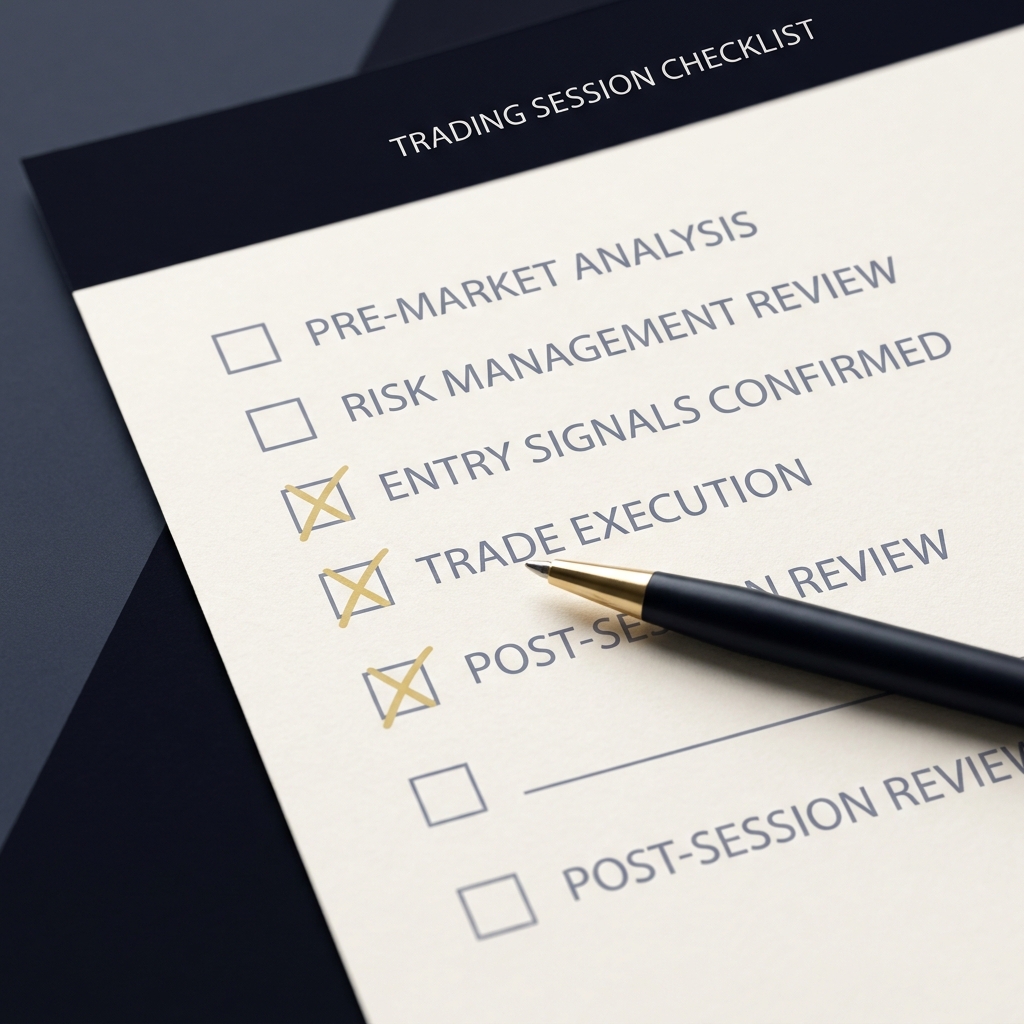
These limits matter because they convert internal judgments into external constraints. When the plan states a stop-loss or a max drawdown, the decision no longer relies on momentary confidence or fear. It becomes a rule to follow, which reduces the likelihood of chasing.
Why Chasing Losses Destroys Trading Plans: effects on risk budgets and position sizing
Increasing trade size after losses breaks the logic of many sizing approaches, including fixed fraction rules and Kelly-like frameworks. Those methods allocate risk as a function of current capital and expected edge. When you raise risk after a loss, you place more capital at risk when the account is already impaired, which accelerates capital erosion.
One session of chase trades can consume a disproportionate share of your available risk budget. If your plan allows a limited drawdown, a single period of amplified sizing can push you past that limit and force a pause or reset under worse conditions. The result is reduced optionality: with less capital left you must take more aggressive stances to reach prior levels, which then increases the chance of further damaging outcomes.

FundedPlays is an example of a funded sports prediction platform where structured evaluation challenges and drawdown rules make disciplined sizing and risk budgets essential. In such environments, preserving capital and sticking to plan rules is important because platform rules govern eligibility and progression rather than real cash exposure.
When your risk budget is eroded, you lose flexibility. Future trades that would normally fit your edge and sizing model may become impractical because the remaining bankroll cannot support the necessary position sizes without violating your own risk limits.
How to design a trading plan that resists chasing losses
Write sizing rules in explicit terms. For example, state the exact percentage of bankroll to risk per selection, or specify a table that maps bankroll brackets to allowed stake sizes. Clear wording removes ambiguity at the moment of decision.
Include stop-loss conditions and how they are calculated. Describe whether stops are fixed, percent-based, or derived from volatility, and give examples that show how to place them. Make the stop rule objective so it cannot be reinterpreted in the heat of a session.
Build session caps and cool-down protocols into the plan. For instance, set a limit on the number of trades per day, and require a fixed break after three losing trades. Use re-entry criteria that are explicit, such as a minimum time off, a required review of the trade log, and a checklist confirming no rule violations occurred before returning.
Use precommitment tools. Precommitment can be as simple as wiring your sizing decisions into an automated stake script, locking them in for a session, or using an accountability partner who signs off before you return. The goal is to make it harder to change the plan impulsively.
Practical rules and checklists to stop chasing losses
Immediate session checklist:
- Verify stop-loss placement for each planned selection.
- Confirm position sizing is within the documented percent or bracket.
- If you have lost X trades in a row, invoke the cool-down protocol.
Post-session checklist:
- Log each trade with reason, entry criteria, and outcome.
- Note any rule deviations and why they occurred.
- Set corrective actions before the next session, such as reducing size or taking an extra review day.
Cool-down tactics are simple and effective. Take an enforced break of at least ten minutes, step away from screens, and write a brief note describing the impulse you felt. Calling or messaging an accountability partner can also interrupt the emotional escalation and help you return with clearer judgment.
quick session and post-session verification
use before reopening a session
Place the tool where it is easily accessible. Whether you use a printed card, a pinned note in a spreadsheet, or a small pop-up reminder, the physical act of checking boxes shifts the behavior from impulsive to procedural.
Common mistakes and psychological traps
Psychological traps and rationalizations are a common gateway to chasing. Phrases such as I need to get even or the next one will fix it are attempts to justify rule-breaking. Calling a larger bet a calculated recovery is often just a post-hoc rationalization that masks an emotional decision.
Misreading variance as a pattern is another trap. Short-term losing runs are normal even for systems with positive expectancy. Interpreting random swings as a change in the underlying edge leads to unnecessary strategy shifts or increases in risk that are not justified by new evidence.
Confirmation bias and selective memory reinforce chasing by letting you remember the times a risky deviation worked while forgetting the times it did not. The remedy is structured record-keeping and periodic objective reviews that compare decision rationale to outcomes without relying on memory alone.
Case studies and scenarios
Scenario 1, incremental escalation. A participant starts the day with a simple play and loses. They then increase size slightly and win, which feels validating. That win encourages another larger size, which then loses. Lesson: small breaches can create false positive feedback that makes further escalation more likely. Containment step: enforce the session cap and require a ten-minute cool-down after any size increase.
Scenario 2, stop abandonment. A forecaster experiences a sequence of losses and, to avoid being stopped out again, widens stop distances. The next adverse movement consumes much larger losses and forces a full session shutdown. Lesson: changing stop rules mid-session removes protective limits. Containment step: document how stops are set and forbid mid-session adjustments without a formal review.
Scenario 3, funded challenge context. In an evaluation challenge you face drawdown rules that limit progression. A user chases to try to meet a target and breaches platform drawdown limits, losing eligibility. Lesson: platform rules change incentives and make discipline more critical. Containment step: design challenge-specific sizing that respects the platform drawdown and keep a dedicated review after any loss that approaches the limit.
Adapting these lessons for sports prediction and funded challenges
Sports prediction differs from financial markets in event structure and timing, but the behavioral rules are similar. Predictive entries are discrete selections rather than continuous positions, and variance can be high in short samples. That makes stop-like rules, session caps, and strict sizing particularly valuable to prevent chasing.
In structured funded challenges the evaluation rules and drawdown conditions are a central constraint. Because challenge progression depends on maintaining limits rather than on immediate cash outcomes, preserving eligibility through consistent, conservative sizing and adherence to the plan is essential. Treat the challenge rules as non-negotiable constraints in your plan.
FundedPlays provides structured evaluation options designed for disciplined forecasting. Use platform rules to frame your plan: set challenge-specific position sizes, restrict the markets you will enter, and write re-entry rules that align with the platform's drawdown policies. These steps let you test and refine strategy without abandoning the guardrails that preserve progression chances.
Use the FundedPlays blog to find more examples and discussion of evaluation best practices.
Tools and metrics to monitor behaviour
Simple measurable signals help detect chasing early. Track trades per session, average stake size, number of rule deviations, and an emotional-state tag after each session such as calm, frustrated, or rushed. These metrics make creeping changes visible and actionable.
Use a trade log or a basic dashboard to expose trends. A spreadsheet that tallies sessions and highlights increases in average stake or deviations flags trouble faster than memory does. Small automations such as session timers or enforced cooldown pop-ups reduce reliance on willpower.
External checks can be low effort. Ask a peer to review your post-session log weekly, or set a calendar reminder to perform a structured review after a losing streak. The goal is early detection and a lightweight intervention that prevents escalation.
Recovery plans after a losing streak
Use a four-step recovery protocol: stop trading for a set period, review, recalibrate, re-enter with limits. First, stop trading for a set period. Then review the log to identify rule breaches and emotional triggers. Recalibrate by adjusting size or taking extra review days if necessary. Finally, re-enter with tightened limits and a short controlled session to rebuild confidence.

Criteria for a temporary pause include exceeding your max drawdown rule or multiple consecutive rule deviations. A longer-term strategy overhaul is warranted when you find persistent edge degradation, repeated failures to follow your plan, or structural mismatches between your method and the environment.
Rebuild confidence with small, measured sessions that emphasize process over outcome. Keep stakes low, follow entry criteria strictly, and document results. Small wins that come from adherence to your plan are more valuable than volatile attempts at rapid recovery.
Conclusion: disciplined consistency over reactive behaviour
Chasing losses undermines trading plans because it replaces rules with emotion, erodes risk budgets, and reduces future optionality. A plan's purpose is to protect capital and decision quality, and chasing removes those protections at the moment they are most needed.
Start with simple steps today: write or update a session checklist, set a max drawdown rule, and commit to a cool-down protocol. Consistent, modest practice with these tools preserves your ability to test and refine strategies over time rather than risking everything on immediate recovery attempts.
Look for patterns like increasing stake size after a loss, abandoning stop rules, overtrading, or feeling an urgent need to recover quickly; keep a trade log to verify behavior objectively.
Invoke a cool-down protocol: stop trading, take at least ten minutes away from screens, document the impulse, and only return after completing a written checklist.
Yes, structured funded challenge platforms let you practice plan discipline with virtual accounts; adapt position sizing and re-entry rules to the platform's drawdown policies.
References
- https://www.britannica.com/money/trading-psychology
- https://pmc.ncbi.nlm.nih.gov/articles/PMC12070191/
- https://www.fundedplays.com
- https://www.fundedplays.com/blogs
- https://www.fundedplays.com/blogs/how-fundedplays-evaluations-work
- https://www.schwab.com/learn/story/trading-psychology-recovering-from-big-losses
- https://www.fundedplays.com/challenges