

When to Reduce Position Size: Definition and Why it Matters
When to Reduce Position Size means applying a deliberate, rule-based reduction of exposure to limit execution cost, concentration and drawdown risk. In practice this is not a market call, but a pre-defined scaling action you apply when objective indicators, such as realized volatility or market depth, move against the assumptions behind your original stake.
Reducing position size is one of the simplest risk controls, yet it has three related effects: it lowers market impact when liquidity is thin, reduces the chance that a single outcome wipes out a large portion of capital, and lets systems remain within governance limits or mandates. These outcomes matter whether you run a funded challenge account or manage a small personal book.
Regulators and market authorities documented that liquidity and market depth can evaporate quickly in stress, a direct reason to prefer smaller, more conservative positions around known risk events. The Bank for International Settlements analysis points to rapid adverse spillovers that can erode liquidity and execution quality during shocks, which supports disciplined, smaller sizing in stressed periods BIS Quarterly Review.
Practical risk teams also link sizing to volatility measures. Scaling exposure down as realized volatility rises tends to reduce peak drawdowns while preserving long-term risk characteristics, according to practitioner research on volatility targeting volatility targeting literature.
Operationally, reducing position size is a binary combination of rule and execution. You decide the observable trigger, the magnitude of the cut and who executes it. The rules should be clear enough that a trader or an automated system can apply them without improvisation.
Good rules separate signal from noise. Use short filter windows for confirmation and require at least simple crosschecks, for example a volatility uptick confirmed by spread widening or a broker execution warning. That reduces knee-jerk reactions to momentary data quirks.
Smaller sizes trade with less market impact and typically face lower slippage, all else equal. That improves execution quality for the remaining position and keeps realized performance closer to backtest expectations. This is especially important in thin or fast-moving markets where adding size when depth is weak magnifies cost.
Regulatory guidance recognizes the value of proactive measures to limit execution costs and preserve market functioning, and suggests deploying management tools ahead of severe stress rather than reacting late. For example, IOSCO’s final guidance urges use of liquidity management tools and anti-dilution measures to handle execution risks in stressed conditions IOSCO liquidity management guidance.
Core framework: A practical step-by-step approach to When to Reduce Position Size
A compact framework has four parts: Monitor, Define triggers, Execute reductions, and Review. The sequence makes a decision repeatable, auditable and suitable for the funded challenge environment or any disciplined trading setup.
Monitor means continuous tracking of indicators that matter to your strategy. Define triggers with clear observable thresholds and confirmation logic. Execute through pre-approved protocols to limit slippage and rebalancing side effects. Review records to learn and adjust trigger calibration with live data.
Monitoring should combine market signals and portfolio metrics. Typical market indicators include realized volatility, bid-ask spreads and depth measures. Portfolio metrics include single-name exposure, aggregate concentration and drawdown from peak. Calibrate a watchlist of fields on your dashboard so nothing important is only checked ad hoc.
IOSCO’s guidance implies that proactive, pre-built responses to liquidity deterioration are sensible governance, not optional safety nets. Building explicit trigger-response templates aligns operational practice with that guidance IOSCO liquidity management guidance.
Decide, then document. Triggers can be conditional and tiered; for example a first-tier alert may reduce size modestly, while a confirmed second-tier event prompts a deeper cut. Governance matters: assign the actor, set the review path, and ensure automated execution paths exist for urgent moves.
Institutional mandates illustrate the appeal of formal limits. Hard caps on single-name exposure or tracking error give managers unambiguous guardrails, and they are an effective complement to volatility-based scaling example management mandate.
Act with execution discipline. When you reduce size, use limit orders, split the execution into tranches when market depth allows, and watch for feedback effects that alter the market. Always record execution quality and the rationale so the review step can separate good decisions from reactive errors.
Download the sizing checklist for challenge-ready risk control
Download a concise checklist or save the trigger-response template to your dashboard to ensure reductions follow pre-set rules and leave an audit trail.
Monitor: what to track continuously
Track realized volatility, bid-ask spread, market depth, recent fill quality, correlation across positions and the portfolio drawdown. Keep a short historical window to detect regime change and a longer window for trend confirmation.
Automate alerts for the most important fields to avoid missing rapid deterioration. Simple alerts can prevent late reactions when every minute of delay increases execution cost.
Decide: trigger rules and governance
Write triggers as observable conditions, not feelings. For example, combine a rise in realized volatility with either widening spreads or depth loss to reduce false positives. Governance must name who approves larger cuts and who can act unilaterally in emergencies.
Backtest trigger logic over historical regimes and then validate with live paper trading before letting it control large-scale automated actions. Use live verification to adjust filter windows and confirmation steps rather than fixed industry numbers.
Act: execution and follow-up
When executing, prefer approaches that minimize market signal. Staged reductions, limit orders and use of multiple venues or routes can reduce informational impact. After action, capture execution detail, the observed effects on fills and the subsequent market reaction for the review step.
Post-action review should be routine. Record the trigger that fired, the person or system that acted, execution costs and whether the reduction met its objective. Use these records to recalibrate thresholds and to demonstrate governance for audits or challenge reviews.
Signals and decision criteria: When to Reduce Position Size
Clear signals reduce ambiguity. The core observables are realized volatility, correlation clustering, liquidity metrics such as bid-ask spread and depth, and portfolio-level breaches like drawdown or tracking error. Map each signal to a pre-defined action so the team knows what to do when a condition appears.

Volatility spikes are a robust early warning. Rising realized volatility often precedes larger moves, and volatility targeting practices show that scaling down exposure when volatility rises can reduce drawdowns without harming long-run risk-adjusted performance volatility targeting literature. See Quantpedia.
Correlation clustering matters because it weakens diversification. If many positions begin moving together, a portfolio that looked diversified can suddenly behave like a single concentrated bet. The ESMA report highlights elevated co-movement risks, which supports tighter position and portfolio limits when correlations rise ESMA TRV report.
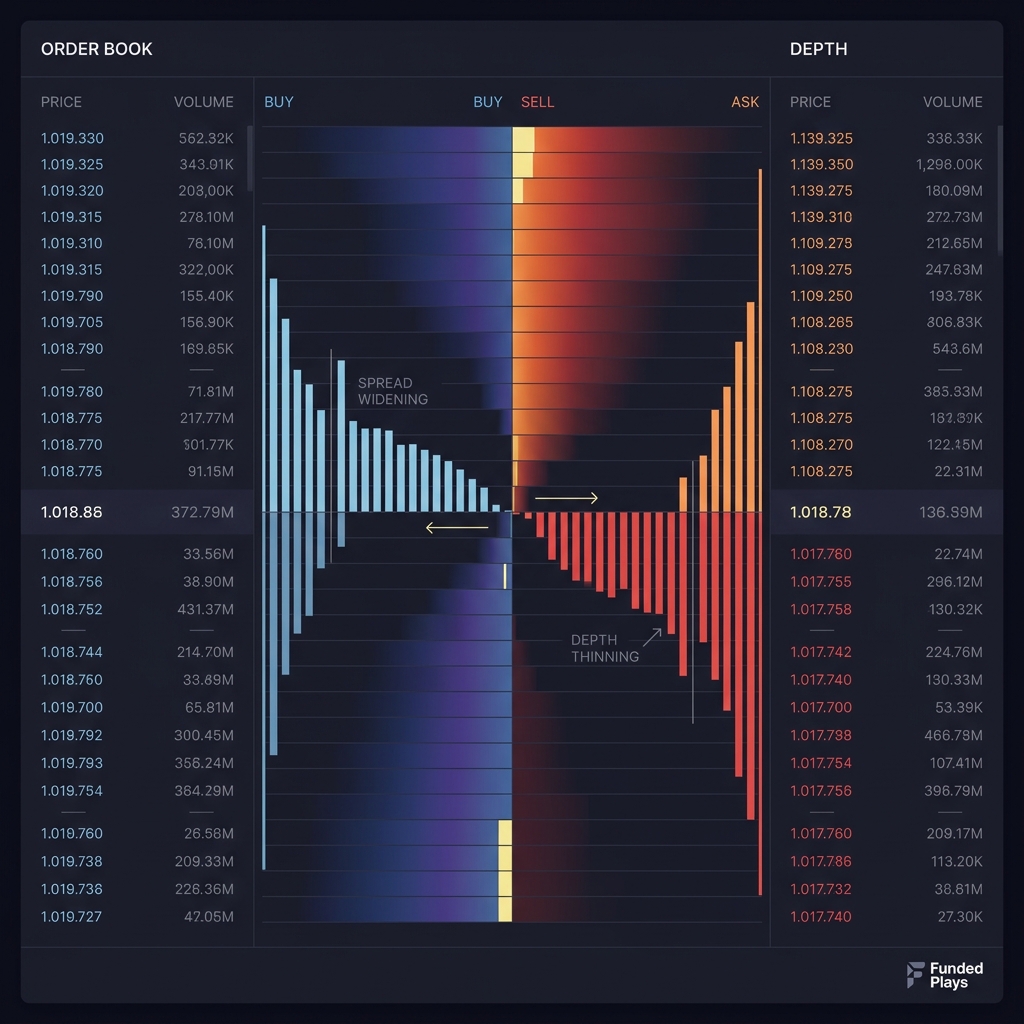
Liquidity signals are practical and immediate. Watch for widening bid-ask spreads, falling market depth on the order book, or broker warnings about execution risk. These signals often precede higher slippage and justify cutting size to preserve execution quality. Regulatory reviews and central bank reports note that liquidity can deteriorate rapidly in stress, so heed broker notices and market depth changes without delay Bank of England Financial Stability Report.
Portfolio-level breaches such as pre-set drawdown limits or single-name exposure caps are direct triggers. Many institutional mandates codify hard caps and tracking error limits as governance tools that force reductions when breached management mandate example.
When you see any of these signals, confirm them with at least one corroborating indicator to avoid reacting to temporary noise. For example, a volatility uptick confirmed by a depth loss or a spread widening is stronger than either signal alone.
Reduce position size when objective indicators such as sustained realized volatility increases, correlation clustering, liquidity thinning or pre-set portfolio drawdown limits trigger your pre-defined rules, and only after confirmation to avoid reacting to transient noise.
After confirming, follow the pre-written execution protocol so the reduction happens cleanly, and then log the event for review. That reduces discretionary bias and supports continuous improvement of the trigger rules.
Volatility spikes and realized volatility measures
Realized volatility measures, such as short-window standard deviation of returns or intraday variance, give timely information on changing risk. Use them as part of a volatility-targeting rule to proportionally reduce size as volatility increases beyond baseline levels.
Design filters to avoid reacting to single outliers. For example, require a two-period confirmation or pair the volatility rise with a second metric like spread widening before acting. That reduces overreaction to transient noise.
Correlation clustering and concentration risk
Calculate rolling correlations across the book to detect clustering. When correlations rise, effective diversification falls and the same sized positions will produce higher portfolio volatility. That is the classic signal to tighten position limits or reduce size until correlations revert.
Institutional reports note rising co-movement as a structural risk in some markets, which makes monitoring correlations an essential part of sizing decisions ESMA TRV report.
Liquidity thinning, spread widening and execution depth
Liquidity metrics give the fastest execution cues. Track the recorded bid-ask spread, depth at common price levels and how fills behaved during recent trades. Falling depth at the top of book and persistent spread widening are reasons to step back.
Central banks and market analyses show that liquidity can be fragile in stressed episodes, which argues for reducing exposure when you detect these market signals rather than waiting for full market dislocation BIS Quarterly Review.
Pre-set drawdown and tracking error breaches
Pre-defined portfolio drawdown thresholds, single-name exposure limits and tracking error caps convert judgement into action. If a drawdown threshold is breached, a pre-set reduction can prevent further slippage and keep the account within the mandates or challenge rules.
Hard limits, when combined with dynamic scaling, give you both flexibility and an outer guardrail. Institutional mandates illustrate how formal caps work alongside volatility-targeted scaling to manage both sudden shocks and chronic concentration risk management mandate example.
Sizing mechanics: How much to cut and how to scale down
Translating a trigger into a concrete size change requires a method, and there are three common approaches: proportional scaling tied to volatility targets, hard caps and staged reductions. Choose a method that fits the strategy and that you can test with live data.
Proportional scaling reduces exposure as realized volatility rises. The main advantage is that it keeps the portfolio’s targeted risk profile roughly stable over time. Practitioners find this reduces realized drawdowns compared with fixed-size bets when regimes shift volatility targeting literature, and further reading is available from Research Affiliates Research Affiliates.
Hard caps act as absolute limits on exposure to a single name or to a sector. They are blunt but effective defense mechanisms. An institutional-style management mandate typically uses hard caps alongside proportional rules to prevent accidental concentration management mandate example.
Decide between immediate tranche cuts and gradual scaling. Immediate cuts reduce risk faster but can move the market and increase slippage. Staged reductions smooth execution and can keep market impact lower, at the cost of leaving some exposure in a stressed environment.
Execution slippage matters in sizing decisions. A planned reduction that triples execution cost defeats the goal of preserving capital. Always model expected slippage under stressed depth conditions before choosing how fast to cut.
Calibration is essential. Do not adopt fixed numbers from others. Backtest candidate rules across historical regimes and then validate them in live, limited deployments to check for model decay or behavioral surprises. Use the review step to refine magnitudes and filtration logic.
Proportional scaling with volatility targets
Proportional scaling ties position size to a rolling volatility estimate. As the estimate rises, target exposure falls. This keeps risk more constant and helps preserve the long-term risk profile of the strategy during regime shifts.
Practitioners should pair proportional scaling with minimum and maximum bounds and with governance that prevents runaway automation. The aim is to make the rule robust to noisy measures while retaining the stabilizing benefit of volatility targeting.
Hard caps and single-name limits
Hard caps are simple to enforce and explain. They prevent tail concentration, which is useful in environments where correlations can spike and hide aggregate exposure. Use them as absolute outer limits rather than the primary scaling tool.
Institutional mandates commonly combine hard caps with softer dynamic rules to give both protection and flexibility, which is a practical model for funded challenges and small teams alike management mandate example.
Gradual scaling versus immediate tranche reductions
Gradual scaling splits the size reduction into multiple parts to reduce market signaling. It works well when depth is thin but stable, and when you can monitor fills between tranches. Immediate tranche reductions are preferable in fast-moving crises where risk of waiting is high.
Choose a path based on how quickly the signal can worsen, expected slippage and whether automated routes can execute cleanly. Always log fills and compare actual execution against expected slippage to inform future choices.
Portfolio-level considerations: concentration, correlation and limits
Position-size decisions are rarely isolated. A cut to one position can increase the relative weight of others unless you rebalance actively. Portfolio context should therefore determine whether a reduction is the right move, or whether a different rebalancing action is better.
Rising correlation or concentration reduces diversification benefits and raises the effective risk of the same-sized positions. That means position limits should tighten when the portfolio displays clustering behavior, protecting the whole book from cascade losses. ESMA’s reporting on elevated co-movement highlights this practical concern for portfolio managers ESMA TRV report.

Use limit rules for single-name exposure and measures such as tracking error to prevent accidental concentration. Many institutional frameworks embed those limits to keep strategy drift under control and to force corrective sizing when risk budgets are breached.
Rebalancing matters. If you reduce one position without active rebalancing, other weights can rise proportionally. Plan rebalancing steps to keep the overall risk profile consistent and consider offsetting reductions if necessary to maintain the intended portfolio risk.
When portfolio context changes the decision to cut
If a position’s contribution to portfolio volatility increases because of correlation or a regime shift, a targeted reduction may be necessary even if the position’s standalone metrics look fine. Portfolio thinking looks at marginal impact, not only absolute size.
Implement marginal risk checks on your dashboard so you can see how each trade or reduction changes total risk. That helps you decide whether cutting a single position or trimming multiple positions is the better route to restore the portfolio target.
Rebalancing and cross-position offsets
Active rebalancing helps prevent a single reduction from unintentionally concentrate other holdings. Consider rebalancing into hedges or across diversifying instruments if your rules and tools allow it.
Document rebalancing rules so they can be audited and reviewed in the post-action step. Clear records also help when demonstrating compliance with challenge rules or internal mandates.
Using limits to prevent accidental concentration
Hard limits and automated checks are simple ways to prevent accidental concentration. Combine them with softer signals so the system can act quickly yet flexibly, for instance blocking new size above a cap while allowing smaller, governed adjustments.
Institutional examples show that governance plus automation is a practical way to maintain intended exposures without constant manual oversight management mandate example.
Typical mistakes and common pitfalls when reducing size
Common errors turn well-intentioned reductions into poorer outcomes. Overreacting to noise, ignoring execution slippage, or failing to document the action are frequent problems that undermine risk control objectives.
One typical mistake is treating a single data blip as a regime change. That creates excessive turnover and can increase realized costs. Use confirmation windows and paired indicators to reduce false positives.
Another issue is poor execution. Cutting size without regard for slippage or signaling can increase realized cost and degrade performance. Plan execution methods in advance and simulate fills under stressed depth.
Data quality problems also cause false triggers. Stale or sparse market data can exaggerate spreads or hide depth. Validate your data feeds and prefer robust measures that are resilient to occasional missing ticks.
Finally, lack of documentation makes it impossible to learn. If you do not record why a reduction happened and what its effect was, you cannot refine the rules. Make the post-action review mandatory and structured.
Overreacting to transient noise
Filters and confirmation logic reduce the cost of overreaction. Build in a minimum hold or a verification window to avoid repeatedly flipping in and out of a size state because of short-lived market blips.
Review false positives regularly to adjust filter sensitivity and prevent unnecessary turnover.
Ignoring execution and slippage effects
Model expected slippage curves for different market depths and incorporate those expectations into your sizing decision. If the cost of reducing size is greater than the marginal risk reduction, rethink the action.
Simulate common execution paths and prefer those that distribute impact over time or across venues if you cannot find deep liquidity at a single route.
Failure to document or enforce rules
Enforce a simple log entry for every reduction: when it happened, which triggers fired, who acted, and what execution quality looked like. Use that file to drive continuous improvement and to demonstrate adherence to governance.
Governance enforcement reduces discretion and ensures that the same rule applies consistently across operators and market conditions.
Practical scenarios and examples for When to Reduce Position Size
Scenarios help translate abstract rules into action. Below are three concise, labelled scenarios that show monitoring checks, immediate actions and follow-up verification steps you can apply to a funded challenge account or a small trading book.
Scenario: sudden liquidity shock during market stress
Signal: bid-ask spreads widen quickly and market depth at common price levels drops, accompanied by broker alerts about execution risk. Immediate action: reduce new entries, trim existing positions in ordered tranches, and pause aggressive additions until depth recovers.

Scenario: correlation spike across the book
Signal: rolling correlations rise, and multiple positions begin moving together, lowering effective diversification. Immediate action: tighten single-name limits, reduce the largest marginal contributors to portfolio variance, and pause directional piling into correlated exposures.
Monitoring checks: run marginal risk contribution reports, confirm correlation increase with multiple time windows, and log any execution moves. Follow-up: reassess diversification assumptions and consider adding offsetting positions or hedges if consistent with the strategy and rules. ESMA’s observations on elevated co-movement underline the need to manage clustering risk ESMA TRV report.
Scenario: volatility regime shift
Signal: sustained rise in realized volatility across your instruments. Immediate action: apply proportional scaling to reduce target exposure, move to more conservative execution methods and increase monitoring frequency.
Monitoring checks: validate volatility rise over a confirmation window, check spreads and depth, and simulate expected slippage for the planned cut. Follow-up: review the impact on drawdown and adjust the volatility estimation window or filter logic based on live results. Volatility targeting is a common practitioner tool to handle such shifts volatility targeting literature and a practical tools cheat sheet Volatility Targeting Tools Cheat Sheet.
Checklist and playbook: step-by-step for live use
Below is a compact playbook to convert into a printable or in-app checklist. Keep each item short so it is easy to read pre-trade and under stress.
Pre-trade checks should include: current realized volatility, bid-ask spread snapshot, order book depth at your size, single-name exposure, portfolio concentration, and available risk budget.
Pre-trade and trigger-response fields for sizing decisions
Use daily verification
Trigger-response template: list measurable conditions, the action to take, the responsible actor and the execution method. Keep actions short and testable so they can be automated or followed under pressure.
Post-action review: record the triggers that fired, the person or system that acted, execution fills and slippage, and whether the reduction met its objective. Use the review to refine thresholds and confirmation steps.
Reference governance best practice when implementing the checklist. IOSCO’s guidance on liquidity tools and institutional limit practices provides a governance rationale for having these templates ready and tested IOSCO liquidity management guidance.
Display the most important metrics prominently: volatility, spread, depth and marginal risk contribution. Keep an alerting hierarchy so the most critical breaches show first and trigger pre-configured responses.
Ensure data feeds are reliable. Stale or missing data can create false alarms or missed events that turn a manageable move into a costly problem.
Write triggers in three parts: observable condition, required action and responsible actor. Short templates reduce confusion and speed response times during stress.
Test the templates with paper trades and small live tests to confirm they behave as expected in real market conditions, then iterate based on observed outcomes.
Make post-action review quick but mandatory. Keep a short form capturing cause, execution, cost and follow-up steps. Use the file to tune filter windows and to demonstrate compliance with challenge or mandate rules.
Regular reviews also help spot data problems and prevent persistent false triggers that lead to unnecessary turnover and cost.
Re-expansion should be conservative. Wait for normalization of triggering metrics and then require a verification window before returning to prior sizes. That prevents whipsaw where positions are cut and then immediately re-expanded on temporary recovery.
Verification should use live data and a short out-of-sample window to confirm that realized conditions match the signals used to shrink positions. Keep logs of re-expansions as you keep logs of reductions so governance has a complete record of sizing cycles.
Finally, tailor all thresholds and rules to your strategy and test them with live deployments. Continuous monitoring and disciplined review keep the system adaptive while avoiding ad hoc reactions that weaken performance.
Reduce size when realized volatility rises and your confirmation filters show sustained change; pair volatility signals with spreads or depth to avoid reacting to one-off spikes.
When applied with a tested volatility or risk framework, reductions aim to preserve risk-adjusted returns by limiting drawdowns, not to predict market direction.
Choose immediate cuts for sudden crises where delay raises risk, and staged reductions when depth allows smoother execution and lower market impact.
References
- https://www.bis.org/publ/qtrpdf/r_qt2409.htm
- https://www.aqr.com/Insights
- https://www.iosco.org/
- https://www.nbim.no/en/organisation/governance-model/management-mandate/
- https://www.esma.europa.eu/publications-and-data/trends-risks-and-vulnerabilities/trv-report-2024-1
- https://www.bankofengland.co.uk/financial-stability-report/2024/july-2024
- https://www.fundedplays.com/challenges
- https://www.fundedplays.com/blogs/how-fundedplays-evaluations-work
- https://www.fundedplays.com/blogs
- https://www.fundedplays.com
- https://www.researchaffiliates.com/content/dam/ra/publications/pdf/1014-harnessing-volatility-targeting.pdf
- https://quantpedia.com/an-introduction-to-volatility-targeting/
- https://robotwealth.com/tradingview-volatility-targeting-tools-cheat-sheet/