
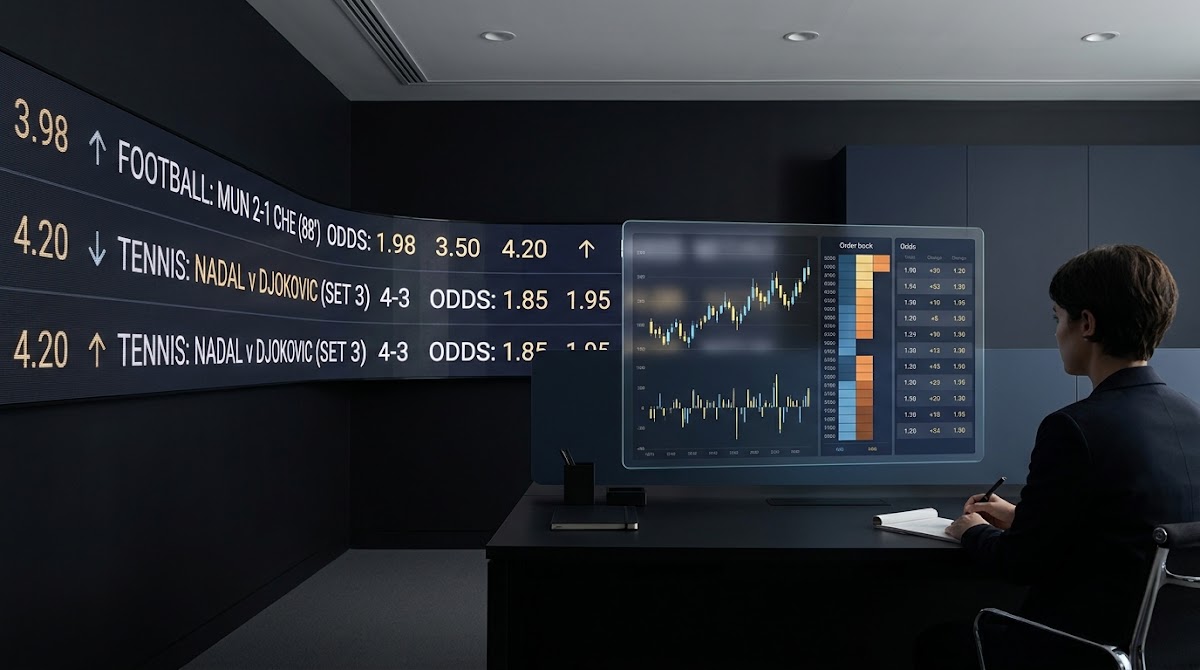
Introduction and what this guide covers
Live environments change fast, and anyone asking What Is Live Sports Trading needs a clear, realistic map of the decisions they will face while an event is running. This guide describes the essential mechanics of in-play trading, the differences from pregame forecasting, and the practical risk controls that keep a learning process orderly. It does not promise income or shortcuts, and it treats live trading as a skill that must be learned through disciplined practice and careful measurement.
You will find sections that focus on definitions and context, an action-oriented lifecycle of a live trade, market drivers and liquidity, risk and bankroll rules to protect capital, the lightweight tools and data that matter, common mistakes to avoid, and a simple practice plan with concrete examples. If you want, skip ahead to the strategy and example scenarios to see how a sequence of decisions plays out in real time.
Early in this guide you will also see checkpoints for how to set session limits, how to structure entry and exit rules, and how to record outcomes so progress is visible. The emphasis throughout is on repeatable routines, conservative controls, and learning rather than chasing short-term gains.
Ready to put practice into structured challenges
If you are ready to move from theory to practice, continue to the risk management and examples sections for step-by-step routines you can try in simulation.
Why this topic matters for sports predictors
Understanding What Is Live Sports Trading matters because decisions in-play require a different rhythm from pregame forecasting. The information a trader uses comes in streams during the event, and the best outcomes come from managing positions against unfolding facts rather than guessing a final outcome before kickoff. Knowing how to translate event signals into position adjustments is what separates repeatable performance from random wins and losses.
Who can benefit from learning live trading basics
Experienced sports predictors, analytics-minded fantasy players, and anyone who already evaluates matchups can all gain from a disciplined approach to live decision making. Practicing live skills helps with execution, timing, and the discipline needed for consistent performance. Newcomers should start in simulated accounts or small controlled sessions to learn without taking open financial risk.
Definition and context: what live sports trading means
Core idea in plain language
Live sports trading is the practice of making and managing positions in active markets while a sporting event is in progress. Instead of placing a single outcome-only bet before an event, a live trader opens, adjusts, and closes positions as new information arrives. The process focuses on short-term probability changes reflected in shifting market prices and often involves multiple trades within a single match.
How live trading fits into the wider sports prediction landscape
In-play trading sits alongside pregame prediction methods. Whereas pregame forecasting emphasizes long form research and final outcome probabilities, live trading emphasizes rapid interpretation of event flow, market price reactions, and execution quality. Many predictors use pregame models to form a baseline view (see guidance on using live data from Sportstrade), then switch to live trading to manage exposure as the match develops. This hybrid approach allows a predictor to combine long-term insights with real-time risk control.
The practical difference is speed of information flow, and the need to have rules that work under pressure. Live trading also exposes a trader to liquidity and platform constraints that matter less in static pregame settings. Learning to read the market during a match is a distinct skill that can be practiced and measured.
How live trading differs from traditional betting and from financial trading
Speed and information differences
Compared with pregame bets, live trades must be executed faster and rely on short bursts of information such as a scoring play, injury, substitution, or a momentum swing. The decision windows are narrower and the cost of missed execution is higher. Compared with regulated financial markets, in-play markets are typically thinner and more fragmented, with variable latency across data feeds and execution venues.
Quick pre-session readiness checklist for live trading
Run this checklist before each live session
Typical objectives and constraints
The objective in live sports trading is usually to manage short-term position value rather than to hold an outcome-only exposure to the final result. Traders set explicit entry and exit rules around defined targets and losses. Constraints include available liquidity, minimum stake sizes, platform order types, and any rules imposed by a challenge or simulation environment. Those boundaries often determine what strategies are feasible in practice.
Because platforms and regulatory frameworks differ from financial markets and from traditional sportsbooks, live traders must learn the particular behavior and rules of the venue they use. That can include limits on order types, delays in match data, and specific settlement conventions. Always treat platform rules as part of the trading plan.
Core mechanics: how a live trade is opened, managed and closed
Entry signals and execution
A typical live trade starts with an entry trigger. Common triggers include a clear momentum shift, an injury or substitution that changes expected outcomes, or a market price move that creates a perceived mispricing relative to your model or read of the game. The trigger should be defined ahead of time as part of a ruleset, including the exact conditions that count as a valid entry.
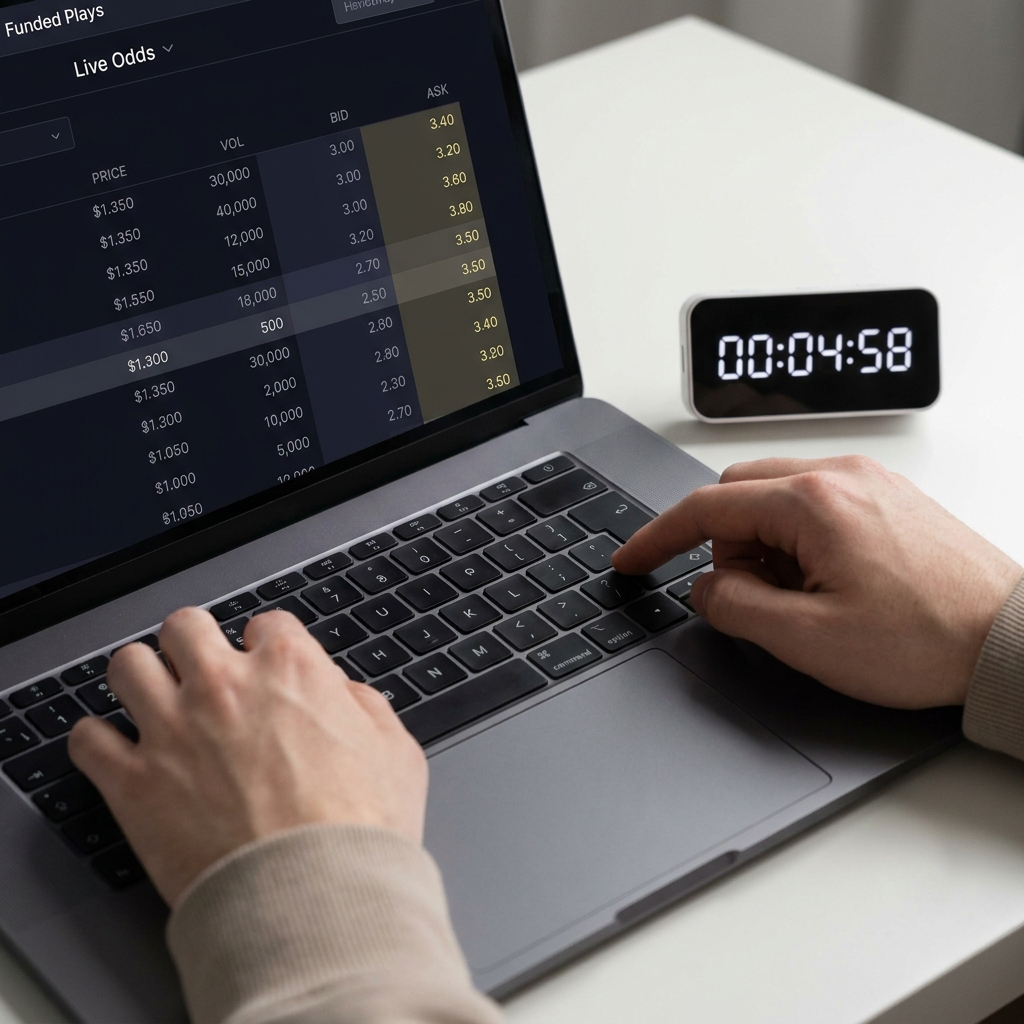
Execution often happens in tight windows, so traders prepare quick order sequences and know acceptable slippage. Practice with the interface you plan to use so you can place and confirm orders under time pressure. If your execution requires multiple steps, rehearse the sequence until it is repeatable and confirmation steps are automatic.
Position sizing and exit rules
Position sizing in live trading needs to balance opportunity and protection. Many practitioners use a percentage of session capital or a fixed fractional approach to limit exposure on any single trade. Clear exit rules are as important as entry rules. Common exit approaches include target-based exits tied to a specified profit level, time-based exits that close a position after a set interval, and stop rules that cap the loss if the market moves against you.
Combine exit rules. For example, pair a modest profit target with a stricter stop and a time limit that forces re-evaluation. This layered approach reduces the chance that you hold through adverse momentum or that you repeatedly chase a position that is not recovering. Always record the exact reason you entered and why you exited so you can evaluate execution quality later.
Markets, pricing and liquidity: what influences live prices
Sources of price movement in-play
Live prices move for clear reasons. Scoring events, injuries, substitutions, and visible momentum swings change the probability of outcomes and are reflected quickly in odds movement. Public money and the flow of bets from a large group of participants can also move prices, especially when markets are thin. Understanding who is moving the market and why helps interpret the signal strength of a price change.

How to read and interpret odds changes
Distinguish sharp moves from soft moves. A sharp move is generally backed by informed action and may indicate a real change in expected outcome. A soft move often reflects a short-term imbalance or a liquidity gap that can revert. Look at price depth and the size of live offers to judge whether a move is likely to persist or to be noise. If the visible liquidity is small, assume higher slippage and treat moves with caution.
Practical checks include scanning the ladder for available match sizes, watching the pace of price updates, and correlating price moves with event timelines to see if the movement follows an observable game event. That context separates meaningful signals from transient noise.
Risk and bankroll management for live sessions
Drawdown controls and stop rules
Conservative drawdown controls keep a trader in the game. Many live practitioners set both per-trade stops and per-session loss limits. For example, a trader might cap any single trade at 1 to 2 percent of session capital and set a session stop loss at 4 to 6 percent. The exact numbers should align with your overall risk tolerance and the size of the capital you are testing with.
Use stop rules that you can actually follow under stress. If a stop is a mental note rather than an automated order, it will often be ignored. Consider combining automated stops with clearly defined review points so you can step away from the screen when limits are hit. Protecting capital is the priority during the learning phase.
Session planning and limits
Plan sessions before you start. Decide which markets you will trade, the hours you will be active, the percentage of bankroll allocated to the session, and the maximum number of trades you will take. A clear session plan reduces impulse trading and helps preserve a consistent environment for learning.
Separate learning capital from performance capital. Use simulated accounts or a defined small allocation to practice new tactics, and keep a separate pool for strategies you have already tested. This separation prevents experimental losses from erasing the runway for disciplined work and makes performance evaluation cleaner.
Tools and data commonly used in live trading
Live feeds and odds aggregators
Traders rely on fast, reliable live data feeds and odds displays to make timely decisions (for an industry perspective see Sportradar). A feed provides event timestamps, scoring updates, and stats that help you judge whether a market move aligns with an observable event. Odds aggregators show price variations across venues and can help you find better execution or detect where liquidity is concentrated.
Latency matters. If your feed updates slower than the venue you execute on, you may see stale prices and experience worse fills. Prioritize reliability in a feed even if it costs a bit more, since missed or delayed information is a common source of execution mistakes (see industry discussion on real-time feeds at LSports).
Pregame prediction focuses on longer term probability estimates before an event starts, while live sports trading focuses on making and managing short-term positions as new information arrives during the event.
Basic analytics and watchlists
Keep a short watchlist and a few real-time indicators. Useful items include momentum indicators derived from event timelines, a simple edge calculator that compares live price to your expected value, and a watchlist of matches where you have a pregame view. Avoid overloading screens with dashboards; pick two or three indicators you understand and use them consistently.
Practice with the actual interfaces you will use so that under live conditions your eyes and hands move to the right place. A lightweight toolkit that you know well is usually better than a heavy stack you have not rehearsed.
Common mistakes and pitfalls to avoid
Emotional trading and chasing losses
Emotions are a major source of poor live decisions. A common mistake is increasing position size after losses in an attempt to recover quickly. That behavior often magnifies losses and undermines a disciplined process. Predefine your session stop loss and an escalation rule for when you feel tilted. If you hit your stop, stop for the session and review the trades that led there.
Another frequent error is letting short-term regret drive new trades. When a move goes against you, pause and check whether your rules still apply. Chasing with larger stakes or loosening exit rules is usually the wrong response.
Overtrading and poor execution
Taking too many trades or entering markets without sufficient liquidity increases costs and slippage. Overtrading often results from searching for action rather than following signal quality. Reduce trade frequency by insisting on clearly defined triggers and avoiding marginal setups. Good execution starts with conservative sizing in thin markets, a habit of checking depth, and using order types that match your execution objective.
Respect platform rules. Some venues have minimum stake sizes, settlement conventions, or other constraints that affect strategy viability. Ignoring those rules can create unexpected losses or limit your ability to exit a position when you need to.
How to practice: safe ways to build live trading skills
Simulated sessions and backtesting
Start with simulated accounts that mirror live conditions. Use the same latency, stake sizes, and time limits you would use in a real session, and log every trade with the same criteria you will use later for evaluation. Backtesting event timelines and price series can help build intuition about how markets tend to respond to specific events, but backtests need realistic execution assumptions to be useful.
Create a weekly practice plan with measurable goals. For example, run three simulated sessions per week focused on execution quality, with a target of keeping slippage under a defined threshold. Record progress in a trade journal and treat the practice plan as a training curriculum rather than a game.
Controlled live experiments
When you move to small live stakes, treat the transition as an experiment. Limit the capital allocated, reduce trade sizes, and predefine the outcomes that will cause you to revert to simulation. This controlled approach isolates variables so you can learn whether behavior under real conditions matches behavior during simulation. Only increase exposure after consistent evidence of repeatable execution and positive risk management outcomes.
Keep experiments narrow. Test one change at a time, such as a new exit rule or a different size sizing method, and measure the effect on execution and drawdown. That disciplined approach accelerates learning and prevents conflating multiple changes into unclear results.
Example scenarios: step-by-step live trades
A momentum-based trade example
Scenario: You have a pregame expectation that Team A is slightly favored, but early in the second half Team B pushes a run of successful possessions and the market drifts in favor of Team B. Your entry trigger is three consecutive scoring possessions by Team B within a ten minute window combined with visible price movement that creates a value opportunity for a small counter position.
Execution: You size the position at 1.5 percent of session capital and place a market order to capture the available price. You set a profit target equal to 3 percent of the position and a stop at 1.5 percent. If the market moves in your favor quickly, you take partial profits and tighten stops. If the market moves against you past the stop, you exit immediately and note the execution slippage for later review.
A defensive exit after a key event
Scenario: Midway through a match you hold a position that was profitable, but then a key player suffers a visible injury and is removed. The immediate uncertainty expands, and available liquidity thins as participants reassess probabilities. Your exit rule in this case prioritizes capital preservation and favors exiting at the first reasonable market quote.
Execution: You use a limit order sized to the visible depth to avoid pushing the price and monitor fills closely. If partial fills occur, you adjust the remaining order to reflect updated depth. After the trade concludes, record the event timeline, the exit rationale, and any execution issues such as slippage or fill delays. This record will show whether your defensive rule preserved capital as intended.
How to evaluate a live trading session and measure progress
Key performance metrics to track
Keep a simple metric set. Track win rate, average return per trade, maximum drawdown, and average slippage. Combine these with operational metrics such as execution latency, number of missed fills, and adherence to entry and exit rules. Over time, these numbers reveal whether you are improving in decision quality and in execution.
Review routines and improvement cycles
Set a weekly review where you scan the trade journal for recurring patterns: mistakes, execution breakdowns, and setups that consistently perform well. Monthly reviews should focus on whether your edge, as tested in simulation, scales to live conditions and whether your risk controls preserve capital across multiple sessions. Make small, documented adjustments and track their impact over subsequent weeks.

How funded challenge platforms relate to live trading
What role challenge models can play in skill development
Funded challenge platforms offer structured evaluation programs where participants complete tasks using simulated funds and specified rules. These environments can provide a consistent framework to test live trading skills without using unstructured real funds. They can also help a practitioner learn how to manage drawdowns and meet defined objectives under constraints that mirror professional evaluations.
Important rules and responsible participation reminders
These platforms do not guarantee earnings and have explicit rules participants must follow. If you use a funded challenge model as part of your development, read the evaluation rules carefully on the Funded Plays evaluations page and treat the challenge as a disciplined exercise. Use simulation first, and only enter challenges when you can demonstrate consistent execution and adherence to risk controls during practice sessions.
Conclusion and next steps for readers
Key takeaways
Live sports trading is a skill that focuses on managing positions during events, not a guaranteed source of income. Discipline, strictly defined entry and exit rules, and conservative bankroll management are the foundations of repeatable performance. Structured practice, measurement, and gradual exposure help turn ad hoc trades into a consistent process.
Suggested immediate next actions
Start by recording a short practice plan: define session capital, set per-trade and per-session stops, and commit to three simulated sessions this week with clear journaling. Review your results weekly and stay disciplined about the rules you set for yourself. Remember to respect platform constraints and to separate learning capital from any larger funds.
Responsible participation matters. Keep expectations realistic, avoid chasing losses, and treat each session as data for improvement rather than as a chance to recover prior losses.
Reaction time varies by sport and market, but you should prepare to make decisions within seconds to a few minutes. Practice with latency-aware tools and conservative sizing until execution is reliable.
Yes. Simulated accounts help build execution habits and test rules without risking real capital. Mirror live constraints when practicing to get useful results.
Protect your capital with fixed per-trade limits and a clear session stop loss. Discipline in loss control is more important than chasing small gains.