

Quick answer: what hedging means in sports trading
One-sentence definition: What Is Hedging in Sports Trading
Hedging is the practice of taking an offsetting position to reduce risk or lock in an outcome, a general risk-management idea that also applies to sports trading; traders use it to protect gains, limit drawdown, or smooth profit and loss when markets move against an initial position, and a concise definition is that it reduces exposure rather than guaranteeing profit Investopedia entry on hedging.
When traders use hedges depends on their objectives, risk tolerance, and the market available for execution; common reasons include locking a guaranteed profit after a big move, reducing variance in a short evaluation period, or protecting a bankroll during volatile in-play phases.
Try hedging workflows in FundedPlays challenge simulations
Read the full guide for step-by-step workflows, worked examples, and decision rules you can use before placing hedges.
As a risk-management approach, hedging is neutral by design: it trades some upside for reduced volatility and often a steadier P&L over time.
Key terms to remember are hedge, risk management and drawdown; understanding these helps frame when a hedge supports longer-term survival versus when it erodes a positive edge.
Why traders hedge: goals and tradeoffs
The primary objectives when traders hedge are straightforward: lock profit and reduce variance so short-term drawdowns are smaller and account survival is more likely, particularly in defined evaluation or challenge-style periods where drawdown limits matter Pinnacle guide on hedging principles.
Locking profit typically means taking an opposing position sized to make the total return similar regardless of outcome; that removes downside from a previously directional exposure but it also reduces the upside that the original position might have delivered.
There is a clear tradeoff: while hedging reduces variance and makes outcomes more predictable, routinely trimming positive-edge positions or closing them early can reduce long-term expected value, because some profitable outcomes are cut short to avoid occasional drawdowns Investopedia entry on hedging.
For traders in funded challenges or tight evaluation windows, the choice to hedge often comes down to survival versus maximizing edge: if a hedge prevents a rule breach it can be the rational option even if it costs EV over many trials.
How hedging works on betting exchanges: back, lay and 'green up'
Back and lay mechanics
On betting exchanges participants can back a selection to win or lay it to lose, creating opposing exposures between users rather than betting directly against a bookmaker; this marketplace model is defined under betting-intermediary regulation in some jurisdictions and is the structural basis for manual hedging UK Gambling Commission guidance on betting intermediaries.
Sizing a counter-position to green up
Greening up means sizing the counter-position so that your total profit is roughly equal across all possible outcomes; you pick the stake on the opposing side so returns net out, which effectively locks a certain profit irrespective of which side wins Smarkets guide to greening up.
In practice you calculate the opposing stake either by simple proportional math or using an exchange tool, then place a lay or back at the desired price and adjust for available market liquidity and fees to approach a true green.
Decide by weighing the immediate benefits of reduced drawdown and secured profit against the long-term cost to expected value, factoring in fees, liquidity, execution risk, and any rule-related constraints in your trading environment.
Once a greening stake is placed you monitor whether the market matches your order and be prepared to amend it if price moves before execution, because partial fills or slippage will change the green outcome.
Fees and market structure
Exchanges charge commission on net winnings and operate as intermediaries connecting backers and layers; that commission and the depth of market at your target prices should be part of any sizing decision because they affect net returns after you green up UK Gambling Commission guidance on betting intermediaries.
Understanding exchange fee schedules and the available volume at desired odds helps you estimate whether greening via a manual hedge is efficient compared with other options.
Bookmaker cash-out: an automated hedge and its limits
How cash-out functions
Bookmaker cash-out lets you close a settled position at live prices offered by the operator, which is effectively an automatic hedge that converts your current exposure into a concrete payout without requiring you to use an exchange or place opposing orders Betfair Help Centre on cash-out.
Because the cash-out price is calculated by the bookmaker and often includes an embedded margin, the payout can be convenient but typically differs from what a manual exchange hedge would cost to execute in the marketplace. For an alternative discussion of cash-out versus hedging see Betting Maths on hedging vs cash-out.
Comparing cash-out to manual exchange hedging
Cash-out is generally easier and faster, which can make it attractive when execution speed matters or when you lack access to an exchange, but it usually embeds additional cost compared with an equivalent back-and-lay hedge on a liquid exchange Smarkets explanation of hedging vs cash-out.
That margin means cash-out can be value-destroying if used reflexively on small-profit opportunities; evaluate the net expected value after the cash-out price rather than the headline convenience.
Practical caveats
Availability is a major constraint: not all bookmakers offer cash-out on every market or at every stage of play, and terms can change, so confirm current cash-out rules before relying on it as a hedge option Betfair Help Centre on cash-out.
Because cash-out removes the need to manage opposing exchange orders it can reduce execution risk, but you trade that simplicity for a margin and occasional restrictions on when a cash-out will be offered.

Pre-match and in-play hedging steps: a practical workflow
Pre-match hedging checklist
Start with clear objectives: decide whether the hedge aims to lock profit, protect against a rule-related drawdown, or rebalance exposure; without an objective the act of hedging can become ad hoc and costly.
Next, size stakes and check market access: calculate the required opposing stake to green up, confirm available exchange liquidity, factor in commission or a bookmaker cash-out margin, and only execute when net returns align with your objective Smarkets guide to greening up. For quick pre-match comparison guides see Oddsshopper how to hedge a bet.

For traders practicing or testing hedging workflows, simulated funded-challenge environments and virtual accounts let you rehearse size, timing, and execution without risking real funds, and documenting those tests helps refine rules.
In-play hedging best practices
In-play markets move fast around key events, so set predefined trigger points for hedges rather than reacting emotionally; specify price thresholds, time windows, or event triggers that will prompt an action to limit hesitation under pressure Journal article on in-play price dynamics.
Decide whether you will use quick cash-out for speed or target a manual exchange hedge for potential cost savings, and include slippage buffers in your sizing if you expect thin depth at your target prices.
Execution notes
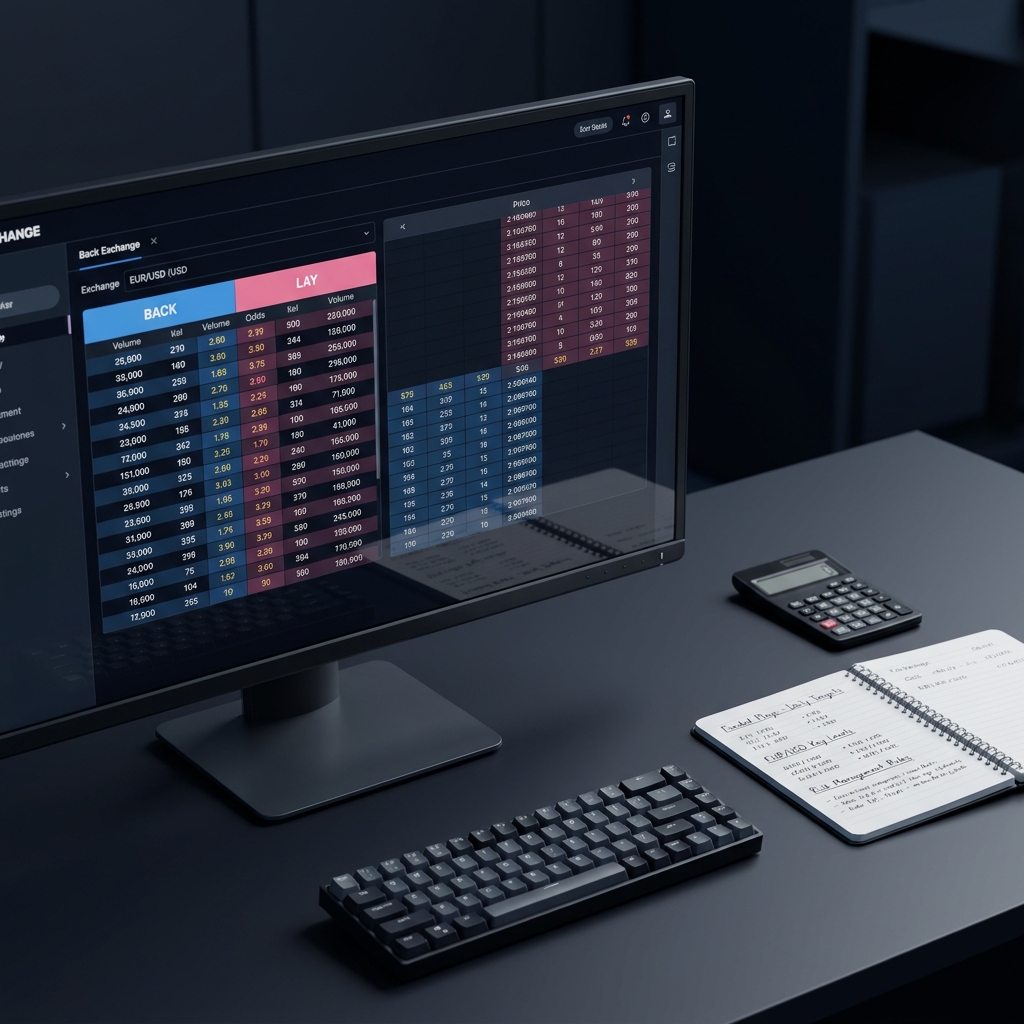
When executing a hedge, prefer limit orders if you can wait for a match to avoid taking a poor market price, but if speed is essential a market order or cash-out may be appropriate despite higher cost.
Always recalculate net returns after fees or cash-out margins before committing to a hedge to ensure the move meets your strategic objective, not just a short-term emotional reaction.
Stakes and sizing: maths for greening up and sizing counterpositions
Simple example calculations
A basic way to size a counter-position is to compute the opposing stake so that potential returns across outcomes are equal; this often means converting odds into implied returns, comparing them, and selecting the hedge stake that balances the two outcomes after fees Smarkets greening method.
Worked examples are useful: use small, manageable numbers to confirm the math before applying larger stakes and always re-run the calculation including commission or cash-out margin.
When fees change the math
Commission on an exchange or a bookmaker cash-out margin changes the required opposing stake and the net outcome; what looks like a perfect green before fees can become skewed after taking platform costs into account, so always compute net returns Investopedia entry on hedging.
If fees are high enough, a hedge that looks profitable on paper may actually reduce expected value relative to holding the original position, especially when the original selection had positive expected value.
Tools that help with sizing
Many exchanges and third-party sites offer greening calculators and staking tools that automate the calculation of opposing stakes and expected net returns; these small tools reduce human error and speed execution when needed Smarkets greening guide.
Before relying on any tool confirm its fee assumptions and update them if your exchange charges a different commission or if you plan to compare with a cash-out amount.
Timing, liquidity and execution risk in in-play hedging
Where slippage appears
Slippage happens when the price you expect changes between decision and execution; in-play slippage is common around goals, red cards, or time thresholds, and it can convert a tidy green into an unbalanced exposure if orders are partially filled or unmatched Journal article on in-play price dynamics.
Because slippage increases execution risk, hedging in-play requires either rapid execution methods or conservative size limits to avoid accidental exposure.
Liquidity hotspots and thin markets
Liquidity concentrates around popular markets and moments; major events attract depth that supports greening, while obscure markets or late-match stages can be thin and make it difficult to place the opposing stake at the desired price Smarkets on exchange liquidity.
Check market depth before committing to an in-play hedge and be prepared to reduce stake size or accept a wider price range if the depth is insufficient.
quick check of net profit difference when staking equal amounts
adjust defaults to match your exchange fees
Mitigating execution risk means using limit orders where possible, breaking a large hedge into smaller parts, and avoiding markets with visibly thin volumes.
When speed matters, weigh the cost of slippage against the cost of a bookmaker cash-out; sometimes a small cash-out margin is preferable to severe slippage that would make the hedge ineffective.
Risk management perspective: drawdown, variance and expected value
From a pure risk-management view, hedging reduces variance and short-term drawdown, which can be essential for a trader trying to survive a strict evaluation period or preserve capital in a small account Investopedia entry on hedging.
However, hedging is not free: if you consistently remove positive-edge exposures to avoid volatility you may lower your long-term expected value, because many profitable outcomes will be truncated by early exits Pinnacle guide on hedge tradeoffs.
Decision rules that weigh survival against edge perform well in structured challenges: prefer hedges when a single loss would breach a drawdown limit, but avoid routine hedges that systematically reduce your return per trial.
Step-by-step examples: pre-match hedge, in-play green up, and cash-out scenario
Pre-match example with numbers
Example: you back Team A pre-match for a $100 stake at 3.00 (decimal odds) and the implied return if Team A wins is $200 net profit before fees; by late betting a lay on the same team at 1.80 you can size the lay stake to equalize returns and lock a guaranteed outcome, recalculating after fees to confirm net profit Smarkets greening walkthrough.
In that pre-match example you would perform the math at small stakes first and confirm the exchange depth at 1.80; if fees are high the green may shrink and you might prefer holding the original stake if your edge remains meaningful.
In-play green up walkthrough
In-play example: you back a selection at 4.50 for $20 and the selection scores early, moving the implied price down to 1.40; by laying at 1.40 for the correct opposing stake you can green up and lock a profit, but the speed of the market means you must watch for partial fills or rapid re-pricing around the event Journal article on in-play liquidity.
If the exchange depth at 1.40 is shallow you may only partially green, creating residual exposure that you must manage with follow-up orders or an alternative exit such as cash-out if available and reasonably priced.
Cash-out vs manual hedge comparison
Cash-out example: the bookmaker offers $45 to close an ongoing bet that would otherwise return $60 if the bet wins; compare that $45 against the net result of placing a manual hedge on an exchange including commission to determine which option preserves more EV before accepting the cash-out Betfair Help Centre on cash-out.
In many cases a manual hedge yields a slightly better net return if exchange liquidity is good and commission is low, but cash-out can be the correct choice when speed and certainty outweigh a small EV differential.
Decision criteria: when you should hedge and when you should not
Signals that favour hedging include a large favourable odds move that can be locked into profit, an imminent rule-triggering loss that would breach a challenge drawdown limit, or a sudden change in match conditions that materially increases downside risk Pinnacle on hedge signals.
Situations where holding is usually better include a clear persistent expected edge, high hedging costs relative to projected benefit, or thin markets where execution risk would negate the hedge's intended effect.
Rules of thumb for challenge-style trading: document your hedging triggers before the challenge, prefer hedges to avoid rule breaches, and avoid emotional or ad hoc hedges that have not been tested in a simulation.
Common mistakes and avoidable pitfalls when hedging
One common error is over-hedging, where frequent small hedges lock modest wins but steadily remove positive expected value over many trials; this erodes long-term returns even if it smooths short-term results Pinnacle on hedge pitfalls. For discussion of cash-out confusion see Betangel on cash-out confusion.
Ignoring fees and cash-out margins is another frequent mistake; calculate net returns after platform costs and do not assume the headline cash-out or opposing price is equivalent to an exchange-based hedge without that deduction Betfair Help Centre on cash-out terms.
Poor execution in thin markets creates slippage that turns a planned hedge into an incomplete or damaging trade; check market depth and break large hedges into smaller orders where appropriate to reduce this risk Journal article on in-play execution.
Platform rules, fees and regulation that affect hedging choices
Exchanges are regulated as betting intermediaries in some jurisdictions, which matters because it clarifies how orders are matched and what protections or obligations exist for participants using those markets to hedge UK Gambling Commission betting intermediary page.
Bookmaker cash-out terms vary by operator, including timing, eligibility and whether the cash-out can be withdrawn or voided under specific conditions, so always confirm current terms before acting on a cash-out offer Betfair Help Centre on cash-out.
Platform fee models affect whether a manual hedge or cash-out preserves more EV; before executing check the exchange commission, any rebate structure you qualify for, and the bookmaker's cash-out calculation method.
How hedging fits with funded challenge platforms and disciplined trading
In evaluation challenges that use virtual funded accounts, hedging is a permissible risk-management tool that can help traders comply with drawdown rules and demonstrate disciplined decision-making, but it should be used according to documented strategy rather than as an ad hoc escape hatch. See evaluation challenges for more on related rules.
Documenting hedging decisions, including triggers, size rules, and post-trade reviews, aligns with a performance-focused approach and helps evaluators see consistent risk management rather than random outcomes.
Funded challenge platforms can provide an environment to practice hedging workflows safely, but such platforms do not guarantee outcomes and hedging should be part of a broader, consistent trading plan.
Checklist and closing summary: a quick reference for next time you consider a hedge
Short pre-hedge checklist
Before hedging check your objective, calculate opposing stake and net returns after fees, confirm exchange liquidity or cash-out availability, and note how the hedge affects your challenge drawdown or account rules Investopedia on hedging basics.
Final reminders: hedging reduces variance but can lower long-term expected value if overused, slippage matters in-play, and document every hedge so you can audit its contribution to your performance.
Test hedging workflows in simulations or low-risk environments before scaling, refine triggers and sizing, and maintain discipline so hedging supports your goals rather than undermines them.
Mitigating execution risk means using limit orders where possible, breaking a large hedge into smaller parts, and avoiding markets with visibly thin volumes.

Greening up means placing an opposing back or lay stake sized so that your total profit is roughly equal across outcomes; do the math including exchange commission before executing.
Cash-out is an automated way to close a position and acts like a hedge, but it usually includes an embedded margin versus a manual exchange hedge and can reduce expected value.
You can hedge in-play when the risk-reduction objective outweighs execution cost and slippage risk; set predefined triggers and confirm market liquidity before acting.
References
- https://www.investopedia.com/terms/h/hedge.asp
- https://www.pinnacle.com/en/betting-articles/betting-strategy/how-to-hedge-a-bet/
- https://www.gamblingcommission.gov.uk/licence-types-and-codes/organisations/betting-intermediary
- https://smarkets.com/pulse/how-to-hedge-and-green-up-on-the-exchange
- https://support.betfair.com/app/answers/detail/a_id/405/~/what-is-cash-out-and-how-does-it-work
- https://www.bettingmaths.co.uk/guides/hedging-vs-cash-out/
- https://www.oddsshopper.com/articles/betting-101/how-to-hedge-a-bet
- https://www.fundedplays.com/challenges
- https://doi.org/10.1177/15270025241234567
- https://www.betangel.com/cash-out-confusion/
- https://www.fundedplays.com/blogs/how-fundedplays-evaluations-work
- https://www.fundedplays.com/blogs
- https://www.fundedplays.com