
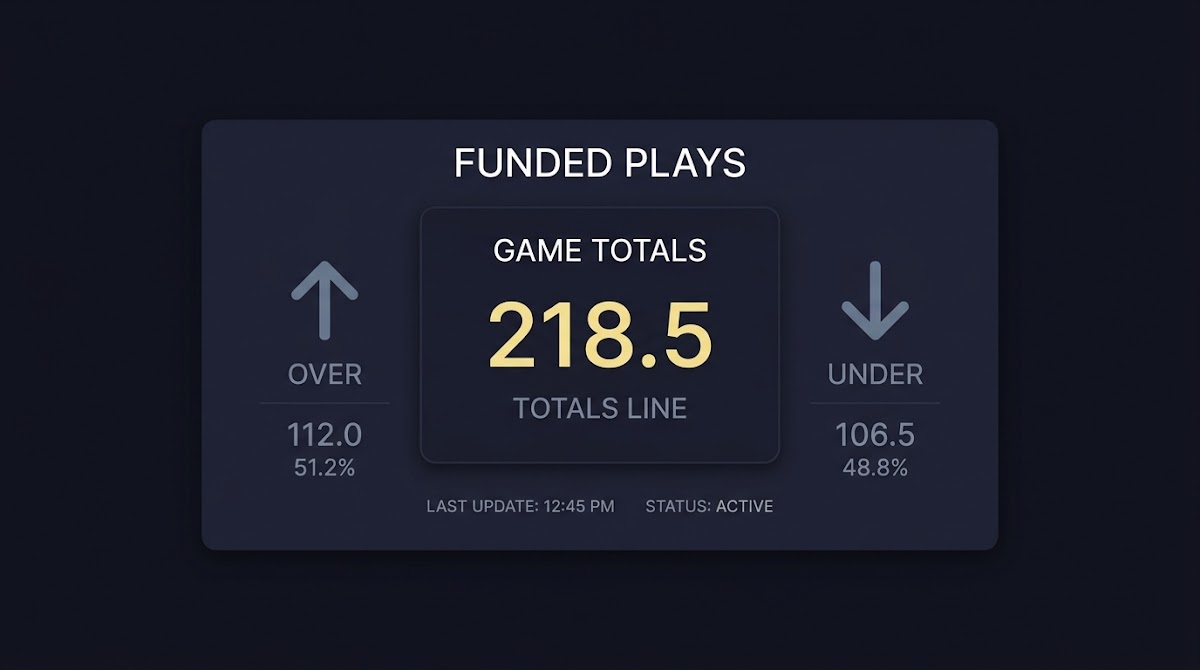
What Is a Total or Over/Under? Clear definition and core rules
A totals bet, often called an over/under, is a wager that asks whether the combined score or a defined statistic in an event will finish above or below a line the bookmaker posts. This definition captures the core idea that you are betting on an outcome relative to a number, not on which side wins, which makes totals a distinct standard market in regulated U.S. betting and elsewhere Investopedia over/under guide.
In practice the bookmaker sets a single line for a game or a statistic and offers odds on both the over and the under. If the final measured outcome equals the line exactly, the result is a push and most markets refund the stake unless the market removes the tie by using a half-point in the line; that half-point makes an exact tie impossible and therefore avoids pushes in many offerings Legal Sports Report over/under betting.
To place a totals wager you select over if you expect the combined score or specified stat to be higher than the line, or under if you expect it to be lower. Totals sit alongside moneylines and point spreads as one of the three core markets available in regulated sports books, and the consistency of these core markets is part of why totals remain standard across expanding U.S. markets American Gaming Association industry overview.
Example: if a football game has a posted total of 45.5 points, a bet on the over wins if the combined score is 46 or more and loses if it is 45 or less. Use of the half-point in the example prevents a push; if the line were 46 and the final score totaled 46 the wager would be a push and most operators would return the stake Investopedia over/under guide.

How sportsbooks set and adjust totals
Sportsbooks begin with statistical models and range estimates that translate team and player data into an initial totals line. These models use historical performance, pace metrics, matchup adjustments, and situational factors to estimate a reasonable expected total before human traders review the outputs Kambi on effective odds management.
Once the line is live, sportsbooks connect real-time data feeds for injuries, weather, and late news and they watch incoming betting volume. When new, credible information arrives the market price can move to reflect the updated probability of different score outcomes; this combination of model output plus fast data feeds is how initial and adjusted lines are produced Kambi on effective odds management.
Lines also move because bookmakers manage exposure. If one side of a totals market attracts outsized liability, the operator will change the posted odds or adjust the line to encourage offsetting action and reduce potential losses. That balancing function is central to risk management during both routine games and major events Legal Sports Report over/under betting.
Injuries, weather, and lineup changes are common concrete triggers for line movement. For example a late injury to a starting quarterback often reduces the expected scoring output and can push a total down; conversely, confirmation that a key defender will not play can push a total up if it materially affects expected scoring Kambi on effective odds management.
Sportsbooks also use limits and market controls during peak moments. For high-profile events, operators may restrict available markets, lower maximum stakes, or widen the juice to manage sharp flows and concentrate on balanced books rather than pure price competition Kambi on effective odds management.
Verify lines and rules before placing totals wagers
Before you place funds in a totals market, verify the posted line, check settlement rules for pushes, and confirm market availability where you are located.
Traders will sometimes move a line early based on model updates or credible information rather than betting volume. Early movement can signal a technical or informational advantage in the model; distinguishing this from late, volume-driven movement is part of interpreting why lines change Legal Sports Report over/under betting.
Finally, remember that movement does not always imply a clear edge for a bettor. Operators aim to attract balanced action, and price adjustments can reflect an attempt to shape behavior rather than a definitive assessment that one side is value. Treat line movement as useful context rather than a stand-alone signal Kambi on effective odds management.
What Is a Total or Over/Under in practice: market types and variants
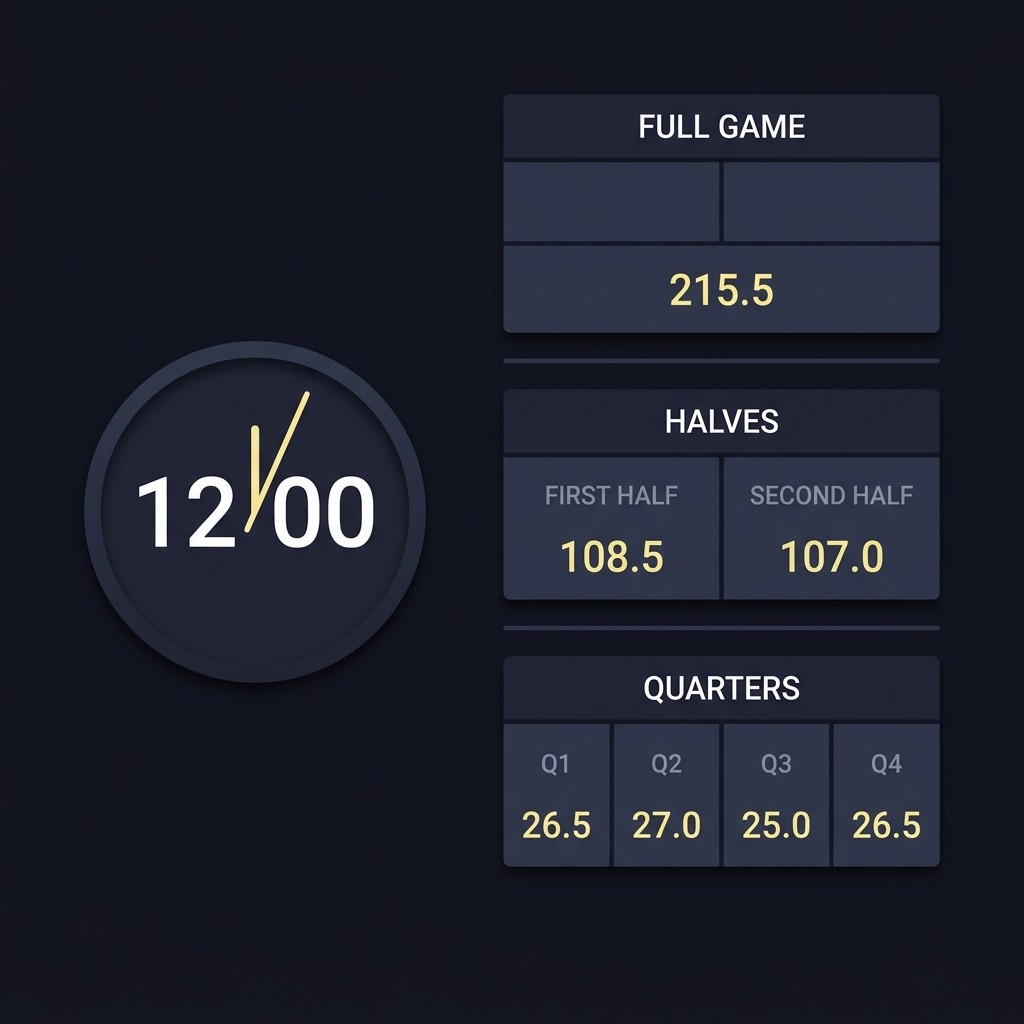
Totals are available in several distinct formats. Full-game totals apply to the combined score at the final whistle and are the most common offering. Full-game markets are the default totals product that most casual and regular users will encounter Legal Sports Report over/under betting.
Halves, quarters, and period totals let bettors target shorter segments of the contest. These markets let you wager on scoring inside a defined window, which can be useful if you forecast a fast or slow start or expect situational differences between halves or quarters Legal Sports Report over/under betting.
A totals or over/under bet is a wager on whether a combined score or defined statistic finishes above or below a posted line; if the outcome equals the line most markets refund the stake, while half-point lines prevent ties.
Team totals split the combined score into an individual team s expected points, while player-stat totals apply to a named player's counting stats such as rushing yards, receiving yards, or points scored. These variants are popular because they let bettors express more granular views than a full-game combined total Legal Sports Report over/under betting.
Availability of certain player-stat or exotic totals can vary by jurisdiction. Some states restrict specific player props or unusual markets, and operators expose only the sets of totals that are compliant with the local wagering catalog and regulatory guidance Colorado wagering catalog of events and wagers.
When you look at a sportsbook s menu, note the labeling for each totals product so you understand whether the market is full-game, team, period, or player-stat and how the operator defines settlement conditions for that market Legal Sports Report over/under betting.
How payouts work on totals: reading American odds and understanding juice
Totals payouts are set by American odds. A common line on totals is -110 on both sides, which typically means you risk 110 to win 100; if the line is listed as +120 the decimal means a $100 stake wins $120 profit. Learning to read these quotes helps you convert odds into practical payout expectations Investopedia American odds.
Simple example for -110: stake 110, win 100, total return 210. For +120: stake 100, win 120, total return 220. These straightforward calculations are the starting point for tracking bankroll and measuring returns on a sequence of totals wagers Investopedia American odds.
Juice, also called vigorish, is the built-in margin that operators extract by adjusting prices away from fair odds. A market priced at -110 on both sides implies the bookmaker takes a small fee over long-run action, which affects expected value unless bettors overcome it with an informational or analytical edge Investopedia American odds.
On a push the settlement is usually a refund of the stake, which means the trade has no win or loss effect on that wagered amount. That refund behavior matters for bankroll accounting and for how players think about variance across a series of totals wagers Investopedia over/under guide.
When assessing a totals price, compare the vig across operators if possible but remember that availability of identical markets can depend on your state s rules and the operator s permitted menu in that jurisdiction Colorado wagering catalog of events and wagers.
State rules and wagering catalogs: check before you place a total
Regulators publish official catalogs that list approved wager types for their jurisdiction, and those catalogs define which totals and props operators may offer. This is the authoritative source for market permissions and is updated periodically by regulators Colorado wagering catalog of events and wagers.
State catalogs typically specify whether player-stat props, certain exotic totals, or in-play variants are allowed and may include settlement rules or definitions operators must follow. That means you can consult the catalog to confirm whether a particular market is permitted where you live Gaming Commission guidance.

Because catalogs are updated and new guidance can arrive ahead of a season, it is prudent to verify availability for the current period. Industry reporting also shows growth and standardization across regulated markets, but that does not remove the need to check local permissions before assuming a market is available American Gaming Association industry overview.
If a state restricts a market you may still see references to it on third-party sites, but the operator will only list markets it is authorized to offer to local customers. Confirm at the operator s site and cross-check with the official state catalog before acting Colorado wagering catalog of events and wagers.
How to read line movement and decide when to act
Line movement comes from multiple sources and understanding the timing helps you interpret why a total changed. Early movement often follows model updates or emerging news that changes expected scoring, while late movement more commonly reflects betting volume and traders adjusting to balance exposure Kambi on effective odds management.
Sharp money refers to bets from professional or highly informed bettors whose actions sometimes move lines significantly. Differentiating sharp movement from general public money can matter, because sharp-driven shifts often indicate new information or superior analysis rather than simply wider public sentiment Kambi on effective odds management.
quick monitoring list to track line changes and key news
check major news sources first
Use line movement as one input among several. Combine your read of movement with injury reports, matchup analysis, and an assessment of the juice to make a disciplined decision rather than leaning solely on movement as your signal Legal Sports Report over/under betting.
When you see a late move, ask whether it aligns with clear factual updates or whether it is simply heavy public activity. Heavy public action can move a line without changing the underlying expected outcome, because operators may shift prices to attract balanced liability Kambi on effective odds management.
Typical mistakes and pitfalls with totals
One common mistake is treating a push as a loss. On most totals markets a push results in a refunded stake, and misrecording that result in your tracking will distort win rates and bankroll calculations; always check settlement rules when you record outcomes Investopedia over/under guide.
Underestimating the impact of juice is another frequent error. Small differences in vigorish across multiple wagers compound over time and change the break-even win rate you need, so give weight to the cost of the juice when comparing markets Investopedia American odds.
Overreacting to single line moves or limited sample results can mislead decision-making. A one-off movement or an anecdotal streak does not reliably indicate a persistent edge; focus on consistent process and appropriate sample sizes before changing your approach Kambi on effective odds management.
Other pitfalls include failing to confirm jurisdictional availability and misunderstanding exactly what a team or player total measures for settlement. Double-check the operator s market definition and the state catalog to avoid surprises after settlement Colorado wagering catalog of events and wagers.
Practical examples, quick checklist, and closing summary
Example 1, full-game total with -110 odds. Suppose a game has a posted total of 48 and the agreed odds are -110 on both sides. If you bet 110 on the over and the final combined score is 50, your stake wins and you receive your original 110 plus 100 profit for a total return of 210. This example shows the simple mechanics of American odds on a totals market Investopedia American odds.
Example 2, team total and a push. If a player prop or team total is listed at 24 and the result equals 24 exactly, the market is typically a push and the operator refunds the stake. If the line had included a half-point such as 24.5 there could be no push; the half-point forces a decisive outcome for settlement Investopedia over/under guide.
Pre-bet checklist: confirm the market is permitted in your state, read the operator s settlement rules for pushes, compare the juice across available operators, and review recent line movement and news that could affect the expected total. These checks help you make an informed, disciplined decision Colorado wagering catalog of events and wagers.
Final takeaways: totals are a straightforward, widely available market that require attention to lines, juice, and settlement rules. Regulated catalogs and market practices determine what you can access, while model outputs and market flows explain why prices move. Approach totals with a process, verify jurisdictional permissions, and keep responsible participation central to how you play American Gaming Association industry overview.
A push occurs when the outcome equals the posted line; most operators refund the original stake for that market unless the line used a half-point to prevent ties.
A -110 price typically means you risk 110 to win 100; a winning -110 bet returns the original stake plus 100 profit, for a total of 210 on a 110 stake.
No, availability varies by state; regulators publish wagering catalogs that define which player and exotic totals operators can offer in each jurisdiction.