
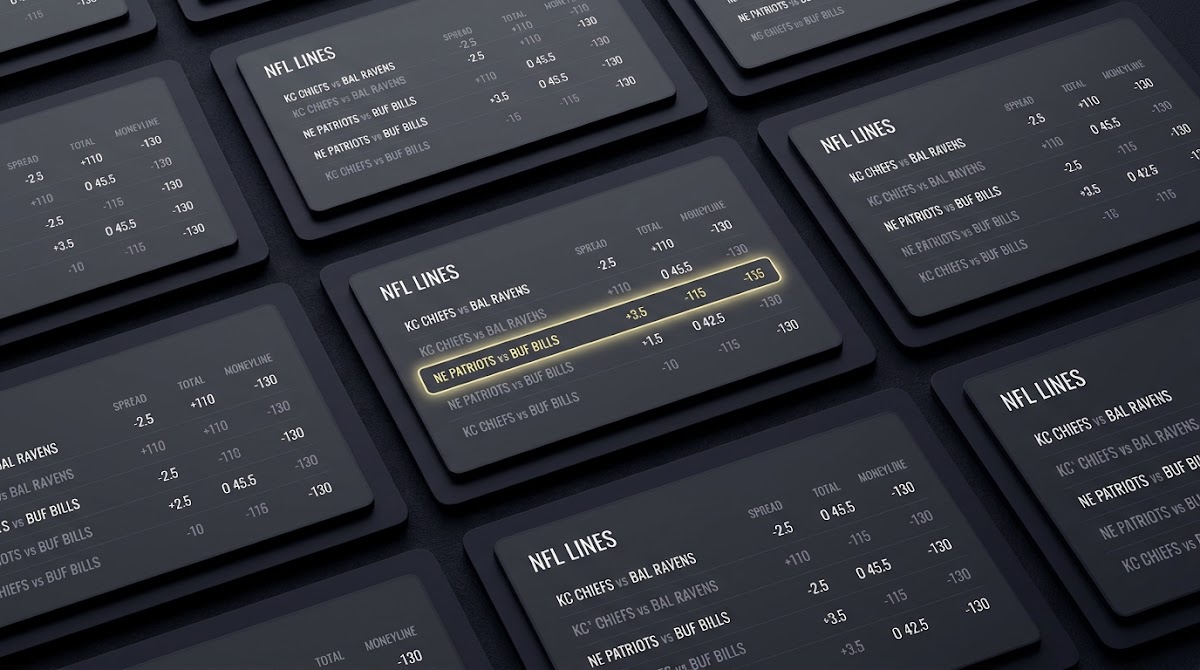
Definition and context: what a middling opportunity means
Basic definition and how a middle differs from other plays, What Is a Middling Opportunity
A middling opportunity occurs when you place opposite bets at different lines so there is a specific band of final outcomes in which both wagers cash. In practice this means you have to find price or line divergence across operators and intentionally stake opposite sides so that, if the game outcome falls inside that narrow range, both tickets win. The basic mechanics and examples used by educators describe middles as a line- and price-driven tactic rather than a guaranteed profit method, and they are taught as a strategic tool rather than a safe hedge Action Network explainer.
It is important to contrast a middle with arbitrage. Arbitrage seeks a risk-free profit by combining prices so every outcome returns money. A middle is not risk-free: many results lead to split outcomes or losses, so expected value depends on both prices and the probability that the final margin lands inside the middle range. That distinction is central to how you evaluate whether any candidate middle is worth the risk Pinnacle resource on middling.
Middles most commonly appear in spread markets, but totals and some props can show the same pattern when different operators post diverging lines. The key requirement is that lines differ enough to create a contiguous band of results that pays both legs; without a meaningful gap there is no practical middle to target. Educators note that totals and props can produce middles in the right conditions, though spreads remain the clearest example.
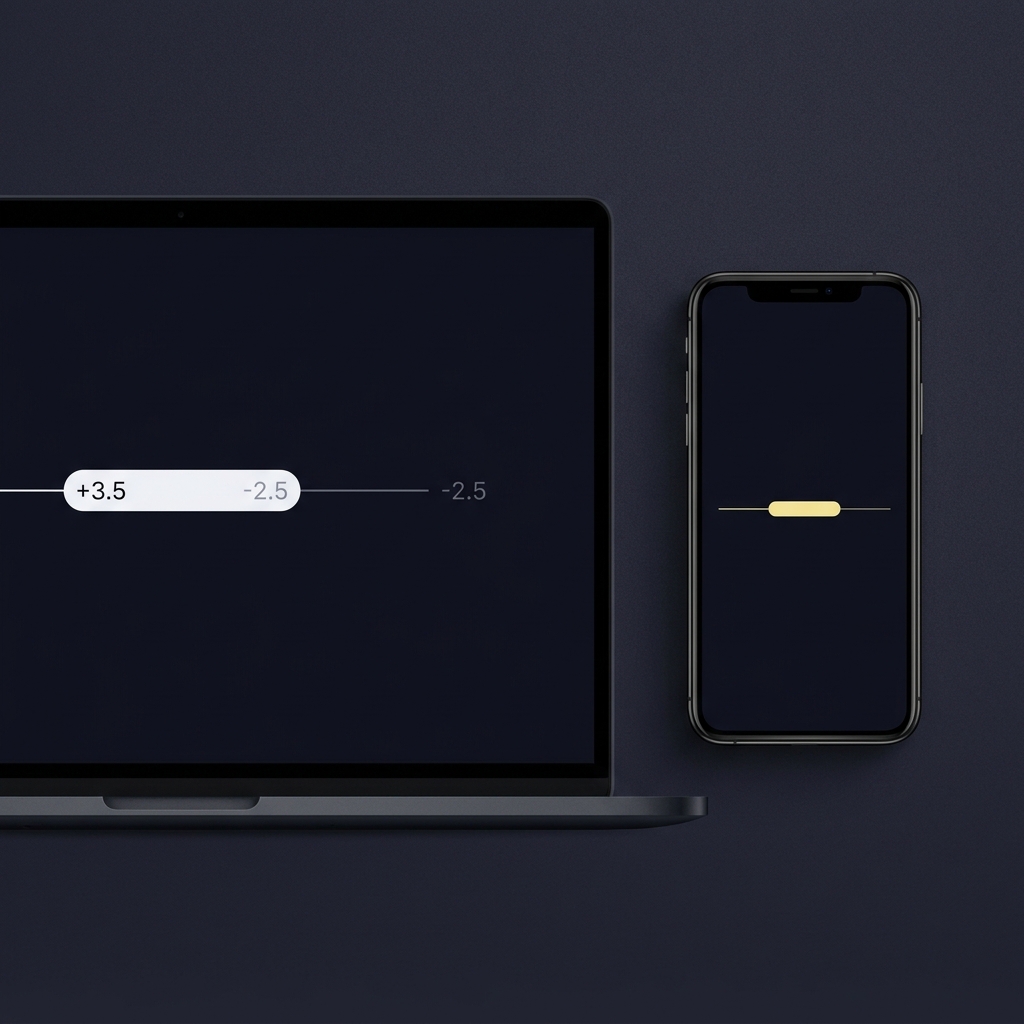
When you place matched but opposite wagers you face four broad outcomes. First, a double win: the final margin falls squarely inside the middle band and both tickets win. Second, a split: one ticket wins and the other loses, which happens when the result lies outside the overlapping band. Third, a double loss: rare relative to a split but possible when both lines are unfavorable relative to the result. Fourth, pushes or voids: if the settlement rules produce a push on one or both legs, book rules determine whether a stake is returned or the wager is voided. A simple spread pairing such as +3.5 and -2.5 illustrates these results because only a 3-point margin creates a double win while other outcomes split or push, depending on exact settlement rules Covers explanation.

To judge a middle you must convert offered odds into implied probabilities and then compute the break-even chance that the result lands in the middle band. Start by converting each leg's price into its implied probability. For American or decimal odds there are standard conversions you can use; the goal is to know how much the books are paying relative to 100 percent probability.
Step 1, write down the payout for each leg and the stake. Step 2, convert prices to implied probability. Step 3, calculate the combined expected return if the middle hits versus if it does not. Step 4, solve for the middle probability that makes the expected value zero. The algebra is straightforward in a spreadsheet: set expected value equal to the weighted payout of the double-win scenario plus the weighted returns of split or loss scenarios, then isolate the middle probability term. The same logic explains why middles are not arbitrage, because unless the calculations show a guaranteed positive EV across all outcomes you retain downside risk Pinnacle guide.
Plain-English summary: if the implied payouts on the two legs create a break-even middle probability that you judge is lower than the true chance the game will land inside the band, the middle can have positive expected value. If not, it is a speculative play that relies on luck rather than pricing edge. Keep math concise and use a template or calculator to avoid arithmetic mistakes.
a short checklist to prepare a simple spreadsheet or calculator
Use this before entering stakes
When middles are most attractive: decision criteria and timing
Key numbers in football and why 3 and 7 matter
Middles become materially more attractive in football when key numbers move, most notably 3 and 7, because those margins are common final-score gaps. When a line moves across these numbers the overlap band often includes the most frequent winning margins, increasing the chance of a double cash. This concentration of likely margins is why practitioners often monitor NFL spreads around these values when hunting middles VSiN on NFL key numbers.
Price symmetry also matters. An appealing middle usually presents roughly similar payouts on both legs so a double win produces net gains after accounting for the cost of the losing scenarios. If one side is heavily juiced while the other is soft, the break-even middle probability shifts and the trade can become unattractive even if the lines technically overlap.
Execution timing is a key risk because line windows can be brief. Modern pricing engines and faster information flows have compressed middling windows in recent years, so a gap that looks promising can close before you secure both legs. That timing risk applies to all market types but is most acute in popular events and when books quickly react to news or betting flow Unabated example.
Checklist for attractiveness: confirm a gap that crosses or sits near a key number, check that prices on both legs are reasonably balanced, and factor the likelihood that one leg will move before you can place the second bet. If you cannot secure both legs within your tolerance for slippage, skip the middle.
A practical evaluation framework: step-by-step before you place opposite bets
Confirming a meaningful gap and proximity to key numbers
Start with a brief gap confirmation: note both books' posted lines and identify the overlap. Prefer gaps that cross NFL key numbers or similar concentration points in other sports. Record the exact lines and the posted prices so you can compute implied probabilities later.
Second, compute the break-even middle probability from the posted prices and compare it to your independent estimate of the chance the final margin will fall in the middle. If your estimate exceeds the break-even probability, the middle may be justifiable. If it does not, do not force the trade. This step is essential because middling is a probability and pricing exercise, not a certitude.

Practice the evaluation steps before staking real funds
Try this framework on paper first: list the lines, compute the break-even middle probability, and only consider placing stakes if the numbers support a positive edge.
Third, run a quick rules audit: confirm push and void policies, maximum acceptance limits, and how each operator settles tickets. Different operators treat pushes and correlated bets differently, and those rules change the math of your expected return. Finally, size positions conservatively and only commit amounts you can afford to lose under a split or double-loss scenario.
Examples and scenarios: spreads, totals and a high-profile event case
Classic spread pair example (+3.5 and -2.5) and how a 3-point middle wins both
A canonical spread example used in teaching is pairing +3.5 against -2.5. In this pairing a three-point margin in the final score produces a double win because both tickets cover their respective lines. This small, focused band illustrates how narrow middles typically are: the double-win zone may be only one or a few score margins wide, and most outcomes will split or lose, which is why careful selection and correct sizing are required Action Network example.
Because the winning band is so narrow, you should expect that most supposed middles will not land perfectly. That narrowness is what separates a disciplined middling strategy from reckless opposite betting; you must treat each candidate with arithmetic and an acceptance of frequent splits.
Totals and certain props can create middles when books post diverging lines, especially in volatile markets or when new information shifts one book's number more than another's. Prop middles are usually less frequent because props often have lower liquidity and tighter limits, but they can appear around widely available lines. In such cases always check operator limits and how pushes are handled since props commonly have unique settlement rules.
Large events like the Super Bowl can briefly widen discrepancies across operators when one book moves early and others lag, creating middling chances that are attractive for a short window. Analysts who tracked the 2024 Super Bowl noted pockets of divergence that created middling possibilities in both spreads and totals, though these windows were often brief and required rapid execution Unabated account of 2024 divergence.
Common mistakes, limits and risk management
Typical execution errors and how they cost you money
Common errors include misreading key numbers, failing to account for push or void rules, and mismatching stake sizes so a split outcome inflicts disproportionate loss. Often a promising-looking middle is ruined by one leg moving after you've placed the first bet, so always plan for slippage and have a clear acceptance threshold.

Book-specific limits can also upset a plan. Large intended middles may be capped by maximum stakes or manually rejected if a ticket appears to be an exploit. You should expect that operators may limit or void suspicious correlated wagers, which is why conservative sizing and knowledge of each book's policies are essential.
Bankroll guidance: size each leg so that a split outcome fits your staking plan and does not trigger ruinous drawdown. Treat middling as a specialized tool and restrict exposure until you have a consistent, documented edge from your calculations.
Market evolution has made middles harder to capture. Faster line moves and more sophisticated pricing models reduce the time books disagree, compressing the window where a profitable middle exists. This evolution increases execution risk and pushes successful practitioners toward pre-checked accounts and automated response plans.
Liquidity matters. In thin markets a book may limit acceptance or adjust quickly to avoid being exposed to correlated risk, which eliminates many middles even when lines briefly diverge. A disciplined approach favors smaller, repeatable candidates rather than one-off large middles that attract attention.
When operators tighten lines or reduce limits, middles that once appeared profitable become impractical. The right adaptation is process-focused: improve speed, keep a short pre-flight checklist, and accept that certain market regimes will produce few workable opportunities. If you cannot reliably execute both legs within your risk tolerance, do not pursue middles regardless of theoretical edge TheLines overview.
Conclusion and quick checklist for spotting a middling opportunity
One-paragraph summary and decision checklist
In short, a middling opportunity is a purposeful, line-driven strategy where opposite bets create a narrow band of outcomes that can win both wagers; it is distinct from arbitrage because it carries outcome risk and depends on prices and probability. Use a compact checklist each time: confirm a meaningful gap, compute break-even middle probability, verify push and void rules, check limits and timing, and size stakes conservatively Action Network refresher.
Middling tries to exploit a narrow range of outcomes created by differing lines so both bets can win, but it is not risk-free; arbitrage combines prices to ensure every outcome returns a profit.
Copy-ready checklist: 1) Record both lines and prices. 2) Confirm the overlap and proximity to key numbers. 3) Compute break-even middle probability and compare to your estimate. 4) Audit push/void rules and limits. 5) Size legs for acceptable split risk. 6) Only execute if steps 1 through 5 support the trade.
A middling opportunity requires a specific outcome range to win both bets and carries outcome risk, while arbitrage combines prices so every possible result yields a guaranteed profit. Middling depends on prices and the probability the result falls in the overlap.
Spreads are the most common middling candidates, especially in football around key numbers, but totals and some props can also create middles when lines diverge across operators.
Confirm how each operator treats pushes and voids, check maximum acceptance limits, and understand bet acceptance timing so that one leg cannot move or be rejected unexpectedly.
References
- https://www.actionnetwork.com/education/what-is-a-middle-in-sports-betting
- https://www.pinnacle.com/en/betting-resources/education/arbitrage-betting-and-middling-explained
- https://www.covers.com/betting/what-is-middling
- https://www.fundedplays.com/blogs
- https://oddsindex.com/guides/line-movement-betting
- https://unabated.com/insights/middling-opportunities-super-bowl-2024
- https://www.vsin.com/nfl/nfl-key-numbers
- https://www.fundedplays.com/blogs/how-fundedplays-evaluations-work
- https://www.actionnetwork.com/education/what-is-a-middle-in-sports-betting
- https://www.fundedplays.com/challenges
- https://www.thelines.com/betting/middling
- https://www.boydsbets.com/middle-in-sports-betting/