
What people mean by a "lock" and why the word is appealing: What Is a Lock and Why Is the Term Misleading
Common colloquial uses and connotations
In casual sports talk, a "lock" is shorthand for a pick that a person believes is almost certain to win. Fans, tipsters and social posts use the word to express very high confidence in a single outcome, and the phrase often signals a strong conviction rather than precise analysis.

That casual use matters because it shapes expectations. Readers hearing that a selection is a "lock" often interpret it as close to guaranteed, which can change how they place attention, stake money, or judge a writer's credibility after an unexpected loss.
People prefer simple, decisive answers when outcomes are uncertain; certainty language reduces cognitive load and makes choices feel more comfortable. This is a well known pattern in decision making where a single, confident statement is easier to act on than probabilistic nuance.
At the same time, cognitive bias toward certainty can mislead both writers and audiences into overweighting recent wins or the narrative appeal of a pick, which is why a clear, neutral definition helps separate enthusiasm from responsible communication.
Why regulators and industry codes discourage "lock" language
Core rules that forbid misleading or deceptive claims
industry codes and regulators require that advertising and public statements avoid false, deceptive or misleading claims, so wording that implies a guaranteed outcome conflicts with those obligations; the AGA Responsible Marketing Code explains these marketing limits and the need for truthful, non deceptive messaging AGA Responsible Marketing Code for Sports Wagering.
State regulations similarly restrict advertising claims that could mislead consumers; for example, Massachusetts rules require clear disclosure of conditions for any apparent "free" offers and bar deceptive statements in sports wagering marketing 205 CMR 256.00: Sports Wagering Advertising, Marketing and Branding.
Avoid 'lock' claims in public picks
If you publish picks or run a platform that shares forecasts, read the relevant marketing rules and apply a simple editorial checklist to avoid absolute certainty language.
How responsible marketing and age targeting fit in
Industry codes also require responsible gambling messaging and age targeting to reduce harm and avoid promoting participation to underage or vulnerable groups; these requirements are part of broader responsible marketing expectations outlined by industry organizations AGA Responsible Marketing Code for Sports Wagering.
These safeguards mean publishers should avoid casual "lock" claims in public posts or ads where marketing rules apply, and instead use calibrated language that communicates confidence without promising certainty.
How odds, implied probability and operator hold show there are no guarantees
What handle, gross revenue and hold mean
Betting markets use odds to express implied probabilities, and operator margin is built into those prices; the AGA State of the States report defines handle, gross revenue and hold to explain how operator revenue is generated from the spread between stakes and payouts State of the States 2024: The AGA Survey of the Commercial Casino Industry.
Because odds reflect both the market view and the operator margin, even favorites are priced to leave room for variance; no single selection can be declared certain without contradicting how markets and margins operate.
Why operator margin implies probabilistic outcomes
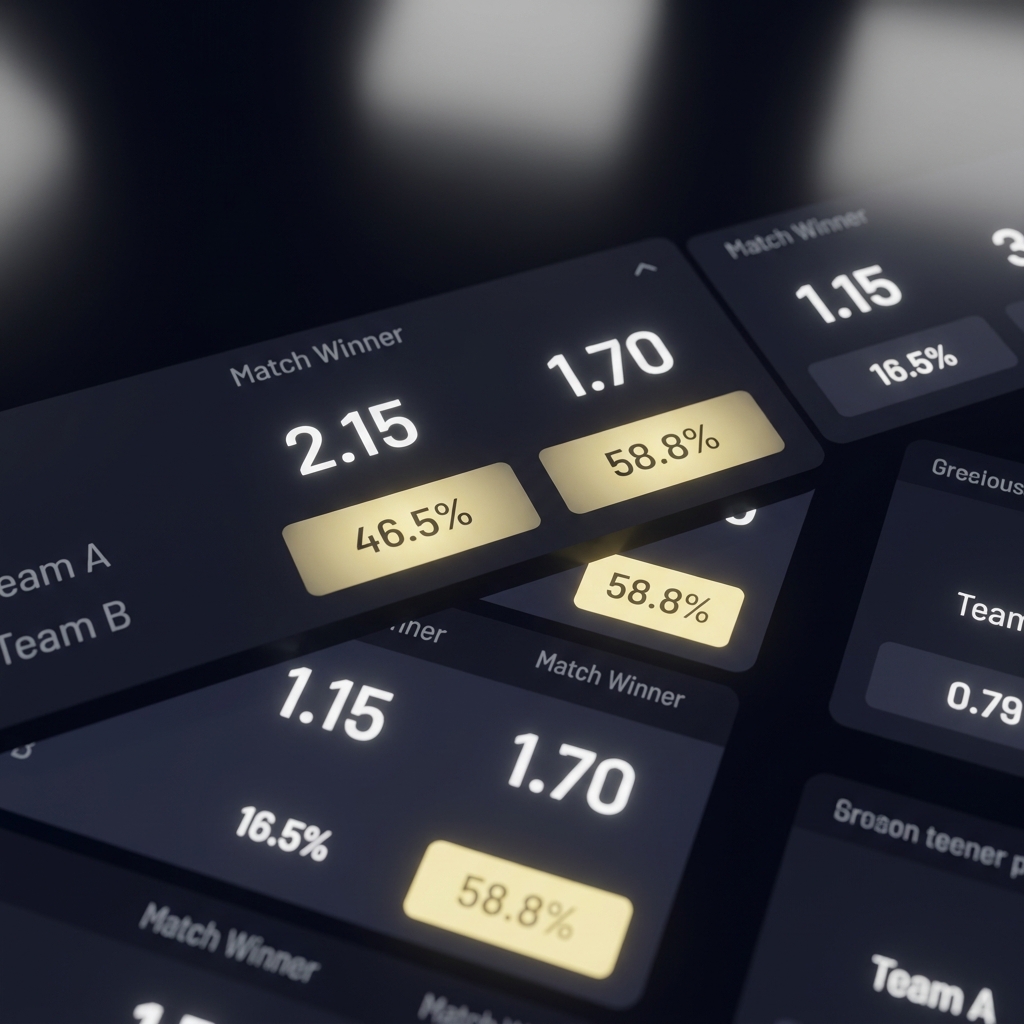
Operator hold means the house expects a margin over many bets, not certainty on any single event; that persistent margin is visible in industry statistics showing stable revenue patterns, which underscores that outcomes are probabilistic rather than guaranteed Industry statistics (Great Britain gambling).
Translating market prices into plain language helps readers understand that a very confident pick is still a probability statement with upside and downside, not a guarantee.
Practical alternatives to saying "lock" when publishing picks
Phrasing that communicates confidence without promising certainty
Instead of calling a selection a "lock," use neutral, informative phrases such as "high confidence forecast," "implied probability 70 percent range," or "favored by our model" to communicate strength without implying certainty.
When you present a pick, give the price or odds, an implied probability band, and a short rationale so readers see how confident you are and why. This reduces the chance readers treat language as a promise and helps satisfy marketing accuracy expectations.

Show the numeric odds, the implied probability, and a confidence level or range so the audience can judge the pick. For example, state the book price, convert it to implied probability, and add a short note about uncertainty drivers such as injuries or weather.
Pair confident phrasing with a brief disclosure that past performance does not guarantee future results and that the pick is an expression of probability, not a promise; this practice aligns with advertising standards that require truthful and non deceptive statements.
A short framework for editors and product teams: evaluate, label, disclose
Step 1: Evaluate confidence and sources
Start with a quick checklist: how large is the sample behind the model, how well calibrated are probability estimates, and what known uncertainties could change the outcome. This helps separate genuine high confidence from overfitting or a lucky run.
Document the data sources and model date so reviewers can see whether a claim rests on robust evidence or limited recent performance. Clear documentation reduces the risk that a team labels a pick a "lock" when the underlying support is thin.

Step 2: Choose a compliant label
Use a taxonomy of labels for public content, with options like "high confidence forecast," "probabilistic edge," and "meets challenge criteria" rather than absolute terms. Labelling should map to quantifiable thresholds set by the team, and those thresholds should be documented for compliance checks.
For platforms that run structured evaluation challenges, prefer labels that reflect challenge rules or qualification status rather than absolute terms. Labelling should map to quantifiable thresholds set by the team, and those thresholds should be documented for compliance checks.
Step 3: Add disclosures and user controls
Include a short disclosure near the pick that notes uncertainty and, where relevant, cites the platform's responsible marketing policy or challenge rules. Also ensure age gating and responsible messaging are in place for pages or campaigns where marketing rules apply AGA Responsible Marketing Code for Sports Wagering.
Finally, keep an editorial log of label decisions so compliance reviewers can trace why a pick was presented with a given confidence label rather than an absolute claim.
Common mistakes and how to avoid misleading language
Overstating certainty based on small samples
A typical error is upgrading a narrative after a short hot streak. Writers may read recent wins as proof of a system rather than noise; emphasize sample size, calibration and variance to avoid this trap.
Prevent use of absolute certainty language in published picks
Use before publish
Authors sometimes conflate a high probability with a guarantee by omitting the word "probability" or failing to show supporting metrics. Make the probabilistic nature explicit and show model outputs rather than a one word confidence claim.
Guides about truthful claims for promotions also address related wording such as "free" or similarly absolute terms, so teams should review federal guidance when crafting disclosures to ensure language is precise and not misleading 16 CFR Part 251 - Guides Concerning Use of the Word Free and Similar Representations.
Concrete examples: before and after copy, and model output language
Sports pick copy rewrites
Before: "This is a lock. Take it now." After: "High confidence forecast, implied probability about 72 percent based on our model; see rationale and known uncertainties below." The after version keeps readers informed without promising an outcome.
Before: "Sure thing on the favorite." After: "Favored by market odds; implied probability 68 percent. Model signals favorable edge, but variance and short term swings remain possible." These rewrites replace certainty with clear probability statements and a note on uncertainty.
How to present model confidence numbers
Publish a small model output block: probability band, expected value range, calibration score and a short caveat. For example: "Implied probability 65-75 percent, expected value +0.8 units, calibration score 0.92; excludes last minute lineup changes." This format gives readers concrete inputs to judge the pick.
Place disclosures immediately beneath the model block and ensure any public claim of confidence is tied to a documented threshold that editorial staff can review during compliance checks State of the States 2024: The AGA Survey of the Commercial Casino Industry.
Wrap-up: key takeaways and next steps for publishers
Calling a pick a "lock" is appealing in informal conversation, but it creates regulatory and communication risk when used in public content. Market mechanics and industry rules show that outcomes are probabilistic, and marketing codes ask publishers to avoid absolute certainty language Marketing and advertising of gambling.
To reduce risk, teams should adopt alternative phrasing, require a simple disclosure under picks, and keep an editorial log of confidence labels for compliance review.
No. The term misstates uncertainty and can conflict with industry and state marketing rules; use probabilistic labels, documented thresholds, and disclosures instead.
Practical next steps: update your style guide, set numeric thresholds for confidence labels, and add a short prepublish checklist for all pick posts to ensure consistent, compliant language across content.
For publishers working with skill based challenges rather than sportsbooks, framing a selection as meeting challenge criteria or a high confidence forecast clarifies that the label reflects a judged or modeled view rather than a promise of results.
Saying a pick is a "lock" implies near certainty and can be misleading under industry and state marketing rules; it also misstates the probabilistic nature of odds and operator margins.
Use labels like "high confidence forecast," "favored by our model," or include implied probability ranges and a brief disclosure about uncertainty.
Yes. Skill based platforms should also avoid absolute certainty language and prefer performance based labels such as "meets challenge criteria," while keeping clear disclosures.
References
- https://www.americangaming.org/responsibility/responsible-marketing-code-for-sports-wagering/
- https://www.mass.gov/regulations/205-CMR-25600-sports-wagering-advertising-marketing-and-branding
- https://www.americangaming.org/resources/state-of-the-states-2024/
- https://www.gamblingcommission.gov.uk/statistics-and-research/publication/industry-statistics
- https://www.asa.org.uk/type/non_broadcast/code_section/03.html
- https://gaming.ny.gov/advertising-restrictions
- https://www.fundedplays.com/challenges
- https://www.fundedplays.com/blogs/how-fundedplays-evaluations-work
- https://www.fundedplays.com/blogs
- https://www.fundedplays.com
- https://www.gamblingcommission.gov.uk/for-gambling-businesses/marketing-and-advertising
- https://mjlr.org/2024/02/16/theres-no-such-thing-as-a-free-bet-how-to-stop-misleading-the-public-in-gambling-advertisements/
- https://www.ecfr.gov/current/title-16/chapter-I/subchapter-B/part-251