

What Is a Bad Beat: a clear definition
At its core, a bad beat is when a statistically strong favorite loses to a weaker hand that improves late, most often on the turn or the river. Wikipedia's summary of the term explains how the phrase is used at the table and why players single it out as especially frustrating: Wikipedia's bad beat article and CardPlayer's bad beat guide
That frustration is understandable, but the key is recognizing what the term describes. A bad beat refers to the result, not necessarily the quality of the earlier decisions. A player can make correct choices and still lose because the opponent hit a low-probability draw on the turn or the river. This distinction matters when you review hands and decide whether to change your play style.

Context: why bad beats matter in a single hand
Bad beats shape short-session outcomes more than they shape long-term skill; a single hand can swing a short session simply because poker has a high degree of variance in isolated situations.
Research that compares single-hand variance with long-term results finds that while one-hand outcomes are highly luck-driven, skill becomes more decisive over many hands. That pattern is why good players focus on decision quality and sample size rather than blaming every loss on unlucky cards PNAS research on skill versus luck

How bad beats happen: outs, turn and river probabilities
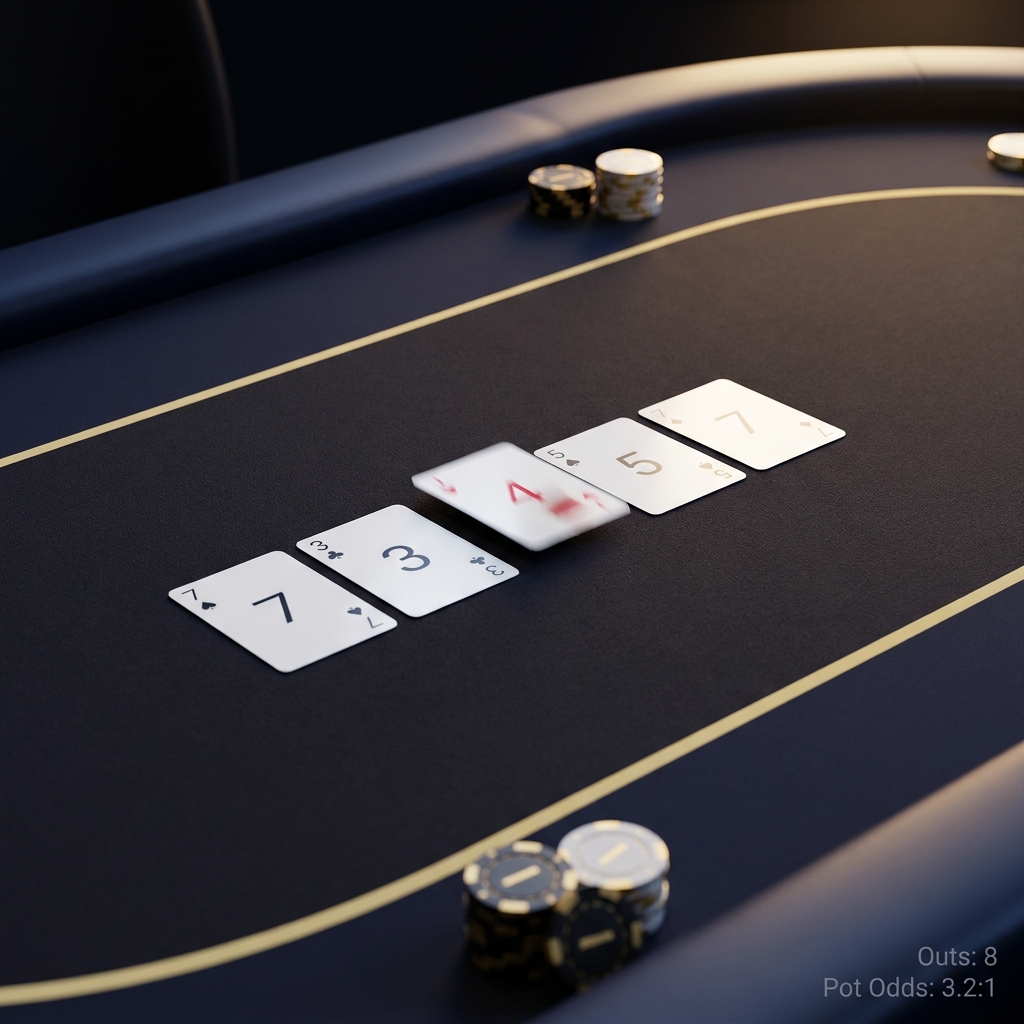
Bad beats usually come from low-probability draw outcomes. In plain terms, an out is any unseen card that improves a losing hand into a winner, and hitting a small number of outs on the turn or river explains why a favorite can lose even after making a correct call or raise. A clear overview of poker probability shows how often those outs appear and why rare turn or river hits produce the outcomes we label bad beats poker probability overview and related resources at Wizard of Odds and SFU math notes on bad-beat jackpots
Practice outs and pot odds with structured challenge training
Learning to count outs and compare them with pot odds reduces mystery and helps you respond calmly when a rare card appears.
Counting outs is a simple habit. For example, if your opponent checks a board where you have four cards to a flush, you count the cards of that suit that remain unseen. From there you convert outs into approximate chances for the next card and decide if the call fits the pot odds. The mechanics are straightforward and improve the quality of post-hand reviews.
Variance versus skill: what one hand tells you
One hand rarely proves or disproves a player's overall ability because single-hand variance is large; over large samples, skill's influence grows and individual lucky or unlucky hands have proportionally less effect. The long-run perspective is why tracking results across many sessions is a more reliable guide to skill than reacting to isolated outcomes PNAS study on skill and luck
This does not make bad beats irrelevant. They still matter for morale, bankroll swings, and short-term decisions. Understanding that they are expected outcomes helps keep emotional reactions in check while you pursue consistent, correct play that pays off across a substantial sample of hands.
How to tell a bad beat from a misplay
Before labeling a hand a bad beat, run a quick checklist. Did you count outs correctly? Were pot odds favorable for the call you made? Did position or bet sizing change the decision calculus? If those foundational checks line up, the result is more likely a bad beat than a misplay.
A bad beat is when a statistically favored hand loses because an opponent hit a low-probability draw on the turn or river. It happens because poker has inherent variance and a few unseen cards can change outcomes in a single hand. Over many hands, correct decisions tend to produce more reliable results.
Signs of misplay include ignoring pot odds, calling when the math demands a fold, misreading position, or failing to account for stack sizes. Probability literacy helps: when you habitually count outs and translate them into expected chances, you reduce the chance of mistaking a poor decision for bad luck.
Common tilt and emotional responses after a bad beat
Bad beats commonly trigger anger, frustration, and a desire to chase losses. Those emotional responses are natural, but they often cause further mistakes, such as raising recklessly, overbetting out of revenge, or abandoning basic bankroll rules. Recognizing the pattern early is the most effective defense.
Responsible-play guidance recommends simple immediate steps after a stirring loss, like taking a short break, stepping away from the table, and using pre-set session rules to stop automatic chasing behavior. Those habits reduce the chance that a single unlucky hand cascades into a poor session NHS responsible-play guidance
Practical controls: bankroll, stop-loss and responsible play
Defined bankroll and stop-loss limits help contain the financial impact of bad beats and support steady decision-making. Decide in advance how much of your bankroll you will risk in a session and what loss level will end play for that day; these controls reduce the risk of ruin and keep your sessions aligned with your risk tolerance.
estimate a session stop-loss amount from bankroll and risk settings
change defaults to match your own bankroll
Practical rules are examples, not prescriptions. A common structure is to risk a small percentage of your bankroll per session and to set a hard stop-loss for that session. If emotion or tilt shows up, close the session and review the hands later rather than adjusting limits mid-session, which is a common mistake that undermines long-term discipline NCPG responsible gambling resources
Strategic responses at the table: bet sizing and pot odds
Using consistent bet sizing and folding when pot odds are unfavorable reduces unnecessary variance. Proper bet sizes extract value when you are ahead and avoid giving opponents cheap chances to hit a draw that can produce a bad beat in the next street. Learning to gauge fold equity and to compare the cost of a call with pot odds is a practical way to keep variance manageable.
When faced with a marginal situation after a bad result, revert to decision rules rather than impulses. Pot odds guide whether a call is correct; if the math does not support a call, folding conserves your bankroll and discipline. Stick to sound bet-sizing principles instead of overreacting to one unlucky runout poker probability overview
Typical bad beat examples and step-by-step breakdowns
Example 1. You hold top pair on a dry flop and your opponent has a small number of outs to a straight. You play the hand aggressively, and your opponent hits the single running card on the river to win. Counting the outs on the turn would have shown a low chance for that river hit, illustrating a protocol where the initial play was reasonable even though the result looks harsh.
Example 2. You call a river bet with a made hand that was a strong favorite on the flop, then an unlikely runner-runner board card completes your opponent's backdoor draw. These scenarios happen because a few unseen cards can change the outcome late, which is precisely why counting outs and verifying pot odds during a review matters poker probability overview
How bad beats affect long-term win-rate and variance
Bad beats reduce short-term results but have limited power over long-term win-rate for players who make correct decisions consistently. The research literature shows that as sample size grows, skill contributes more to outcomes and individual unlucky hands exert less influence, which is why patient tracking and analysis are essential to understanding true performance PNAS evidence
This means occasional painful runs are expected even for winning players. Using realistic sample sizes when evaluating your edge and maintaining rules that protect your bankroll will ensure that the inevitable swings do not derail progress.
When to stop: setting limits and seeking help
If play causes distress, persistent chasing, or noticeable changes in mood or finances, those are signals to stop and seek confidential help. U.S. national helplines and resources are available for people who need guidance or treatment for gambling-related harm SAMHSA national helpline
Other warning signs include neglecting responsibilities, chasing losses repeatedly, or feeling unable to follow preset limits. In such cases, calling a helpline or consulting a responsible-play resource can offer immediate confidential support and referrals.
Reviewing hands productively after a bad beat
Create a short hand-review checklist to keep reviews focused. Key items: verify the outs and pot odds you used, confirm bet-size and position considerations, and note whether stack sizes or tournament stage changed the correct play. This structure helps you separate decision quality from unlucky results.
Common mistakes players make regarding bad beats
One frequent error is calling a misplay a bad beat. If the underlying decision ignored pot odds or position, the loss was avoidable and not a random stroke of bad luck. Being honest in hand reviews prevents repeating mistakes.
Reactive strategy changes are also common and harmful. Examples include switching bankroll rules mid-session, overfolding after one unlucky run, or using overly aggressive bet sizing out of frustration. The corrective is simple: keep rules constant during a session and review with a calm checklist afterward NHS guidance on safer play
Conclusion: accepting variance and improving over time
Bad beats are an expected part of poker and related prediction activities because a few unseen cards can reverse the best-laid plans. Accepting that variance is inherent helps you focus on improving decision quality and managing emotions so that skill can show up over time.
Use the hand-review checklist, maintain clear bankroll and session limits, and seek confidential support if play ever causes harm. With measured practice and attention to probability, you can reduce the disruptive effect of bad beats and build more consistent long-term results.
Check outs, pot odds and position. If the math and decision process were correct, the loss is likely a bad beat; if you ignored odds or misread the situation, it was likely a misplay.
Pause for a short break, stop the session if a preset stop-loss is reached, and avoid making impulse bets. Use a calm review checklist after you have cooled down.
Seek help if play causes persistent chasing, financial strain, or emotional harm. Confidential helplines and support services are available 24/7 in the U.S.
References
- https://en.wikipedia.org/wiki/Bad_beat
- https://www.cardplayer.com/rules-of-poker/glossary/bad-beat-in-poker
- https://www.fundedplays.com/challenges
- https://www.fundedplays.com
- https://www.pnas.org/doi/10.1073/pnas.1012409108
- https://en.wikipedia.org/wiki/Poker_probability
- https://wizardofodds.com/games/texas-hold-em/bad-beat-jackpots/
- http://people.math.sfu.ca/~alspach/mag59/
- https://www.nhs.uk/live-well/addiction-support/gambling-addiction/
- https://www.ncpgambling.org/help-treatment/safer-gambling/overview/
- https://www.samhsa.gov/find-help/national-helpline
- https://www.fundedplays.com/blogs
- https://www.fundedplays.com/blogs/how-fundedplays-evaluations-work