
Why pre-game research matters for live markets
Using Pre-Game Research in Live Markets
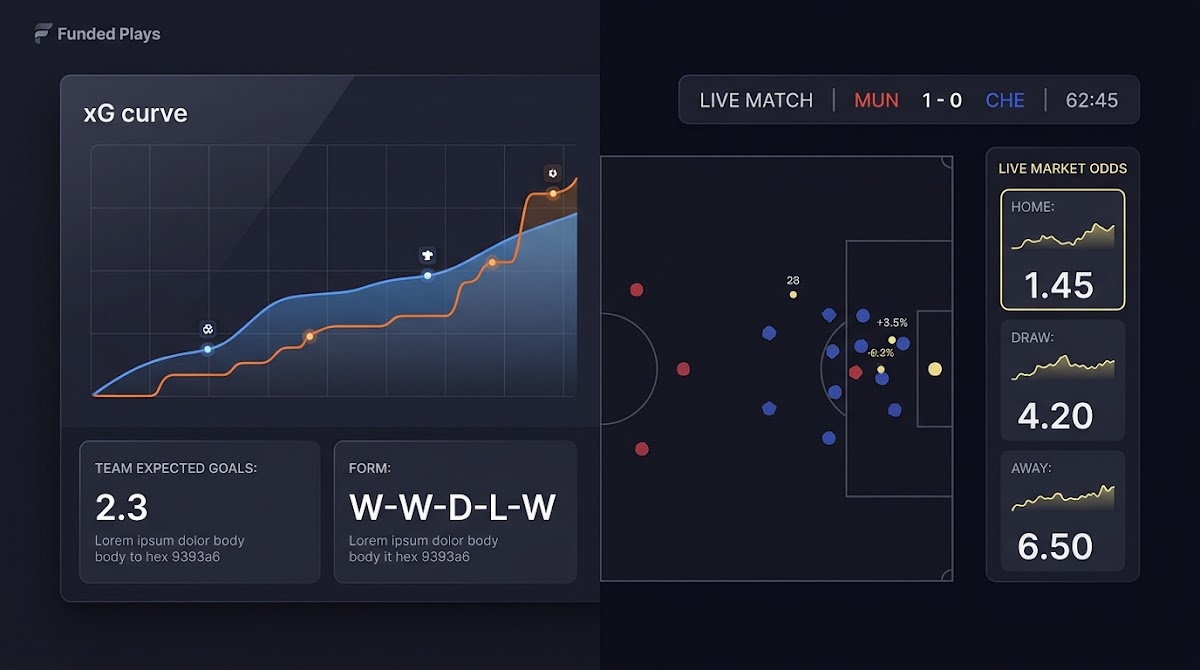
Start with a clear pre-match baseline and you change uncertainty into something you can update, measure and defend. A baseline, often expressed with expected goals or a similar probability model, gives a prior distribution of outcomes that can be carried into live decisions rather than relying on unsystematic hunches. For an accessible explainer of expected goals and how it defines chance quality, see the overview from The Analyst What Are Expected Goals (xG)?
Pre-game research matters because it defines the starting point for any in-play adjustment. Without a quantified prior, every market move can feel like a new opinion rather than an update to a defensible forecast. That distinction matters when you audit trades, set stake sizes, or explain a loss. Use pre-match models as a documented prior, then plan explicit update rules so you treat live information as corrections rather than replacements.
Pre-match models do not, however, capture every match-state contingency. Regulations and on-field events can change the practical remaining opportunity in ways a standard pre-match xG curve will not anticipate. The IFAB Laws of the Game list timekeeping, added time, substitutions and disciplinary events as items that change match state and warrant structured attention when you move from pre-game assumptions to live rules Laws of the Game 2024/25
Test your in-play rules in a safe challenge environment
Try a structured challenge simulation to test these rules in a risk-free environment that records decisions and outcomes.
That last point matters for implementation. Treat pre-game research as a living document. Record the baseline, record the estimated edge you expect to have at kick-off, and be explicit about which events will force a recalculation. Those steps reduce guesswork and ensure your live actions remain traceable against the pre-game plan.
A structured framework to turn pre-game research into in-play rules
Step 1: Establish the pre-match baseline and edge estimate
The first practical step is to save the pre-match model output in a simple, machine- and human-readable format. Capture the baseline probability of core outcomes, the xG profile if applicable, and a calculated prior edge for the market you intend to trade. A brief note on methodology helps later reviews: which model was used, its date, and any subjective adjustments. For a primer on expected goals and how it can feed an edge estimate, consult the xG explainer from The Analyst What Are Expected Goals (xG)? Predicting goal probabilities with improved xG models
Next, translate that edge into a stake recommendation. Kelly-like logic remains a defensible bridge between estimated probability advantage and stake proportion. The classic formulation and its implication for information rate remain a sound conceptual basis when you want to convert edge into exposure A New Interpretation of Information Rate
Step 2: Specify match-state triggers and update rules
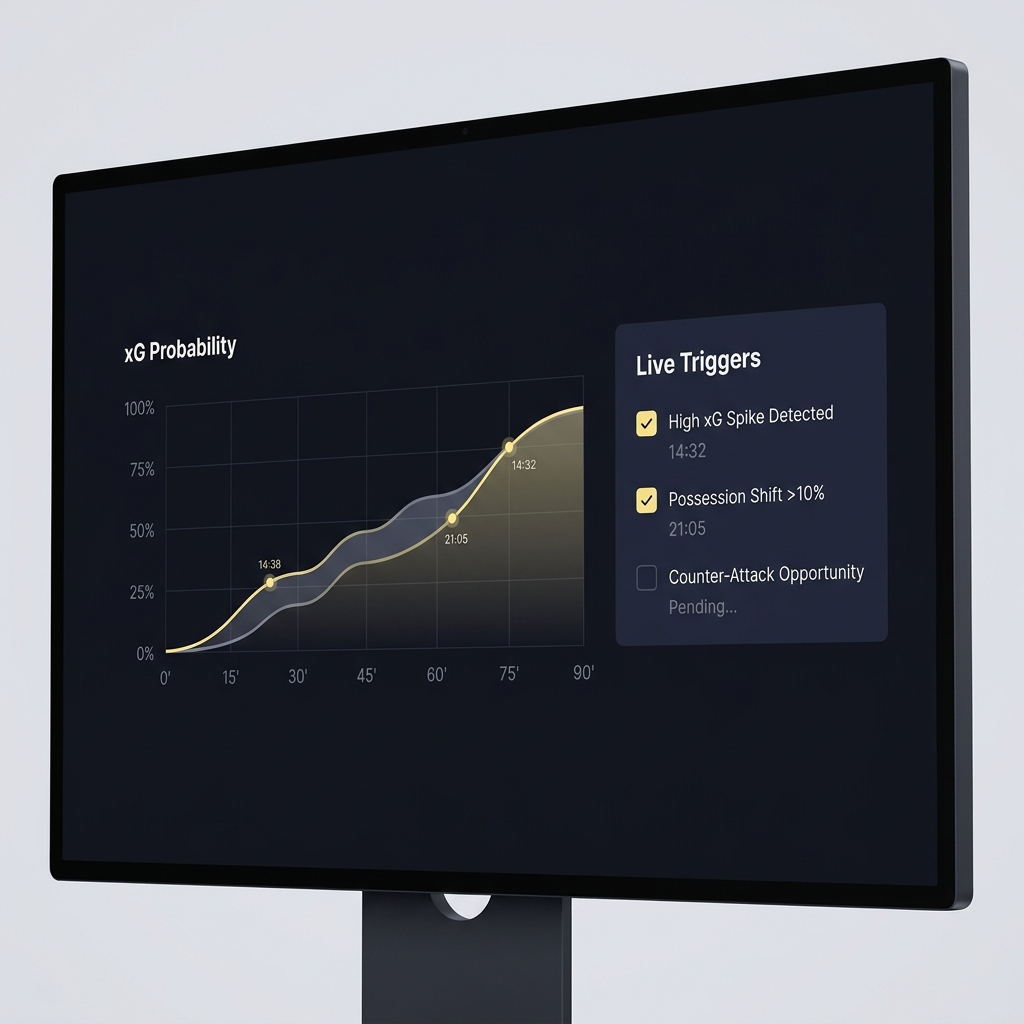
Create a short, enumerated trigger list and map each trigger to a single action. Keep the list lean so it is easy to apply in fast-moving games. Example triggers include red card, substitution of a key player, official added time announcements, long stoppages, and disciplinary sendings-off. Each trigger should map to one of three actions: pause entries, adjust probabilities, or reduce stake.
Make the mapping precise. For instance, if a red card changes a team from 11 to 10 players and your model shows a 20 percent change in goal rates under that scenario, your rule might be: rerun probability with the red-card modifier and apply fractional Kelly with a halved fraction until 10 minutes of normal play elapses. Where the red card is cited as the trigger, reference the IFAB provisions on disciplinary events to ensure the event basis is clear Laws of the Game 2024/25
Document time-based triggers too. When added time is announced or a long stoppage starts, your rule set should either reduce the remaining-time adjustment in the xG projection or hold entries until restart confirmation. Those timekeeping cues come from the standardized match-state definitions in the Laws of the Game and should be treated as primary inputs to any timing rule.

Define clear execution steps for every live action you will take. A minimal protocol includes: 1) confirm the event on a primary feed, 2) check a secondary feed for timecode or event confirmation, 3) apply the trigger mapping and adjust the stake, 4) submit the order with a latency buffer, and 5) verify the bet confirmation. If any step fails, abort and record the failure. This explicit sequence helps you separate model error from execution error.
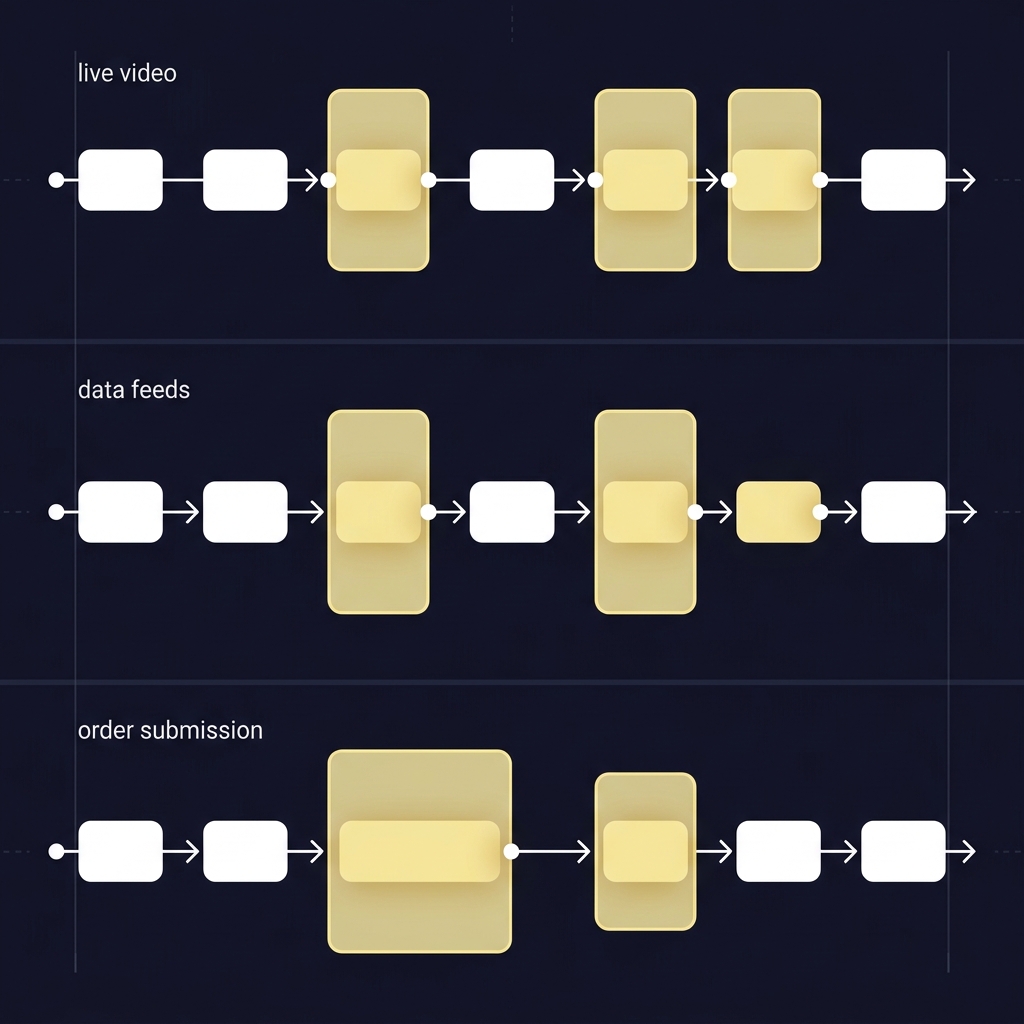
Include latency buffers in your protocol. Ofcom found that live sports streams can lag real-time, so entries and exits must account for streaming and feed delays that create timing mismatches between on-field events and displayed market prices Media Nations 2024 and see analysis of information asymmetry in real-time betting Information Asymmetry in Real-Time Sports Betting
Finally, add a manual or automatic fail-safe: if the platform does not return a clear bet acceptance confirmation within your predefined window, treat the action as not accepted and log it. Remote technical standards require clear bet acceptance and system information for operators, a reminder that confirmations matter for both compliance and accurate performance measurement Remote gambling and software technical standards
Translating IFAB events into decision triggers
IFAB provisions on timekeeping and match-state modifications define several specific events that change the effective playing time and therefore the probability structure you rely on. Added time announcements, substitutions and disciplinary actions each alter the immediate opportunity set in measurable ways. Use those official event types as canonical triggers in your rulebook Laws of the Game 2024/25
For added time, the basic rule is: reduce the remaining-time adjusted opportunity proportionally to the announced extension and, if the announcement is tentative, pause new entries until the restart. This prevents chasing odds based on a presumption of full extra minutes when the practical restart window is uncertain.
Document your pre-match baseline, codify objective match-state triggers tied to IFAB events, include latency-aware execution steps and confirmations, and convert estimated edges into conservative fractional Kelly stakes while logging every decision.
Substitutions change personnel risk and, when a key attacker or defender is replaced, you should rerun the post-event probability update with the substitution modifier. Make substitution handling a short checklist: identify player importance, estimate direction of change, apply a conservative probability adjustment, and use fractional Kelly to size the trade until the new state holds for a defined period.
Don't forget regulatory implications. Remote technical standards require operators to make system status and bet acceptance transparent, which affects how tightly you can rely on time-critical windows. If a venue or platform has slower acceptance behaviour, lengthen your confirmation window accordingly and prefer smaller stake sizes under those conditions Remote gambling and software technical standards
Accounting for latency and bet acceptance in live execution
Execution risk is not just a theoretical concern. Stream lag and data-feed delay can change the effective price you receive and the moment you can act on new information. Ofcom documents that live sports streams can lag real-time broadcasts and that these lags vary across platforms and regions Media Nations 2024
Because latencies differ by provider and by user connection, build a conservative latency buffer into every timed entry. Practically, this means delaying order submission by a buffer that reflects your slowest reliable feed rather than your fastest. That reduces the frequency of trading on stale displays and lowers the chance of execution regret where the market has already moved.
Data-feed differentials also matter for cross-checks. When a primary feed shows an event but a secondary official feed does not, treat the mismatch as a signal to hold. This pattern often precedes integrity or transmission issues and should be part of your execution triage: never assume the fastest feed is the ground truth.
Finally, define recovery steps for rejected or late-accepted bets. Log every rejection, compare expected vs actual acceptance timestamps, and treat clustered rejections as a reason to pause automated strategies until the platform behaviour normalises. These practices protect both compliance and the integrity of your performance tracking Remote gambling and software technical standards
Validating market moves: integrity checks before acting
Not every sharp market move is tradable. The International Betting Integrity Association reports ongoing suspicious betting alerts across sports, which means abrupt deviations require validation before you act 2024 Annual Integrity Report
Run a concise set of checks when markets spike: confirm live video and timecode, check official event feeds, compare at least two independent data sources for the same event, and inspect recent market history for pre-move anomalies. These steps filter out false positives and reduce the chance of trading on potentially compromised markets.

When an integrity concern is unresolved, pause automated entries, escalate to a manual review, and document the incident in a structured log that records timestamps, feed sources, and the decision rationale. Post-match, include the incident in your retrospective analysis so you can refine trigger thresholds and escalation criteria.
Sizing stakes in volatile in-play conditions
Kelly's idea remains useful because it ties stake proportion to the estimated fractional edge, but full Kelly can produce volatile stake sizes that are poorly suited to in-play uncertainty. Use fractional Kelly to reduce variance and limit drawdowns under volatile conditions. The conceptual basis for converting information into stake remains instructive when you need a principled way to size exposure A New Interpretation of Information Rate
Practical rules of thumb help turn the theory into action. Choose a conservative fractional Kelly fraction, for example one quarter or one half of the nominal Kelly, and then cap per-event exposure with an absolute stake limit. Add session-level drawdown thresholds that pause activity if you exceed a tolerated loss band.
Account for execution friction in stake sizing. Latency, confirmation uncertainty and market slippage all increase effective variance, so reduce nominal stakes where those frictions are measurable. In practice, apply a liquidity or latency penalty that lowers your fractional Kelly proportion based on observed feed behaviour.
Finally, automate stop-loss conditions tied to execution anomalies. If bets are repeatedly rejected or accepted late, suspend live staking until the environment stabilises and a manual review confirms acceptable behaviour.
Common mistakes to avoid when applying pre-game research in play
1) Overreacting to small market moves without verifying on-field events or timecodes. Rapid changes can be caused by feed jitter or a single large ticket and not by a change in real probability. Cross-check before you adjust your model or escalate stake changes 2024 Annual Integrity Report
2) Failing to account for timekeeping effects and added time. When the effective remaining time changes, the pre-match xG curve becomes less representative unless you apply a time-based reweighting drawn from match-state rules Laws of the Game 2024/25
3) Using full Kelly or oversized stakes without considering in-play volatility and execution friction. Volatile live conditions and latency mean that conservative fractional Kelly fractions are usually more robust than aggressive sizing A New Interpretation of Information Rate
Simple countermeasures prevent these mistakes: codify verification steps, define time-aware probability adjustments, and enforce conservative stake caps during uncertain moments. Those safeguards turn lessons into repeatable practice.
Practical scenarios: worked examples and templates
Red card or early sending-off: immediate steps. If a red card occurs, confirm the event on two independent feeds and pause automated entries. Recalculate the remaining-goals probability using a conservative post-red modifier, reduce your fractional Kelly fraction by a predefined factor, and only re-enter when the new 10-minute sample shows stable play characteristics. The IFAB rules make disciplinary events a canonical trigger for exactly this type of update Laws of the Game 2024/25
a short actionable scenario checklist
Use conservative adjustments during uncertain events
Late injury or long stoppage: adjusting time-based models. When play halts for an extended period, treat the pre-match xG curve as partially stale and reduce the remaining-time multiplier in your projection. Hold entries until restart confirmation and then resume with reduced stakes for a hold-in period to ensure the game state has normalised. Expected goals explain the baseline chance distribution but not long interruptions on their own What Are Expected Goals (xG)?
Sudden market spike with no visible event: integrity-first checklist. If markets spike without a corresponding on-field event, run integrity checks: compare live video timecode, query an official event feed, check a second bookmaker or exchange feed, pause any automated strategy and escalate for manual review. IBIA findings remind us these alerts continue to occur and that restraint is often the best initial response 2024 Annual Integrity Report
Each scenario template should be recorded as a short playbook entry you can follow under pressure. Keep the templates searchable and indexed by trigger type so that during live sessions you can reach the correct checklist in under 30 seconds.
Checklist and next steps for disciplined in-play trading
Compact checklist: establish your pre-match baseline, codify triggers and update rules, set a latency buffer, apply fractional Kelly, record confirmations and create an integrity escalation path. These items form the backbone of a disciplined in-play process and map directly to the concepts discussed earlier What Are Expected Goals (xG)?
Operational next steps: implement the rulebook in a simulation or challenge environment, run documented experiments, and review outcomes in retrospectives that focus on trigger sensitivity and execution reliability. Track rejected bets and latency incidents as part of your performance dataset.
Remember that platform rules and confirmations matter. If you operate where remote technical standards apply, align your confirmation windows and logging with the expectations set out for remote operators to avoid misinterpretation of results and to maintain compliant practices Remote gambling and software technical standards
Use xG as a documented prior probability and update it only when objective triggers occur, such as substitutions, red cards, or added time. Treat xG as a starting point, not a live oracle.
Use a fractional Kelly approach with conservative fractions, cap per-event exposure, and factor in latency and confirmation friction to reduce effective variance.
Confirm live video and timecode, check at least one independent event feed, compare multiple market feeds, pause automated strategies, and escalate if inconsistencies remain.
References
- https://theanalyst.com/eu/2020/07/what-are-expected-goals-xg/
- https://www.theifab.com/documents/?documentSlug=laws-of-the-game-2024-25
- https://archive.org/details/bstj35-4-917
- https://www.ofcom.org.uk/research-and-data/tv-radio-and-on-demand/media-nations/media-nations-2024
- https://www.gamblingcommission.gov.uk/technical-standards/remote-gambling-and-software-technical-standards
- https://ibia.bet/ibia-publishes-2024-annual-integrity-report/
- https://www.fundedplays.com/challenges
- https://www.fundedplays.com
- https://www.fundedplays.com/blogs
- https://www.fundedplays.com/blogs/how-fundedplays-evaluations-work
- https://pmc.ncbi.nlm.nih.gov/articles/PMC11524524/
- https://georgetownlawtechreview.org/already-scored-information-asymmetry-in-real-time-sports-betting/GLTR-02-2026/
- https://www.frontiersin.org/journals/sports-and-active-living/articles/10.3389/fspor.2024.1348983/full