
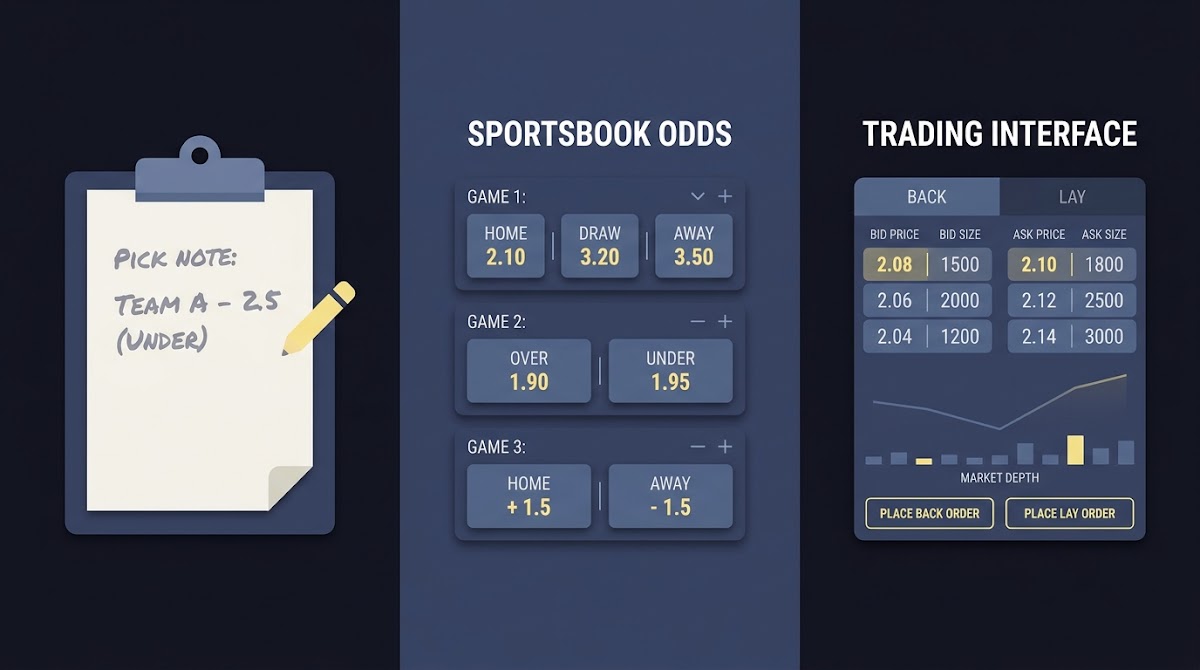
Quick overview: what this article will clarify
Who this is for
This guide is written for sports fans, analysts, and experienced handicappers who want a clear, regulation-grounded explanation of terminology and workflows. It focuses on the practical differences between a recorded prediction, a regulated wager, and exchange-based trading.
How to use the guide
Read the short sections that follow to find workflow checklists, decision criteria, and examples that match your goals. If you are tracking performance or preparing to stake funds, the step-by-step sections show how to move from a pick to a bet, or how to open and manage a trade on an exchange. See how Funded Plays evaluations work.
Understanding the Difference Between Picks, Bets, and Trades
In plain language, a pick is a selection or forecast, a bet is a regulated staking of value with an operator, and trading uses exchange mechanics to back and lay outcomes; this article separates those meanings and shows when each is appropriate. See Gambling Commission definitions of terms.
Explore Funded Challenge Options and Rules
If you want to continue, read the workflows that show how to record a pick, place a regulated bet, or manage a trade on an exchange.
This piece does not offer legal or financial advice, and it does not promise outcomes. It aims to explain terminology, workflows, and the legal contours so readers can make informed choices.
Why the words matter: legal and everyday uses of pick, bet, and trade
Words shape expectations. Publishers and commentators often use pick and bet interchangeably, but industry glossaries and regulators treat them differently; a bet or wager is typically the act of staking value, while a pick is a forecast that by itself is not a transaction, according to common industry definitions American Gaming Association glossary.
Casual usage in media can blur the line and create compliance or clarity problems for both readers and publishers. When a publisher labels something a pick, readers should understand it as a recorded prediction unless the publisher also describes a staking action with a licensed operator.
What regulators and glossaries define as a bet or wager
Regulatory definitions emphasize that placing a wager usually involves staking value on an uncertain event and doing so with a licensed operator, which creates a contractual relationship rather than a simple forecast Gambling Act 2005 definitions.
Different jurisdictions have guidance on how wagering is regulated and what operators must do to license and monitor betting activity; for example, state and national regulator FAQs explain registration, age verification, and operator responsibilities in their respective markets New Jersey Division of Gaming Enforcement FAQ.
A pick becomes a bet when someone stakes funds with a licensed operator and becomes a trade when placed on an exchange and matched with counterparties; each action triggers different rules, costs, and options for managing exposure.
The distinctions matter because placing a bet triggers account terms, regulatory protections, and operator oversight in ways that publishing a pick does not. Treat this as general information, not legal advice.
What a pick is: forecasts, tracking, and why picks are not transactions
A pick is a documented selection or forecast: an event, a market, a chosen outcome, and often a short rationale. Media outlets, handicappers, and analytics platforms publish picks to show reasoning and track long-term performance rather than to act as legal wagers American Gaming Association glossary.
Common pick records include fields such as event, market, selection, odds at time of record, rationale, and result. Those records are tools for analysis and performance measurement until someone places a stake with a licensed operator, at which point the selection becomes a bet in regulatory terms.

What trading means in sports: exchanges, back and lay, and position management
Trading in sports commonly refers to activity on betting exchanges where users can back or lay outcomes and open or close positions before or during an event. That model differs from placing a single fixed-odds bet with a bookmaker because trades let participants manage exposure dynamically UK Gambling Commission guidance on exchanges.
On exchanges, users can act as counterparties to one another rather than having the operator be the single counterparty; that matching of offers and requests changes both pricing and how exposure is held. See Smarkets explanation of betting exchanges.

Because trading lets you enter and exit positions, it supports hedging techniques such as backing early and laying later to lock profit or limit loss, instruments that are not available in the same way with fixed-odds bookmaker bets.
How sportsbooks set prices: odds, vig, and the operator as counterparty
Sportsbooks set fixed odds that typically include a margin, often called the vig or hold, which adjusts offered prices so the operator expects a positive return over time; that embedded margin changes expected value relative to true probabilities American Gaming Association glossary.
When you place a bet at a sportsbook, the operator is the counterparty to your stake; in practice, this changes the cost structure compared with exchanges because a bookmaker prices markets to manage house exposure rather than matching peers.
Detailed exchange mechanics: fees, commissions, and counterparty exposure
Exchanges usually charge a commission on net winnings rather than embedding a margin into the quoted prices; that creates a different fee profile for users who trade actively and lock profits through multiple positions Back and lay betting explained.
On an exchange, a matching engine pairs offers to back and lay. Users can post a lay price that others accept, or take existing offers; by becoming the offered counterparty, a user assumes exposure that the exchange tracks until the market resolves.
a simple ledger for tracking events, positions, odds, stake, and outcomes
Use the checklist every time you publish a pick or execute a trade
That matching and the commission-based fee model mean traders often plan for partial closes and hedges to manage P and L, paying commission on net winning legs rather than a built-in margin on every stake.
Practical workflow: turning a pick into a bet - step-by-step
Before staking funds, follow a short checklist: confirm the market is available in your jurisdiction, pick a licensed operator, compare available odds, set a stake consistent with your rules, and record the selection for later review American Gaming Association glossary.
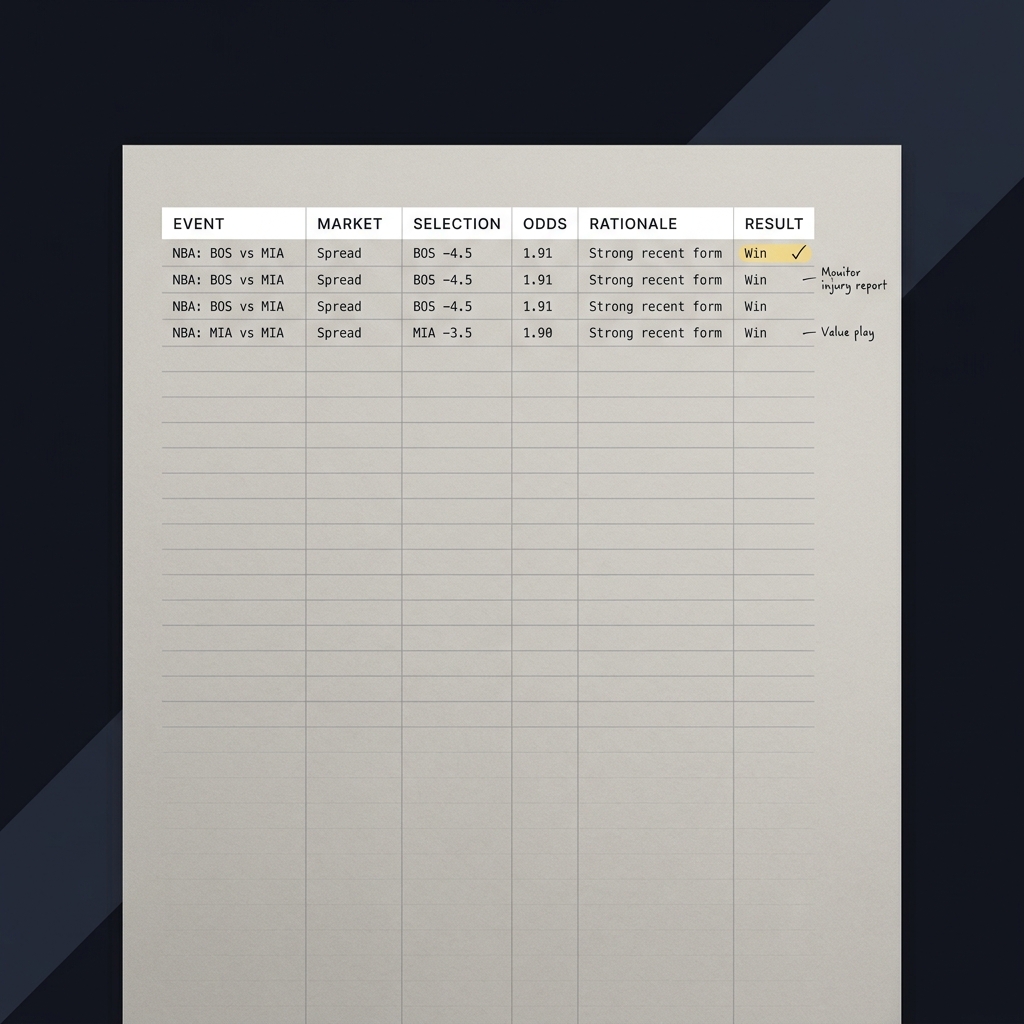
Step sequence: select the market and entry odds, confirm your stake and account limits, place the bet with the licensed operator, then record the placed bet and eventual result in your tracking system. Once you place the stake, regulatory terms and operator rules apply. See our blog.
Practical workflow: trading on an exchange - step-by-step
To open a trade on an exchange, choose the market, decide whether to back or lay, set your stake or liability size, and confirm the order; the exchange will match your order with counterparties or leave it unmatched as a posted offer Back and lay betting explained. For a general overview, see betting exchange.
Managing a trade typically involves monitoring market movements and using hedges or partial lays to lock profit or reduce loss. Because exchanges let you close positions before settlement, many traders use back then lay sequences or size adjustments to achieve a target exposure.
When to pick, when to bet, when to trade: decision criteria
Decide based on your regulatory access, liquidity needs, and whether you want the option to exit or hedge. Picks are best for record-keeping and developing ideas; bets suit fixed-odds commitments when you accept the quoted price; trades are appropriate when you value exit options, dynamic sizing, or hedging American Gaming Association glossary.

Consider cost structure: sportsbooks add a margin to prices while exchanges usually levy commission on net winnings, so compare fees and market depth when choosing between a bet and a trade Back and lay betting explained.
Common mistakes and pitfalls to avoid
Typical errors include labeling picks as bets in public records, which can mislead readers about legal exposure, and failing to account for sportsbook vig or exchange commission when evaluating expected returns American Gaming Association glossary.
Mitigations: always label whether a published selection is a pick or a placed wager, keep separate logs for picks and for stakes, and check operator terms and commission schedules before you act.
Concrete examples and scenarios: three short case studies
Example 1: A media outlet publishes a pick with event, selection, and rationale. If a reader later places a stake with a licensed operator, that reader has converted the pick into a regulated bet under the operator's terms. The published pick itself remains a forecast unless the publisher also placed a stake.
Example 2: A trader backs a selection early on an exchange and then lays it later as the market price shifts, using the lay to lock in profit. This back-then-lay approach relies on exchange matching and the ability to close positions before event settlement Back and lay betting explained.
Example 3: An analyst keeps a picks-only record for several seasons to test models without placing stakes. That approach helps evaluate signal quality and refine selection criteria while avoiding the regulatory and account implications of wagering.
Conclusion: practical next steps and resources
Key takeaways: a pick is a forecast, a bet is the act of staking with a licensed operator, and trading uses exchange mechanics to manage exposure and close positions. Each has different legal and operational implications for fees, counterparty, and risk management UK Gambling Commission guidance. Visit Funded Plays for more resources.
Quick checklist: label picks clearly, verify operator licensing before betting, consider exchanges when you need hedging or exit options, and keep detailed records of selections and stakes for performance review.
No. A pick is a documented forecast; it becomes a bet only when someone stakes funds with a licensed operator.
Trading on an exchange lets you back or lay and close positions with peers, usually paying commission on net winnings, whereas sportsbook bets are fixed-odds with the operator as the counterparty.
Publishing picks is generally not regulated as wagering, but publishers should avoid soliciting bets and clearly label forecasts to reduce compliance risk.
References
- https://www.fundedplays.com/blogs/how-fundedplays-evaluations-work
- https://www.gamblingcommission.gov.uk/about-us/guide/page/definitions-of-terms
- https://www.fundedplays.com/challenges
- https://www.americangaming.org/resource/sports-betting-glossary/
- https://www.legislation.gov.uk/ukpga/2005/19/contents
- https://www.njoag.gov/divisions/dge/faq-sports-wagering/
- https://www.gamblingcommission.gov.uk/licensees-and-businesses/guide/betting-intermediary-operating-licence
- https://help.smarkets.com/hc/en-gb/articles/115001820389-What-is-a-betting-exchange
- https://betting.betfair.com/how-to-exchange/back-and-lay-betting-explained-040608.html
- https://www.fundedplays.com/blogs
- https://en.wikipedia.org/wiki/Betting_exchange
- https://www.fundedplays.com