
Types of bets horse racing: quick definition and how wagering is organized
The phrase types of bets horse racing covers the common ways people place money or virtual stakes on single races and on sequences of races, and it refers to core pari-mutuel pools as well as standardized exotic and multi-race wagers.
In North America most wagering is offered through pari-mutuel pools that are governed by pool rules and model racing rules, so the menu of available bets and how they pay is set by regulation and by the operator's wagering menu, not by simple fixed odds, and this structure affects how tickets are built and settled ARCI model rules.
Explore Funded Plays Challenges for structured practice
Read on to see how core pools, exotics and multi-race wagers differ and how ticket formats change coverage and cost.
Availability, minimum stakes and exact terms can differ by track or jurisdiction, so confirm local rules and the wagering menu before placing bets.
Core pari-mutuel pools: Win, Place and Show
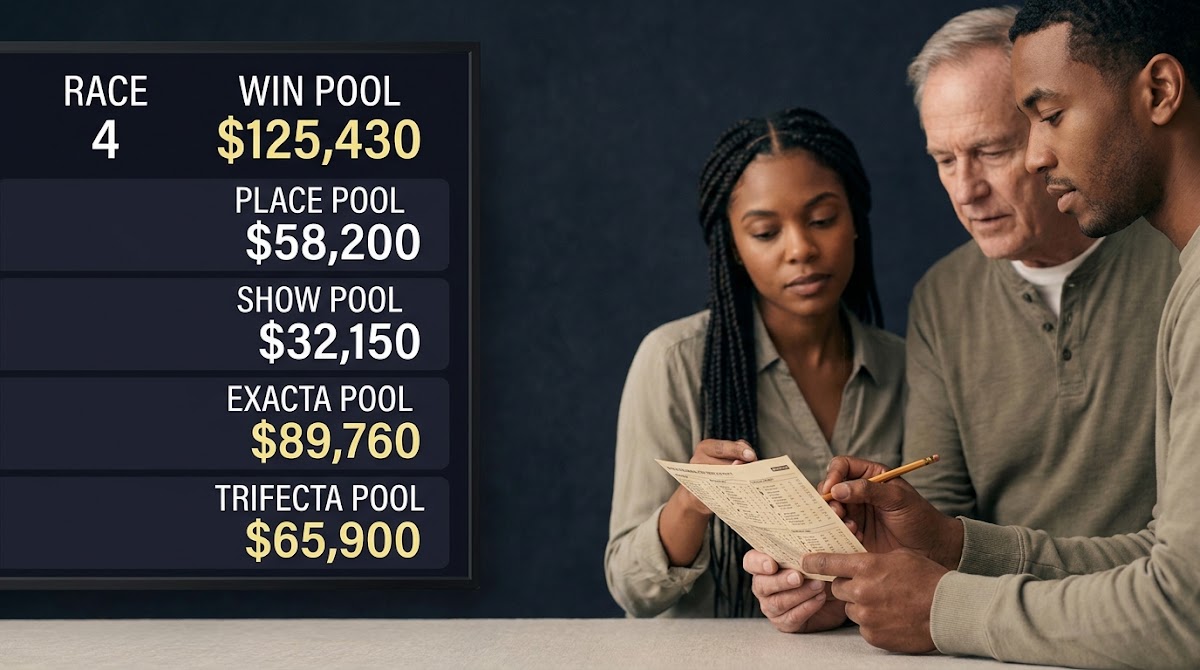
Win, Place and Show are the foundational pari-mutuel pool types used to settle single-race wagers; a Win bet pays if your selection finishes first, a Place bet pays if it finishes first or second, and a Show bet pays if the selection finishes first, second or third.
These pools are netted and subject to takeout and any regulatory breakage before dividends are distributed to winning tickets, and model rules and pool schedules define those mechanics and how winners are determined Pari-Mutuel Betting Supervision Regulations.
For a beginner, the key differences are coverage and payout symmetry: Win is highest risk and usually highest reward, Place reduces risk but also divides the eventual payout among more winning tickets, and Show is the most conservative single-race choice.
Track education pages typically show examples and minimum stakes for these pools, so consult them to see how a local operator lists Win, Place and Show on its wagering menu NYRA wagering guide.
Common intra-race exotics: Exacta, Quinella, Trifecta and Superfecta
Exacta, Trifecta and Superfecta are intra-race exotic bets that require selecting the horses to finish in the exact order specified: Exacta is first two in order, Trifecta is first three in order, and Superfecta is first four in order.
Quinella is a two-horse wager that pays if the two named horses finish first and second in any order, but its availability varies by jurisdiction and operator, so check local menus to confirm whether Quinella is offered for a race ARCI model rules.
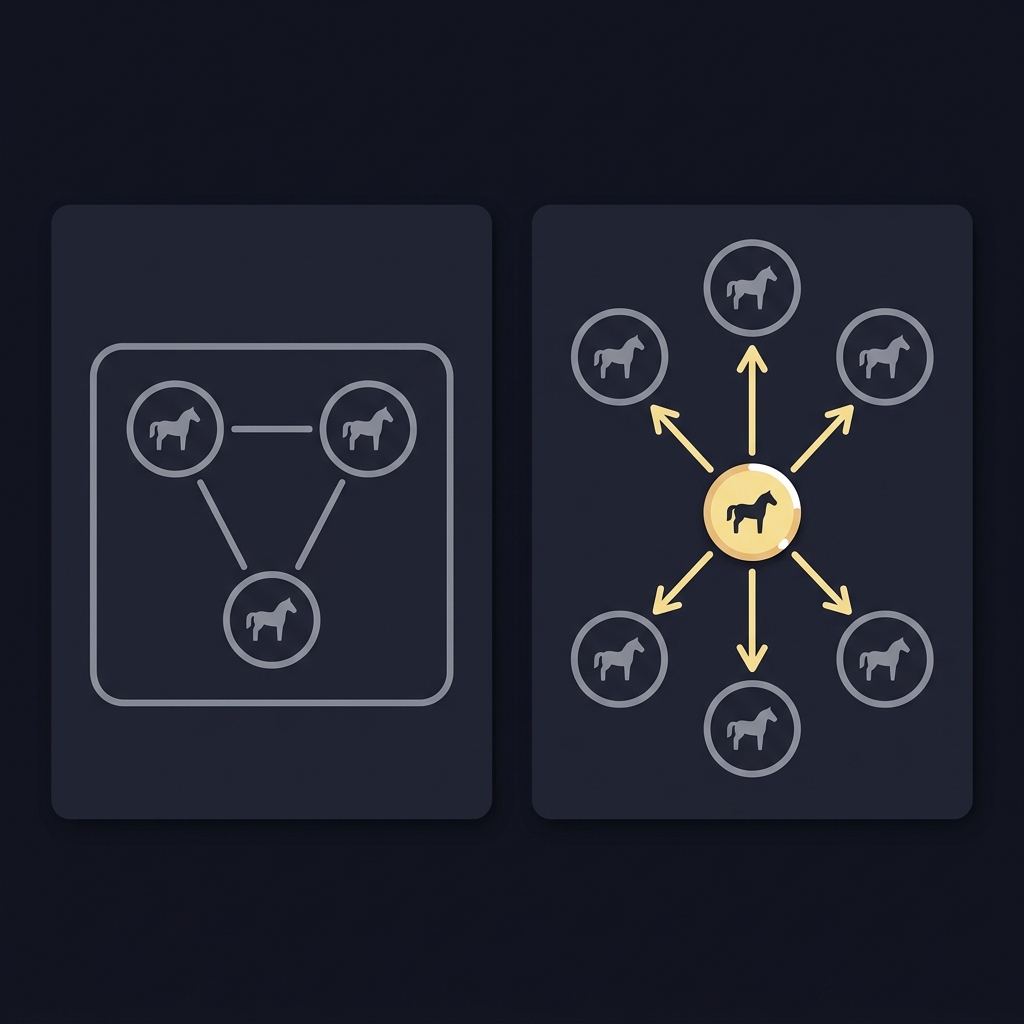
Ticket constructions for exotics include straight tickets, boxed tickets and wheel tickets. A straight Exacta has one ordered pair, a boxed Exacta covers both orders of two chosen horses, and a wheel pairs one selection with many others to expand combinations efficiently.
Boxes and wheels increase the number of combinations and therefore the total stake a bettor must pay, so they change the tradeoff between coverage and cost; track guides and operator help pages often show the multiplication logic for common exotics NYRA wagering guide.

When deciding among exotics, consider how many combinations you can cover with your bankroll and whether you prefer ordered payouts or broader, lower-cost coverage.
Multi-race wagers: Daily Double, Pick 3 and Pick 4 explained
Multi-race wagers require selecting the winners in successive races; common examples include the Daily Double and Pick 3 and Pick 4 sequences, and each sequence is handled as a separate pari-mutuel pool that pays on the winning combination for that sequence.
Because each multi-race sequence has its own pool, payouts depend on the net pool for the sequence after takeout, so the same horse can contribute very different value depending on how many tickets and how much money are in the sequence pool ARCI model rules.
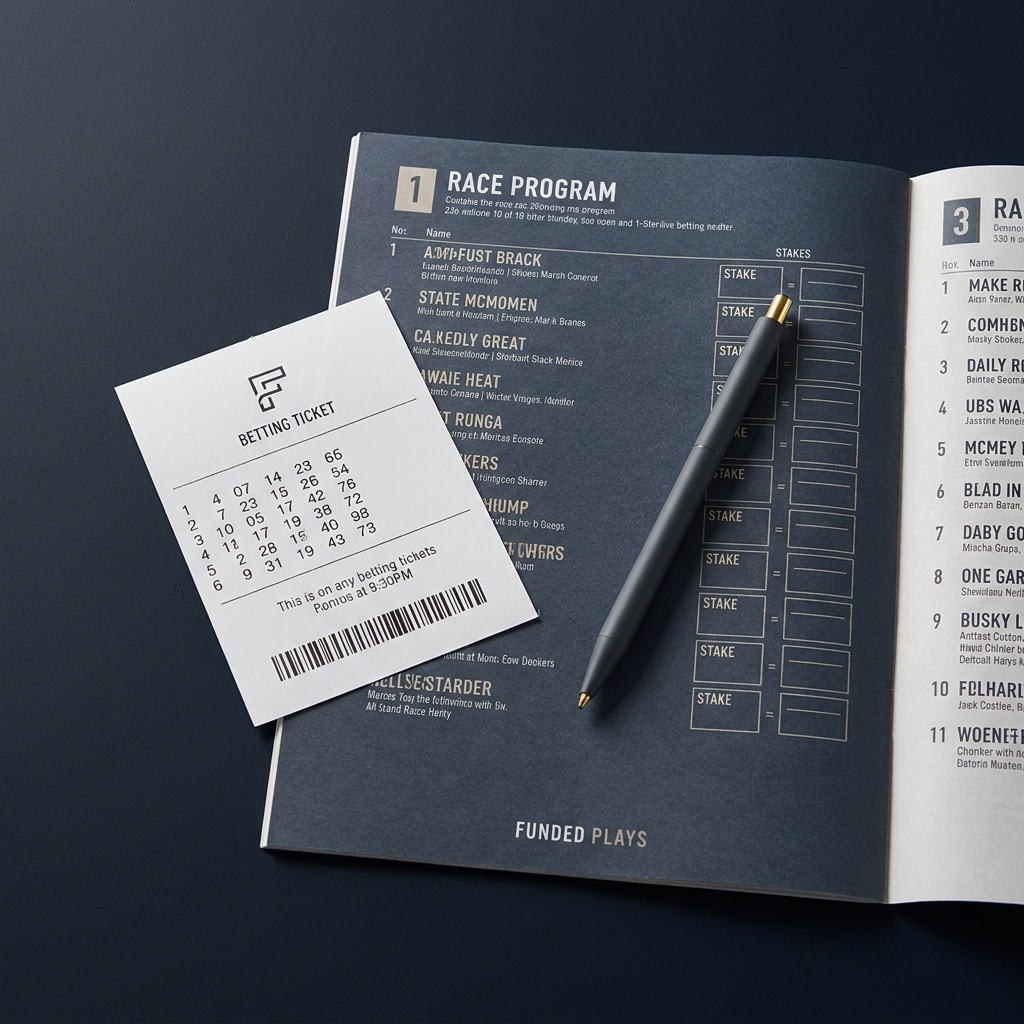
When building a Pick 3 ticket, bettors assemble combinations across the three legs and the resulting ticket cost equals the number of combinations times the base stake per combination; many operators list minimum stakes and provide ticket builders to check totals before purchase.
For practical play, start with a small number of singles and key horses to limit combinations and cost, then expand to coverage you can sustain within your bankroll.
Other ticket formats and operator conventions: boxes, wheels, minimums and place terms
A boxed Exacta, Trifecta or Superfecta multiplies the number of combinations by the factorial of the horses boxed, so knowing the combination count is essential to estimate ticket cost before you bet; operator guides show the math and common examples for boxed and wheeled tickets NYRA wagering guide.

Wheel tickets let you select a stable of horses in one slot and pair them with many others in another slot to cover likely outcomes efficiently, and wheels are often the choice when one race is narrow but the other is wide open.
Minimum bet sizes and place terms are set by tracks or regulators and they affect strategy; for example minimum unit stakes change the effective cost of boxed exotics and place terms determine whether a place pays for second only or for second and third in a race.
How pari-mutuel payouts are calculated
Pari-mutuel payouts come from the net pool, which equals the total money wagered in a pool minus takeout and any required breakage, and dividends are distributed by dividing that net pool among all winning units, a method described in regulatory pool schedules and tote operator materials Hong Kong Jockey Club betting guide.
In clear steps, the dividend process works like this: pools collect wagers by type, the operator deducts the applicable takeout, breakage is applied if required, and the remaining balance is allocated to winning tickets, so per-unit payouts vary by how many winning tickets share the net pool.
That means two races with similar finishing orders can pay different dividends because the size of the underlying pools and the number of winning tickets differ, and tote operator guides and regulatory rules explain these dependencies for each pool type Pari-Mutuel Betting Supervision Regulations.
Worked examples are useful for learning this logic without assuming real-world payout rates; use small hypothetical numbers to confirm you understand net pool and per-unit division before you test with real stakes.
Each-way and fixed-odds conventions: how UK and Irish each-way bets differ from North American tote bets
An each-way bet is a paired product in fixed-odds markets, commonly in the UK and Ireland, that combines a win bet and a place bet under bookmaker terms; place terms such as number of places and fraction of the win price are set by the bookmaker or by event convention BHA Rules of Racing.
Compute ticket cost from combinations and a base stake
Use for quick ticket-cost checks
North America generally uses pari-mutuel place pools rather than bookmaker each-way terms, so an each-way product in the UK will not map directly to a North American place bet; check your operator if you see an each-way offering outside of a bookmaker market Racing Post each-way guide.
When considering each-way conventions, remember that fixed-odds place terms and pari-mutuel place pools allocate risk and reward differently, and you should confirm whether the market you are using is fixed-odds or a tote pool before structuring combined bets.
How to read and place tickets: step-by-step examples
A basic Win ticket shows the race number, the horse number, the stake per unit, and the bet type, so read the ticket to confirm the race, the runner and the base stake before you finalize a purchase; operator help pages typically list the required ticket fields and common formats NYRA wagering guide.
For an Exacta ticket you will need to list the first and second horse in order for a straight Exacta, or list both horses with the box instruction for a boxed Exacta, and you must account for the multiplication in combinations when you calculate total stake.
To build a boxed Trifecta, pick three horses and choose the box option; a boxed Trifecta creates all ordered permutations of the three horses, and the total stake equals the number of permutations times your base stake per permutation.
Always confirm the minimum stake and the operator's ticket-builder totals before submitting the ticket so you do not exceed your intended bankroll or accidentally buy extra combinations.
Decision criteria: choosing which bets to use based on bankroll, odds, takeout and coverage
Decide on bet types based on bankroll size, the cost of combinations, takeout rates and how much of your bankroll you are willing to risk on single events; smaller bankrolls often favor simpler Win or Place plays, while larger bankrolls can absorb the cost of boxed or wheeled exotics if the expected reward justifies the outlay NYRA wagering guide.
Takeout and pool size influence expected value, so compare potential payout efficiency of a straight Win against the long-shot possibilities in exotics; a high takeout reduces the long-run return from any pool, and that should affect how you size bets.
When using exotics, limit combinations to a level your bankroll can support and consider keying one leg or using partial wheels to manage cost while keeping useful coverage.
Adopt simple bankroll rules such as fixed unit sizing and maximum ticket counts per race to preserve your ability to participate over time rather than risking a large share of funds on a single ticket.
Typical mistakes and common pitfalls to avoid
Common errors include overplaying expensive exotic combinations with too small a bankroll, failing to check minimums, and miscalculating box or wheel costs, so always count combinations and confirm the total before purchase NYRA wagering guide.
Another frequent pitfall is ignoring local takeout rates and pool sizes, which can make certain bet types poor value in some jurisdictions; check operator or regulatory sources to see the applicable takeout before you chase a perceived inefficiency.
Also avoid confusing each-way, fixed-odds conventions with pari-mutuel place pools; different markets use different rules and you should verify the type of market you are in to avoid unexpected payout structures.
Practical scenarios: worked examples of ticket cost and dividend logic
Exacta box example: if you choose three horses and box them for an Exacta, the box covers every ordered pair of those three horses; count the pairs to compute combinations and multiply by your base stake per combination to find the total ticket cost, and use the operator ticket builder to confirm the amount before purchase NYRA wagering guide.
Pick 3 scenario: when you build a Pick 3 with a single in leg one, two horses in leg two, and three horses in leg three, the ticket combinations equal the product of the selections in each leg, and you pay the number of combinations times your base stake per combination; the Pick 3 sequence is a separate pool and its payout will depend on how many winning tickets share that pool ARCI model rules.
These worked examples show how combinations determine cost and how separate sequence pools determine payouts; use hypothetical numbers when practicing to verify you understand the relationship between combination count, stake and potential dividend without relying on actual pool figures.
Always make your assumptions explicit when practicing and check operator help pages for ticket examples to avoid mistakes when moving from practice to real stakes.
Jurisdictional differences: what to check at your track or operator
Some bets such as Quinella may not be offered in every jurisdiction, and place terms and minimum stakes differ internationally, so verify availability and specific terms on the local wagering menu or in the regulator's schedule before you place a bet ARCI model rules.
Official pool rules and takeout rates are published in regulatory schedules and operator education pages, and older legal texts remain authoritative until they are superseded by new rulemaking, so consult those sources when you need definitive guidance Pari-Mutuel Betting Supervision Regulations.
If you are unsure whether a particular exotic or multi-race bet is available at a track, call the wagering desk or check the operator's posted wagering menu before planning tickets that depend on that specific bet type.
Summary and responsible next steps for learning and practicing
In short, horse racing wagers fall into three broad categories: straight pari-mutuel pools such as Win, Place and Show, intra-race exotics like Exacta and Trifecta, and multi-race wagers such as the Daily Double and Pick 3; understanding how pools and combinations work is essential to making sensible choices NYRA wagering guide.
To practice responsibly, use small-stake tickets or simulation tools, adopt simple bankroll rules, and study operator education pages and regulator schedules to confirm bet availability and takeout rates before staking larger amounts.
Approach exotics with discipline, count your combinations, and prefer consistent, testable strategies instead of chasing large payouts you cannot afford to buy into.
Start with Win, Place and Show, then learn Exacta and Trifecta basics; practice ticket construction using small stakes or simulation before expanding to exotics.
Pari-mutuel payouts are paid from a net pool after takeout and shared among winning tickets, while fixed-odds payouts are set by the bookmaker at the time the bet is placed.
Check the local racing authority's regulatory schedules and the track or operator education pages for published pool rules and takeout information.
References
- https://en.wikipedia.org/wiki/Parimutuel_betting
- https://www.arci.com/wp-content/uploads/2024/04/Model-Rules-Version-14.0-April-2024.pdf
- https://laws-lois.justice.gc.ca/eng/regulations/SOR-91-365/page-9.html
- https://www.nyra.com/betting/handicapping-info/wagering-101
- https://www.kentuckyderby.com/wp-content/uploads/sites/3/2024/04/CDRT-Wagering-Rules.pdf
- https://www.fundedplays.com/challenges
- https://www.fundedplays.com/
- https://www.fundedplays.com/blogs/how-fundedplays-evaluations-work
- https://www.fundedplays.com/blogs
- https://www.keeneland.com/wagering-experience
- https://campaign.hkjc.com/en/racing-guide/betting/pool-types
- https://www.britishhorseracing.com/regulation/rules-of-racing/
- https://www.racingpost.com/betting-guides/what-is-an-each-way-bet/