
Definition and context: what a trifecta and a trifecta box are
Basic definitions
A trifecta is a wager that requires picking the first three finishers in exact order, a bet type commonly described in U.S. racing education materials, and understanding that exact order is required is essential for cost and payout planning NYRA betting 101, Trifecta.
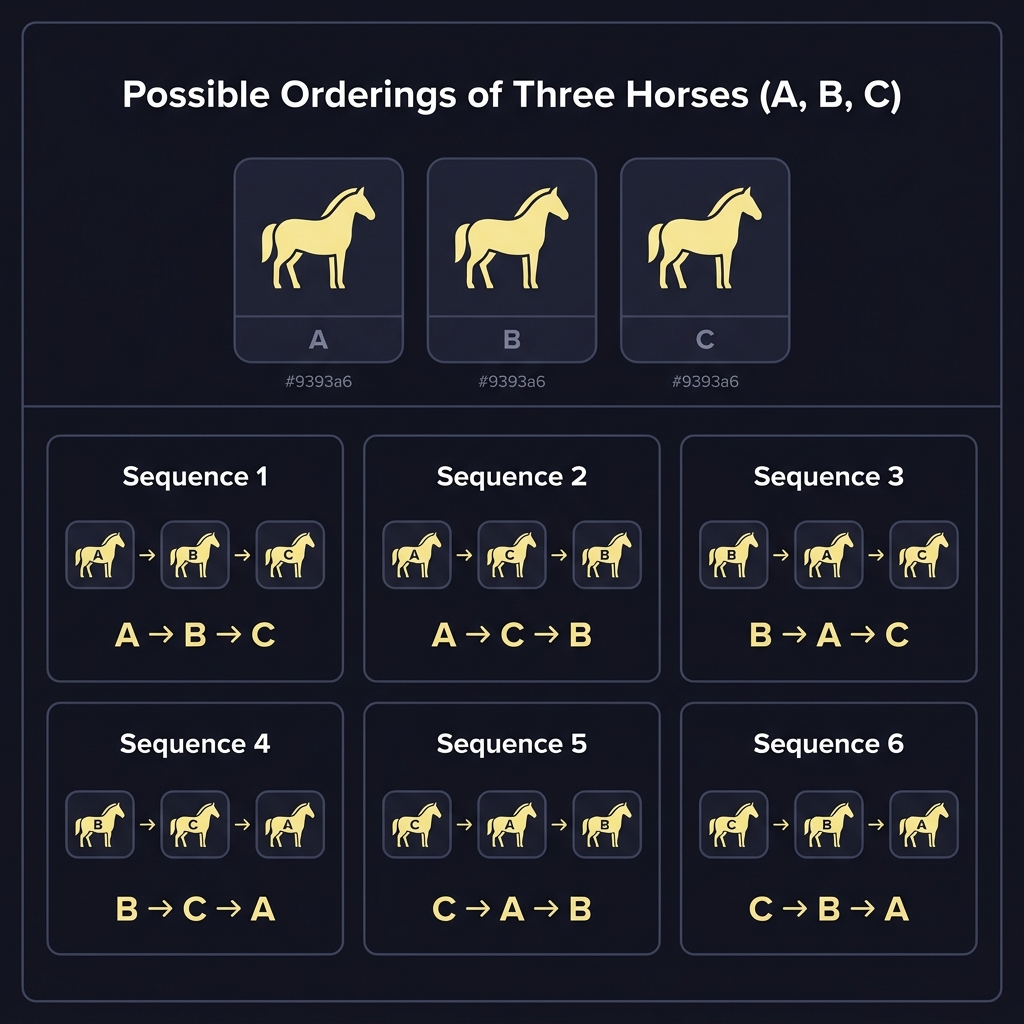
A trifecta box is a way to cover the same set of horses in every possible finishing order among them; instead of one exact-order ticket, a box produces multiple ordered combinations so the three selected horses can finish 1-2-3 in any sequence and still win. AmWager explanation
Why bettors use a box instead of a straight trifecta
Bettors box when they want coverage of multiple possible orders without predicting a single precise finishing order, accepting higher upfront cost in exchange for broader outcome coverage. Boxed bets increase the number of combinations and therefore the ticket cost compared with a single straight trifecta, and that higher cost does not guarantee a higher net profit.
Check combinations and cost before you bet
Use a simple calculator to confirm how many combinations your box creates before you submit a ticket; it helps avoid surprises in cost and keeps staking disciplined.
Quick primer: straight trifecta versus boxed trifecta
How order matters in straight trifectas
A straight trifecta requires the exact 1-2-3 finish in the order you name; one wrong position and the ticket loses, which is why many bettors compare that single-ticket risk to the coverage from a box America's Best Racing trifecta guide.
Example: selecting horses A, B, C as a straight trifecta means only A first, B second, C third wins. That single ticket represents one ordered permutation of those three horses.
How a box converts one straight into multiple tickets
A 3-horse box converts the single straight permutation into every order of those three horses. Practically, the box multiplies coverage into multiple ordered tickets so any 1-2-3 result using your three horses pays, though the cost equals the number of ordered tickets times your base stake.
Remember that while a box covers more possible outcomes, it also raises the upfront outlay and does not change how pari-mutuel pools determine payoffs for winning $1 units.
The trifecta box formula: n times n minus 1 times n minus 2
Derive the permutation formula
When you select n horses to box, the number of ordered ways to place three distinct finishers is n multiplied by n minus 1 multiplied by n minus 2. This counts ordered 3-permutations of n items and is the standard combinatorial result used in calculators and guides Khan Academy on permutation formulas.
The reasoning is stepwise: you have n choices for first place, then n-1 remaining choices for second, and n-2 remaining choices for third; multiplying those choices gives the total ordered combinations.
The formula is n*(n-1)*(n-2), which counts ordered permutations of three finishers from n selected horses and gives the number of combinations in a boxed trifecta.
Common quick-results (3, 4, 5 horses)
Apply the formula to common box sizes: a 3-horse box gives 3*(2)*(1)=6 combinations, a 4-horse box gives 4*(3)*(2)=24 combinations, and a 5-horse box gives 5*(4)*(3)=60 combinations, which are the standard counts bettors use when sizing boxes America's Best Racing trifecta guide.
Because these figures come directly from the permutation rule, they apply regardless of the track or pool structure; you still must check local rules for base stake and other limits before wagering.
Combination count examples and cheat-sheet
Table-style list of common box sizes
Common boxed trifecta counts to remember are: 3-horse box = 6 combinations; 4-horse box = 24; 5-horse box = 60; 6-horse box = 120. Each value follows from n*(n-1)*(n-2), and keeping these quick results in mind helps when estimating cost rapidly Khan Academy permutation reference.
Keep a short mental list or a small printed cheat-sheet of these counts if you plan to box frequently; it makes it easier to see at a glance whether a proposed box is affordable for your bankroll.

When the formula stops being practical
As n grows, combinations grow quickly by the multiplicative rule, so large boxes can become impractical for typical bankrolls and common base stakes. When the count becomes large, consider alternatives such as keying horses, wheel bets that limit positions, or smaller boxes.
Practical advice: compute the combination count first, then multiply by your intended base stake before deciding whether to proceed.
How to calculate ticket cost: base stake and fractional units
Ticket cost formula: combinations times base stake
Ticket cost is simply the number of combinations multiplied by the base unit stake you choose, so cost = combinations × base stake; this is the straightforward calculation most guides use when estimating boxed trifecta expense TwinSpires Edge on trifecta box cost.
Example verbal calculation: if your box produces 24 combinations and the track accepts a $0.50 base, the ticket cost is 24 × $0.50, calculated before you place the bet to confirm the outlay.
Common base stakes and how fractions affect total cost
Common base stakes in U.S. pari-mutuel pools are $1 and $0.50, though tracks or ADWs can set different minimums; fractional units reduce the cost proportionally but also change the payout per winning unit.
For a concrete numeric example, a 4-horse box at a $0.50 base costs 24 × $0.50 = $12.00, so always run the multiplication mentally or with a calculator and verify the track accepts your chosen base stake TwinSpires Edge cost guidance.

Using a trifecta calculator: inputs and step-by-step
What to enter: number of horses and stake size
The typical trifecta calculator asks for three simple inputs: the number of horses you want to box, the base stake per combination, and whether you are using a fractional unit such as $0.50; enter those values and let the tool compute combinations and total cost using the permutation rule.
Using a calculator speeds the arithmetic and reduces input errors compared with doing the multiplication by hand, and it is especially useful when you experiment with different box sizes to see the cost trade-offs quickly.
Interpreting calculator output: combos, ticket cost, and fractional payouts
Calculator output usually lists the number of ordered combinations, the total ticket cost, and optionally the equivalent number of $1 winning units represented by your ticket when you use fractional bases; use those outputs to check affordability and to see how many $1 units you will hold if a winning permutation occurs Khan Academy permutation explanation.
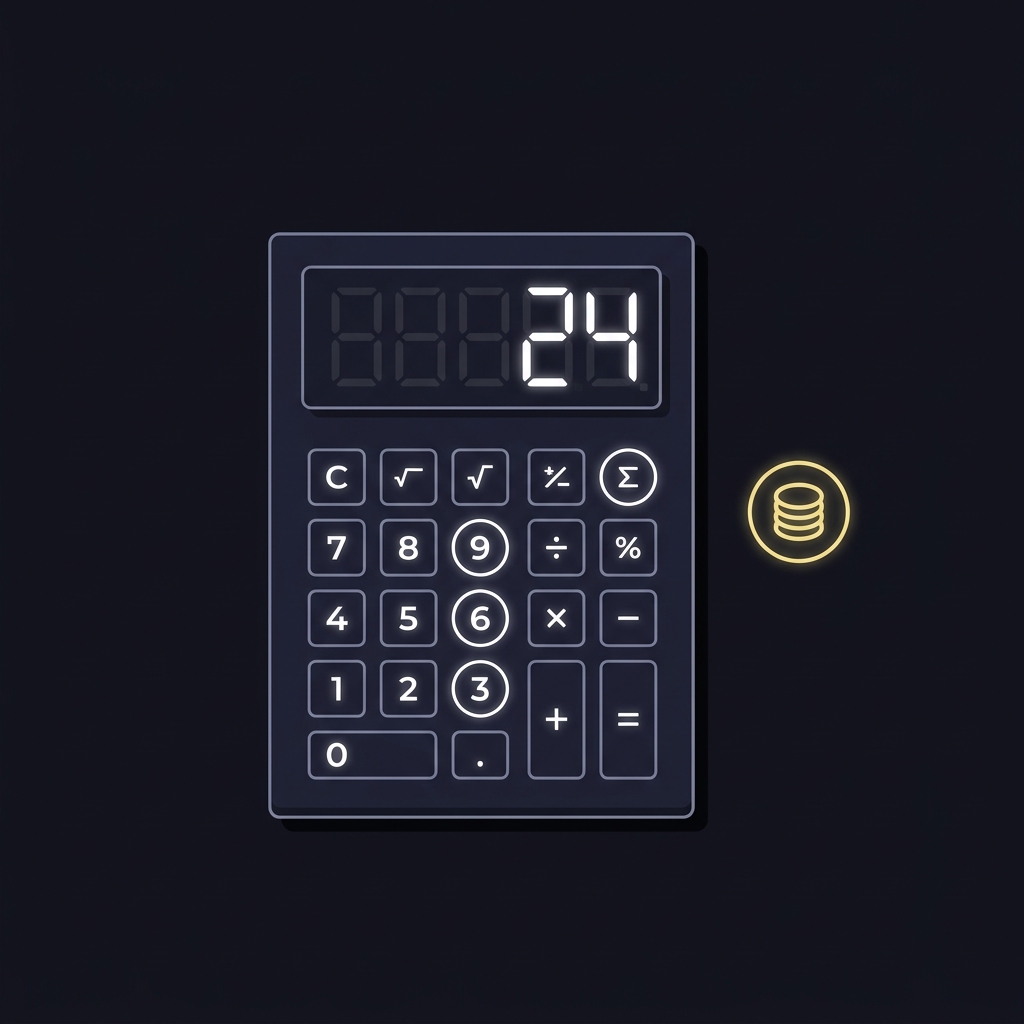
After you compute combinations and cost with the calculator, always verify the base stake and minimums with the track or ADW before you submit a ticket to ensure compatibility with local betting rules.
How payouts work for boxed trifectas under pari-mutuel systems
Pari-mutuel basics and takeout
Pari-mutuel pools collect all bets of a given type, subtract the takeout and applicable fees, then divide the remaining pool among winning $1 units; posted $1 payoffs are the baseline used to determine how much each $1 winning unit receives Investopedia on parimutuel payouts. Wikipedia on parimutuel betting
That means a boxed ticket that represents multiple $1 winning units will receive the posted payoff multiplied by the number of winning units you hold, and the pool size and number of winning tickets determine the final dollar payoff per winning unit. Action Network on payouts
estimate ordered combinations and total ticket cost
Use to confirm combinations and cost
Fractional base units and how payouts are calculated
If you buy fractional base tickets, for example $0.50 units, each fractional ticket receives the proportional share of the posted $1 payoff; a $0.50 unit is paid at half the posted $1 payoff for each winning $1 unit represented by the winning permutations on your ticket Investopedia on parimutuel payouts.
When a boxed ticket produces multiple winning permutations, you hold multiple winning units and your total payout is the posted $1 payoff times the number of winning $1 equivalents you own, less the usual pool variability.
Jurisdictional rules, minimums, and what to verify at your track
Regulatory minimums and when a wager may be declared invalid
Jurisdictions regulate exotic wagers and may set minimum betting-interest requirements or other conditions before an exotic like a trifecta is offered or declared official, so check the regulator or track materials for local rules affecting availability and validity California Horse Racing Board exotic wager rules.
Because regulatory minimums and administrative rules vary, always consult the track program, ADW help pages, or the regulator in your jurisdiction if the availability of a boxed trifecta or the base stake is in question.
Where to find official base stakes and takeout information
Track programs and ADW help pages list current base stakes, minimums, and takeout rates; verify those figures before placing any boxed trifecta so your calculator results match the live offering.
While the mathematical box formula is constant across jurisdictions, practical offerings such as accepted fractional units, minimums, and takeout rates differ and affect both cost and net payout potential.
Choosing horses and decision criteria for a box
When to box more horses versus fewer
Boxing more horses increases coverage but also raises cost by the combination rule, so balance the number of horses against your confidence in specific contenders and your bankroll limits when choosing how many to box America's Best Racing trifecta guide.
A practical approach is to box a small core of horses you rate highly and use keying or limited wheels to expand coverage in a controlled way rather than automatically boxing a large field. Practical approach
Balancing probability, cost, and payout potential
Use the permutation formula to quantify coverage, then weigh that against implied probabilities from odds and the cost computed from your chosen base stake; a clear numeric view of combinations helps avoid emotionally driven overcoverage.
Document a simple pre-race rule, such as a maximum number of combinations or a per-race percentage of bankroll, and stick to it to keep boxing decisions disciplined.
Risk management and bankroll implications of boxed trifectas
How boxed costs affect session bankroll
Because combinations can rise rapidly, boxed trifecta costs can consume a session bankroll faster than straight bets; calculate combinations and cost first, then size stakes so you do not exceed a predetermined per-race or per-session limit TwinSpires Edge cost guidance.
One simple rule is to cap any single race commitment at a fixed percentage of your session bankroll to avoid a few large boxes depleting your ability to bet later in the card.
Using fractional units to control spending
Fractional base units, such as $0.50, let you buy coverage at lower cost while retaining proportional exposure to posted $1 payoffs; this is a common method to reduce outlay while still holding multiple winning units if permutations hit.
However, remember that fractional units also scale down the payout per winning unit, so use fractions as a cost-control tool rather than as a way to expect the same dollar returns as full $1 units.
Common mistakes and pitfalls to avoid
Counting errors and slipping decimal places
Frequent errors include miscounting combinations, misplacing parentheses in manual arithmetic, or entering the wrong fractional stake; use the permutation formula and a calculator to verify counts before you submit a ticket America's Best Racing trifecta guide.
When using fractional units, double-check decimal placement to avoid paying ten times the intended amount because of a misplaced zero or decimal point.
Forgetting to check base stake and jurisdictional rules
Another common pitfall is assuming a $0.50 base is accepted everywhere; always confirm the track or ADW base stake and any minimum bet requirements before converting calculator results into a live ticket TwinSpires Edge guidance.
Also avoid assuming a posted $1 payoff applies identically to fractional units without adjusting proportionally for the base unit you purchased.
Worked examples and scenarios using a trifecta calculator
Example: 4-horse box at $0.50 base
Step 1, compute combinations with the formula: for 4 horses, combinations = 4*(4-1)*(4-2) = 24. Step 2, multiply by the base stake: 24 × $0.50 = $12.00 total ticket cost; this stepwise approach mirrors calculator outputs and matches guidance used by betting education resources TwinSpires Edge example.
Before placing that $12 ticket, confirm the track accepts $0.50 units and that your session bankroll can absorb the outlay; if not, lower the base stake or box fewer horses.
Scenario: when a box produces multiple winning permutations
A 3-horse box yields 6 ordered combinations; if the race finishes with your three horses in any order, each winning permutation that matches your ticket corresponds to one $1 winning unit or fractional equivalent, so multiple permutations increase the number of winning units you own and thus your total payout in proportion to those units Investopedia on parimutuel payouts.
Conceptually, if you hold multiple winning $1 equivalents because several permutations hit, your total return equals the posted $1 payoff multiplied by the count of $1 winning equivalents you own, adjusted by how many other winning tickets share the pool.
Conclusion: quick checklist and next steps
Quick checklist before you place a boxed trifecta
Compute combinations using n*(n-1)*(n-2), multiply by your chosen base stake to get ticket cost, verify the track or ADW accepts your base stake and fractional units, and confirm any regulatory minimums that apply to the wager Khan Academy permutation reference.
Use a trifecta calculator to cross-check your arithmetic, then decide whether the cost fits your bankroll and strategy before committing funds. trifecta calculator
Where to learn more
For more on wagering rules and how payoffs are calculated, consult track education pages, regulator materials, and reputable betting guides that explain pari-mutuel pools and exotic wagers. reputable betting guides
Remember that the box formula remains constant; practical decisions hinge on pool size, takeout, and your own risk management rules.
The formula is n*(n-1)*(n-2); it counts ordered 3-permutations of n horses to give the number of combinations in a boxed trifecta.
Multiply the number of combinations from the formula by the base unit stake you choose; for example, combinations × $0.50 or combinations × $1.00.
Yes. Fractional units receive the proportional share of the posted $1 payoff, so a $0.50 ticket gets half the posted $1 payoff per winning $1 unit.
References
- https://www.nyra.com/belmont/betting-101/trifecta
- https://www.amwager.com/what-is-trifecta-bet/
- https://www.americasbestracing.net/gambling/2024-what-trifecta-and-how-bet-it
- https://www.khanacademy.org/math/statistics-probability/counting-permutations-and-combinations/permutation_formula/a/permutation-formula
- https://edge.twinspires.com/racing/how-much-does-a-trifecta-box-cost/
- https://www.fundedplays.com/challenges
- https://www.investopedia.com/terms/p/parimutuel_betting.asp
- https://en.wikipedia.org/wiki/Parimutuel_betting
- https://www.actionnetwork.com/education/how-exacta-trifecta-superfecta-payouts-work-in-horse-racing-betting
- https://www.chrb.ca.gov/rules/Rule1975_Exotic_Wagers.pdf
- https://www.fundedplays.com
- https://www.fundedplays.com/blogs
- https://www.fundedplays.com/blogs/how-fundedplays-evaluations-work