
What over/under player prop bets are and how they work
Definition of over under in player props
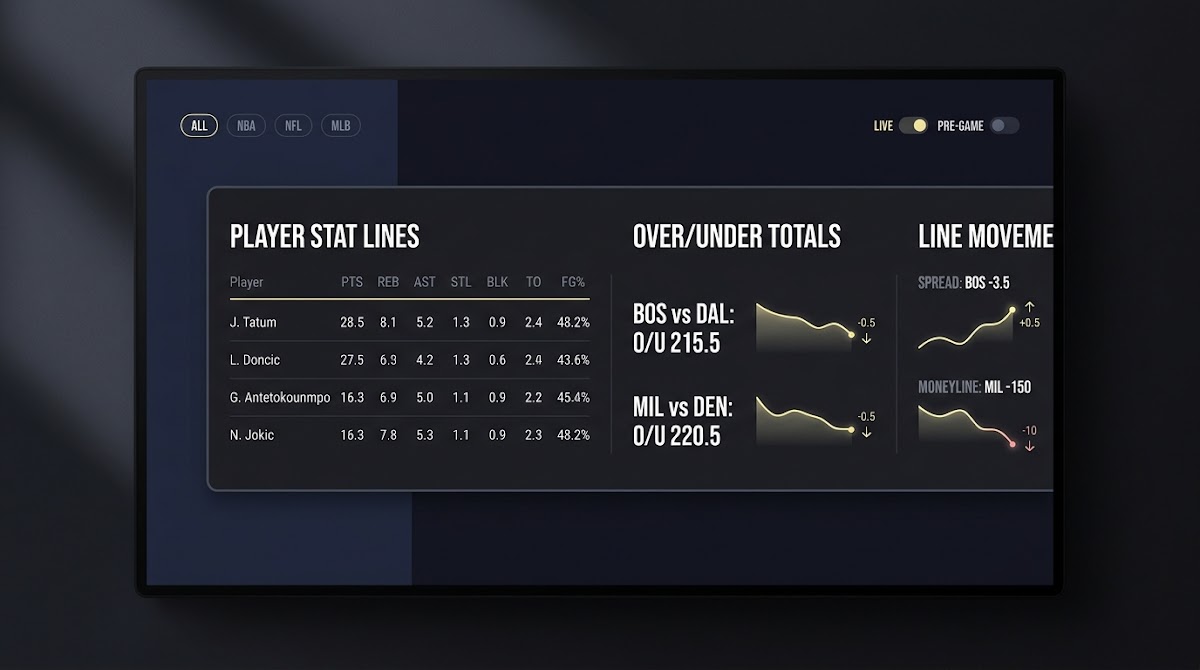
Trading Overs vs Unders in Player Props describes a class of wagers where the market sets a numeric total for a player statistic and market participants choose whether the actual result will be higher or lower than that total; this over under concept is a core format used in player prop markets and the definition aligns with standard industry descriptions Over/Under (O/U) Definition.
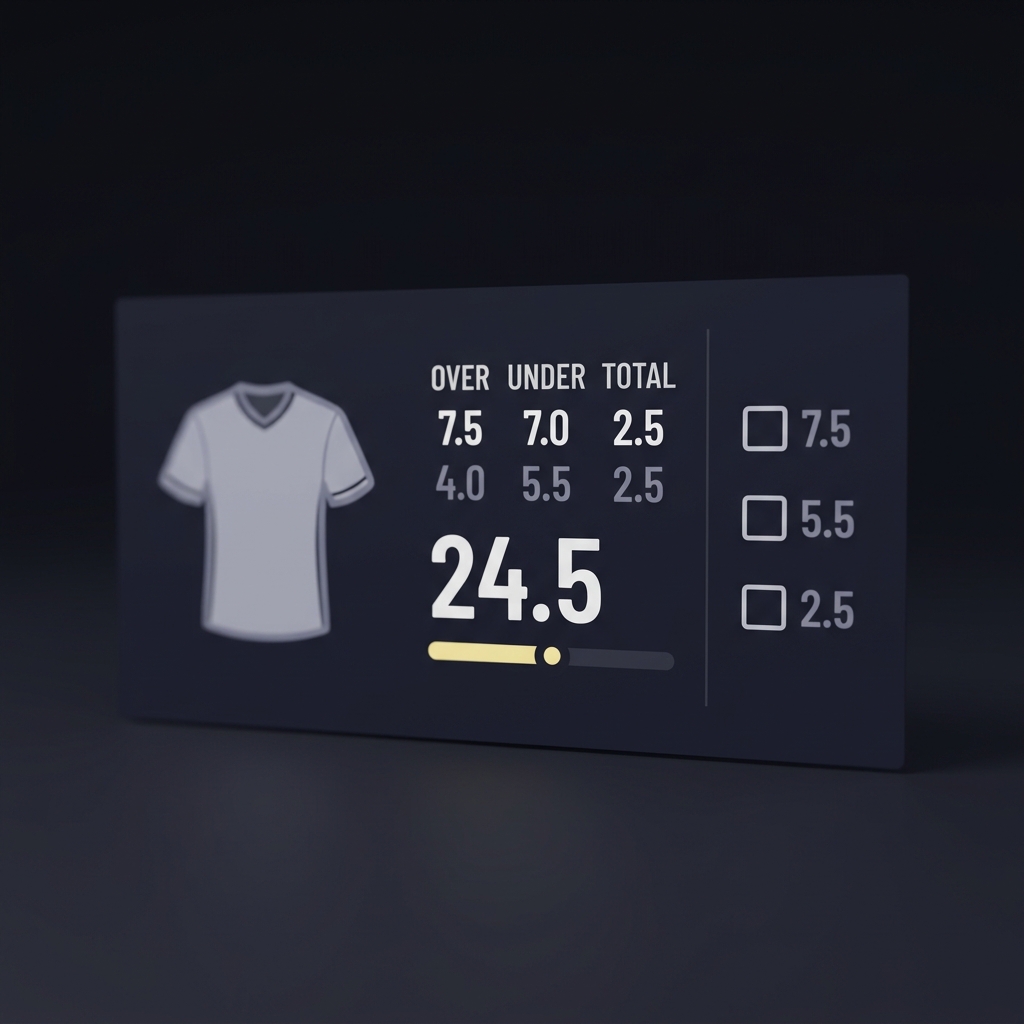
Player proposition bets target individual performances such as points, assists, or receptions rather than the final game result, and many of those are presented as over/under lines because a single numeric threshold simplifies binary decision making for traders and bettors.
Unlike game outcome wagers, which settle on final scores or winners, player props settle on a discrete player statistic; that distinction changes which data and contextual signals matter when you evaluate an opportunity.
Availability of a specific player prop depends on state and platform rules, so traders should confirm that a line is permitted in their jurisdiction before planning a trade, since state wagering catalogs can exclude particular markets or participants.
Decide by combining a quantitative edge threshold from your model, a variance expectation, a liquidity check, and a jurisdictional permission check; only execute when all criteria meet your predefined rules and document the rationale for later review.
Traders concentrate on overs versus unders because liquidity can concentrate in particular player markets and create more consistent pricing, and the expanding U.S. market has increased the variety and depth of player-focused products available over recent years, offering more opportunities where market pricing reflects varied opinions State of the States 2025.
An over or an under may present an edge when public expectations diverge from private models, when usage patterns are stable, or when relevant information such as lineup news is underappreciated by the market. Edge candidates often come from clearer role definitions or steady playing time rather than volatile usage.
Market depth matters: deeper markets allow traders to enter and exit with less cost, while shallow markets can make it hard to enact complex hedges or to scale position size without moving the line.

Sportsbooks publish preset totals based on model estimates of expected outcomes, using inputs such as historical player rates, expected usage, matchup context, and available injury information to set an opening number that represents the book's neutral projection.
Lines move in response to real time factors including betting flow, new public information, and sharper bets; watching how a line moves can provide information, but movement does not guarantee predictive power and must be interpreted with context.

Which player props are offered and how they are structured is often governed by state wagering catalogs and regulatory guidance, so traders need to consult local permitted and prohibited wagering lists before placing trades Colorado Sports Betting Catalog.
In March 2024 the NCAA urged states to ban prop bets on college athletes, and several regulators acted to restrict or prohibit such markets into 2025; that development has a direct impact on traders who might otherwise consider college lines NCAA statement.
Integrity monitoring continued to report suspicious activity in 2024, reinforcing that traders should adopt compliance-first workflows, pause on markets with integrity alerts, and document any unusual patterns they observe Integrity Report 2024.
Idea generation: record the initial signal and the rationale in your trade log, including the model output and any qualitative checks. Model verification: cross check model signals against matchup and usage context. Stake sizing: set size according to predefined bankroll rules. Execution: enter the market in tranches if liquidity is limited. Post-trade review: timestamp outcomes, log final results, and note deviations from expectations.
Learn the FundedPlays challenge process
Consider a disciplined practice routine that combines model testing, small live experiments, and consistent record keeping to learn without exposing your whole bankroll to a single strategy.
Evaluation checkpoints before placing a trade: verify the jurisdictional permission for the market, check injury and lineup reports, look for integrity alerts, and confirm market liquidity can handle your desired size. If any checkpoint flags a concern, pause and document the reason before proceeding.
Maintain versioned rules that define your edge threshold and acceptable variance; these rules help separate deliberate trading from emotional reactions to short term results. A clean workflow reduces second guessing and supports objective post-trade analysis.
Common inputs include historical player statistics, usage rates, opponent adjustments, and public injury information; combine those with context such as recent role changes to avoid being misled by short term variance Proposition Bet (Prop Bet) Definition.

Simple models often weight recent usage and matchup factors more heavily than raw season averages, while larger models may incorporate play by play data and opponent defensive tendencies; small sample sizes and role volatility are the main reasons to reduce confidence in a model signal.
Trust models when they show consistent outperformance in in-sample and cross validation checks and when you have a clear explanation for why a signal should persist into the next game; otherwise use smaller stakes to test a hypothesis in live conditions.
Adopt stake sizing tied to a clear bankroll definition and an allowed drawdown limit, for example fixed percentage sizing and maximum daily drawdown rules that trigger a mandatory pause and review if breached.
Integrate integrity alerts and jurisdiction checks into your stop conditions; if a regulator changes permitted markets or an integrity report highlights suspicious flows, pause trading in affected markets and document the action taken Integrity Report 2024.
Trade log and bankroll tracker to enforce sizing rules
Use before and after trade
Do not chase losses. If you hit a prearranged drawdown, stop and conduct a review rather than increasing size to recover. Stopping rules protect capital and preserve the ability to learn from a clean record of trades.
Combine an edge threshold from your model with a variance expectation and a liquidity check: if expected edge exceeds your threshold and market liquidity allows execution at scale, the trade meets the basic quantitative rule set.
Always run a jurisdiction check as part of your decision rules; exclude markets that regulators or catalogs prohibit, such as certain college athlete props in many states following recent guidance NCAA statement.
Timestamp your decision and record the rationale so you can later audit whether the decision criteria were applied consistently.
Hedges are appropriate when correlated markets provide a low cost way to reduce exposure, for example using a correlated player prop or a game total to offset a directional risk; partial hedges can reduce volatility while still leaving upside for the original view.
Partial hedges entail reducing net exposure rather than eliminating it and are useful when liquidity or cost makes a full hedge uneconomical. Beware of liquidity costs and the risk that correlated markets move in unexpected ways.
Avoid over hedging because high hedge turnover and fees can erode any structural edge and because excessive hedging can mask information about your original model's performance.
Typical behavioral errors include overfitting to a short sequence of outcomes, treating a few wins as proof of a robust strategy, and ignoring sample size when generalizing a pattern to future games. Keep disciplined record keeping so you can detect when a pattern was likely noise rather than signal.
Do not ignore integrity alerts; suspicious betting activity or regulator changes should pause related strategies and prompt documentation and review rather than continued trading until the issue is resolved Integrity Report 2024.
Step 1: Idea generation. Your model flags a player whose usage rate is trending up due to a teammate injury. Step 2: Jurisdiction check. Confirm the market is permitted locally. Step 3: Verify context. Check minute projections and matchup difficulty. Step 4: Stake sizing. Use your predefined stake as a fraction of bankroll. Step 5: Execution. Enter in two tranches to manage market impact. Step 6: Post-trade review. Log the final result and note any variance from expected usage.
Step 1: Idea generation. A player with variable minutes presents both upside and downside. Step 2: Decision checks. If liquidity allows, open a primary position on the over and plan a partial hedge using a correlated prop that benefits if usage falls. Step 3: Execution. Size the hedge to limit worst case drawdown while preserving upside. Step 4: Review. Compare projected variance to realized outcome and record lessons learned.
Each example begins with a mandatory jurisdiction check and ends with a documented review to ensure compliance and continuous improvement.
Track hit rate, average edge on executed trades, peak and realized drawdown, and realized variance; these metrics give a balanced view of both accuracy and risk behavior.
Set a regular review cadence such as weekly for operational checks and monthly for performance analysis and model recalibration; trigger an immediate review when integrity alerts or regulatory changes affect your active markets State of the States 2025.
Trading overs versus unders in player props requires a mix of quantitative discipline, careful context checks, and up to date regulatory awareness. Maintain checklist driven workflows, prioritize integrity monitoring, and treat each trade as a data point for learning rather than a promise of performance. For practical resources on disciplined trading see Funded Plays.
Document decisions, maintain a trade log, run controlled live tests to validate model signals, and consult state wagering catalogs when markets or rules are unclear. Over time this process helps you refine judgment while staying compliant and measured.
An over/under player prop sets a numeric total for a player statistic and settles on whether the actual result is higher or lower than that total. It differs from game outcome wagers because it focuses on specific player performance.
No. Many states and regulators have restricted or banned prop bets on college athletes following formal requests and regulatory actions, so legality varies by jurisdiction.
Pause trading in affected markets, document the alert, and conduct a review before resuming activity. Follow any applicable regulator guidance and your platform's compliance rules.
References
- https://www.investopedia.com/terms/o/over-under-bet.asp
- https://rg.org/guides/prop-betting/prop-betting-strategy
- https://www.americangaming.org/resources/state-of-the-states-2025/
- https://oddsindex.com/guides/player-prop-betting-strategy
- https://www.fundedplays.com/challenges
- https://sbg.colorado.gov/sports-betting-catalog
- https://www.ncaa.org/news/2024/3/27/media-center-ncaa-urges-states-to-ban-prop-bets-on-college-athletes.aspx
- https://ibia.bet/wp-content/uploads/2025/02/IBIA-Integrity-Report-2024.pdf
- https://www.fundedplays.com/blogs/how-fundedplays-evaluations-work
- https://www.investopedia.com/terms/p/prop-bet.asp
- https://www.fundedplays.com/blogs
- https://www.sportsline.com/guides/props/
- https://www.fundedplays.com