
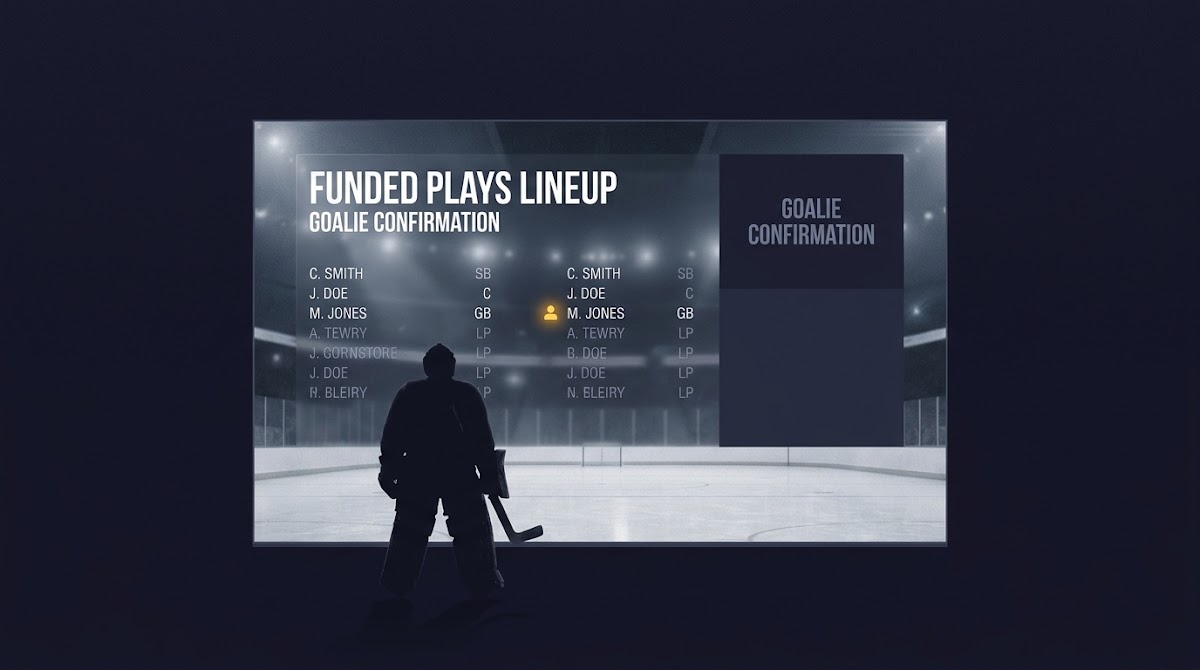
Trading NHL Games After Goalie Confirmation: definition and why it matters
What 'goalie confirmation' means
Trading NHL Games After Goalie Confirmation starts with a simple signal: a team has publicly or reliably announced which netminder will start. That announcement can come from a formal lineup report, a coach comment in a pregame media availability, or the team sheet released before the game. In practice, a confirmed starter is an input you trade against other information, not a guarantee that market moves will resolve in one direction.
For a trader the term 'goalie confirmation' captures timing and source quality. A morning skate note or an official lineup release sits in a different confirmation window than last-minute warmup news. Treat each type of confirmation differently and document the source and timestamp when you act.
Explore FundedPlays Challenges for structured practice and evaluation
Consider trying structured, skill-based challenge formats to practice rules and trade decision routines without real-money wagering pressure.
How the confirmation can shift pregame and in-game markets
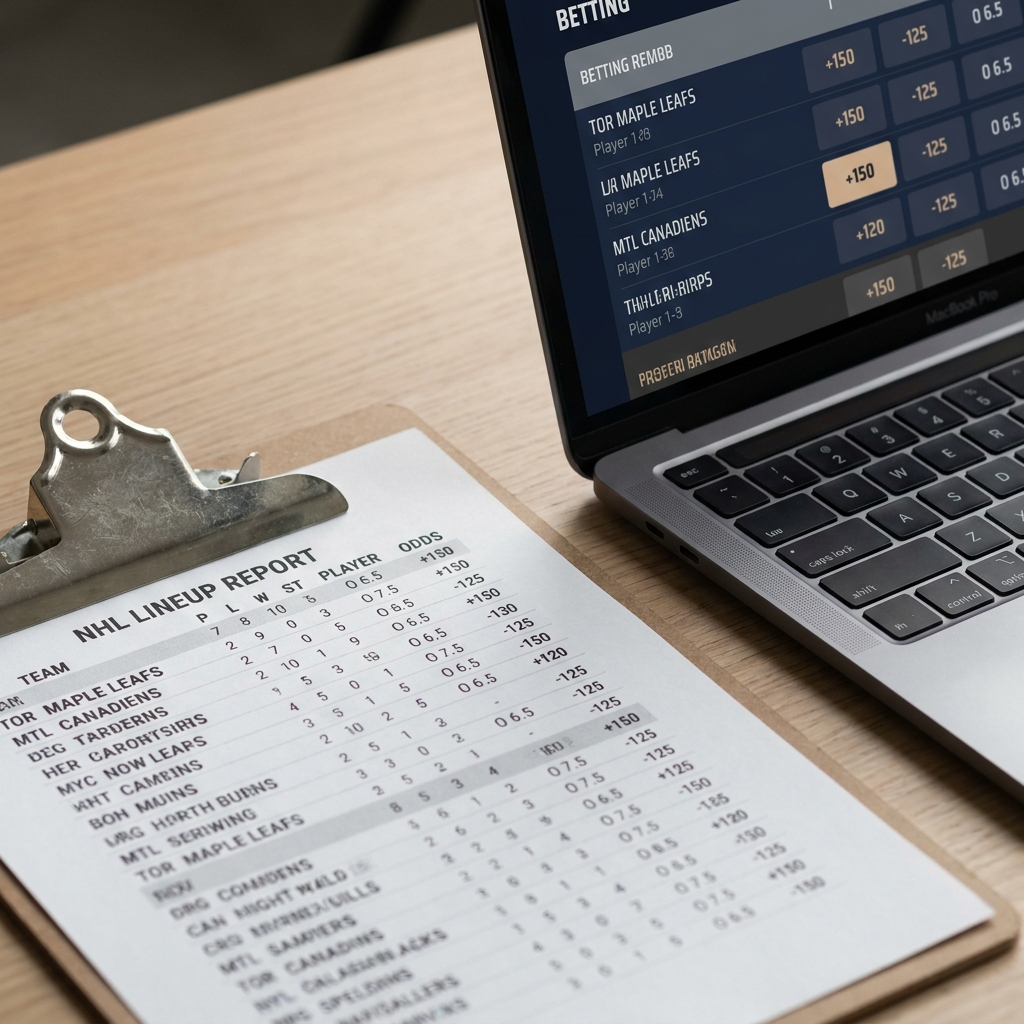
When a starting goalie is confirmed, two market responses are common: immediate shifts in posted odds or lines, and a change in perceived game risk for either side. How big and how fast those moves are depends on the reputation and recent form of the confirmed starter, the perceived gap between the starter and the likely alternative, and the liquidity of the market you use. Treat the confirmation as a catalyst that may change probabilities, but never as a sole determinant.
It helps to view goalie confirmation as one input in a layered process. Combine confirmation with matchup context, travel and rest, recent workload and public lineup notes before sizing a trade. Keep expectations modest and prioritize risk control over attempting to capture a single large move.
Remember that confirmations do not guarantee outcomes. They simply change the probability landscape. Use them to tilt a disciplined edge rather than to justify oversized bets.
Scope and limits of the strategy
Not every confirmation is tradeable. Some confirmations arrive well before market open and the information is already priced in. Others come so late that markets react with high volatility and poor liquidity. Know your trading window and platform limits before attempting to use confirmations as your primary signal.
For a trader the term 'goalie confirmation' captures timing and source quality. A morning skate note or an official lineup release sits in a different confirmation window than last-minute warmup news. Treat each type of confirmation differently and document the source and timestamp when you act.
When and where goalie confirmations appear and how markets react
Typical timing
Teams and media commonly publish goalie confirmations during morning skate notes, official lineup releases roughly 60 to 90 minutes before puck drop, and in last-minute scratches or warmup confirmations. Knowing these windows helps you set alerts and monitor channels at the right time rather than reacting to every rumor.
Late scratches and warmup switches can trigger the most dramatic market moves, but they can also bring the worst liquidity and the highest slippage. Evaluate whether your platform can execute quickly and at reasonable cost before you commit position size in those moments.

Channels that publish confirmations
Reliable confirmations come from formal sources such as team lineup sheets, coach or team press statements, and official game-day reports. Social media and beat reporters can be fast, but they vary in accuracy. Prioritize sources that include a clear timestamp and, when possible, corroboration from the team or league channel.
Keep a short list of trusted feeds and avoid acting on unverified chatter. If two or more independent and credible sources confirm the same starter, that increases the signal quality without guaranteeing the outcome.
General market behaviors to watch
Watch for rapid odds movement, line shifts, and changes in market-implied totals after a confirmation. Consult general guides on hockey betting for execution basics. Market depth often thins during last-minute changes, increasing the risk of slippage. In pregame windows, odds may move gradually as books adjust exposure; in live situations, changes can be abrupt and difficult to trade.
As you monitor markets, track the size of price moves relative to normal ranges for the platform you use, and prefer trades that fit your liquidity tolerance and execution requirements.
Quick checklist: what to check immediately after goalie confirmation
Pre-game data points to capture fast
Within the first minute after a confirmation, capture these essentials: exact timestamp and source, confirmed starting goalie name, the likely backup if applicable, and any concurrent lineup notes affecting defense or special teams. Record this information in your trade log for later review.
Next, do a fast sanity check of the confirmed goalie's recent usage and any public notes about injury or fatigue. You are not trying to build a full dossier in this moment, only to note whether there is immediate cause for concern that would materially change the expected impact of the confirmation.
Verify the confirmation source, check corroborating matchup and lineup context, size conservatively based on liquidity and timing, set clear exit rules, and log the trade for review rather than assuming the confirmation alone ensures profit.
Quick sanity checks to avoid bad trades
Scan opponent matchup context and surface-level analytics, such as whether the opposition generates a high volume of high-danger chances or is dealing with travel and rest issues. If nothing else corroborates the confirmation as a tradeable catalyst, consider standing aside until more information appears.
Finally, check liquidity and execution costs. A clear confirmation with no market depth is not the same as a clear confirmation with reasonable liquidity. If fills would be unreliable, protect your capital by sizing down or skipping the trade.
Core framework for trading NHL games after goalie confirmation
Define your edge and acceptable signals
Start by documenting what, specifically, gives you an edge when a goalie is confirmed. That might be a combination such as a clear disparity between starters, corroborating lineup changes that weaken one team, or travel and rest differentials that affect the opposing offense. Write these entry rules down and treat them as objective gates you must pass before committing capital.
A strong entry rule focuses on repeatable observations rather than intuition. Examples of acceptable corroborating signals include a weak defensive change, confirmed backup with a distinct style mismatch, or a repeatable pattern you have observed across multiple games. Keep examples focused and non-numeric when logging early decisions.
A simple risk-management framework to apply consistently
Protecting capital is the central priority. Define a maximum percent risk per trade relative to a tracked bankroll and use smaller sizes for in-play or late confirmations. Use stop rules that specify when to exit if the market moves against you and when to trim positions to lock partial profits. The exact percentages are a personal choice, but consistency and discipline are what create a measurable edge over time.
Document each trade in a trade log with entry reason, confirmation source, size, and exit plan. Over time review patterns that point to when confirmations were helpful and when they were misleading. That historical review helps you refine the entry rules and avoid emotional decision-making.

When to step out and re-evaluate
If the trade violates any pre-declared rule, step out immediately. Examples include late conflicting news about injuries, unusual volatility that exceeds your slippage tolerance, or an inability to execute at expected sizes. A disciplined trader treats these moments as signals to re-evaluate rather than reasons to double down.
After a sequence of trades, schedule a brief review session to check assumptions. Ask whether confirmations are adding predictive value in your workflow and whether sizing rules preserved capital while allowing consistent learning.
Sizing and bankroll rules for reacting to goalie confirmations
Sizing methods for pregame vs in-play
When a confirmation arrives early and liquidity is stable, sizing can be more assertive within your pre-declared limits. For late or in-play confirmations, reduce size because slippage and volatility can quickly erode expected value. Treat confirmation-driven trades as information-tilted plays rather than full conviction bets unless your documented rules state otherwise.
Use position limits to prevent any single confirmation from creating a disproportionate exposure. A fixed fraction approach or a volatility-based adjustment can work; the core idea is to keep each trade small enough that a few incorrect confirmations do not meaningfully damage your bankroll.
Protecting capital against volatility
Set explicit drawdown limits and loss thresholds. If you hit a predefined drawdown, pause trading and conduct a structured review. Volatile confirmation scenarios can create repeated small losses that accumulate if you fail to respect stop rules and position sizing guidelines.

Consider practicing confirmation-driven routines and sizing rules in simulation or structured challenge environments before committing larger sums. Practicing in a controlled setting supports consistent decision-making and helps you test sizing rules without immediate financial pressure.
Decision criteria: clear rules for enter, avoid or hedge
Signals that strengthen a confirmation
Look for corroborating context such as matchup weakness against the confirmed goalie style, travel or rest disadvantages for the opposing team, or concurrent lineup notes that reduce a team's scoring depth. Multiple independent signals raise the confidence that a confirmation has tradeable value.
Also consider whether expected scoring style mismatches are present. If the confirmed goalie struggles against a certain shot type and the opponent generates that shot profile, the confirmation can be more meaningful when combined with those analytics and matchup notes.
Signals that advise avoiding a trade
Avoid trades when the confirmation is uncorroborated, when market depth is poor, or when conflicting news is circulating without resolution. Extreme short-term volatility in the market that exceeds your slippage tolerance is another reason to skip trading after a confirmation.
If you lack a clear exit plan or the execution environment is unreliable, the prudent choice is to avoid the trade. Discipline in avoidance is as important as discipline in taking positions.
When hedging is a reasonable option
Hedging can make sense when you have partial conviction but the market shows asymmetric risk. Simple hedges might include taking an offsetting smaller position on a correlated market or scaling into a position while maintaining a clear stop. Hedging is not a cure for poor sizing or unclear entry rationale; it is a tool to reduce exposure when used with intent and limits.
Document why you hedge and the expected effect on portfolio risk so that post-trade reviews can judge whether the hedge improved outcomes or added unnecessary complexity.
Live-trading tactics and exit rules for confirmed goalie scenarios
How to watch line movement and liquidity
In live trading monitor both price movement and available size at the levels you need. Rapid moves without depth often lead to painful fills and slippage. If the market moves but offers thin liquidity, consider reducing size or waiting for a retracement that offers better execution quality.
Use layered orders when possible and avoid market orders in very fast-moving post-confirmation moments unless you accept the potential cost. Scaling in and out helps lock gains and reduces the risk of a single poor execution wiping out progress.
Exit strategies for different outcomes
Plan exits before you enter: define partial-profit points, stop conditions, and rules for when to let a position run. A common approach is to scale out at pre-declared price improvements while maintaining a trailing stop on the remainder to capture extended moves. If the market moves against you and liquidity deteriorates, use the stop rules you defined to limit losses.
Remember that changing exits mid-flight based on emotion often reduces long-term performance. Stick to documented exit rules and only adjust them when new, credible information arrives that invalidates your original analysis.
Rapid trade readiness checklist for live odds monitoring
Use as a quick go-no-go before placing an in-play trade
Common mistakes and cognitive traps when trading after goalie confirmation
Overreacting to a single signal
One of the most frequent errors is treating a single confirmation as conclusive. That often leads to oversized positions and regret when additional context emerges. Maintain gate rules that require corroboration before increasing exposure.
To reduce overreaction, require at least one secondary signal from your documented list before taking larger positions, and use smaller default sizes when acting on a single input.
Confirmation bias examples
Traders often remember the profitable confirmation trades and forget the many confirmations that did not lead to wins. This outcome-based thinking creates a biased impression of signal quality. Keep a trade log that captures both wins and losses with the original rationale to see the true distribution of outcomes.
Implement cooling-off periods after a run of losers to avoid chasing losses, and use objective stop rules to prevent escalation based on emotion rather than analysis.
Three hypothetical case scenarios: step-by-step walkthroughs
Scenario A: pregame confirmed starter shifts lines
Hypothetical example A begins with a confirmed starter released in the morning lineup. You capture the timestamp and source and check for corroborating notes about the backup, defensive changes and opponent rest. The market moves modestly in response and liquidity is reasonable. Your entry rule required a clear starter disparity plus acceptable liquidity, so you take a small position sized to your limit.
Action: scale out at the first profit threshold, maintain a trailing stop on the remainder, and log the trade with the confirmation source. Post-trade review prompt: did the confirmation add directional value after reviewing trade logs and outcomes?
Scenario B: last-minute scratch and backup confirmed
Hypothetical example B presents a last-minute scratch during warmups and a backup is confirmed. The market gaps sharply but depth is thin. Your rules require reducing size for late confirmation scenarios and checking for conflicting injury reports. You decide to either take a reduced position or to skip the trade based on liquidity and noise level.
Alternative action: if you take a position, set tighter stops and smaller size and note that this was an elevated-slippage environment. Post-trade review prompt: did the late timing and execution environment justify a conservative size?
Scenario C: live-game replacement during warmups
Hypothetical example C involves a replacement close to puck drop when line movement is chaotic. You decide only to act if the trade meets an entry rule that includes immediate corroboration and a clear mismatch that the backup is known to struggle against. If those criteria are absent, you stand aside and use the event as a learning point.
Action: log the decision to step aside or the smaller trade taken, then review execution quality and whether the decision process was followed. Use these reviews to refine your entry gates and sizing decisions.
Using analytics and indicators to strengthen post-confirmation decisions
Which publicly available indicators help
Relevant indicators include expected goals trends, shot quality against the confirmed goalie, and recent workload notes. Use these indicators qualitatively in fast decisions: they can confirm a hunch or suggest caution but should not be over-interpreted in small samples.
Combine analytics with lineup and travel context. For example, an indicator that highlights poor recent performance against a specific shot type gains weight if the opponent generates that shot profile and if the goalie has had heavy recent minutes.
Interpreting sample-size limits and context
Analytics can mislead when sample sizes are small. A short run of bad results does not necessarily indicate a persistent change. Use indicators as context rather than as sole decision drivers and be explicit in trade logs about how much weight you assigned to each analytic input.
Over time, review trades where analytics influenced your decision to see whether that influence improved outcomes. Keep your models simple for fast decision-making.
Platform and ethical considerations: skill-based play, rules and transparency
How skill-based challenge platforms differ from sportsbooks
Skill-based challenge platforms focus on structured evaluation and performance over time rather than on traditional betting mechanics.
Read each platform's terms and conditions before participating. Understand the rules for qualification, progression, and withdrawals so you can align your trading plan with the platform's structure and avoid surprises. For more on how these evaluation paths work, see structured evaluation.
Why rule clarity and transparency matter
Transparent rules let you test strategies in a controlled environment and assess whether confirmation-driven approaches suit your style. Look for clear guidance on allowable actions, account progression and any fees or limits that affect execution.
Responsible participation includes acknowledging risk and avoiding claims of guaranteed returns. Use platform features for practice and discipline rather than as a shortcut to results.
Pre-trade checklist: final steps before placing a confirmation-driven trade
A short pre-submit checklist
Before you submit a trade, verify the confirmation source and timestamp, confirm your entry trigger, set a clear exit plan, and define your maximum loss for the position. These four items should take no more than a minute when you are prepared.
Also mark the trade for follow-up and set a calendar reminder for a post-trade review so the event is captured in your learning routine. That short follow-up discipline separates guesswork from systematic refinement.
How to log the trade for later review
Log the confirmation source, the reasoning that led to the trade, exact size and execution details, and the exit outcome. After a small batch of confirmation-driven trades, review for pattern recognition: which corroborating signs mattered and which ones did not.
Use a simple template that you can complete quickly and consistently so that trade logging does not become an obstacle to disciplined trading.
Summary and disciplined next steps for trading NHL games after goalie confirmation
Key takeaways
Verify confirmations, require corroborating signals, size conservatively and use predefined exit rules. Keep clear logs and review trades regularly so you can learn which confirmation patterns reliably help your decisions and which do not.
Practice the approach in simulation or structured challenges, prioritize capital preservation and avoid making guarantees about expected returns. Discipline and process create an environment where you can measure progress.
Suggested next steps for practice and review
Start with a compact rule set, document trades, and review weekly to refine entry gates and sizing. If you use a challenge or simulation platform, treat it as a lab to test hypotheses, not a promise of future earnings.
Commit to small, consistent steps and let objective reviews guide adjustments to your framework over time.
Act after verifying the source and timestamp, then use your documented entry and sizing rules; reduce size for last-minute confirmations and prioritize liquidity.
A single confirmation is rarely sufficient alone; it should be combined with corroborating context like matchup and lineup notes before sizing a trade.
Yes, practicing in simulation or structured challenges helps refine rules, test sizing, and build discipline without immediate financial risk.