
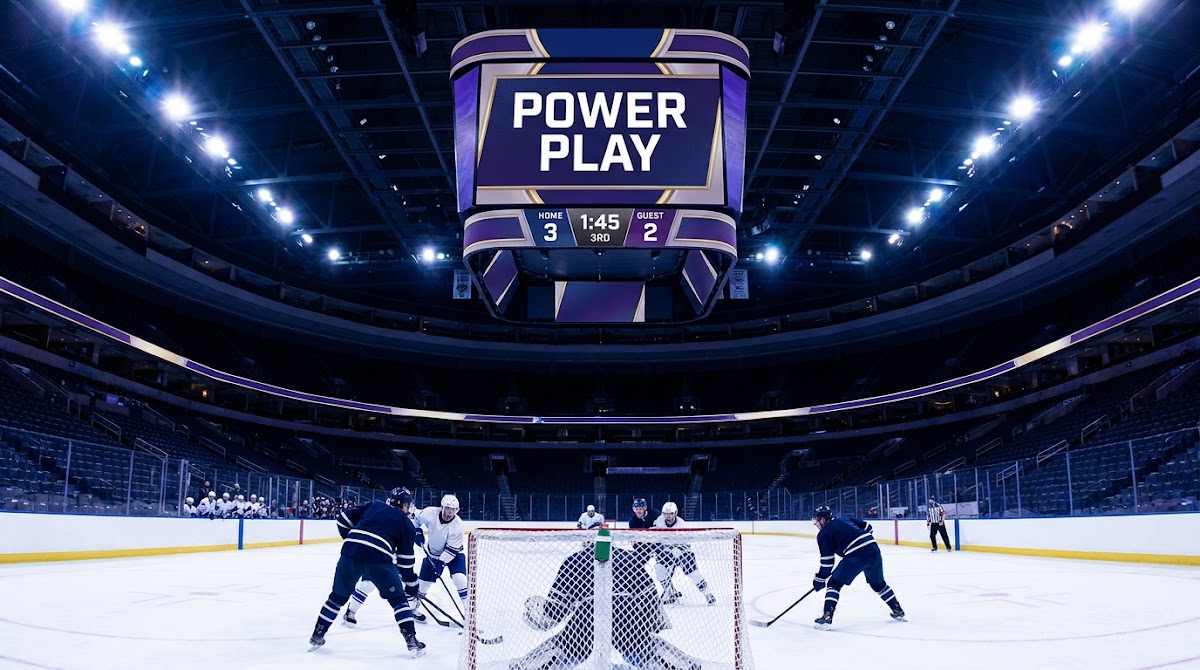
Trading NHL Favorites vs Underdogs - definition and market context
In moneyline markets, a "favorite" is the team priced with the higher implied probability to win, and an "underdog" is the team priced with a lower implied probability. When you convert a moneyline into implied probability, you get a straightforward way to compare market prices to your own estimate of the game's outcome.
Industry analysis has observed favorite-longshot distortions can appear in moneyline pricing at times, meaning underdogs may be overpriced relative to their true chance and favorites underpriced in some contexts; traders should treat this as a conditional signal rather than a universal rule, and verify edges against current season data and market depth Unabated favorite-longshot overview.
Home-ice advantage historically inflated home favorite prices, but recent seasons show that advantage shrinking, which reduces the automatic premium for home favorites in closely matched games. Traders should not assume a fixed home bias and instead check recent season trends when assessing pre-game value The Athletic analysis on home-ice trends.

Trading NHL Favorites vs Underdogs - how pre-game lines move and what to watch
Pre-game moneylines reflect a blend of opening lines, public money, and late informational updates. Books with higher liquidity will absorb large bets more smoothly, while lower-liquidity markets can move more on modest flows. Compare opening lines to current prices on The Spread to spot where value might persist or evaporate.
Starting-goalie confirmations are a notable pre-game driver. Official confirmations often trigger line moves because goalies materially change a team win probability; monitoring goalie news close to puck drop reduces information risk for pre-game trades (see starting goalie lists at DailyFaceoff) Action Network analysis on goalie confirmations.
Run the pre-game checklist
Before placing pre-game trades, run the checklist in this article: screen opening versus current lines, confirm the starter, check injury and line changes, and compare model-implied prices to the market.
Practical pre-game checks should include an odds screen to find outliers, a quick goalie and injury scan, and a model overlay that maps your probability estimate to the current moneyline. If the market moves after a late confirmation, be prepared to scale in rather than commit full size immediately.
Pregame workflow: structured checks to set up a trade
Start with an odds-screen checklist: capture the opening moneyline, current moneyline, implied probabilities, and available market depth across books. Flag games where your model and the market differ by a threshold you define in advance.
Confirm the starting goalie and monitor warmups, since late swaps can change pricing. Use official confirmations and team reports to reduce the chance of entering on outdated information Action Network analysis on goalie confirmations.
Goalie confirmations can shift pre-game prices materially, and in-play model signals like expected goals and shot-attempt momentum offer steadier, less noisy triggers for timing entries and hedges.
After goalie checks, review injury and lineup notes, then overlay your pre-game model estimate. Commit only a defined fraction of your available stake to pre-game edges and log every trade with entry price, rationale, and outcome for later review.
Set pregame sizing rules before you act. A simple rule is a fixed percentage of available bankroll per pre-game position, with absolute maximum exposure for any single event. Use warmup confirmations to scale into or pass on an opportunity rather than changing stakes on the fly.
Model-based in-play signals: using xG and shot-attempt momentum
In-play momentum is noisier than pre-game signals, so model smoothing matters. Expected goals models and shot-attempt momentum generally provide steadier signals than raw shot counts because they weight shot quality and location, reducing false triggers from low-value events MoneyPuck methodology on win probability and xG.

When you track xG and shot attempts, use short smoothing windows to detect persistent surges and avoid reacting to single events. Define a threshold for a meaningful surge, for example a sustained xG differential over a five to eight minute window, and require the signal to persist across at least two model updates before acting.
Translate a model surge into one of three actions: enter a position in the direction of momentum, place a partial hedge if you hold an opposite exposure, or hold and wait for confirmation if the game state is volatile. Document the mapping from model output to action so post-session review is consistent.
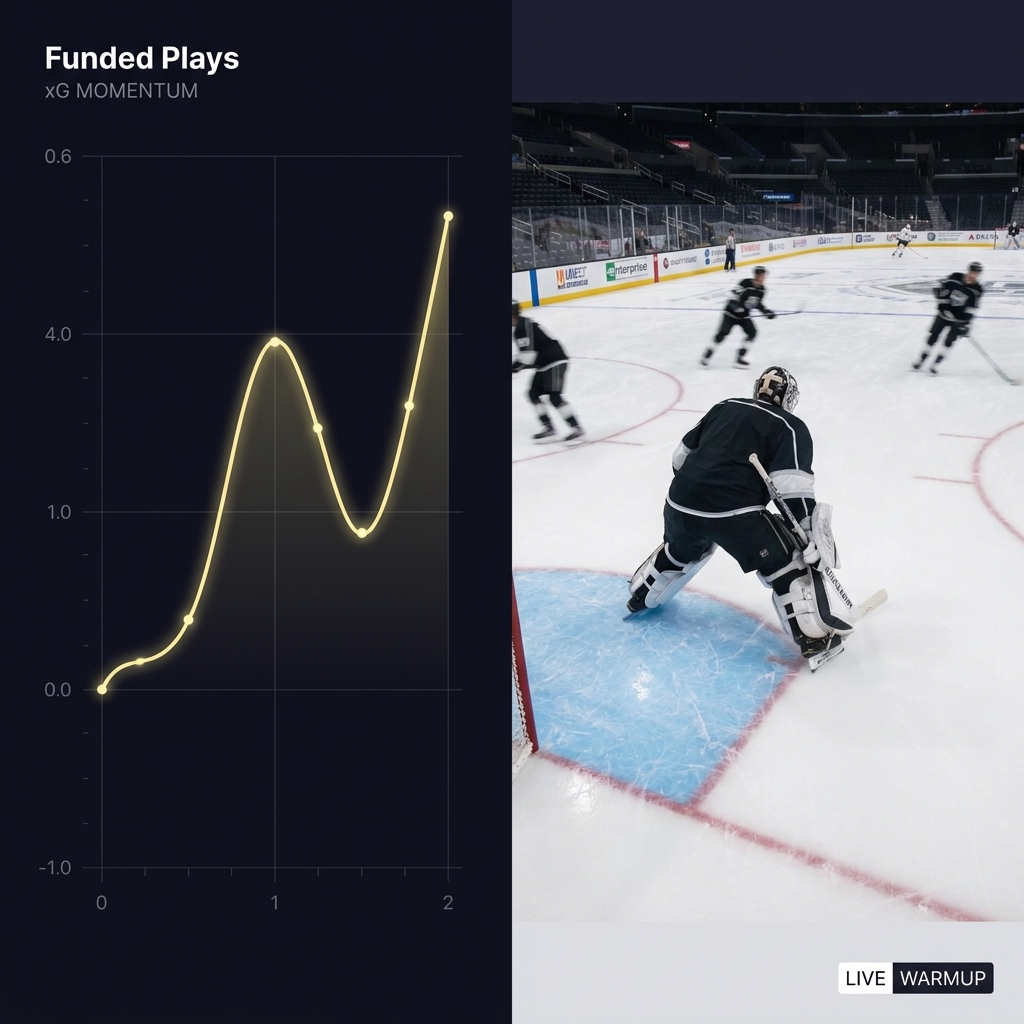
Tie entries to discrete, verifiable state changes. Rule 1: act on goals that change the lead. Rule 2: act on penalties or power play shifts that change expected scoring rates. Rule 3: act on goalie-off situations that increase variance. Anchoring entries to these events helps avoid trading noise.
Position sizing should be proportional to a clearly defined fraction of your available stake and consider maximum drawdown limits. For in-play trades, many traders use smaller percentages than pre-game sizes due to increased volatility and shorter horizons.
Hedging thresholds must be pre-defined. For example, buy protection if your live exposure would lead to a drawdown beyond your session limit on the next decisive event, or lock profit when a move achieves your target return. Concrete examples help: a 20 percent target gain might justify locking half the position, while a 10 percent adverse move could warrant a partial hedge.
When considering small edges, be disciplined. Accept trades that meet your predefined expected-value threshold and sizing rules, and pass on noisy or marginal-looking opportunities. Preserve capital and clarity by avoiding impulsive scaling after a single favorable event.
Late-game dynamics: goalie pulls, penalties, and comeback pricing
Foundational research shows pulling the goalie earlier than conventional practice increases comeback probability when trailing late, which affects how 6-on-5 and goalie-off pricing behaves; adjust late-game expectations accordingly when evaluating comeback odds SSRN paper on pulling the goalie (for broader context see ESPN analysis on starting goalie value).
Quickly verify late-game state inputs for live model checks
Use a public xG feed and live play-by-play where available
Penalty events and 6-on-5 situations move live prices sharply because they create immediate scoring vectors. When a team pulls its goalie the live market should reflect both the increased scoring upside and the heightened variance; traders should widen hedging thresholds but maintain clear rules for when to act.
Practical rule: when a team pulls its goalie, require stronger confirmation from models before adding directional exposure, and consider accepting higher variance if the hedge cost is prohibitive. If a model shows a clear expected-goals surge for the trailing team after the pull, that can justify a defensive hedge or an opportunistic live entry in the underdog.
Common mistakes and risk controls when trading favorites and underdogs
One common mistake is overreacting to single events, such as a single high-quality shot or a fortunate bounce. Relying on raw shot counts without a model can create false positives. Use smoothed model signals to avoid these traps and check your assumptions against real-time outputs MoneyPuck methodology on win probability and xG.

Ignoring confirmation bias and late lineup information is another frequent error. Failing to log trades and rationale compounds small mistakes into repeated losses. Maintain a trade journal that captures entry rationale, model signals, and outcome so you can separate skill from luck over time.
Poor sizing and chase behavior erode long-term performance. Implement strict position limits, pre-defined hedge plans, and session-level drawdown thresholds. Emphasize responsible participation and remember that no approach guarantees consistent profit; outcomes depend on disciplined execution and adherence to rules.
Practical examples and scenarios
Pre-game underdog example: a team opens as a six-point underdog but the visiting starter is listed as day-to-day and then a confirmed backup appears at warmups. If your pre-game model shows the backup reduces the favorite's implied probability more than the market moved, a scaled underdog entry may be sensible. Monitor post-confirmation lines and act according to your sizing rules Action Network analysis on goalie confirmations. Visit the Funded Plays blog for related strategy discussions.
In-play comeback hedge example: imagine the trailing team posts a sustained xG surge over an eight minute window while on sustained zone pressure. If your model shows a meaningful shift in win probability, consider a hedge that limits downside while preserving upside, such as buying a small favorite position or locking partial profit on the leading side MoneyPuck methodology on win probability and xG.
Backtest design: to test a suspected favorite-longshot overlay, collect season moneyline data, convert to implied probabilities, and compare outcomes for cohorts of favorites and underdogs after controlling for starting goalie and home status. Use out-of-sample testing and season-level splits to verify persistence before risking capital live Unabated favorite-longshot overview (see how Funded Plays evaluations work for process notes).
Conclusion: building a disciplined, evidence-based trading routine
Summarize the workflow: run pre-game checks, confirm starters, use model-based in-play triggers like xG and shot-attempt momentum, apply disciplined sizing and hedging, and adapt late-game rules for goalie pulls and 6-on-5 situations. Verify any edge against current season data before committing live Unabated favorite-longshot overview. See additional materials on the Funded Plays blog.
Keep a trade log, review sessions regularly, and focus on consistent execution rather than chasing single wins. Responsible participation and strict risk controls are central to long-term learning and performance when trading favorites and underdogs. For tools and resources visit Funded Plays.
Risk a predefined percentage of your available stake per pre-game position and enforce an absolute maximum exposure for any single event to limit drawdown.
Require the xG surge to persist across at least two model updates or a sustained window, such as five to eight minutes, before acting.
Pulling the goalie increases comeback probability and variance; consider model confirmation and hedge costs before increasing exposure to the underdog.
References
- https://unabated.com/resources/betting-education/favorite-longshot-bias/
- https://theathletic.com/
- https://www.thespread.com/nhl-odds/
- https://www.dailyfaceoff.com/starting-goalies
- https://www.actionnetwork.com/nhl/
- https://moneypuck.com/about.htm
- https://www.fundedplays.com/challenges
- https://papers.ssrn.com/sol3/papers.cfm?abstract_id=2814321
- https://www.espn.com/espn/betting/story/_/id/42470775/nhl-odds-betting-goaltending-factor
- https://www.fundedplays.com
- https://www.fundedplays.com/blogs
- https://www.fundedplays.com/blogs/how-fundedplays-evaluations-work