
What Trading NBA Games with Late Player News Means
Definition and scope
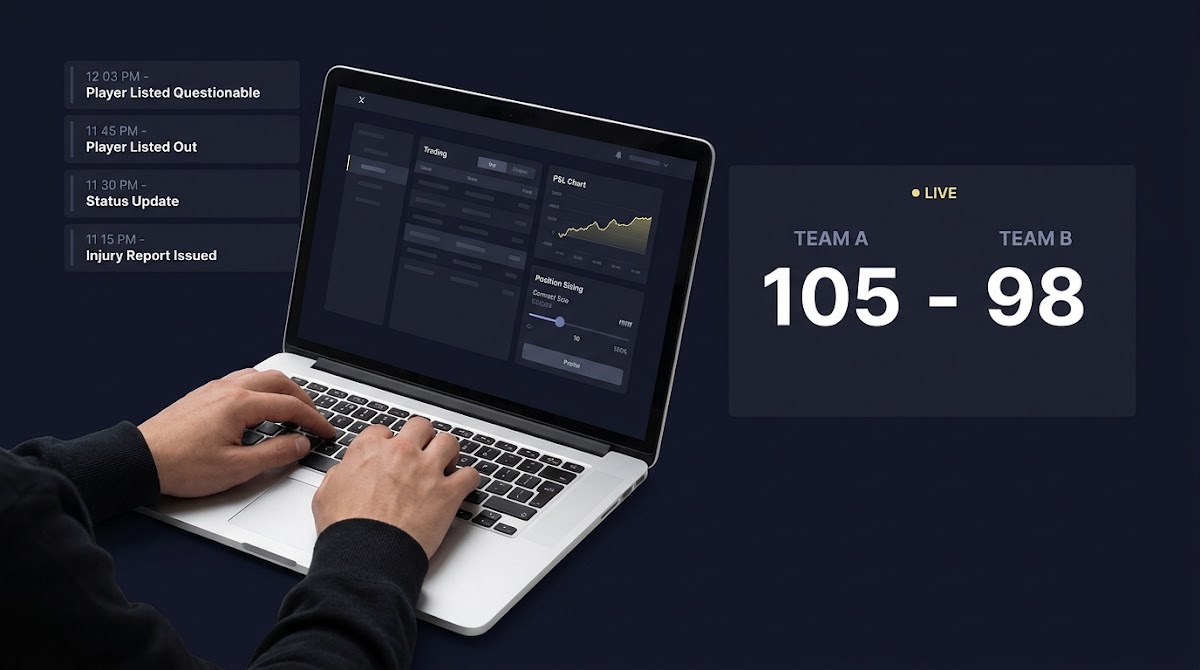
Trading NBA Games with Late Player News refers to reacting to confirmed pregame injury or availability updates and adjusting positions in point spreads, totals, or props based on those confirmations. The core idea is to treat official status changes as market-moving events, then convert that status into a projection delta you can use to size and time a trade.
The timing matters because markets often incorporate credible updates quickly, which means the tradable window for a durable edge is usually brief. Editorial analyses note that lines move rapidly after official confirmations, so speed and rules-driven sizing are essential when responding to late-breaking information Action Network guide.
A trader should confirm the update on official channels, estimate conservative replacement-minute scenarios from public logs, compare the projection delta to market prices net of fees, and size positions according to pre-defined exposure and drawdown rules.
Who trades this and when
Participants who pursue these moves tend to be experienced bettors, prop and trading style users, and analytics-driven sports prediction practitioners who can convert minutes and usage into clear projection adjustments. They typically act when an official status flips shortly before tip-off and when the expected on-court replacement path is reasonably predictable.
Official sources and real-time feeds to trust
Start with the NBA Injury Report as the canonical, time-stamped source for player status updates before acting; it is the official publication teams use to report game-by-game availability and status flags NBA Injury Report.
monitor the NBA Injury Report feed for time-stamped status updates
use this as a first-step verification
Beyond the injury report, consult NBA Communications for policy context when ambiguity appears. The league's Player Participation Policy sets expectations that improve transparency around star rest and disclosure, which helps you weigh the credibility of a late update NBA Communications announcement.
Practical traders also keep public injury logs and game-log databases handy for quick historical context. These resources help estimate which bench or role players previously absorbed minutes in similar situations and what that meant for team output Basketball-Reference injuries page, and trackers such as ESPN's injury tracker provide another live feed.
How to verify late news quickly and reliably
Verification should follow a short, repeatable checklist: confirm the status in the NBA Injury Report, look for the same update from NBA Communications or official team channels, and cross-check credible local beat reporters. Treat social posts as signals to investigate rather than proofs.
Interpret status tags carefully. An Out designation is decisive for immediate projection changes, while Questionable or Probable call for probability adjustments rather than full replacements. Use the official status tag as your anchor when converting news into a numeric projection delta NBA Injury Report.
Red flags include lone unverified social posts, reports that contradict the league portal, or late return-to-play chatter without an official status change. When you see conflicting information, pause and seek the official feed; the Player Participation Policy increases the chance that meaningful star-level rest or absence will be formally posted NBA Communications announcement.

Quick projection adjustments: estimating lineup and minute changes
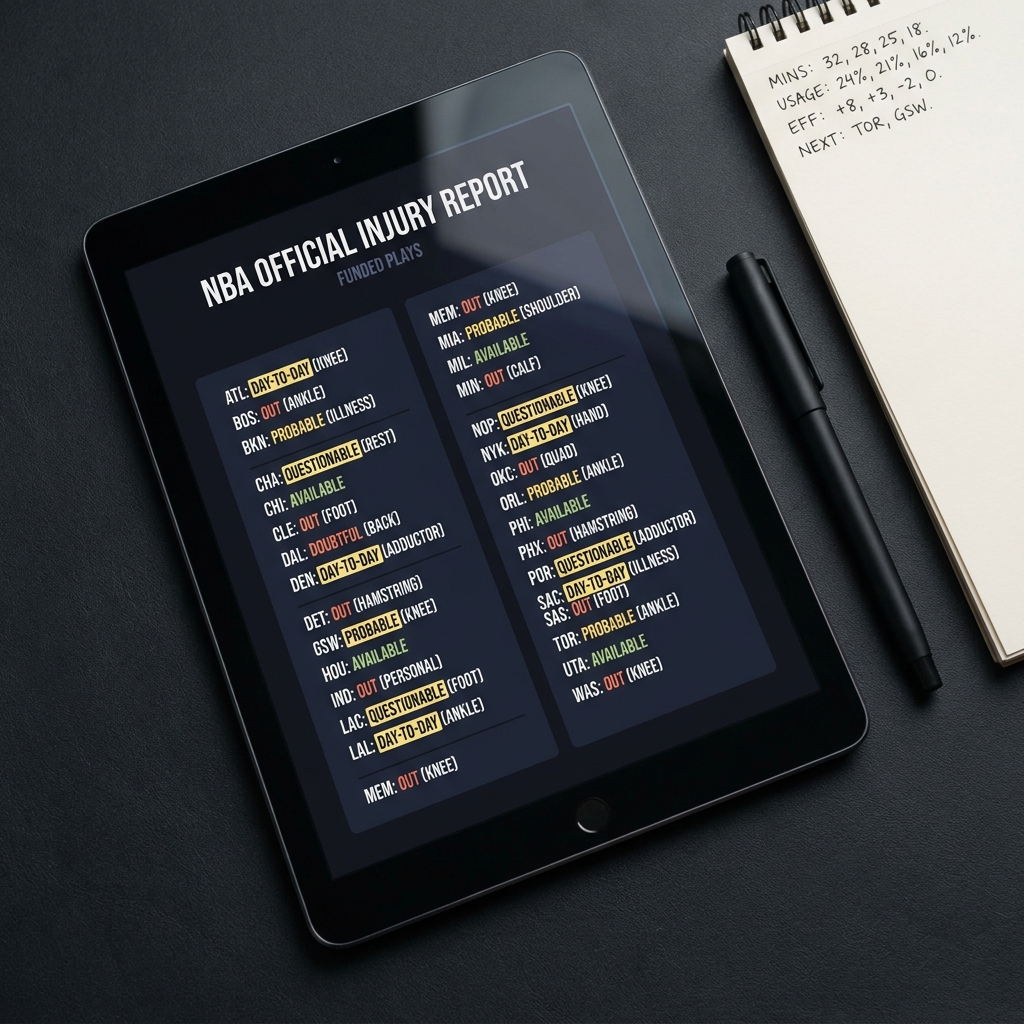
When a starter becomes unavailable, use historical game logs to identify who most often absorbed their minutes. Public logs show patterns across recent games where specific bench players stepped into larger roles, giving a defensible starting point for replacement-minute assumptions Basketball-Reference injuries page.
A practical framework begins by estimating replacement minutes, then applying usage rate and per-36 or per-100-possession rates to convert minutes into expected scoring and defensive impact. For example, identify the primary backup's recent usage in games where the starter sat and weight that figure toward your projection adjustment.
Because late news is uncertain, express adjustments as conservative ranges rather than single-point forecasts. Set a base, low, and high scenario for replacement minutes and translate each into an expected points and defensive efficiency shift. Use the range to size positions conservatively and to set realistic exit criteria.
A step-by-step trading framework for late NBA news
Prepare before events by setting pre-news posture: define maximum exposure per late-news trade, add players and games to a watchlist, and pre-calculate replacement-minute lookups for likely scenarios. A clear pre-game routine reduces decision friction when news arrives. See our blog for related pre-game routines and templates.
Try the workflow in a controlled challenge on the Funded Plays Challenges page
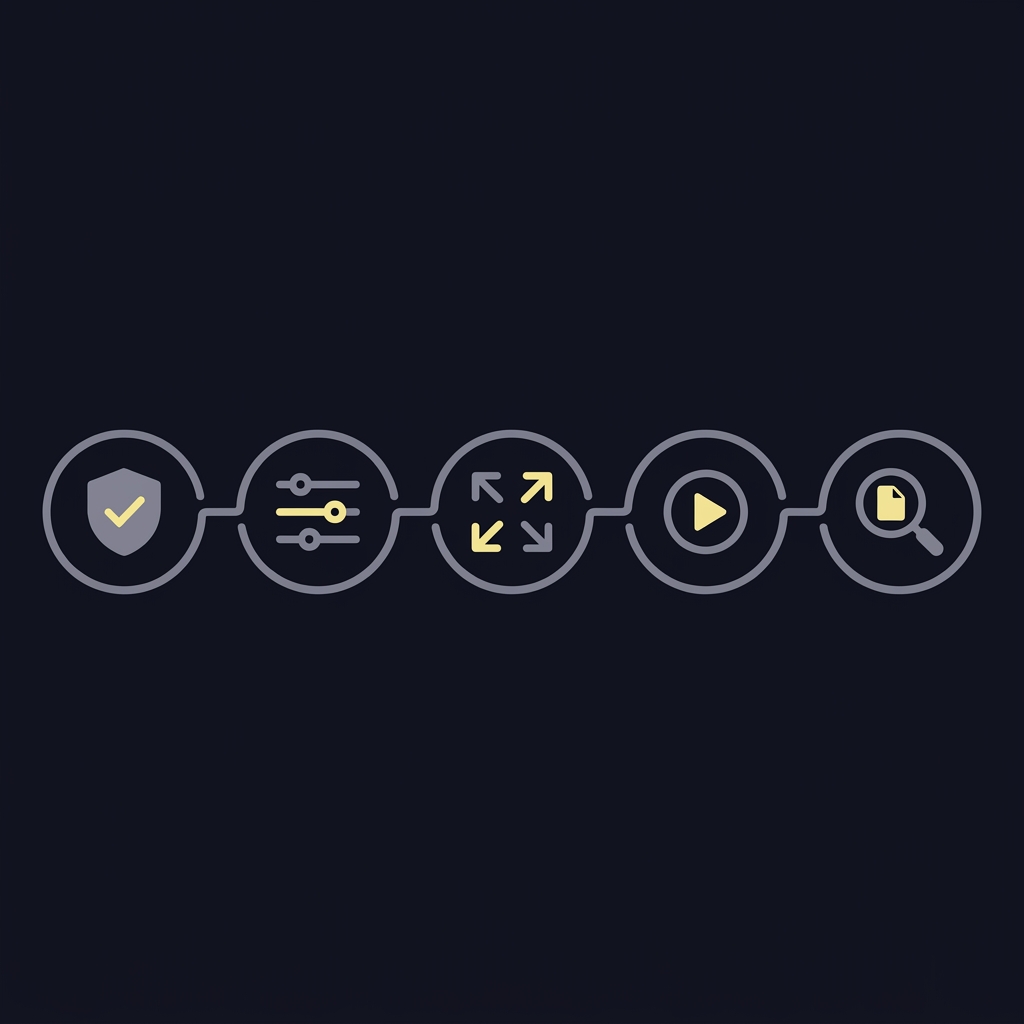
Adopt a simple verify, adjust, size cycle when late news appears; practice the sequence in a controlled environment before risking meaningful bankroll.
Once you have an official confirmation, execute this sequence: update your projection ranges, compare your projection delta to the market move, choose an order type that matches speed and expected slippage, and size according to your pre-set percent exposure. If the market has already adjusted beyond your conservative high scenario, pass and log the observation for later review.
Decide when to act instantly versus when to wait for a second look. Act quickly for clear outs or confirmed star rests where historical replacement patterns are strong, but wait when the status is ambiguous or when liquidity is low and fills could be expensive. Across most professional analyses, the window to capture residual mispricing is brief and best approached with conservative sizing Action Network guide.
How markets typically react and where edges appear
Lines and totals often move quickly after credible late news, especially when a high-usage starter is ruled out. The magnitude of the move usually scales with the player's importance, and totals can shift materially if the removed minutes alter offensive pace or efficiency Pinnacle Betting Resources.
The exploitable window is generally transient. Editorial guidance suggests that the remaining edge, when it exists, appears in the brief period between official confirmation and the market's full adjustment. You should validate any perceived gap by comparing the implied market change to your projection delta net of vig and liquidity costs Action Network guide.
Risk controls, position sizing, and rules for discipline
Combine official-status confirmation with conservative position sizing tied to your bankroll or funded account rules. Predefine a maximum percent exposure for any single late-news event and a maximum number of simultaneous late-news positions to limit correlated risk NBA Injury Report.

Set drawdown limits and stop rules to prevent emotional over-leveraging after a win or loss. A common practical rule is to treat late-news trades as tactical opportunities and to cap their share of your active exposure so that ordinary variance cannot push you past meaningful drawdown thresholds Action Network guide.
Institutionalize post-trade review and logging. Recording confirmation time, sources, projection delta, size, result, and notes creates the dataset you need to refine replacement assumptions and sizing over time.
Common mistakes and pitfalls to avoid
Frequent errors include acting on a single unverified social post, ignoring the official status portal, and increasing size after emotional wins. These behaviors can turn a short-term perceived edge into a long-term performance problem if left unchecked Action Network guide.
Confirmation bias also appears when a trader selectively interprets substitution patterns to justify a large size. Mitigate this by relying on pre-specified projection ranges and strict size limits, not on ad hoc intuition after the news.
Another pitfall is chasing stale fills or trading in illiquid markets without adjusting for expected slippage. If the market has already moved past your conservative high scenario, it is usually better to stand aside and document the miss for learning.
Practical scenarios and worked examples
Scenario one: a starter is ruled Out about 30 minutes before tip. Verification: check the NBA Injury Report and confirm the Out tag, then cross-check team channels. Projection step: consult recent game logs to find who logged the most minutes in the starter's absences and estimate replacement minutes with conservative low and high bounds Basketball-Reference injuries page.
Execution step: calculate the projection delta for points and defensive impact, compare that delta to the market move net of vig, and size to your pre-defined max percent exposure if the edge remains. Exit criteria: if the market moves against you beyond a pre-set stop or if the player status changes again, exit and log details.
Scenario two: a late rest announcement for a star less than two hours before tip. This often moves lines more forcefully. Verification should emphasize official channels because star rest is often subject to league policy scrutiny. Use conservative projection ranges and smaller initial sizes to account for the greater uncertainty and potential for late reversals NBA Communications announcement.
Tools, trackers, and scripts that speed execution
Combine official feeds with an aggregated tracker that surfaces status changes as alerts. A minimal toolkit includes an injury feed watcher, a quick game-log lookup tool, and a watchlist that preloads replacement-minute candidates for likely scenarios MIT Sloan resources. Also see how how funded plays evaluations work for related tooling ideas.
Small automation can shave seconds from detection to action. Use alerting rules to flag status changes, then run a local script or lookup to pull the primary backup's recent minutes and usage. However, never execute solely on automation; always validate the official status before filling sizeable orders NBA Injury Report.
Legal, policy, and ethical considerations
The Player Participation Policy raises disclosure expectations and helps traders by increasing the likelihood that meaningful rest decisions are formally posted, but traders must not rely on privileged or inside information. Stick to public, official sources for confirmation NBA Communications announcement.
Responsible participation means acknowledging that no approach guarantees profit. Treat late-news trading as a tactical part of a broader, rules-driven plan and avoid misrepresenting your methods or results when discussing them publicly.
How to build a post-trade review process
Log the minimal fields for each late-news trade: confirmation time, source, projection delta, size, entry price, exit price, result, and short notes on assumptions. This set gives you the elements needed to analyze where projections or sizing choices were off Action Network guide.
Calculate simple performance metrics such as win rate, average return per trade, and average projection error. Use these to tighten sizing and projection ranges on a scheduled cadence, like weekly or monthly, rather than making ad hoc changes after a small sample of trades MIT Sloan resources.
Conclusion: consistent, conservative, and rules-driven trading after late news
The essential sequence is verify, estimate replacement impact, compare to the market, and apply conservative sizing. Prioritizing official verification through the NBA Injury Report and respecting the Player Participation Policy gives you a defensible baseline for acting on late news NBA Injury Report.
Practice the workflow in a controlled environment, keep disciplined logs, and iterate on ranges and sizing based on measurable outcomes. Treat late-news trading as a skill to refine over time rather than a shortcut to consistent profits. Visit Funded Plays for additional resources.
Act promptly for decisive outs or confirmed star rests, but always verify via official channels first and size conservatively to account for market slippage.
The NBA Injury Report is the primary, time-stamped source for official player status updates and should be your first check.
Automation helps speed detection but should not replace manual confirmation from official sources before placing significant trades.
References
- https://www.actionnetwork.com/nba/how-injury-news-moves-nba-betting-lines
- https://official.nba.com/nba-injury-report-2025-26-season/
- https://pr.nba.com/player-participation-policy/
- https://www.basketball-reference.com/friv/injuries.cgi
- https://www.espn.com/nba/injuries
- https://www.actionnetwork.com/nba/how-injury-news-moves-nba-betting-lines
- https://www.pinnacle.com/en/betting-resources/basketball/how-injuries-affect-betting-odds
- https://www.fundedplays.com/challenges
- https://www.fundedplays.com/blogs
- https://www.fundedplays.com/blogs/how-fundedplays-evaluations-work
- https://www.fundedplays.com
- https://www.sloansportsconference.com/research-papers
- https://www.cbssports.com/nba/injuries
- https://official.nba.com/injury-report/