
Trading Live Without Chasing Momentum: definition and context
What 'trading live without chasing momentum' means in sports prediction
Trading Live Without Chasing Momentum describes an approach to in-play forecasting where decisions are driven by pre-defined edge, disciplined sizing, and verification rules rather than by short-term crowd movement or visible swings in the action. The phrase names a process: prepare, observe objective signals, apply your entry and sizing rules, and accept outcomes according to a plan rather than reacting to every apparent surge.
In practical terms this means treating each live pick as a testable hypothesis about value, using a simulated bankroll or challenge account, and applying the same stop and sizing logic you would in a structured evaluation. Participants in funded challenge platforms often frame live trading as a performance exercise where consistency and adherence to rules matter more than chasing a single hot streak.
How live trading on funded challenge platforms differs from stopwatch betting
Live trading on skill-based challenge platforms emphasizes process over momentary wins. Traders use in-play discipline, position sizing, and post-event review to demonstrate repeatable ability inside evaluation rules. That contrasts with stopwatch betting or impulsive in-play bets that aim to capture a headline swing without a consistent edge. The funded challenge model rewards disciplined performance and rule compliance rather than impulsive or emotionally driven entries.
Why momentum feels compelling and why it can mislead
Common cognitive traps in live decision making
Momentum feels persuasive because it is visible and immediate. When a team suddenly dominates possession or scores, the human brain responds with recency bias, overweighting the latest events and assuming the short trend will persist. Fear of missing out increases the pressure to act quickly so you do not miss a perceived opportunity. For background on momentum trading concepts see momentum trading strategies.
Other triggers include escalation after loss, where a trader increases size to recoup prior losses, and confirmation bias, where a single favorable event is taken as proof of a larger advantage. These cognitive traps are normal and common among both new and experienced live sports predictors. Recognizing them is the first step toward in-play discipline.

Situational signals can also mislead. Volatility in live games creates noisy short-term signals: an unexpected injury, a tactical substitution, or a refereeing decision can flip possession metrics for a few minutes without changing the underlying probabilities much. Treat short-term swings as noisy data rather than proof of a durable change in edge.
How short-term moves can mask underlying probabilities
Short-term moves often overstate the strength of a trend because the sample size is tiny. A dominant five-minute period does not always alter the match-level expected outcomes. Traders who chase momentum may confuse temporary advantage with a genuine shift in expected value.
Concrete cues to pause include: when the perceived move is driven by luck events like a deflection, when the live dashboard shows possession changes but not shot quality, or when an emotional increase in stake size follows a single event. Pausing and reassessing protects your simulated bankroll and preserves your ability to follow rules during an evaluation challenge.
A disciplined framework to trade live without chasing momentum
Pre-game plan and entry criteria
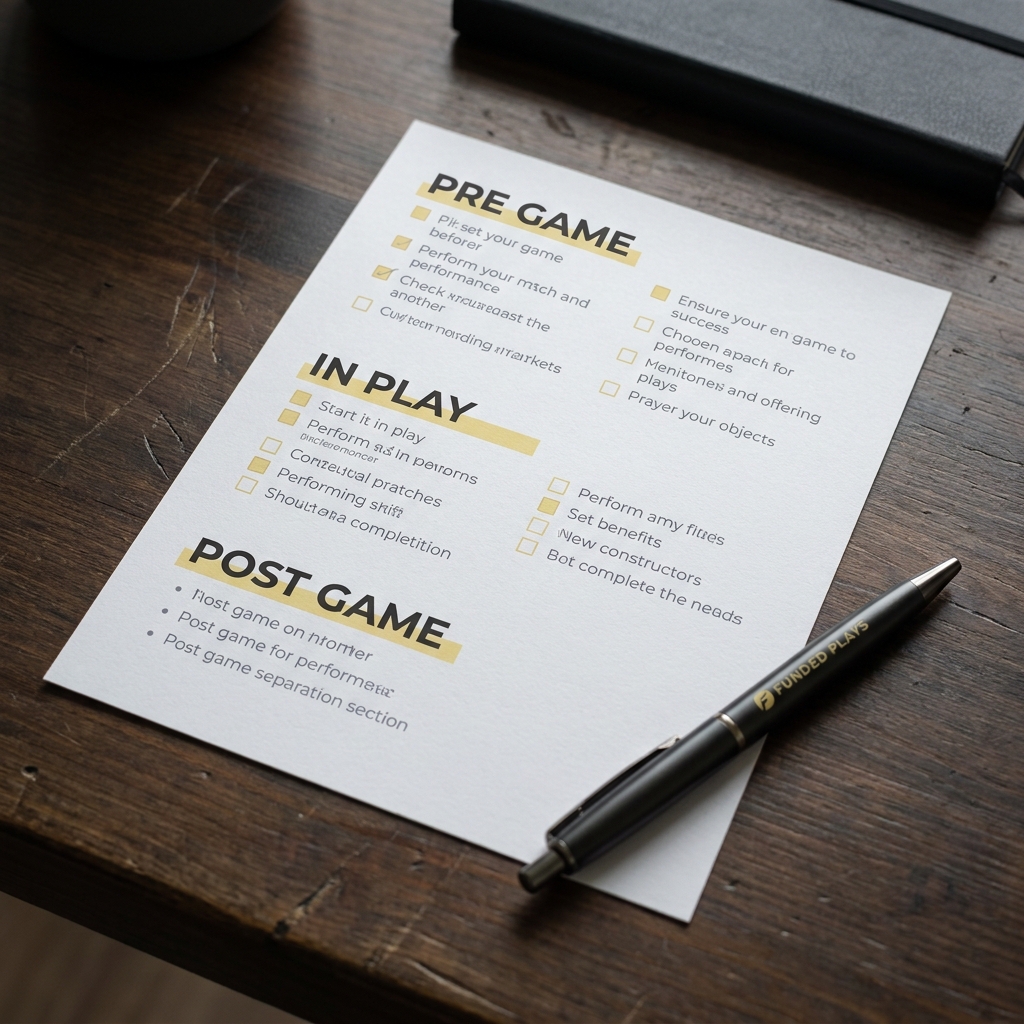
Start with a pre-game checklist. Identify the edge you expect and the conditions that must be present for you to act in-play. Define a maximum stake as a percentage of your simulated bankroll and a maximum allowed cumulative risk for the session. Pre-commit to exact entry triggers and the context where you will decline to trade.
Keep entry signals simple and verifiable. For example, require a combination of possession advantage sustained over a set time and an observable quality measure such as expected value improvement before you consider a live entry. Avoid fuzzy triggers like 'momentum feels right'.
Practice the framework in a FundedPlays challenge
Try applying this pre-game checklist in a single practice session and note how many potential impulsive entries you avoid by waiting for the predefined signals.
In-play rules: sizing, stops, and reassessment cadence
Set a fixed sizing rule: no single live pick should exceed a defined percent of your simulated bankroll. Use stop rules tied to adverse events or to time-based reassessments. For example, if a live pick moves against you by a pre-set amount or after a fixed number of minutes without the expected confirmation, close or reduce the position as your rules demand.
Adopt a reassessment cadence. Instead of constantly adjusting to every micro-move, check verdicts at regular intervals, for example every 5 or 10 minutes of play. This reduces noise-driven changes and helps maintain in-play discipline.
A simple checklist to follow every live decision
Use a short if-then checklist before acting: If entry signals are met, then size per rule and set stop. If not met, then sit out. If the market or scoreboard shows a major luck event, then pause and reassess with a fresh set of checks. Keep the checklist visible during the session so you can follow it under pressure.
Document each live decision in brief session notes: the trigger, stake, stop, and outcome. These notes become the raw material for your post-event review and help reinforce rule adherence over time.
Document each live decision in brief session notes: the trigger, stake, stop, and outcome. These notes become the raw material for your post-event review and help reinforce rule adherence over time.
Risk and bankroll rules for in-play discipline
Setting drawdown and daily loss limits
Drawdown rules protect your evaluation account and are central to performing inside a funded challenge. Define a maximum allowable drawdown for the session and for the challenge period, and refuse to exceed it. These limits prevent emotional recoveries that lead to size creep and revenge trades.
Set a daily loss limit tied to your simulated bankroll. When you reach that threshold, stop trading for the day and review. Taking a forced break preserves capital and reduces the chance you will make emotionally charged decisions that harm long-term metrics.
Sizing rules that prevent overreaction to momentum
Practical sizing rules reduce the impact of impulsive trades. A common approach is to limit single live picks to a small percent of the bankroll, for example a low single-digit percentage, and to cap total exposure to multiple concurrent live positions. Keep sizing rules strict during volatile matches where short-term swings are more likely.
Make stop-loss rules explicit. A stop can be a fixed stake reduction if the live event flips, or a time-based exit if the expected confirmation does not appear within your reassessment window. Following these rules prevents a single emotional decision from causing an outsized drawdown.

Tools and signals that support non-momentum live trading
Which live metrics to watch and which to ignore
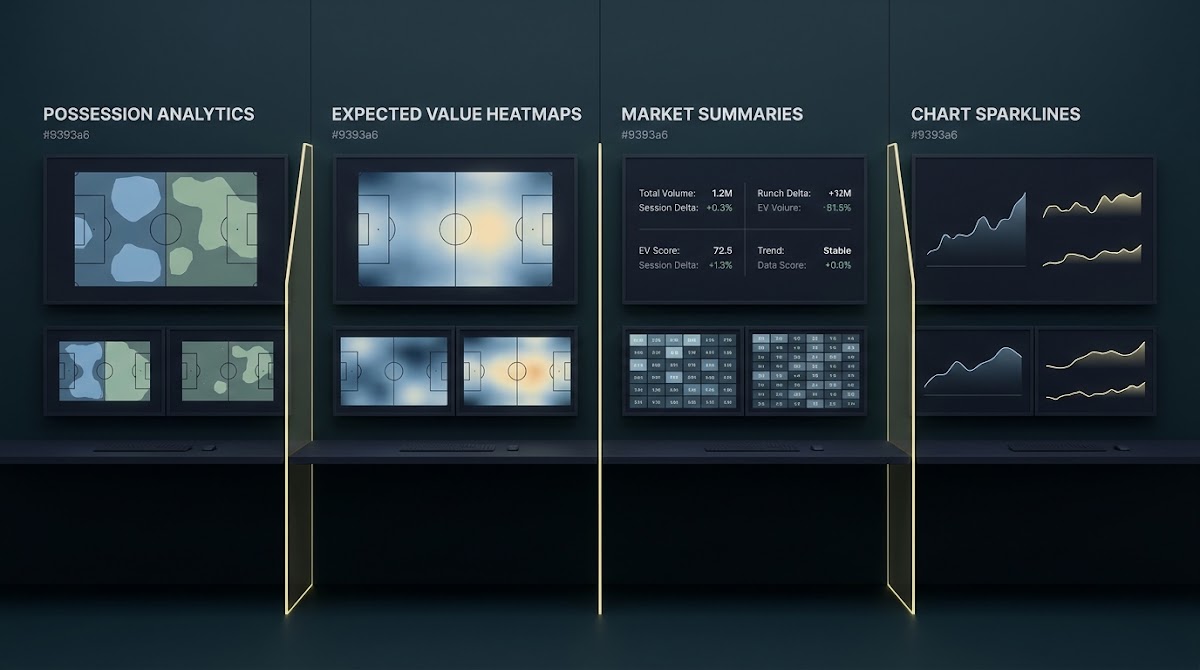
Choose metrics that measure quality rather than noise. Useful live metrics include possession trends coupled with shot quality indicators, expected value signals that incorporate shot location and game state, and context flags like time and substitution status. Indicators that only show short-term volume, like raw possession percentage without quality filters, can be misleading.

Limit the number of live data feeds. A crowded dashboard increases the chance you will react to noise. Use a small set of reliable metrics and ignore flashy but noisy numbers that tend to provoke impulse entries. For practical live trading approaches see relevant live trading strategies.
A single filtered live dashboard and a timer to force reassessment
Use the timer to wait before acting
Using timelines, overlays, and simple models to keep decisions objective
Apply overlays that smooth short-term spikes, such as moving averages for possession or shot quality over small windows, and use a short timeline to compare current metrics with pre-game expectations. Simple models that convert events into a change in expected value help you decide whether a live move meaningfully alters the edge.
Phrase your in-play decision as a question to keep it objective: Does this event change my expected value enough to justify the stake under my rules? If the answer is no, skip the trade. This single question prevents many momentum-driven entries and maintains process discipline.
Common errors and how to avoid them
Typical momentum-chasing behaviors
Common errors include revenge trades after losses, size creep where stakes grow after wins or losses, and abandoning your plan after a dramatic short-term outcome. These behaviors often start small and compound, eroding both your metrics and your simulated bankroll over the course of a session.
Another mistake is overtrading during high-volatility periods. More opportunities do not equal more edge. Overtrading increases exposure to noisy outcomes and weakens long-term performance, especially inside evaluation challenges where drawdown rules are strict.
Quick fixes and pre-commitments to reduce mistakes
Implement pre-commitments that are easy to follow under pressure: fixed stake sizes, explicit stop rules, and mandatory session cooldowns after a defined number of losses or a set percentage drawdown. Use a visible reminder on your screen with the single-line rule set to help enforce these commitments.
Use session notes to log impulsive entries and mark whether each one followed the checklist. Over time, these notes reveal patterns you can correct. Assign one clear improvement target each week and focus your practice sessions on that single behavior until it becomes automatic.
Practical scenarios: step-by-step examples you can rehearse
Example 1: momentum swing late in the game
Scenario: Team A takes a late run of possession and scores, narrowing the deficit with ten minutes left. The live market shortens Team A's odds and volume shifts toward them. The impulse is to jump in because momentum feels real.
Disciplined response: Check your entry criteria. If your signal requires sustained possession advantage plus improved shot quality for at least two five-minute windows and that condition is not met, do not trade. If the conditions are met and your sizing rule allows a small live stake, enter with a pre-defined stop that limits downside if the apparent momentum reverses.
Rehearsal tip: Run this scenario in simulation and force yourself to wait two reassessment windows. Record whether the momentum held and how often the pre-defined stop saved capital. Use the session notes to track frequency of false breakouts.
Example 2: quick reversal after an injury or red card
Scenario: A key player goes down and leaves the field, or a red card turns the balance of play. Markets react immediately and odds swing again within minutes.
Disciplined response: Treat the event as a structural change and allow a single reassessment window before acting. If your rules call for a pause after major events, follow it. Update your expected value estimate based on likely tactical changes rather than immediate crowd reactions. If you do act, reduce size to reflect increased uncertainty until you have two confirming intervals.
Rehearsal tip: Simulate a red card moment and practice sizing down by a preset fraction for the next decision. Note whether early small stakes or waiting improved your long-term edge in the simulation.
Example 3: sudden momentum after a high-variance lucky event
Scenario: A lucky deflection results in an unexpected goal and the trailing team appears to seize the initiative. The dashboard shows a spike in possession but no consistent shot quality improvement.
Disciplined response: Remember that luck events can create misleading momentum. Require both possession sustainability and shot quality confirmation before adjusting position size. If only one of these checks is present, decline the trade or use a minimal stake and a tight stop.
Rehearsal tip: Create practice sessions where you flag luck events and force a 'no trade' rule unless two quality metrics confirm. Track how often avoiding quick reactions preserves simulated bankroll relative to jumping in.
Measuring performance and iterating your process
Key metrics to track beyond raw wins and losses
Track metrics that reveal process adherence and risk control: win rate, edge per pick, average stake as percent of bankroll, max drawdown, and percentage of trades that followed the checklist. These metrics show whether you are truly trading by plan and avoiding momentum-driven errors.
Record contextual notes for each trade: the trigger, the emotional state, and whether you broke any rules. This context helps identify recurring weaknesses and informs targeted improvements in training.
A simple monthly review routine
At month end, summarize your metrics and pick one process improvement target for the next month. Review session notes for repeated deviations from rules, and rehearse scenarios that triggered those deviations in simulation. Small, focused change targets compound into better discipline over time.
Include an emotional-state metric in your review. Logging whether you felt rushed, tired, or reactive during trades helps you correlate emotional states with rule breaches and adjust scheduling or daily loss limits accordingly.
Conclusion: checklist and next steps for disciplined live trading
One-page checklist to print or pin
Pre-game: Define edge, entry triggers, max stake percent, session drawdown, and required confirmations.
In-play: Follow the if-then checklist, size per rule, set explicit stops, reassess at fixed intervals, and pause after major events.
How to practice inside funded challenge platforms
Use simulated challenge accounts to rehearse these rules under realistic market conditions. Treat the platform as a skills lab where the goal is consistent process execution rather than short-term wins. Journal every session, measure the metrics described above, and iterate weekly on one small improvement.
Remember that disciplined practice and consistent adherence to rules are the reliable path to improving in-play forecasting. Responsible participation, measured progress, and patience are the core elements that sustain good decision making in live sports prediction. For industry commentary on momentum in play betting see coverage of in-play momentum.
Use a simple pre-game checklist, fixed sizing rules, and a reassessment timer. Pause after major events and require confirming signals before entering.
A conservative approach is to keep single live picks to a low single-digit percent of your simulated bankroll and cap total concurrent exposure.
Yes. Use simulated challenge accounts to rehearse rules, document sessions, and measure discipline without risking real funds.
References
- https://www.fundedplays.com
- https://www.fundedplays.com/blogs
- https://www.fundedplays.com/blogs/how-fundedplays-evaluations-work
- https://www.fundedplays.com/challenges
- https://www.investopedia.com/trading/introduction-to-momentum-trading/
- https://www.bettoredge.com/post/sports-betting-exchanges-live-trading-strategies
- https://www.skrill.com/en-us/skrill-news/gaming/momentum-in-play-betting-world-cup/