
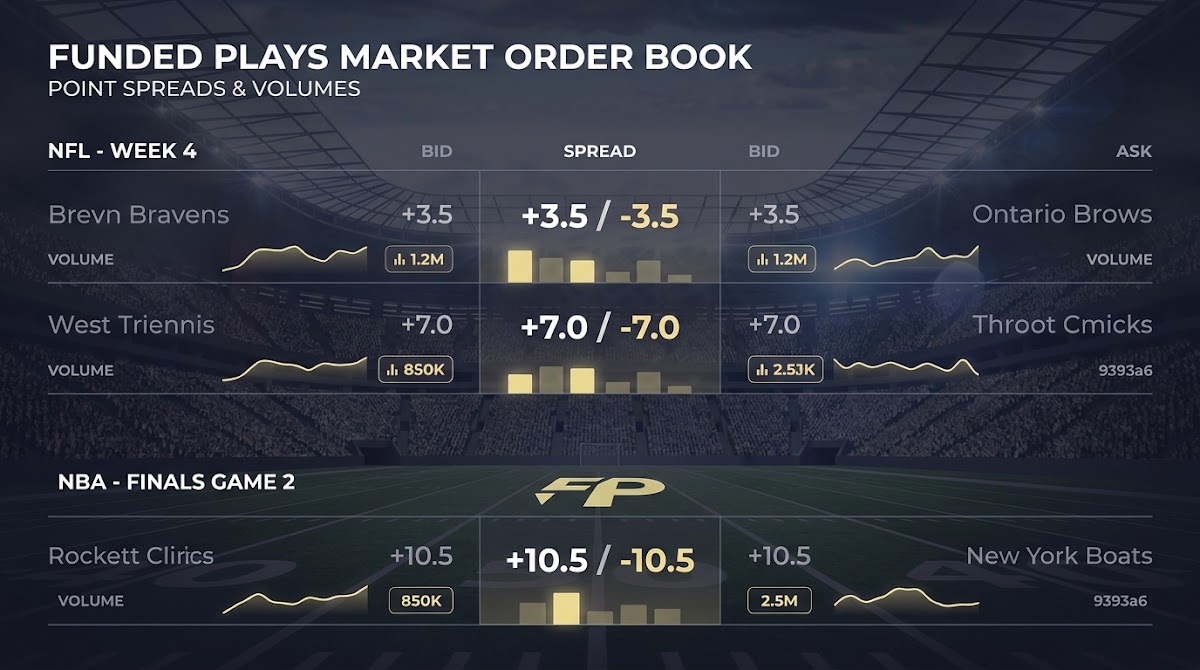
Trading Games with Large Point Spreads: definition and why it matters
What we mean by large point spreads
In practice, a large point spread describes a matchup where the market expects a clear difference in expected scoring or outcome, and that expectation is reflected in a spread that materially exceeds typical league norms. For the purposes of this guide, a large point spread is a directional price that creates wider bid-ask gaps and deeper execution risk than a standard, closely matched game. The distinction matters because trading behavior, order types, and sizing rules change when pricing is wide and liquidity is concentrated in thin pockets.
This guide treats spread trading as a skill-based activity that relies on pre-defined virtual bankroll rules and disciplined execution rather than a simple bet on an outcome. Framing trades this way-as repeatable, documented decisions with drawdown limits and post-trade review-helps separate tactical forecasting from pure wagering and aligns with skill-focused challenge platforms.
Recent industry reporting shows that aggregate online market activity remained large and liquid through 2024 and 2025, which supports the idea that major-league pre-game windows often offer workable depth for disciplined spread strategies. For a recent overview of industry activity and market scale see the UK Gambling Commission industry statistics UK Gambling Commission industry statistics.
estimate a conservative fractional-Kelly stake for a spread trade
use conservative edge inputs
Why spread trading differs from straight bets or prop trading
Spread trading focuses on pricing exposure rather than only predicting which side wins. A straight bet is binary: you win or lose based on the outcome. Spread trading can be directional while also managing the price you achieve and the path the market takes. That creates different risk profiles: execution quality, slippage, and the ability to scale in or out matter more than they often do with single-prop wagers.
Because execution and liquidity shape outcomes, traders should work with explicit order plans and logging templates so each decision can be evaluated objectively. This mindset-discipline, documentation, and repeatable sizing-reflects a skill-based approach rather than a one-off gamble.
Market context: liquidity, integrity and when large-spread trading is viable
Market liquidity signals to check pre-game
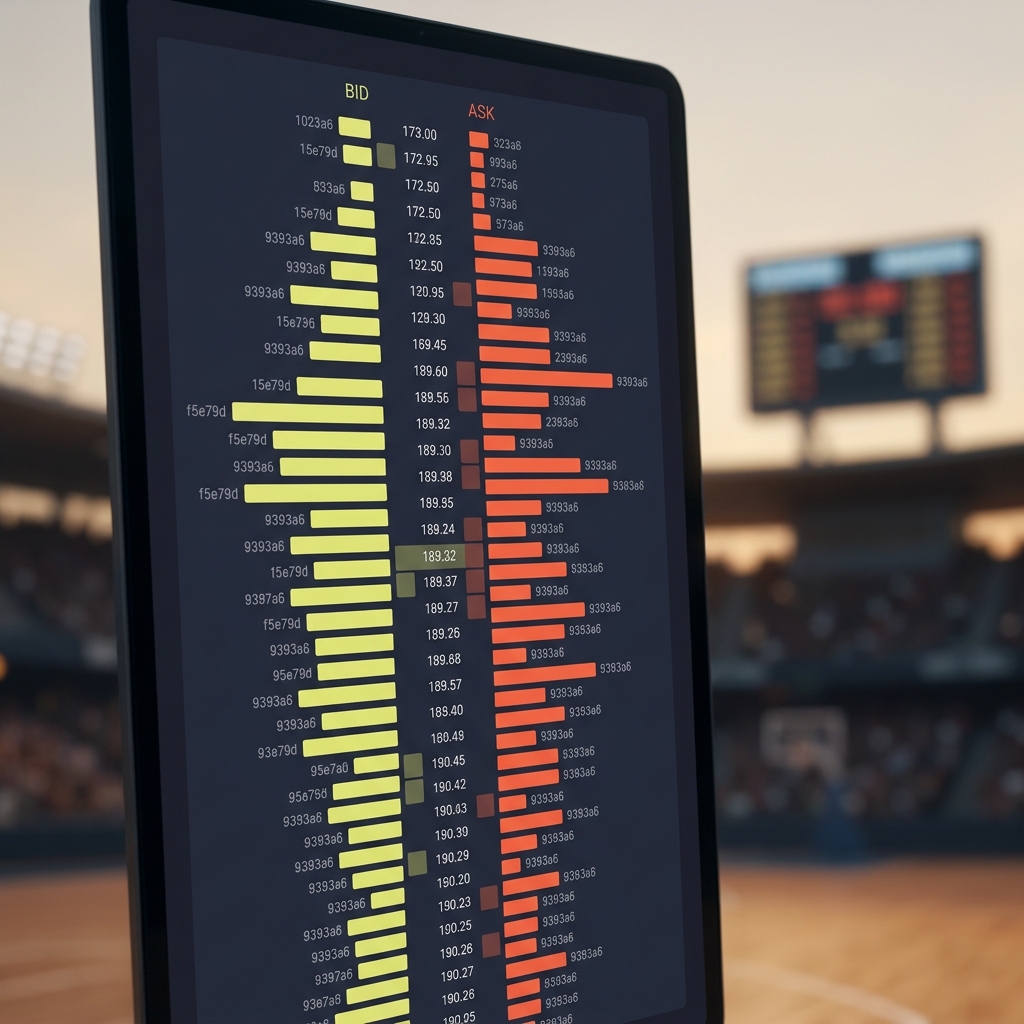
Before considering an entry on a wide spread, verify pre-game liquidity in the specific market and venue. Useful signals include the number of matched contracts or tickets, depth across the best bid and ask, and whether multiple participants are showing orders rather than isolated one-sided liquidity. Exchange and operator reporting over recent years indicates that primary sports markets generally sustain pre-game depth suitable for disciplined trading in many major leagues, but depth varies by fixture and market type. See the American Gaming Association state-level overview for context on market scale and activity State of the States 2025: The AGA Survey of the Commercial Casino Industry.
Practical checks you can run in minutes: observe the top three levels of the order book, note the size and frequency of fills, and watch for sudden thinning of bids or asks as the start time approaches. If depth is concentrated on one side with no counter liquidity, plan to reduce size or avoid the trade.
Integrity and in-play risk: what monitoring reports show
Integrity monitoring in recent industry reports highlights that a substantial share of suspicious alerts originates in live, in-play markets. That trend means live trading carries higher operational and oversight risk than pre-game activity. When you trade during the live window, be prepared for faster price moves and the possibility that markets behave unusually around key events.

Because integrity issues concentrate in-play, disciplined traders prefer confirmed pre-game depth or the early live window when participation and price stability are still present. For an industry perspective on integrity alerts and live-market risk consult the International Betting Integrity Association report IBIA Annual Integrity Report 2024.
When to trade and when to avoid: timing windows for Trading Games with Large Point Spreads
Why pre-kickoff and early-game windows are often preferable
Pre-kickoff and the early-game window typically offer tighter pricing and lower slippage for large spreads because markets have had time to aggregate information and participants are still establishing positions. Exchange operator guidance explains that in-play prices commonly widen and move sharply around key events, so entering in steadier phases reduces the chance of being picked off by rapid jumps.
Prefer entries when the order book shows consistent depth on both sides and when there has been no recent news that would trigger a reprice. If the market has been stable for the last several minutes before kickoff, that is often a safer window than attempting to time mid-game momentum swings.
Approach them with a risk-first framework: confirm pre-game liquidity, use conservative fractional-Kelly sizing with a hard cap, apply documented exits, prefer pre-kickoff or early-game windows, and log trades for post-trade review.
Entries later in live play can still work, but they demand stricter sizing, faster exit rules, and active monitoring to avoid sudden slippage.
Signs to avoid entering during live play
Red flags for avoiding an entry include immediate market widening after a kickoff, sharp re-prices following unofficial lineup leaks or injury notices, abrupt weather shifts, and rapidly declining depth on one side of the book. Specific triggers to pause entries: late lineup announcements that contradict previous expectations, reports of injury or illness in pre-game warmups, and visible one-sided order flow that suggests liquidity has evaporated.
Create a simple entry pause policy you follow without exception: if a key trigger is observed within X minutes of your planned entry, delay or cancel the trade. These predefined timing rules protect execution quality and help you avoid chasing volatile moves after momentum-shifting events. Exchange guidance on in-play behavior and price jumps provides useful context for these timing rules In-play betting explained: how live trading works on the exchange.
Risk controls and position sizing for large point spreads
Sizing frameworks: Kelly, fractional Kelly, and pragmatic caps
The Kelly Criterion gives a theoretical approach to sizing positions when you can estimate an edge, and many practitioners prefer fractional-Kelly staking to limit drawdown versus full Kelly. Using a fraction of Kelly reduces volatility in account equity at the cost of slower geometric growth, which is desirable in noisy or thin markets where edge estimates are uncertain.
When applying Kelly-style sizing to large point spreads, use conservative inputs. If your edge estimate is noisy or based on limited data, apply a small fraction-commonly one-quarter to one-half of Kelly-to avoid outsized exposure. For an accessible primer on applying the Kelly approach in sports contexts see the Pinnacle explanation of the Kelly Criterion An introduction to the Kelly Criterion for sports betting.
Translate Kelly outputs into pragmatic caps. For example, after computing a fractional-Kelly stake, impose a hard upper limit such as 1.5 to 3 percent of bankroll for any single large-spread trade. The cap prevents any single execution or unexpected slippage event from producing disproportionate drawdowns.
Maximum-drawdown rules and documented exits
Set maximum-drawdown rules at the account and per-trade level. A common practice is to define a daily or campaign drawdown threshold that, if breached, triggers a mandatory pause and a review. These rules should be written down and non-negotiable to avoid emotional responses during streaks of adverse moves.
Documented exit criteria are equally important. Predefine stop levels, time-based exits for trades that do not resolve, and scale-out rules if liquidity deteriorates. Regulators and industry overviews emphasize transparency and responsible participation, which supports conservative sizing and clear drawdown controls as best practice.
Practical execution framework for Trading Games with Large Point Spreads
A step-by-step checklist from pre-game screen to post-trade review
Begin with a pre-trade screen that confirms the market meets your minimum liquidity and depth thresholds. A simple checklist: confirm matched volume or tickets at the top levels, verify at least two counter-side participants, ensure no recent material news, and confirm implied price movement matches your model assumptions.

Place the initial order only within your predefined window, sizing it according to your fractional-Kelly calculation and pragmatic cap. Use limit orders at a price that reflects acceptable slippage rather than aggressively lifting a wide market unless you explicitly accept the higher execution cost.
Practice rule-based sizing and execution
Adopt rule-based sizing and practice entries in a challenge environment to learn execution timing without risking real capital.
After entry, monitor the order book and predefined event triggers closely. If the market moves against you past a documented stop or if liquidity evaporates, exit according to your scale-out or stop rules. Log each trade with the entry reason, size, edge estimate, and exit rationales so you can evaluate performance later.
Order types, spread tapering and exit discipline
Limit orders are the preferred default for wide-spread trades to control the price you accept. When using marketable limit orders, set a clear maximum slippage tolerance and avoid repeatedly chasing fills by increasing aggression without a documented reason. If fills come in pieces, apply tapering: take a portion at your initial size and leave the remainder pending only if the book remains stable.
Scaling out helps protect realized gains when liquidity thins. A common tactic is to scale out in thirds: take one-third at a modest profit target, one-third at a higher target, and leave one-third subject to a time-based stop or trailing rule. The specific percentages should reflect your comfort with slippage and your post-trade review findings on execution quality. Exchange guidance on in-play price behavior helps inform how aggressively to scale In-play betting explained: how live trading works on the exchange.

Keep a short, consistent post-trade logging template: date, market, pre-trade depth snapshot, stake, fractional-Kelly inputs, order type, fill detail, exit reason, and lessons learned. This log is the data you need to refine edge estimates and staking rules over time.
Common mistakes and operational pitfalls
Over-sizing based on optimistic edge estimates
One of the costliest mistakes is using full-Kelly sizing or otherwise increasing size because a recent streak made the trader feel confident. Edge estimates are often noisy, and overconfidence amplifies the risk of catastrophic drawdowns. Stick to conservative fractions and hard caps until your model has substantial, validated outperformance.
When estimating edge, intentionally bias inputs toward conservatism. That reduces the chance of oversized stakes based on transient patterns or small-sample results. For theoretical context and the trade-off between growth and risk see the Kelly literature on both practical and academic perspectives The Kelly Capital Growth Investment Criterion: Theory and Practice.
Ignoring integrity signals in live play
Failing to respect integrity alerts or visible anomalies in the live window can expose you to unusual price action and potential review. If monitoring systems flag a market or if the order flow looks atypical, pause activity until the situation clears or until you can verify the source of the change. Industry integrity reports show live markets are a frequent source of alerts, so design your operational playbook to treat in-play trades with extra caution.
Other operational pitfalls include poor logging that prevents meaningful post-trade learning, unclear exit rules that lead to emotional decisions, and chasing fills after momentum-shifting events instead of accepting a disciplined loss. Building routine checks and a culture of strict adherence to written rules will reduce these avoidable errors.
Practical scenarios: three annotated examples of trading large point spreads
Example A: pre-game entry on a major-league mismatch
Scenario: A clear mismatch in a top-tier league creates a large spread. Pre-game order books show multi-level depth on both sides and no late news. Liquidity checks: top three price levels show consistent sizes and matched tickets. Edge estimate: modest positive edge based on season-long model calibration.
Decision: take a conservative fractional-Kelly stake capped at your per-trade limit, place a limit order and monitor until kickoff. Exit: scale out if the market moves in your favor; if the market moves against you beyond the predefined stop, exit and log the trade. Apply the fractional Kelly calculation conservatively to convert estimated edge into a dollar stake and then apply your hard cap.
Example B: early-game opportunity with confirmed depth
Scenario: A large spread game shows early stability after a few minutes of play, with confirmed in-play depth from multiple participants and no integrity flags. Liquidity checks: matched flow has been steady for a defined early-game window and momentum indicators are muted.
Decision: enter with a smaller fraction of Kelly than the pre-game case, tighten time-based exits, and prepare to scale out quickly if depth declines. Execution: use a limit order near the mid to avoid immediate slippage and plan to take quick partial profits when the market hits conservative targets.
Example C: when to pass after a key lineup/injury update
Scenario: a late lineup change or injury update arrives 15 minutes before kickoff that materially contradicts the model input. Liquidity checks: depth thins and price re-prices sharply.
Decision: pass. Do not attempt to re-enter until the market stabilizes and you can re-estimate edge with the new information. Avoid chasing the repriced spread; instead log the event, note how your triggers performed, and revisit the model assumptions during your next review.
Conclusion and a compact checklist for safer spread trading
Five quick rules to follow
1. Confirm pre-game liquidity and counter-side depth before entering.
2. Use conservative fractional Kelly staking and a pragmatic hard cap for any single trade.
3. Define maximum-drawdown rules and stop-driven exits up front.
4. Prefer pre-kickoff or early-game windows unless your live monitoring shows stable depth.
5. Log every trade and run a post-trade review to refine edge estimates and execution tactics.
Next steps: practice the checklist and execution template in simulated or challenge environments before committing real capital, and treat results as data for incremental rule improvements. For a concise primer on sizing and risk frameworks that inform these rules see the practical Kelly introduction An introduction to the Kelly Criterion for sports betting.
Check matched volume at the top price levels, observe bid-ask depth across multiple tiers, confirm there are counter-side participants, and pause if depth is one-sided or thinning.
No, full Kelly magnifies drawdown risk when edge estimates are noisy; use a conservative fractional Kelly and a pragmatic hard cap per trade.
In-play trading carries higher operational and integrity risk; prefer pre-game or early-game windows unless you have strong monitoring and strict rules.
References
- https://www.investopedia.com/terms/b/bid-askspread.asp
- https://www.fundedplays.com/blogs/how-fundedplays-evaluations-work
- https://www.gamblingcommission.gov.uk/statistics-and-research/publication/industry-statistics
- https://www.americangaming.org/research/state-of-the-states/
- https://bookmap.com/blog/strategies-for-trading-in-low-vs-high-liquidity-markets
- https://ibia.bet/wp-content/uploads/2025/02/IBIA-Annual-Integrity-Report-2024.pdf
- https://help.smarkets.com/hc/en-gb/articles/360001300817-In-play-betting-explained
- https://www.pinnacle.com/en/betting-articles/Betting-Strategy/kelly-criterion/P9F2GQE7Z9HCSBKJ
- https://www.fundedplays.com/blogs
- https://www.fundedplays.com/challenges
- https://www.worldscientific.com/worldscibooks/10.1142/7590
- https://gilaherald.com/what-sports-odds-reveal-about-market-liquidity/
- https://www.fundedplays.com/