
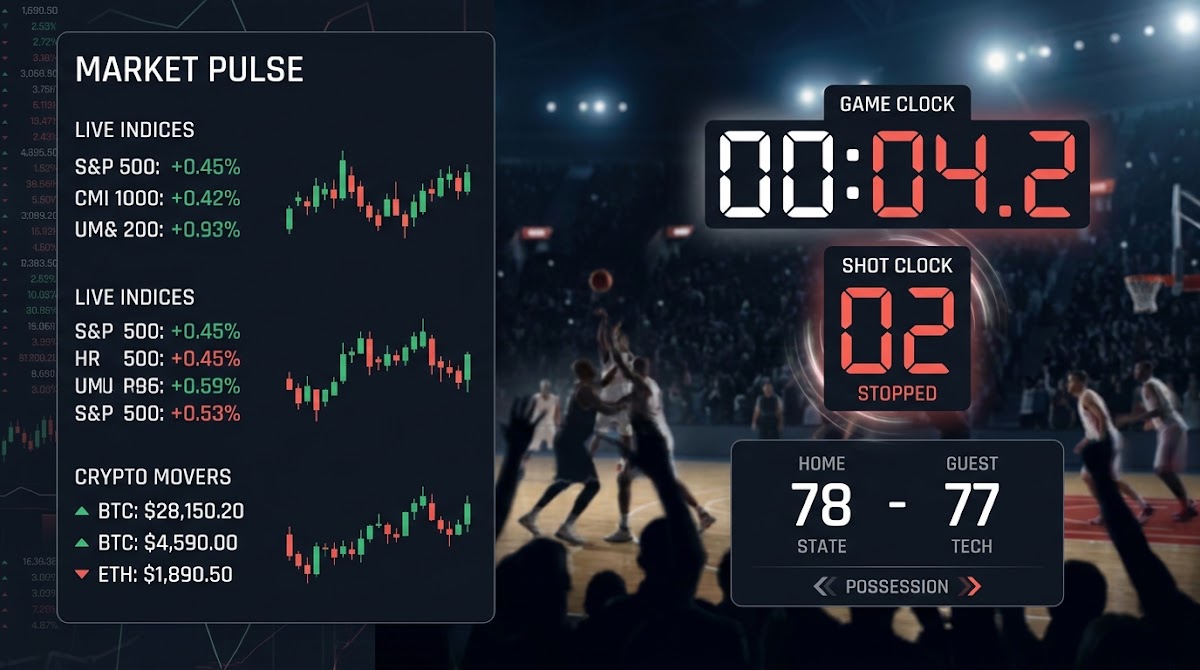
What trading college basketball rivalry games means: definition and context
Trading College Basketball Rivalry Games refers to managing pre-game and in-play positions around college matchups with heightened intensity and public focus, using entries, hedges, and exits rather than one-off speculative wagers. This approach treats lines and prices as instruments to be bought, scaled, or reduced as information and game flow evolve, with the trader aiming for consistent, repeatable performance rather than relying on single large outcomes NCAA urges states to ban prop bets. See also the NCAA media center release NCAA media center.
Why rivalry games matter to traders, briefly: rivalry matchups compress attention, increase public volume, and often widen short-term volatility, which can create scalp opportunities and mispricing windows for disciplined traders.
Verify local market availability before relying on props, prioritize sides and totals when props are restricted, and maintain fallback hedges that do not depend on single-player derivatives.
How trading differs from casual betting is primarily about intent and process. A trader will define position size, stop triggers, and exit rules in advance and will treat markets like tradable assets rather than single-event gambles. That difference in mindset helps manage the emotional pull that rivalry games often produce.
Key structural realities: college game rules that shape trading opportunities
Men’s college basketball is played in two 20-minute halves with mandated media timeouts under the 16, 12, 8, and 4 minute marks, and those scheduled breaks create predictable windows for liquidity and reprice activity 2024-25 NCAA rules book
These stoppage windows matter because they concentrate broadcast attention, coaching adjustments, and bettors who use breaks to reassess positions. Compared with professional leagues that use four 12-minute quarters, the college timing changes when and how momentum resets, so traders should plan entries around the half structure and media-break rhythm rather than copying pro-game timing.
Two 20-minute halves and scheduled media timeouts
Expect predictable spikes in activity just before media timeouts when traders take final short-term positions, and immediately after a timeout when lines adjust to new information. These spikes often compress spreads briefly and can be targets for quick scalps or hedges aimed at capturing the immediate reprice.
How clock and stoppage rules create recurring volatility windows
Simple rule: map the game clock to your execution plan. Note the common windows around under-16, under-12, under-8, and under-4 minutes, then avoid putting large, undisciplined exposure on in the seconds before a scheduled stoppage unless you have a clear edge.

Market landscape in 2024-26: prop restrictions, liquidity and integrity signals
Since March 2024, the NCAA has publicly urged states to ban proposition bets on individual college athletes, a change that has led to variation in which player prop markets are available across jurisdictions and that can materially alter tradable instrument sets NCAA guidance page. Read reporting from Yahoo Sports Yahoo Sports.
At the same time, U.S. commercial sports betting continued to expand through 2025, supporting deeper liquidity for mainstream college matchups and meaning traders may see faster information assimilation and tighter live markets on widely broadcast rivalry games AGA state of the states 2025
Quick jurisdictional prop availability check
Use before placing orders
Integrity monitoring consistently highlights basketball among sports with frequent alerts, so traders should keep an integrity watch as part of pre-game checks and be ready to reduce exposure when alerts arise IBIA annual integrity report
How stoppages, timeouts and momentum windows create tradable microstructure
Pre-timeout and post-timeout pricing often follows a repeatable pattern. In many games, lines drift slightly toward public sentiment just before a timeout, then snap back or reprice as coaches use the break to address mismatches or substitutions. Anticipating that reprice can let a trader scalp a small guaranteed edge if execution is fast.
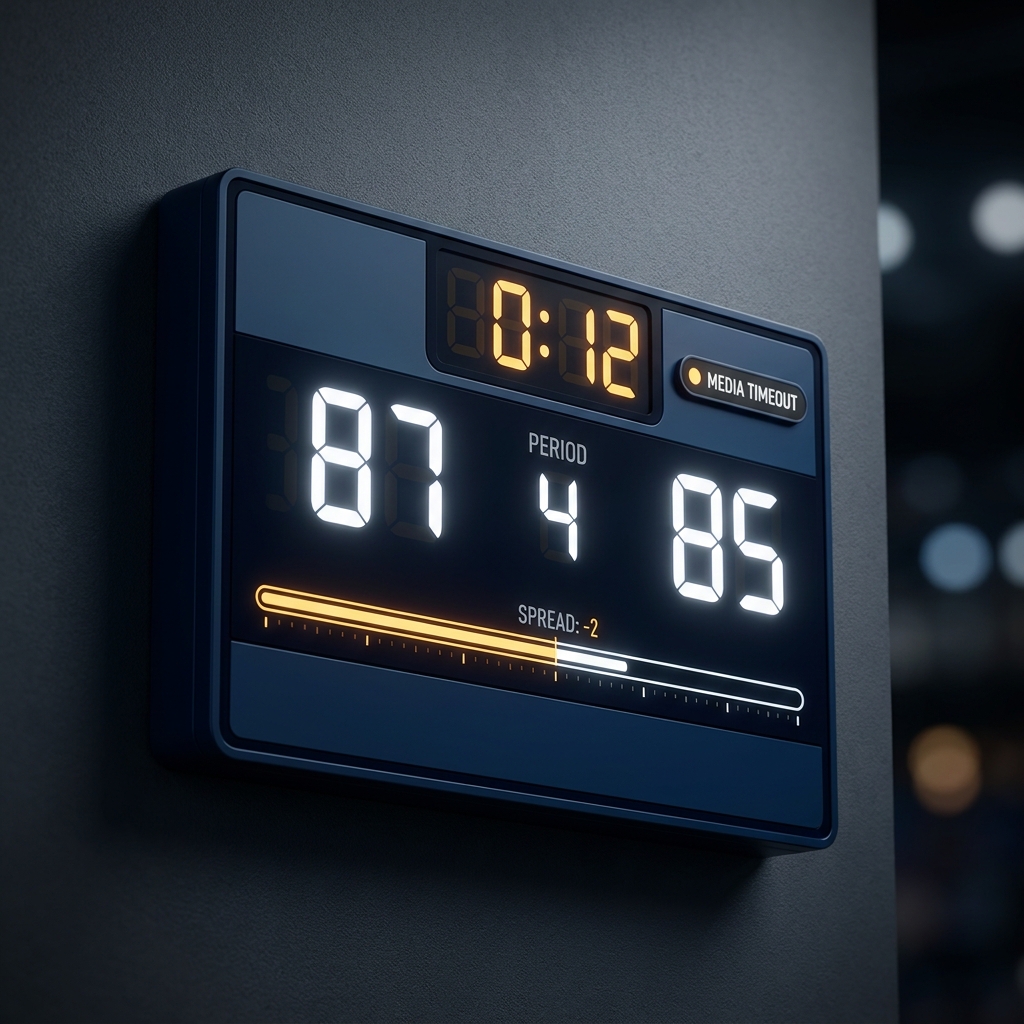
Halftime and media-break adjustments offer a distinct microstructure: halftime gives teams time to change tactics and often produces larger line moves than a short media timeout. For rivalry games, where halftime adjustments can be more pronounced due to emotional intensity, those moves tend to be larger and faster, which can be favorable for traders prepared with risk caps.
Pre-timeout and post-timeout price behavior
Common scenario: a hot shooting run triggers public bets, then a timeout allows teams to regroup. Prices may overreact in the first possessions after play resumes, creating a narrow window for quick hedges or scalps if you have solid execution and pre-defined stop levels.
Halftime and media-break adjustment opportunities
Use halftime to evaluate deeper metrics that do not reprice instantly, such as possession-level indicators or matchup substitutions. Those inputs can inform a second-half entry when the market resets, provided you respect liquidity and execution risks.
Pre-game preparation: checklists, market selection and jurisdictional checks
Verify whether individual player props are offered in your state early in your preparation, because availability affects which markets you can trade and which hedges are possible. For legal and operational confirmation consult your state regulator and league resources before relying on player props for a trade plan NCAA guidance page
Choose matchups with the right combination of liquidity, broadcast profile, and clear inefficiency. Rivalry game betting tips include preferring games with televised coverage and steady pre-game line movement, which often signal deeper liquidity and better execution for in-play adjustments. See Athlon's March Madness betting guide March Madness betting guide.

How a funded-challenge style simulated account workflow helps: rehearse the same staking limits and drawdown rules you plan to use in live trading, log each decision, and review trades after the event. That structured rehearsal improves discipline and makes it easier to follow pre-defined rules on rivalry nights.
Trading framework: staking, bankroll rules and how funded-challenge principles apply
Use predefined limits and conservative staking that emphasize consistency over high-variance bets. A simple rule is to cap exposure per game as a small percentage of your active bankroll and to set daily loss limits that stop you from increasing risk after a poor session ResponsiblePlay tips
Funded-account simulation mirrors this approach by enforcing drawdown limits and measured position sizing. Practicing within simulated constraints helps a trader internalize discipline, particularly for rivalry games where emotional swings can prompt overtrading.
Simple staking plans suitable for rivalry games
A practical staking example: set a per-trade size that keeps your maximum daily exposure within a conservative cap, use partial scaling into positions rather than an all-in move, and predefine profit-taking points so you avoid impulsive exits when games get tense.
How funded account challenge principles can improve discipline
Treat the challenge structure as a behavioral training tool. Accepting tight drawdown rules and fixed position limits forces you to focus on edge and execution instead of outcome, and over time that discipline can reduce the common traps of chasing losses or increasing stake after a win.

In-play tactics for rivalry games: timing entries and exits around stoppages
Scalping during media timeouts works because many traders and consumers use breaks to submit last-minute bets, creating a concentrated burst of orders. If you plan to scalp, set strict stop-loss levels and favor trades where the expected move is short and measurable rather than open-ended.
Second tactic: use halftime information to reset your second-half plan. If a team shows a tactical shift or a key rotation change, the market can reprice at the half and present a clearer asymmetric opportunity for players who prepared a risk cap in advance 2024-25 NCAA rules book
Practice disciplined trading with structured challenges
Save this checklist and rehearse the scenarios in a simulated account before trading live on rivalry nights.
Third tactic: focus on end-of-half sequences where possession outcomes and fouling patterns can produce rapid line moves. Those moments offer defined risk-reward if you can execute quickly and respect latency and liquidity limits, particularly in widely watched rivalry games where prices move fast.
Scalping during media timeouts
Execute short-term scalps around the timeout restart, and keep position sizes small. The goal is capturing known microstructure reprice rather than predicting long-term game outcomes.
Using halftime information and line resets
After halftime, compare observed substitution patterns and tempo with your pre-game model. When the market underreacts to a clear tactical shift, that is a place to consider a measured entry with a clear exit plan.
Risk management and integrity controls for high-intensity rivalry matchups
Basketball frequently appears in integrity alerts, according to monitoring bodies, which means traders should implement stricter risk controls for rivalry games and be ready to reduce or pause trading when an alert is issued IBIA annual integrity report
Concrete controls include preset stop-losses, daily loss caps, and position-size reductions on high-profile rivalry matchups. When an integrity notice or suspicious pattern appears, pause trading on the affected market and document the decision for later review.
Integrity alerts and when to reduce exposure
If integrity monitoring signals an issue, reduce sizes immediately and avoid markets tied to specific athlete props, which can be most affected by regulatory scrutiny and sudden removals from the market.
Setting stop-losses and daily limits
Set stop-losses tailored to the microstructure of rivalry games: smaller, tighter stops for scalps around timeouts and wider, measured stops for halftime pivots. Pair these with a strict daily limit that prevents tilt-based escalation after a losing streak.
Decision criteria: when to take a trade in a rivalry game and when to stand aside
Entry checklist: ensure sufficient liquidity, confirm a clear matchup edge, verify price dislocation relative to your model, and check time-to-stoppage so you are not entering immediately before a media break 2024-25 NCAA rules book
Exit rules: set predefined profit targets, use partial scaling to lock gains, and define stop triggers tied to game context such as a lead change or clear momentum reversal. Avoid entering when officiating looks uncertain or when integrity alerts are active.
Checklist for trade entry
Quick rules: liquidity check, model edge, time buffer until next stoppage, and jurisdictional confirmation if your strategy depends on player props or restricted markets.
Exit rules and partial scaling
Scale out to secure profits: take a portion off at first target, tighten stops on remaining exposure, and be ready to exit fully if the game context shifts beyond your scenario assumptions.
Typical mistakes and traps in rivalry-game trading
Chasing losses is common after a bad in-play move. The cure is pre-set daily and per-trade loss limits that stop you from increasing stakes to recover quickly, which usually increases long-term drawdown and degrades decision quality ResponsiblePlay tips
Overweighting single-market derivatives, especially player props that may be restricted or removed by regulators, creates operational risk and can leave you with unhedgeable exposure if markets change mid-season or mid-game.
Chasing losses and emotional overtrading
Keep a trade journal and review losses without changing plan mid-session. Behavioral discipline prevents small losses from becoming large ones.
Overweighting single-market derivatives
Favor core markets like sides and totals which are more consistently available across jurisdictions, and treat player props as supplementary when they are legally accessible.
Practical examples and short scenarios traders can rehearse
Scenario one, pre-game fade on a rivalry with late injuries: entry trigger is a significant line move after injury news, risk cap is percentage of bankroll defined pre-game, exit target is modest profit or scaled hedge at game start. Always verify whether player props are available in your state before including props in the hedge NCAA guidance page
Scenario two, in-play halftime pivot after a hot streak: entry trigger is a clear tactical rotation noted at halftime, risk cap is small portion of bankroll, exit target is a predefined movement in the live spread or total after five to ten minutes of play.
Scenario three, timeout scalp in the fourth minute: entry trigger is public heavy action into one side before a media timeout, risk cap is tight, exit plan is immediate hedge or profit take within the first two possessions after the timeout.
Short case study and lessons learned (hypothetical, rule-driven)
Hypothetical: a trader plans a rivalry-night strategy assuming full access to player props, but a jurisdiction implements a restriction before the season. The immediate lesson is to keep fallback plans that rely on sides and totals, and to verify local availability before executing trades that depend on props NCAA guidance page
Another hypothetical: an integrity alert during a marquee rivalry causes rapid liquidity withdrawal. In practice the right move is to pause trading on affected markets, document the exposure, and await official clarification rather than attempting to trade through uncertain signals IBIA integrity report
Pre-trade and in-play checklist: a compact playbook for rivalry nights
Pre-game verification steps: confirm market availability in your jurisdiction, check whether player props are allowed, set staking limits, and add relevant games to an integrity watchlist. Document these checks in your trade journal before kickoff NCAA sports wagering resources
In-play quick checklist: note upcoming timeouts and halftime, apply stop-loss rules, use partial scaling on entries, and pause trading if an integrity alert or regulator notice appears. After the game, review trades and adherence to the plan to improve future performance.
Conclusion: key takeaways and next steps
Plan around the college game structure, verify prop availability in your jurisdiction, and prioritize disciplined staking and integrity controls. Trading College Basketball Rivalry Games rewards preparation and consistent process more than aggressive, high-variance moves ResponsiblePlay tips
Next steps: adopt a written checklist, rehearse scenarios in a simulated account or challenge workflow, and verify NCAA and state guidance regularly since policy and market availability can change season to season NCAA sports wagering resources
No. Since March 2024 the NCAA urged states to consider banning individual college athlete props, and availability varies by jurisdiction, so check local rules before trading those markets.
Core markets such as sides and totals are generally more consistently available and liquid, making them safer choices than single-player derivatives that may be restricted.
Use predefined staking limits, stop-losses, daily caps, and reduce or pause exposure if integrity alerts or unusual market behavior appear.
References
- https://www.ncaa.org/news/2024/3/28/media-center-ncaa-urges-states-to-ban-prop-bets-on-college-athletes.aspx
- https://www.ncaa.org/media-center-ncaa-urges-gambling-commissions-to-eliminate-prop-bets/
- https://ncaaorg.s3.amazonaws.com/championships/sports/basketball/rules/2024-25/2024-25_MBB_Rules.pdf
- https://www.americangaming.org/resources/state-of-the-states-2025/
- https://ibia.bet/wp-content/uploads/2025/02/IBIA-Annual-Integrity-Report-2024.pdf
- https://www.fundedplays.com/challenges
- https://www.responsibleplay.org/responsible-gambling-tips/
- https://athlonsports.com/betting/march-madness-betting-guide
- https://sports.yahoo.com/ncaa-set-to-push-states-with-legalized-sports-betting-to-ban-prop-bets-for-all-college-sporting-events-141503923.html
- https://www.fundedplays.com/blogs/how-fundedplays-evaluations-work
- https://www.fundedplays.com/blogs
- https://www.fundedplays.com
- https://www.ncaa.org/sports-wagering