

What trading boxing moneylines and round props means
Definition of moneylines and round props
Trading Boxing Moneylines and Round Props refers to taking a structured, repeatable approach to markets that pay on bout winners and specific round outcomes, rather than placing a single fixed bet then walking away. In practical terms, moneyline markets pay on the bout winner, while round props cover outcomes such as a specific round, over or under total rounds, or round-by-round results. This foundation is shaped by how the sport is contested and scored, so traders should treat markets as expressions of those rules. Unified Rules of Boxing
How trading differs from casual betting
Where a casual bettor might pick a winner once, a trading approach treats each opportunity as a timed decision: plan entries, size positions small, and accept many small outcomes rather than a single swing. Traders look to manage price movement, liquidity and execution across many small trades or selective larger hedges to achieve consistent returns over time. Educational resources on live betting emphasize that in-play odds move quickly with new information, which is central to trading behavior.
Access trade-plan templates and challenge details
Subscribe for trade-plan templates to help you write pre-fight entries, target odds and stop rules before fight night.
How official rules and state catalogs shape boxing markets
Key rule elements that affect pricing
Market definitions and which props are offered depend on the sport rules that set round length, rest periods and scoring criteria, because these determine whether a stoppage or round outcome is possible under particular timing. For example, professional rounds are typically three minutes with one minute rest and scoring focuses on clean punching and effective aggression, which are the same criteria bookmakers and traders implicitly use when modelling round outcomes. Unified Rules of Boxing
Which markets are commonly approved by regulators
State sports betting catalogs govern which products operators may list. Some regulators explicitly allow bout winner moneylines, total rounds, round betting and method of victory markets, and they may also permit in-play wagering under operator rules; checking the catalog for your jurisdiction is an important compliance step. Colorado Sports Betting Catalog
Operators can still restrict in-play offers, the timing of cash-out options or the specific round markets they list, so traders should verify permitted markets with the operator before relying on any live strategy.

Market mechanics: how moneylines and round props price and move
Pre-fight pricing drivers
Pre-fight odds reflect a mixture of objective inputs and market sentiment: fighter styles, records, weight and recent activity, known injuries, referee tendencies and the matchup dynamics that influence expected rounds. Traders should build models or checklists that consistently capture these inputs so they can compare live moves against pre-fight expectations.
Use a written pre-fight checklist to form a trade thesis, size positions with fixed-percent rules, set session drawdown limits, log every trade and apply pre-defined hedging or stop-loss rules; always trade only in regulated markets and follow operator rules.
In-play price movement and information flow
Once the fight starts, visible events such as punches landed, a cut, a knockdown or clear ring control can shift perceived probabilities within seconds; liquidity and execution speed then determine whether a trader can capture the move. Live-betting education highlights how odds react quickly to new information and why practical trading must account for latency and market depth when attempting scalps or value entries. Beginner's guide to live betting
Pre-fight analysis framework for trading boxing markets
Checklist: objective data and qualitative signals
Start with a concise, repeatable checklist you complete before every event. Include fighter styles (pressure, counter, boxer-puncher), recent rounds boxed, known durability issues, home advantage, time away from ring and any visible ring rust. Add referee and venue notes because stoppage tendencies and rounds-per-fight norms affect round props.
How to build a trade thesis
Convert the checklist into a trade thesis by specifying entry odds, size, stop-loss and target odds in advance. A simple formatted thesis might read: entry at odds X, stake Y percent of bankroll, stop-loss at Z odds or loss threshold, target to hedge or cash out at W odds. Writing these rules before the bell prevents improvisation in live heat. For live execution, plan for how quickly you will act if the expected trigger occurs and what you will do if the market moves the other way. Beginner's guide to live betting
Data, tools and trackers to prepare before fight night
Sources of structured data and what to log
Keep a short pre-fight dossier per fighter: recent fight video links, basic punch stats where available, rounds boxed, layoff and medical notes, and referee history. Before the session, test connectivity and the operator UI you plan to use so you know where cash-out and limit-fill options are displayed.

Simple tracker templates for rounds and in-play events
Log timestamps, market fills, and your reason for each entry or exit so post-session review is straightforward. Track a minimal set: date-time, market, side, size, odds in, odds out, reason, and outcome. Testing your logging process under a simulated or low-stakes session will show if latency or UI design disrupts timely entries. See the Funded Plays blog for related posts.
Bankroll and stake management for trading boxing moneylines and round props
Sizing rules and drawdown limits
Use small, fixed-percentage stakes per trade and set a clear maximum drawdown limit for any session. Responsible gambling guidance recommends setting limits and using stake controls, which maps directly to disciplined trading: decide in advance the percent of your trading bankroll you risk per trade and the session drawdown that stops activity. Internet Responsible Gambling Standards
Account controls and stop-loss discipline
Implement account controls such as daily loss caps, time-based session limits and enforced cooldowns after a string of losses. Stop-loss rules should be simple and automated where possible. Maintaining these boundaries reduces the chance of chase behavior and keeps variance manageable.
Planned hedging, partial cash-out and risk reduction techniques
When and how to hedge a position
Hedging means placing an offsetting trade after favorable odds movement to lock profit or limit downside. Use hedges as pre-planned exits rather than improvised reactions: specify triggers such as a knockdown or reaching a target odds threshold, and then apply a rule for hedge size. Understand that hedging typically reduces expected value even as it reduces variance. Hedging your bets explained
live checklist to run during a trade session
keep items brief
Trade-offs: reduced variance versus lost expected value
Partial cash-out and hedges trade expected value for certainty; they are useful when preserving capital or avoiding outsized tail risk. Define rules that balance locked profit against forgone upside and apply those rules consistently. When you hedge because a fight changes materially from your pre-fight view, document why you acted so the decision can be reviewed later. Hedging your bets explained
Live execution tactics: timing, liquidity and typical scalps
How to read momentum and time entries
Momentum signals in a fight are plain: sustained clean punching, visible damage or a knockdown all shift the balance. For scalps, act quickly on a confirmed signal, use small sizes to test fills and avoid expanding size until your rules permit. Always check market depth before committing to larger sizes to reduce slippage.
Scalp examples and small-profit strategies
A common scalp pattern is to take a position after a clear two-round swing in control, then close once the market retraces a portion of the move. Execution steps include confirming the trigger visually or by stats, placing a small limit or market order according to your rules, and exiting at a pre-defined target or when the initial thesis no longer holds. Live-betting resources warn that execution speed and liquidity constraints are central to success when targeting small profits. Beginner's guide to live betting
Regulatory, integrity and safety considerations for live trading
Monitoring, suspicious activity alerts and compliant behavior
Integrity monitoring continues to record alerts for combat sports including boxing; this means traders should operate only in regulated markets with oversight and be ready to stop trading if unusual alerts arise. IBIA Integrity Report 2024
Operator rules and permitted markets example
Check the state sports betting catalog or operator rules before trading to confirm permitted markets and any special in-play restrictions. Regulators may list which markets are approved and under what conditions in-play wagering is allowed, so this check helps avoid compliance surprises during live sessions. Colorado Sports Betting Catalog
Common mistakes and how to avoid them
Emotional trading and chase behavior
Frequent errors include increasing stake after losses, abandoning stop rules and trading without a written plan. Responsible gambling standards suggest setting limits and avoiding chasing losses, which directly supports disciplined stake controls for traders. Internet Responsible Gambling Standards
Overleveraging and ignoring market structure
Avoid adding size because a move has gone your way unless that action is explicitly allowed by your trade plan. Overleveraging when liquidity is thin leads to slippage and account risk that outstrips any single-win benefit. Stick to predefined size rules and session caps.
Scenario walkthroughs: scalp after a fast first round and hedging a late-round prop
Scenario A: fast-start scalp example
Pre-fight plan: enter a small moneyline trade at odds consistent with the favored fighter, size at 1 percent of trading bankroll, with a stop-loss set to a small loss and a target to close for a 20 to 30 percent price retracement. Trigger: a dominant first-round showing such as multiple clean knockdowns or sustained damage. Execution steps: confirm the event visually and in the market, place a limit or market order sized as pre-planned, and set an automatic exit at the target retracement or at a small guaranteed profit. If the market offers partial cash-out options, have the hedging rules ready to lock a portion of profit according to your plan. Beginner's guide to live betting
Scenario B: late-round hedge example
Pre-fight plan: take a late-round prop (for example, fight to go beyond a given round) sized modestly with the expectation of hedging if the fight becomes one-sided. Trigger: entering the final two rounds with one fighter clearly ahead. Execution steps: assess the live moneyline price, calculate a hedge size that reduces net exposure while leaving some upside, and place the hedge if the risk threshold is met. Hedging rules should be numeric and pre-defined so you are not improvising under pressure. Understand the trade-off: hedging locks value but reduces expected return. Hedging your bets explained
Tools, trackers and a minimal decision log template
What to include in a decision log
Maintain a compact decision log with fields: date-time, market, side, size, odds in, odds out, reason, and outcome. Keep entries short and factual so post-session review is focused on rule compliance and edge quality rather than narrative justification.
Simple tools to run on fight night
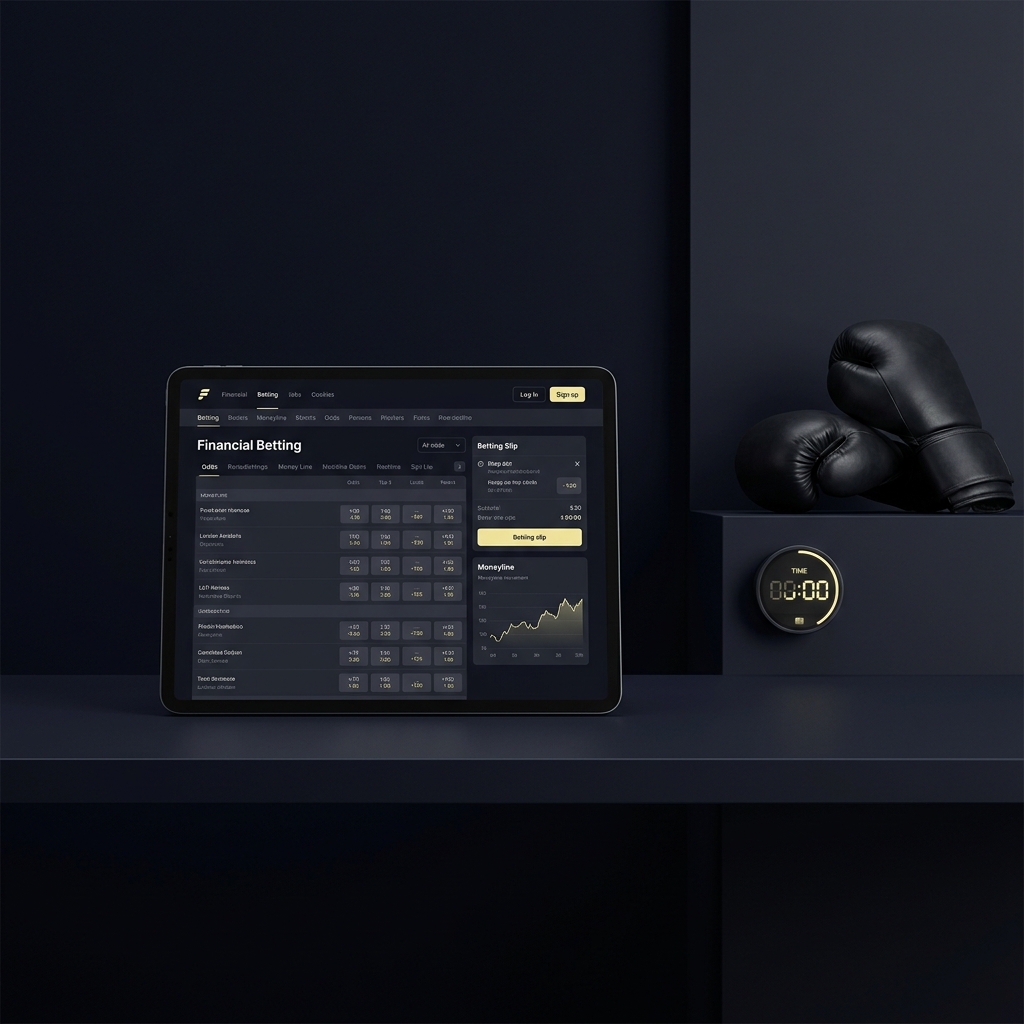
Use a spreadsheet for the decision log, a separate stopwatch or timer for round timing, and a pre-tested browser or app environment for execution. Run a latency test and a mock fill exercise before you trade with real stakes to confirm you can enter, modify and exit positions as expected.
When to step away: exit planning and limits
Hard stop conditions and pause rules
Define hard stop triggers such as a percent drawdown, a set number of consecutive losses, major network issues or an integrity alert. If any hard stop is hit, stop trading for the session and enforce a cooldown period before resuming. These rules help prevent emotional escalation and protect the bankroll. Internet Responsible Gambling Standards

Post-session review and learning
After each session, review your decision log to check whether entries matched your written plan, whether stop-losses were observed and what adjustments to the checklist may be needed. Learning from disciplined review is the most reliable path to consistent performance.
Key takeaways and next steps for practicing safely
Summary checklist
Pre-plan every trade, use stake controls, log decisions, respect operator rules and integrity alerts, and apply hard stop limits for sessions. Practice in low-risk environments or with small stakes before scaling, and treat trading as a disciplined process rather than a source of guaranteed returns. Visit the Funded Plays homepage for more information.
How to practice in low-risk environments
Start with simulation or minimal stakes, test your logging and latency, and review every session against your trade-plan rules. Consistent, rule-based practice is the safest way to develop a repeatable edge.
Moneyline trading focuses on the bout winner and often involves entering and exiting positions around price moves, while prop bets cover specific outcomes like a round and are traded using the same execution principles but different triggers.
Use small fixed-percentage stakes of your trading bankroll, set session drawdown caps, and avoid increasing size after losses; document sizes in your pre-fight plan.
Hedging is appropriate when a predefined trigger is met, such as a late-round shift in momentum or a clear knockdown, and when it aligns with your risk management rules.
References
- https://www.abcboxing.com/unified-rules-of-boxing/
- https://www.pinnacle.com/en/betting-resources/betting-strategy/beginners-guide-to-live-betting
- https://sbg.colorado.gov/sports-betting-catalog
- https://ifdm.stanford.edu/sites/g/files/sbiybj30991/files/media/file/paper_cghst.pdf
- https://pmc.ncbi.nlm.nih.gov/articles/PMC10316160/
- https://www.fundedplays.com/challenges
- https://www.fundedplays.com/blogs
- https://www.ncpgambling.org/programs-resources/responsible-gambling/internet-responsible-gambling-standards/
- https://www.pinnacle.com/en/betting-resources/betting-strategy/hedging-your-bets
- https://betboxinguk.com/live-boxing-betting/
- https://ibia.bet/wp-content/uploads/2025/02/IBIA-Integrity-Report-2024.pdf
- https://www.fundedplays.com