
Trading Best-of-Three vs Best-of-Five Matches: What it Means
Definition and quick comparison
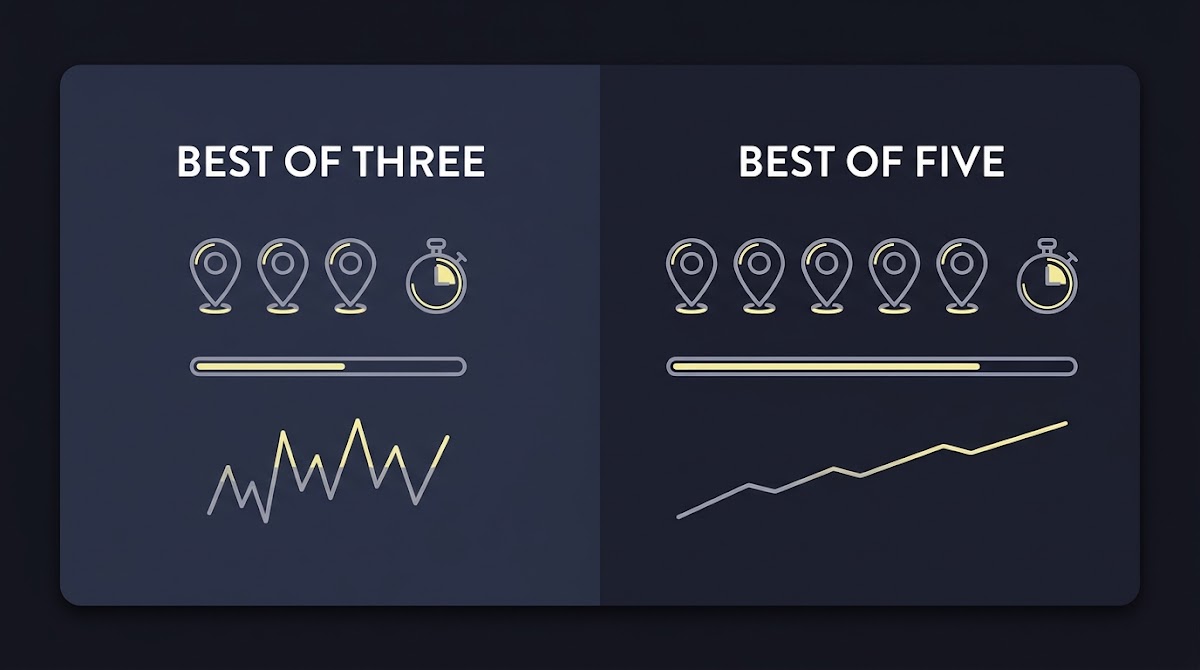
Trading Best-of-Three vs Best-of-Five Matches refers to adapting trading and modeling choices to the number of deciding games or maps that determine a match outcome. In plain language, best-of-three matches award victory to the first side that reaches two wins, while best-of-five matches require three wins. The choice between these formats changes how much a single game swings the series and how a trader interprets early signals.
Which markets feel the difference most depends on structure and rules. Esports with map-based play, short-set tennis formats, and playoff series in many sports are typical places where series length matters, because each game or map carries different tactical importance and can alter lineup or strategy choices between games.
Where this issue matters: esports, tennis, cricket, basketball series
Esports matches that use a map pool and rotations are particularly sensitive to series format, since map advantage, side choice, and map-specific strengths can compound across maps. Short tennis formats and limited-overs cricket sometimes use multi-game ties or super overs, creating compact outcomes. Basketball-style series that span multiple games introduce stamina and coaching adjustments that accumulate over a longer series.
FundedPlays is a funded sports prediction challenge platform where traders can practice adapting to different series formats and test rules-based approaches in a structured environment. This platform framing helps emphasize disciplined testing and record-keeping when switching between best-of formats.

Why Series Length Matters for Traders
Concepts: variance, sample size, momentum
Shorter series tend to amplify variance, making it harder to distinguish noise from edge. That is why traders treat single-game surprises with caution when they occur in best-of-three contexts, because a single upset can decide the whole match.
Longer series increase the sample size of observable events inside a match, which can surface systematic strengths and reduce the impact of one-off variance. Traders often find more reliable signals when a series gives teams or players room to adjust tactics, because repeated play produces more information to update models and sizing rules.

Confidence in a modeled edge should scale with the opportunity to observe outcomes. In a short series, traders typically lower per-event exposure to account for higher outcome volatility. Conversely, when a series allows multiple rounds of play, the same edge can be executed with more conviction, provided market conditions and liquidity support the position.
Trading Best-of-Three vs Best-of-Five Matches: Variance, Sample Size, and Probability
How to think about probability in a series
Think of a series as a small collection of independent or semi-independent trials where each trial changes the immediate stakes and often the strategic incentives. When you translate single-game probability into expected outcomes across a series, remember that the fewer the trials, the more likely a single unlikely result will determine the whole match. That practical intuition helps keep probabilistic thinking grounded rather than relying on a single observed outcome.
Qualitative differences traders should expect
In best-of-three formats, outcomes can be dominated by single-event variance, which makes short-term performance harder to interpret. By contrast, best-of-five formats let repeated interactions reduce noise and reveal persistent edges, provided the market does not adapt faster than the underlying skill manifests.
Test Series-Aware Tactics on FundedPlays Challenges
Use small, controlled tests to compare how your model or sizing behaves in short series versus long series before increasing exposure. Treat initial sessions as learning rounds and log outcomes carefully to detect persistent differences in variance and signal clarity.
Pre-match vs In-play: How Series Length Changes Live Trading
Timing of trades and liquidity differences
Pre-match opportunities often reflect broader consensus about team strength and expected map or game advantages. In short series, pre-match prices can be less informative because a single map or early event can swing the outcome; in longer series, pre-match prices tend to be more stable as markets anticipate adjustments and endurance factors.
Liquidity in-play frequently depends on how many viewers remain interested and how many markets the operator offers for subsequent maps or games. Short series may see quicker, sharper moves after early events because fewer in-play markets remain to absorb new information.
When to use in-play signals in short and long series
In best-of-three matches, plan for faster pivots. Early in-play signals that indicate a clear tactical mismatch are useful, but scale exposure down to reflect the higher chance that variance will reverse the situation. In best-of-five matches you can often wait for stronger confirmation across one or two additional rounds before committing larger sizing.
Strategy Framework: Adapting Models to best-of-three and best-of-five
Model inputs to adjust
Adjust inputs that are sensitive to series context, such as starting lineup durability, map pool fit, substitution rules, and historical series performance between opponents. Some features gain predictive weight in longer series while others, like momentary fatigue signals, may be more important in extended play.
Model cadence matters too. In shorter series, prefer features that capture immediate matchup strengths and pre-match indicators. For longer series, incorporate features that allow for dynamic updating based on observed in-series behavior, such as in-game efficiency trends and substitution patterns.
Adjust model inputs, reduce per-event exposure in short series, allow staged scaling in longer series, split backtests by format, and log decisions to enable iterative improvement.
Testing and validation approach
Backtest with series-length aware splits so that you evaluate best-of-three and best-of-five performance separately. This prevents leakage where a model tuned to long-series behavior underperforms in short-series markets. Maintain separate performance dashboards and review sample sizes to avoid overinterpreting early results.
When a single model is used across formats, include a feature that signals series length and let the model learn conditional behavior. If performance diverges markedly by format, prefer specialized models for each format and ensemble their outputs when the market makes both kinds of events available concurrently.
Bankroll and Risk Management across Series Lengths
Exposure sizing rules
Short-series contexts usually warrant conservative per-event exposure because variance is higher and outcomes are less predictable. Use lower maximum exposure percentages per opportunity and increase the number of small, independent opportunities you take rather than a few large bets.
In longer series, traders can allocate a slightly larger fraction of bankroll to expressed conviction when the observed in-series signals reinforce a pre-match edge. Still, maintain absolute caps and progressive scaling rules so a single mistaken conviction cannot cause a large drawdown.
Stop-loss and drawdown considerations
Predefine stop-loss rules for in-play scaling and enforce cumulative drawdown thresholds across a session. Short series may require tighter stop rules because rapid reversals can erase gains or escalate losses quickly. For longer series, plan scaling steps that allow partial captures of a developing advantage while protecting capital if momentum fails to materialize.
Consistent, rule-based bankroll management reduces emotional reaction to short-series surprises and supports longer-term learning when you log outcomes and review sizing decisions.
Market Behavior and Odds Movement in Short vs Long Series
Typical price discovery patterns
Early surprises tend to move lines more violently in short series because there are fewer subsequent events to rebalance expectations. In longer series, initial shocks are often absorbed and then re-evaluated as additional games reveal adjustments in strategy and stamina.
Watch for asymmetric reactions between the public and sharper market participants. Public sentiment can create quick directional moves in short matches, whereas sharper flows may be more apparent and influential in longer series where position building is feasible.
Role of public signals and sharp money
Public signals are often noisy and can exaggerate perceived momentum after one unexpected result. Sharp money tends to appear where a sustained edge is visible and where liquidity allows position scaling. Learning to read the timing and size of moves helps you identify when a market is signaling true information versus when it is amplifying noise.
quick odds-movement checklist for short and long series
Use as a quick first-filter
Tactical Play: Map and Set Picks, Momentum, and Lineup Effects
Specific in-match factors to incorporate
Include map pool fit, recent lineup changes, coaching tendencies for map bans or picks, and known stamina issues in your decision set. These tactical factors often have different predictive weight depending on series length, because map order and side selection matter more when there are fewer maps to play.
Lineup changes between maps or games can signal strategic adaptation or desperation. Track how often teams make effective changes and how quickly those changes translate to map wins. Use those observations to inform how much weight you place on early momentum in either format.
When momentum is predictive vs when it is noise
Momentum tends to be more predictive when it follows structural advantages, such as a favorable map pick or a substitution that corrects a matchup weakness. Momentum that appears purely from isolated lucky plays or one-off errors is more likely to be noise, especially in short series where reversals are common.
Weight momentum signals by their source. Prefer momentum with an observable causal mechanism rather than momentum that is only reflected in a temporary scoreboard lead.
Common Mistakes Traders Make with Series Length
Overfitting to small-sample outcomes
A common error is to recalibrate models aggressively after a single surprising short-series outcome. That overfitting reduces out-of-sample stability. Instead, log the event, note contextual factors, and wait for multiple similar outcomes before adjusting model parameters.
Misreading live momentum
Another mistake is treating any in-play surge as confirmation of an edge. In short series, quick surges may reverse; in long series, surges followed by sustained behavior are more informative. Use predefined thresholds and scaling rules to avoid emotional sizing changes during live events.
Corrective actions include automated logging of decision triggers, periodic review of model adjustments, and enforcing minimum sample sizes before accepting a pattern as reliable.
Practical Scenarios and Worked Examples
Scenario A: Trading an upset in a best-of-three
Scenario walkthrough. A lower-seeded team wins the first map in a best-of-three, and early in-play prices reflect a shift toward the upset. Before increasing exposure, check liquidity, map pool context, and whether the favored team has a history of strong comebacks. If your model expects higher variance in this format, scale back and consider a small in-play hedge that preserves capital while leaving room to add if further evidence appears.
Checklist items for this scenario include confirming map advantage signals, verifying lineup stability, and setting a tight stop if the favored team equalizes. Logging the decision and the triggers helps refine future reactions to similar upsets.
Scenario B: Trading stamina effects in a best-of-five
Scenario walkthrough. In a best-of-five, a team wins the first two games but shows signs of roster fatigue and limited substitution options. Here, stamina and adjustment potential matter more. If your model captures fatigue or depth of lineup as a feature, that signal can justify a gradual scaling into a position that anticipates a comeback rather than an immediate reversal play.
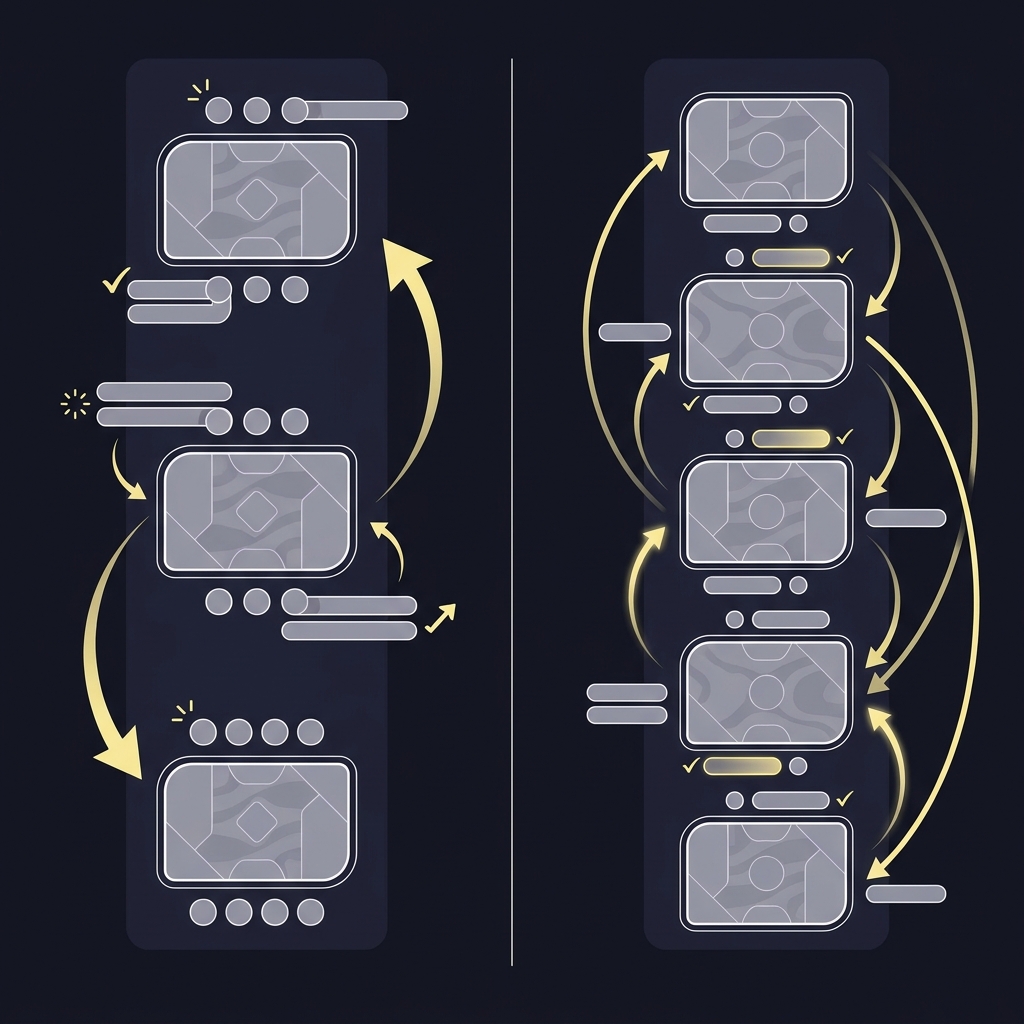
Checklist items for this scenario include monitoring rotation patterns, minutes played by core players, and coach tendencies for late-series adjustments. Use staged sizing to capture partial gains while protecting capital against unexpected surges from the opponent.
Measuring Performance: Metrics and Evaluation Approach
Which KPIs matter for series-aware trading
Track return per opportunity and hit rate by format to see where your edge is manifesting. Consider a risk-adjusted performance metric that factors in variance per format rather than relying solely on raw win rates. Maintaining a split by series length is critical for meaningful interpretation.
Use rolling windows to monitor consistency and to avoid overreacting to short-term swings. If measures diverge significantly by format, investigate feature importance differences and sample composition before making structural changes.
How to split results by series length
Maintain separate dashboards for best-of-three and best-of-five results. Include fields for market type, in-play versus pre-match, liquidity notes, and decision triggers. This allows you to analyze whether a strategy is robust across formats or whether specialization offers better risk-adjusted returns.
Document hypotheses and the tests you run. Over time, this discipline decreases the chance of mistaking noise for a real edge.
Choosing the Right Markets and Timeframes
When to prefer short-series markets
Short-series markets suit traders who have a fast cadence, can handle higher variance, and prefer many independent opportunities to compound small edges. These markets often have higher volatility and can reward quick, well-sized plays when you manage exposure carefully.
Short-series opportunities can also be valuable when you have a model tuned to match-specific tactical advantages that do not require long observation windows to validate.
When to target longer series
Longer series are preferable when your edge relies on strategic depth, stamina, or the ability to update forecasts from observed in-series behavior. If your model benefits from repeated observations and you have capital to support larger staged positions, prioritizing longer series can improve signal clarity.
Flexibility across formats helps diversification. Align your trade cadence with available events, personal time, and capital so you do not overextend in unsuitable markets.
Checklist: Decision Criteria for Trading best-of-three vs best-of-five matches
Quick pre-trade checklist
Confirm model inputs are series-aware, verify expected liquidity, and set per-event sizing rules before placing a trade. Ensure you have logging fields ready to capture triggers and any real-time notes that influenced the decision.
In-play decision checklist
Follow predefined stop rules, apply scaling steps if momentum confirms, and avoid emergency decisions. If the situation contradicts your model, record the divergence and apply a conservative sizing rule until clarity emerges.
Post-event, log outcome, reason codes, and whether a rule was followed. This consistent logging feeds future refinement and reduces ad-hoc changes that harm long-term performance.
Conclusion: Recap and Action Plan
Top takeaways
Best-of-three formats increase variance and demand conservative sizing and faster pivots, while best-of-five formats provide more opportunity for edges to surface and for staged scaling. Models and bankroll rules should reflect these differences to preserve capital and improve learning.
Next steps for readers
split historical results by series length, run small controlled backtests for each format, adjust exposure rules based on observed variance, and maintain disciplined logging to iterate. Consistent testing and record-keeping are the most reliable paths to steady improvement.
Shorter series typically require smaller per-event sizing because variance is higher; longer series can allow staged scaling when signals persist. Always use predefined caps and stop rules.
If performance differs by format, maintain separate models or add a series-length feature. Backtest on split data to decide whether specialization improves results.
Verify map or matchup context, confirm liquidity is sufficient, check lineup stability, and follow your predefined scaling thresholds before increasing exposure.
References
- https://www.fundedplays.com
- https://www.fundedplays.com/blogs
- https://www.fundedplays.com/blogs/how-fundedplays-evaluations-work
- https://www.fundedplays.com/challenges
- https://www.investopedia.com/articles/active-trading/090415/only-take-trade-if-it-passes-5step-test.asp
- https://tradeciety.com/how-to-perform-a-multiple-time-frame-analysis
- https://www.forex.com/en-us/trading-guides/how-to-use-the-5-3-1-trading-strategy-in-forex/