

Why skill matters in funded sports trading
The Core Skills Every Funded Sports Trader Needs begin with an understanding that funded sports challenge platforms judge consistency and process rather than one-off wins. These programs use virtual funded accounts and explicit evaluation challenge rules to measure sustained decision-making and adherence to drawdown limits.
That emphasis on repeatable performance means the measure of success is how you make choices over time, not whether you hit a single large outcome. On funded platforms participants demonstrate skill through a sequence of regulated choices inside an account progression framework.
Explore FundedPlays challenge formats and rules
Consider practicing the same selection and sizing rules you will use in a live challenge for a few weeks before you enter a paid evaluation, so your routine feels automatic under pressure.
Expect clear, public challenge rules that define maximum drawdown, profit targets, and progression criteria. The intention is not to replicate a sportsbook or investment product, but to provide a controlled environment where skill, discipline, and rule-following can be observed and assessed.
What a skill-first model looks like
A skill-first model sets measurable objectives, tracks simple performance metrics, and enforces limits that prevent reckless behavior. Participants operate inside simulated bankrolls and must reach thresholds that prove they can manage variance while following the platform's rules.
The Core Skills Every Funded Sports Trader Needs
In practice, this means combining disciplined selection criteria, consistent stake sizing, clear record keeping, and a routine review process to turn isolated insights into a reliable edge. Building these competencies is the primary aim before attempting an evaluation challenge.
How it differs from casual betting or gambling
Casual betting often focuses on individual outcomes and emotional reactions. A funded sports challenge focuses on process, documented rationale, and staying within drawdown limits. The rules and virtual bankrolls are designed to highlight sustainable decision making rather than short-run luck.
Understanding the funded challenge model and evaluation rules
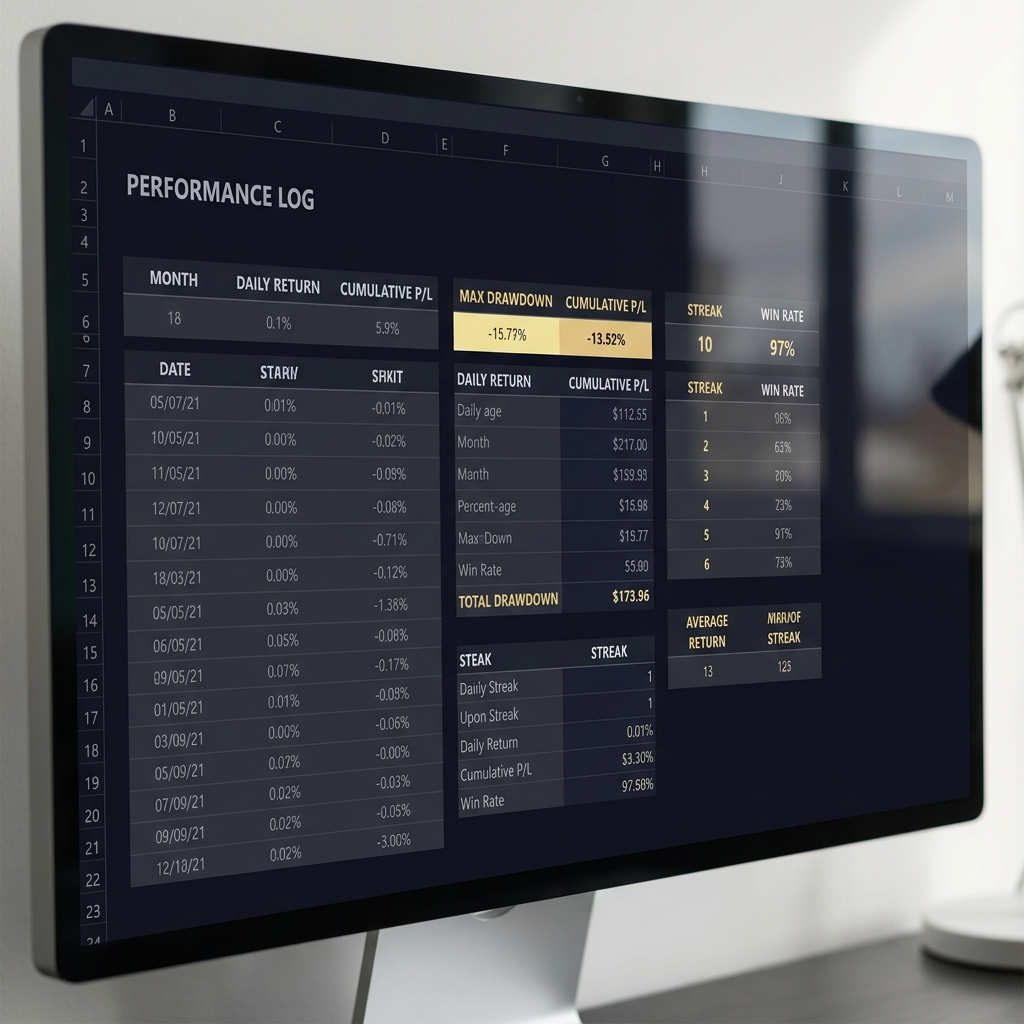
Evaluation challenges typically combine a virtual bankroll, a target performance objective, and a maximum drawdown constraint. Participants must operate within those parameters to progress through account progression steps and become eligible for performance-based rewards.
Challenges are structured to separate chance from skill by using objective thresholds. This helps platforms and participants see whether a strategy holds up over a series of selections rather than a single lucky result.
Common challenge formats
Formats vary but generally include tasks such as reaching a percentage gain, maintaining a non-excessive maximum drawdown, or completing a minimum number of valid selections. Each format signals slightly different priorities, for example growth versus preservation.
Key metrics organisers track
Organisers monitor metrics that reveal both skill and behavior. Typical metrics include win rate, streak length, variance measures, and maximum drawdown. These metrics show whether a participant’s approach is repeatable and whether they respect account constraints.

Discipline and decision-making: the mental core
Discipline is the backbone of consistent sports prediction skills. It means having pre-set selection criteria, stake sizing rules, and the resolve to follow drawdown limits even when short-term losses provoke a desire to change course.
Decision rules reduce the role of emotion. Write down your selection filters and sizing method and commit to them for a defined test period so you can evaluate their effectiveness objectively.
Build disciplined decision rules, consistent stake sizing and bankroll controls, systematic logging and weekly reviews, and lightweight research-tested edges; practice these in mock sessions that replicate challenge rules.
Decision criteria and precommitment
Precommitment involves documenting the conditions under which you will place a selection and the exact size to use. This can be as simple as a checklist that verifies the matchup factors, the edge estimate, and the maximum allowed stake for that event.
Handling losing streaks without changing strategy
Losing streaks are a normal feature of any skill-based process that faces variance. The appropriate response is to check that you followed your process, confirm sizing remained within rules, and review whether the sample of selections still fits your original hypothesis rather than reacting impulsively.
Bankroll management and drawdown control
Bankroll size determines how much room you have to absorb normal variance. When you size stakes as a consistent fraction of the virtual account, you protect longevity and give an edge time to express itself.
Drawdown limits are evaluation constraints, not optional guidelines. If you approach those limits reduce activity, tighten sizing, or pause until you can review performance. The goal is to finish the challenge still within the rules, so you remain eligible for progression.
Simple sizing rules
Practical approaches include flat stakes for simplicity, fixed percentage sizing to scale risk with account size, and small maximum single-event caps to avoid concentration. Each method has trade-offs in clarity, variance, and ease of discipline.
When to reduce activity
Reduce activity when you are within a short distance of a drawdown limit, when your documented process fails to produce expected signals, or when fatigue undermines decision quality. Conservative responses preserve the chance to recover and re-enter with clear choices.
Research, data and analytics for repeatable edges
Good research starts with public stats, matchup factors, and a few simple filters you can apply consistently. Keep your methods lightweight so they are repeatable and testable within your practice routine.
Structure hypotheses about what matters and test them over historical samples, using out-of-sample checks when possible to avoid mistaking noise for signal.

Sources of edge
Edges often come from niche knowledge, timing, understanding lineup news, or focusing on markets that move slowly. The aim is to identify stable patterns that persist across many events rather than one-off anomalies.
Keeping research manageable
Limit the scope of research to a few features and track baseline metrics in a results-log that records whether a proposed edge survives forward testing. Avoid complex models until you can reliably generate forward signals by hand.
Bet sizing and stake strategy
Stake frameworks should protect account health. Flat stakes work well for beginners because they reduce complexity. Fixed-percentage sizing aligns risk with account size and helps preserve longevity as the account changes.
Maintain a strict rule for maximum stake per event and resist increasing size after wins. Discipline in sizing is often more important than finding an additional small edge in selection accuracy.
Proportional sizing methods
Common proportional methods include fixed-percentage of bankroll and Kelly-derived approaches simplified into conservative fractions. The practical priority is clarity so you can consistently apply the rule during an evaluation.
Adjusting size after streaks
After streaks, adjust only if your documented process indicates a sustained change in edge or volatility. Avoid reactive increases after wins or recovery chasing after losses. A predefined rule for scaling up or down reduces regret and protects account eligibility.
Record keeping, review cycles and iterative improvement
A performance log turns experience into learning. Record event, stake, odds, rationale, result, and context notes so you can later inspect whether decisions followed your stated rules.
Weekly reviews are compact, action-oriented sessions. Calculate key metrics, note persistent biases, and set one concrete improvement to test the following week.
What to record
Essential fields include the event identifier, stake, odds, selection rationale, and result. Add a short note about uncertainty or external factors so you can later judge whether those contexts affected outcomes.
How to run weekly reviews
In a weekly review compute win rate, average stake, and streak patterns. Identify two things that worked and one thing to change. Make only one experimental change at a time so you can attribute any effect in subsequent reviews.
Tools and tech that make practice scalable
Start with a clean spreadsheet to log selections and compute simple metrics. A template that records date, event, stake, odds, result, and notes is sufficient for most practice routines.
When volume grows or you want repeatable reporting, consider lightweight tracking apps that export logs. Move to automation only after you have stable rules that benefit from scaling.
selection and results logging for funded challenge practice
keep entries brief and consistent
Simple spreadsheets and tracking apps
A simple spreadsheet gives full control: you can add calculated fields for running drawdown, moving averages of results, and filters to isolate types of edges. It is the easiest way to start systematic practice.
When to move to automated tools
Consider a dedicated tool when manual logging becomes error-prone or when you need repeatable reports to confidently evaluate small edge changes. Ensure the tool supports your documented process and does not encourage distraction.
Managing variance and emotional resilience
Variance is an unavoidable feature of prediction work. Short-term losing periods do not necessarily mean a strategy is broken; they often reflect normal statistical fluctuation.
Emotional resilience comes from routines: session limits, scheduled breaks, and a pre-session checklist that confirms your process, rather than a focus on short-term profit and loss.
Normalising streaks
Expect streaks and make them unremarkable in advance by setting clear rules for sizing and when to pause. If you treat a streak as data, you preserve decision quality instead of dramatizing each result.
Strategies to avoid tilt
To avoid tilt, use pre-defined session stop conditions, step away when fatigue appears, and keep a short list of micro-tasks to restore focus, such as re-reading your selection checklist before the next attempt.
Building and testing simple models and systems
Create minimal systems by defining a hypothesis, selecting a few features, and testing on historical data with an out-of-sample holdout. Start simple so you can understand why the model makes certain calls.
Guard against curve-fitting by keeping validation conservative and by testing forward with paper or mock sessions before applying a rule inside a real evaluation period.
Backtesting basics
Backtesting requires consistent data and clear rules. Use a clean historical sample, define how you apply selections, and record results in the same format you will use during practice so comparisons are valid.
How to avoid curve-fitting
Avoid overly complex feature sets and too many parameter tweaks. Prefer simple rules that you can follow manually; complexity tends to hide overfitting and reduces transferability to live conditions.
Match selection, market efficiency and when to act
Look for markets where your skills give an advantage: slower-moving markets, niche leagues, or specialized prop markets where information differences are larger and pricing slower to adapt.
Balance opportunity frequency against conviction. Many low-conviction entries dilute the impact of your best ideas; patience for clearly filtered opportunities typically yields better long-term results.
Finding less-efficient markets
Less-efficient markets include niche competitions and props with limited liquidity. These tend to reward specialist knowledge and careful information gathering more than broad, high-volume markets.
Time windows for advantage
Act when your pre-defined filters align and when market movement indicates your information edge is meaningful. Avoid forcing entries just to meet arbitrary activity targets.
Common mistakes funded sports traders make
Frequent errors include overtrading, increasing stake size after wins, and neglecting documentation. Each of these behaviors increases the chance of exceeding drawdown limits or disqualifying performance patterns.
Confusing luck with skill is another common trap. Use systematic logging and conservative validation to separate random outcomes from repeatable processes.
Overtrading and revenge sizing
Overtrading usually follows emotional responses. The remedy is a hard session or daily limit, and a rule that requires a checklist pass before any additional entries are allowed.
Confusing luck with skill
Track sequences and run out-of-sample tests to check whether good outcomes persist. If a result does not survive forward testing or falls apart after small changes, treat it as noise rather than a durable edge.
Practical examples and scenario walkthroughs
Scenario A: Conservative qualifier path. Use flat or small percentage sizing, focus on high-conviction filters, and prioritize drawdown control. Log every decision and run weekly reviews to confirm the approach is stable.
Scenario B: Aggressive path and why it fails. Higher frequency and larger stakes increase variance and the chance to trip drawdown limits. Without strict process controls this approach often ends in disqualification or failure to progress.
Conservative qualifier path
A conservative path sacrifices short-term speed for the likelihood of finishing the challenge inside limits. It emphasizes documentation, predictable sizing, and patient match selection.
Aggressive path and why it fails
An aggressive approach can look successful in a short period but tends to break the evaluation rules through concentration or by increasing stake size after wins. The lesson is that preservation often wins qualifiers more reliably than rapid growth attempts.
How to prepare before entering an evaluation challenge
Prepare with a 30-day plan: set up record-keeping, define five consistent model rules or filters, run mock sessions with a virtual bankroll, and practice your stress-management routines under simulated conditions.
Read and understand the official challenge rules and withdrawal conditions in detail before starting. Knowing the precise drawdown and progression criteria will shape your sizing and activity plan.
Checklist for first 30 days
Day 1 to 10: create and populate a logging template, confirm selection filters. Day 11 to 20: run mock sessions with time-boxed blocks. Day 21 to 30: tighten rules, run a simulated qualifier under the same limits as the real challenge.
Practice routines to build confidence
Short, focused practice blocks help you rehearse the decision sequence and reduce impulsive choices. Treat these sessions like a rehearsal so the real challenge feels familiar and manageable.
Conclusion: how to build these skills sustainably
Small, consistent habits are more powerful than occasional high-conviction plays. Focus on a single priority each month, keep strict logs, and run a monthly review to translate experience into better routines.
A 90-day roadmap could allocate one skill per month: month one for disciplined sizing and logging, month two for research and hypothesis testing, and month three for mock qualifiers and review. Responsible participation and adherence to challenge rules remain essential throughout.
Read and understand the mock sessions and withdrawal conditions in detail before starting. Knowing the precise drawdown and progression criteria will shape your sizing and activity plan.

A funded sports challenge is a structured evaluation where participants use a virtual bankroll to demonstrate consistent sports prediction ability under defined rules and drawdown limits.
Bankroll management is essential; consistent fractional sizing and drawdown control preserve eligibility and give an edge time to manifest.
Yes, mock sessions with a virtual bankroll and disciplined logging are effective ways to build skills before entering a paid evaluation.
References
- https://www.amos-business-school.eu/en/job/sports-trader/
- https://www.fundedplays.com
- https://opticodds.com/blog/funded-sports-trading-odds-api
- https://fortraders.com/blog/funded-trading-programs-join
- https://www.fundedplays.com/blogs/how-fundedplays-evaluations-work
- https://www.fundedplays.com/blogs
- https://www.fundedplays.com/challenges