

What are straight bets and how do they differ from parlays?
Quick definitions
Straight bets are single-game wagers resolved independently, where one selection determines the outcome of that stake. In plain terms, you place one selection, wait for that event, and the bet wins or loses on its own merits. That clarity makes straight bets easy to track and helps bettors isolate skill on individual markets.
By contrast, parlays combine two or more selections into a single ticket so that every leg must win for the ticket to pay out. A parlay links multiple results into one payout, which means the potential payout grows with each additional leg while the chance of full success falls.

How payouts and outcomes differ
For straight bets the payout follows a simple stake-to-odds relationship: stake times the decimal odds minus the stake equals net return when the single selection wins. For parlays the platform multiplies the legs' odds together, so a two-leg parlay pays more than either single by itself but requires both legs to win. A void or push on a parlay often reduces the bet to fewer legs on many platforms, while a losing leg usually cancels the entire ticket.
Note that operators handle settlement rules and payout tables differently, so always check platform-specific rules for void outcomes and same-game parlay restrictions before placing bets.
How straight bets work in practice
Bet sizing and staking on single selections
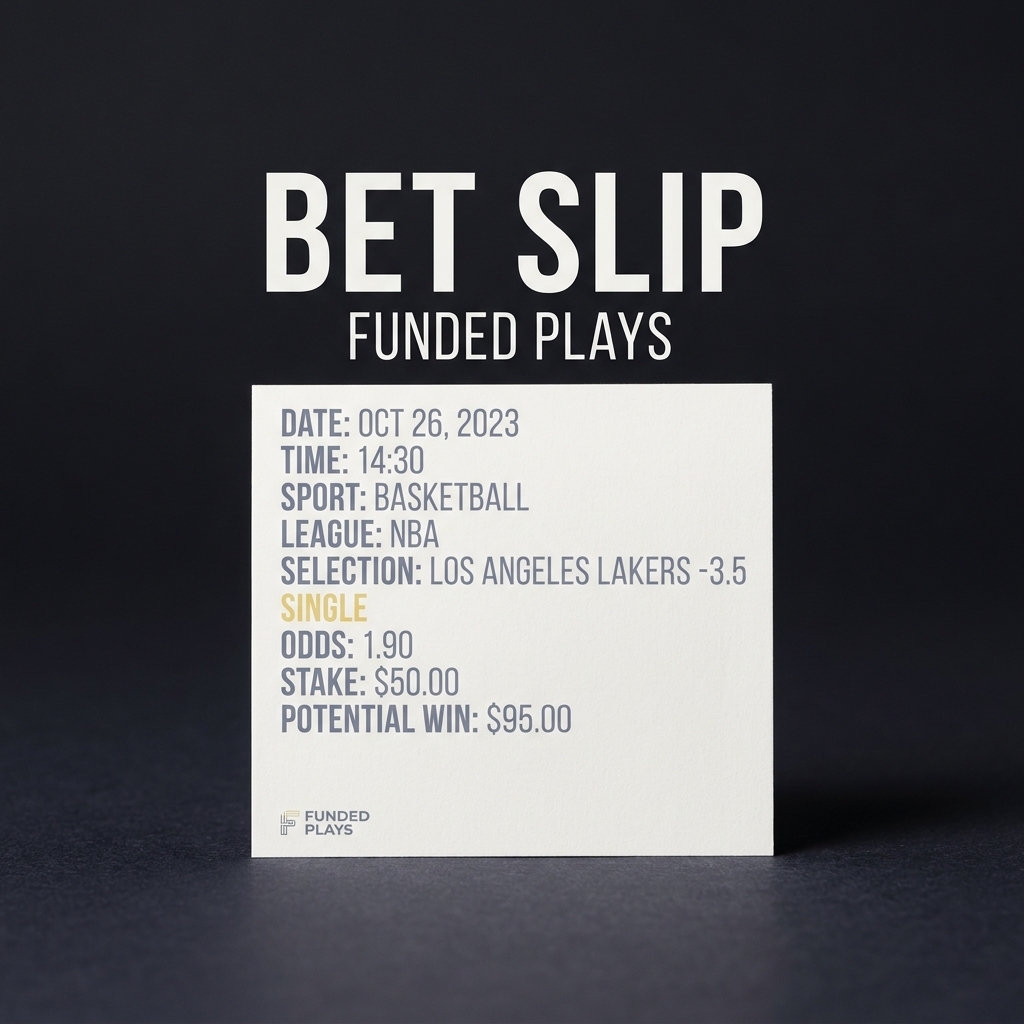
Placing a straight bet typically involves choosing a market, selecting your stake, and confirming odds such as moneyline, point spread, or totals. If you place a $10 single on a moneyline that reflects the stated odds, your payout is determined solely by that selection. This simplicity helps when tracking edge and measuring return per market over time.
Common straight bet types include moneyline, point spread, totals, and single-player props. Each resolves on its own timetable, and the settlement applies only to that stake rather than affecting other wagers you may have placed the same day.
Settlement and result timelines
Straight bets settle when the event finishes or when the operator applies a rule for void outcomes. Settlement can be instant after the final whistle or delayed if a post-game review is required. Because each straight bet is independent, a void or push returns the stake for that bet without impacting others.
Odds translate to implied probability, and knowing how to invert odds into a rough success rate is helpful for single bets. As you track outcomes, you can estimate whether a market repeatedly offers value for your forecasting approach and adjust bet sizing accordingly.

How parlays work and why payout scales with selections
Combining odds and multiplicative payouts
Parlays multiply each leg's odds together to form a single combined price. That multiplicative structure explains why adding legs increases the payout quickly. For example, two modest underdog legs combined can produce a noticeably larger return than either selection alone, but only if both win. One losing leg typically voids the whole ticket. Tools such as OddsJam's parlay calculator can help estimate payouts before placing a ticket.
Common parlay structures
Typical parlay types include two-team parlays, multi-leg parlays, and same-game parlays that combine multiple markets from the same event. Some platforms treat a pushed leg as void and reduce the parlay to fewer legs, while other rules vary, so understanding your operator's handling of voids and pushes is crucial.
Explore FundedPlays Challenges to practice structured prediction and test approaches
Use the decision checklist in this article to test choices, and if you try parlays do so with a small, budgeted stake and careful logging rather than chasing big payouts.
Because parlay odds depend on the product of each leg's price, the combined probability of success drops quickly as legs are added. That lower probability is why parlays deliver higher nominal payouts for the same nominal stake compared with individual straight bets on the same selections.
Risk and reward: variance, probability, and expected value explained
What variance means for bettors
Variance describes the size and frequency of swings in your bankroll. Parlays increase variance because they concentrate many event outcomes into one result; a single upset can wipe out many otherwise successful single picks. Conversely, straight bets spread risk across independent outcomes and typically produce smaller per-bet swings.

Think of variance like coin flips versus long streaks: repeating single picks is like many independent coin flips, while parlays require consecutive successes and therefore make your results look more streaky.
Comparing expected value in straight bets and parlays
Expected value is the probability-weighted average result you expect over many repetitions. A higher payout does not automatically mean higher expected value. If the market prices are fair, multiplying odds into a parlay usually reduces expected value compared with placing equivalent straight bets, unless one of the legs is mispriced or correlated in your favor. You can also use expected value calculators such as SportsLine's betting calculator to check scenarios.
In practice, bettors who can identify mispriced legs or exploit correlation might find occasional parlays with better expected value, but those opportunities are rare and should be treated cautiously.
Bankroll management and decision criteria for choosing straight bets
Position sizing rules
Straight bets support clear, conservative stake sizing because each outcome is isolated. Common approaches use a fixed fraction of bankroll or a unit system so that individual losses have predictable impacts. That clarity makes it easier to measure ROI and to scale stakes up or down as your edge estimates change.
For example, using small, consistent units forces discipline and prevents large swings when variance spikes. Straight bets allow you to track per-market win rate and return without the confounding effect of multi-leg tickets.
Loss limits and drawdown control
Straight bets make drawdown control straightforward. You can set stop-loss limits, weekly caps, and daily stake rules that are simple to enforce because each bet affects the total independently. That structure helps preserve capital while you evaluate whether your selection process genuinely produces an edge in the long run.
Use criteria such as your goal for steady growth, tolerance for variance, and frequency of positive-expectation picks to lean toward straight bets when predictability and disciplined bankroll management are priorities.
When parlays make strategic sense
Situations where parlays add value
Parlays can make sense in limited cases, for example when you want a small entertainment stake with a chance at high nominal payout, or when legs are positively correlated so the joint probability is higher than independent multiplication suggests. Same-game parlays can sometimes exploit correlation between line moves in a way single bets cannot.
Another situation is when you detect clear mispricing across several legs and the combined expected value of a parlay exceeds that of separate singles, though such edges are uncommon and often short-lived.
Behavioral and entertainment use cases
Many bettors use parlays for fun, as a low-cost way to add interest to a slate. That entertainment value is legitimate, but it should be budgeted as discretionary play separate from core bankroll allocations. Beware of confirmation bias and chasing large payouts after losses; treat parlays as occasional satellite plays rather than a main growth engine.
When you do place parlays, set explicit stake caps and log each ticket to measure impact on overall return.
Quick decision checklist: straight bets versus parlays
A short, printable checklist
Before placing a ticket run this quick list: the expected bankroll impact, your confidence or edge in each selection, whether legs are correlated, stake size relative to bankroll, and whether the play is for entertainment or growth.
Straight bets generally support steadier growth and clearer risk controls, while parlays offer occasional high nominal upside with greater variance; choose based on goals, bankroll impact, and disciplined testing.
Interpret the results like this: if you answer low risk-tolerance, steady growth intention, and consistent edge for single markets, prefer straight bets. If you have a small discretionary stake, low impact on your bankroll, and clear correlation or mispricing, a parlay may be acceptable occasionally.
Log every decision and review outcomes monthly so you can see whether your parlay experiments damaged long-term performance or simply added occasional excitement without harming the core strategy.
Practical tool: simple decision calculator and how to use it
What the tool calculates
The tool is a small spreadsheet or calculator that estimates the combined payout and the rough probability of a parlay given implied probabilities for each leg, then compares that to placing the same stakes as straight bets. Inputs include bankroll, stake, each leg's implied probability, number of legs, and a correlation factor you can adjust conservatively. For an online alternative try the Action Network parlay calculator.
Step-by-step example using the tool
Enter your bankroll and a proposed stake, then list the implied probabilities for each leg. The calculator multiplies the leg probabilities to estimate parlay success and multiplies the odds to show the payout. It then reports an approximate expected value so you can see whether the parlay or the equivalent set of straight bets looks more sensible for your plan.
ToolType: | Purpose: | Fields: | Notes:
Use conservative inputs for correlation and probability estimates, and treat the output as a directional aid rather than a forecast. The goal is to help you choose between a small, budgeted parlay and the safer route of straight bets when your priority is steady bankroll growth.
Common mistakes and cognitive traps with parlays and straight bets
Psychology: chasing and bias
Behavioral traps include chasing losses by increasing parlay stakes, overvaluing occasional big wins, and confirmation bias where you remember hits more than frequent misses. These habits erode performance over time and obscure whether your process actually produces an edge.
To resist these traps, pre-commit stake limits and always log outcomes on our blog. A disciplined record will highlight whether emotional plays are hurting performance.
Operational errors
Operational errors include failing to account for correlation between legs, misunderstanding void or push rules, and poor bet tracking. For example, placing a same-game parlay without realizing a key prop is graded as void under certain settlement rules can alter expected outcomes dramatically.
Concrete fixes are simple: set a stake cap for parlays, maintain a bet log, and review platform settlement policies before placing complex tickets. These steps reduce accidental losses due to rules or mistakes rather than prediction error.
Combining strategies: how to integrate straight bets and occasional parlays
Portfolio approach to sports betting
Think of your approach as a portfolio. Core allocation goes to straight bets where you seek steady long-term returns and learn market edges. A small satellite allocation can be reserved for speculative parlays that offer high nominal upside but higher variance.
Use allocation templates as a starting point and adjust based on your observed performance. The key is to keep the satellite allocation small enough that a string of parlay losses cannot derail overall progress.
Allocating a percentage for speculative parlays
Rather than prescribing a single fixed rule, provide a template you can adapt: commit to a small, fixed portion of your disposable play budget for parlays and never move core capital into speculative tickets. Rebalance allocations monthly and base changes on tracked results, not short-term streaks.
Time-limit each experiment and compare logged outcomes side-by-side over a set period to determine whether parlays add value to your process or merely increase volatility for entertainment value.
Three real-world scenarios with step-by-step choices
Scenario A: long-term value single picks
Context: you have a consistent process that produces positive expected picks in single markets. Stake: standard unit sizes that match your bankroll plan. Recommended approach: prioritize straight bets to preserve clarity and measure ROI. Track win rate and realized ROI monthly to confirm your process.
Reasoning: straight bets allow you to scale and to see whether your edge persists across many samples. Logging ensures decisions remain objective rather than emotionally driven.
Scenario B: correlated same-game parlay
Context: you identify two markets in one game that are positively correlated, for example a specific team to win and a player to exceed a usage metric in a way that logically supports both legs. Stake: small, discretionary amount. Recommended approach: consider a same-game parlay only when correlation is evident and the combined expected value, by your conservative estimate, beats separate singles.
Reasoning: correlation can improve the parlay's joint probability compared with independent multiplication, but only if you are confident in the linkage. Keep stake caps and log outcomes for later review.
Scenario C: entertainment parlay with capped stake
Context: you want a modest thrill for a large nominal payout from a small amount of capital. Stake: a capped, budgeted amount you can afford to lose. Recommended approach: treat this as entertainment and do not let it replace your core straight bet plan.
Reasoning: this use case is fine as long as it is clearly segregated from bankroll-building activities and stays within pre-committed limits. Log the result and note whether the emotional value was worth the draw on discretionary funds.
Quick checklist and next steps to make better choices tomorrow
Printable checklist summary
Use this short checklist before wagering: 1) Will this affect core bankroll goals 2) How confident am I in each leg 3) Are legs correlated 4) Is the stake within my cap 5) Is this entertainment or growth. If answers favor predictability, choose straight bets; if a small, budgeted thrill and correlation are present, consider a parlay.
Keep the checklist accessible while making bets and record each ticket in a log. The log is your tool for objective review and helps avoid repeating costly behavioral mistakes.
How to run a 30-day test
Run a 30-day experiment where you split logged activity between straight bets and a capped amount for parlays. Track ROI, variance, and emotional impact. After 30 days compare results and decide whether to adjust allocation or stop parlay experiments. For additional methodology examples see evaluation templates.
Reassess after the test and use data to guide whether to keep parlays as a satellite strategy or to focus exclusively on single bets that support disciplined bankroll management.
Conclusion: choosing the right format for your goals
Recap of core trade-offs
Straight bets favor steadier bankroll growth, clarity in tracking, and simpler risk controls. Parlays offer occasional high nominal upside but come with higher variance and lower probability of consistent success. Use straight bets as your primary approach if predictability and growth are priorities.
A final framework to decide
Practical rule: make straight bets your primary strategy and treat parlays as limited, budgeted exceptions for entertainment or rare cases of clear correlation or mispricing. Log every decision and review outcomes regularly. Prioritize responsible participation and remember that no approach guarantees profits. Learn more at Funded Plays.
Applying a checklist, running controlled tests, and keeping disciplined stake rules will help you choose the right format for your goals over time.
A straight bet is a single selection resolved independently, while a parlay combines multiple selections into one ticket that pays only if every leg wins.
Parlays can be appropriate occasionally for small, budgeted stakes or when legs are clearly correlated, but they are not usually the primary strategy for steady bankroll growth.
Maintain a bet log that records stake, market, odds, result, and classification as straight or parlay; review results and variance monthly to assess impact.
References
- https://www.fundedplays.com/challenges
- https://www.fundedplays.com
- https://www.fundedplays.com/blogs
- https://www.fundedplays.com/blogs/how-fundedplays-evaluations-work
- https://oddsjam.com/betting-calculators/parlay
- https://www.sportsline.com/tools/betting-calculator/
- https://www.actionnetwork.com/betting-calculators/parlay-calculator