
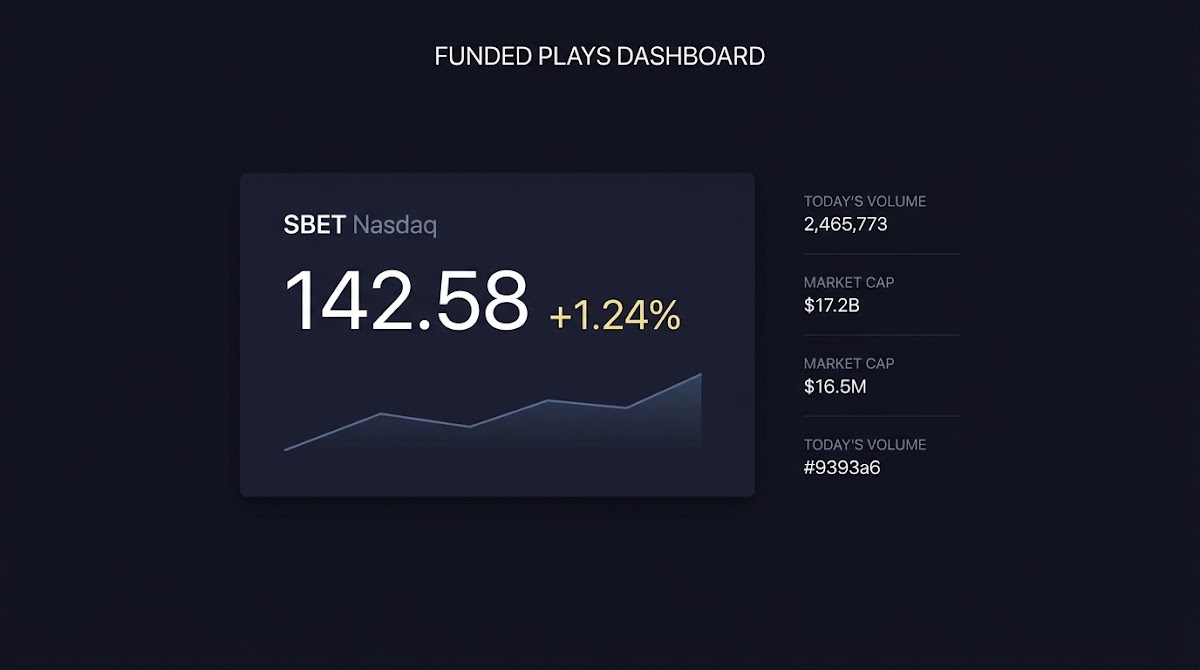
st bet: what SBET stock is and a quick overview
What the ticker stands for
At its simplest, the symbol you see as SBET on exchange pages identifies the common stock issued by a particular company. In U.S. markets SBET is listed on the Nasdaq Capital Market and denotes Sharplink Inc common stock, as shown on Nasdaq's official listing and quote page Nasdaq SBET listing.
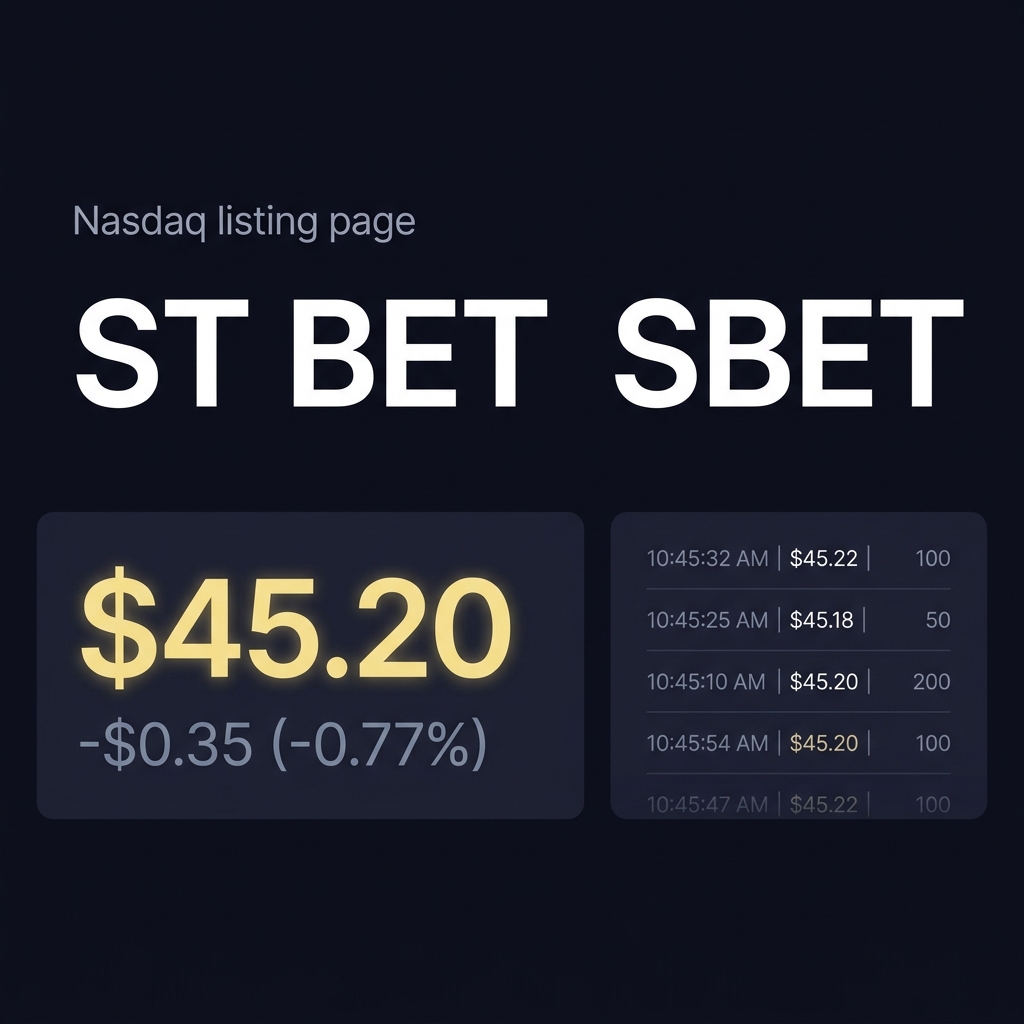
That exchange listing is the primary place most investors see the ticker, the trading quote, and the company name associated with the symbol. Public market identifiers can be stable but corporate names, descriptions, or business models sometimes change, so the ticker alone is a starting point for verification.
Confirm the ticker by checking the Nasdaq SBET listing for official exchange details and then read the company filings on the SEC EDGAR system to verify the legal name, business description, and risk disclosures.
Financial news services and market data providers often mirror exchange identifiers. For example, Reuters lists the issuer under SBET.O and maintains a company profile that aligns with the market identifier used on exchange pages Reuters SBET.O profile.
Why small Nasdaq tickers matter to investors
Small or recently listed tickers on the Nasdaq Capital Market can be less liquid and more volatile than large-cap names, which affects execution and short-term price movement. When you look up SBET, treat the ticker as an entry point to deeper checks rather than a final confirmation of the company's present business description.
To be sure the symbol represents the company you expect, consult the company filings on the SEC EDGAR system to read the latest legal name, business description, and risk factors, which provide the authoritative corporate details investors rely on SEC EDGAR filings for SBET.
st bet market listings: where exchanges and feeds show SBET
Nasdaq listing page and real-time quote
For live pricing, corporate action notices, and official listing details, start on Nasdaq's SBET page. That page shows the current quote, recent trades, and any exchange notices that affect holders or prospective buyers, and it is the authoritative exchange source for the ticker Nasdaq SBET listing.

Use the exchange page to confirm the exact listing name and whether the security is classified as common stock or another share class, since some tickers can represent different instruments in other markets. The Nasdaq listing will display the issuer name that the exchange recognizes for trading purposes.
How Reuters and other market data providers represent SBET
Reuters and similar data providers build company pages that collect price history, headlines, and filing links under a consistent identifier, often including regional suffixes like .O for U.S. listed equities. Reuters lists Sharplink Inc under SBET.O and provides a company feed that matches exchange identifiers used by market participants Reuters SBET.O profile.
Market data presentations can differ in layout and additional context, so use exchange pages for definitive listing details and rely on reputable news services for supplementary coverage and alerts.
st bet and EDGAR: finding Sharplink Inc's official filings
Which filings to check first
Learn about FundedPlays Challenges
Check SBET filings on the SEC EDGAR page to confirm the current corporate name, business description, and risk disclosures before relying on older summaries.
The SEC EDGAR system contains the official, legally filed documents companies submit, and it is where you confirm the authoritative corporate description for SBET. Start at the EDGAR browse page for the ticker to see a list of filings filed under the company's CIK and ticker SEC EDGAR filings for SBET.
Key filings to open first are the most recent 10-K or annual report, the latest 10-Q quarterly report, and any 8-Ks that describe material events. Registration statements or prospectuses can be useful when a company has recently listed or completed a corporate action.
How to read business descriptions and risk factors
When you open a 10-K or 10-Q, read the business description section to confirm the principal activities and markets where the company operates. Risk factors and the management discussion and analysis sections are where the company outlines current risks and operational context, and these are necessary for understanding the legal position of the issuer relative to the market summary.
Compare the narrative in filings with the exchange listing and recent company disclosures to spot any mismatches. If the EDGAR filing shows a different legal name or a materially different business description than exchange pages or news headlines, prioritize the filed disclosure and seek updates from filing amendments or 8-Ks as appropriate SEC EDGAR filings for SBET.
st bet: how to follow price, news, and corporate actions
Using the Nasdaq SBET page for market data
The Nasdaq SBET page provides real-time quotes, last sale information, and corporate action notices that exchanges publish for investors. Use that page to track price change, daily volume, and any exchange communications that might affect shareholders or trading halts Nasdaq SBET listing.
Setting alerts through an exchange watch function or your brokerage can notify you of price moves or corporate actions listed by Nasdaq, which is helpful for staying current without combing filings every day.
Following Reuters coverage and news feeds
For editorial coverage and a consolidated news feed, Reuters provides company pages and news aggregation that can surface press releases, filings, and analyst commentary under the SBET.O identifier Reuters SBET.O profile.
Rely on primary sources for confirmation of material events, but use reputable news providers to detect developments quickly and to gather context on announcements that appear in filings or exchange notices.
Limitations of secondary forums and social sources
Discussion forums, social posts, and unverified aggregators can amplify rumors or mischaracterize filings. These secondary sources should not replace exchange listings or SEC filings; they are useful only as starting points that require validation through primary documents SEC EDGAR filings for SBET.
When you see a claim about SBET in a forum, check Nasdaq for the listing and EDGAR for filings before treating the claim as accurate. That verification sequence reduces the chance of acting on outdated or incorrect company descriptions.
st bet: how to buy SBET stock in the U.S. - broker basics and order types
Opening and funding a brokerage account
To buy a listed U.S. stock such as SBET, U.S. investors typically open and fund a brokerage account, search for the ticker symbol, and submit an order according to standard brokerage workflows described by the SEC How to buy and sell stocks.
Make sure your account permissions allow trading on the Nasdaq Capital Market and that you understand settlement, margin, and any account-specific requirements before placing an order.

Market, limit, and stop orders and why order type matters
Order type affects how an order executes and the price you receive. A market order sends an instruction to trade immediately at the best available price, while a limit order specifies the worst price you will accept. FINRA provides an overview of these order types and how they can affect execution and price outcomes FINRA order type guidance.
On smaller-cap tickers with thinner liquidity, the difference between a market and a carefully placed limit order can be meaningful, so consider how much price slippage you are willing to accept when placing a buy or sell order FINRA order type guidance.
st bet risks: liquidity, volatility, and microcap considerations
What microcap risk means for investors
Smaller listings often fall under microcap or small-cap risk profiles, which can include limited trading volume, wider bid ask spreads, and higher short-term volatility. The SEC provides guidance on microcap risk and what investors should watch for when considering such securities SEC microcap guidance.
These risks do not mean the underlying business is poor, but they do mean that execution and short-term price behavior can be driven by order flow rather than fundamentals. Treat liquidity conditions as part of the due diligence process before trading.
How thin liquidity can change execution and price
When a stock has thin liquidity, a single large order can move the quoted price substantially. Order type interactions with liquidity influence whether you fill at a favorable price or suffer slippage; FINRA material on order mechanics is a useful primer on these concepts FINRA order type guidance.
Be cautious with size and consider staggered or smaller test orders if you plan to establish a meaningful position, because execution risk is one of the practical consequences of thin markets.
Always read the company's SEC risk disclosures to understand issuer specific risks before buying any shares SEC EDGAR filings for SBET.
st bet: a simple framework to decide if SBET fits your plan
Checklist: filings, liquidity, news flow, and position sizing
Use a short checklist to turn verification into a repeatable decision. First, confirm the legal name and latest business description on EDGAR; second, review Nasdaq quote and volume data to assess liquidity; third, scan reputable news services for material developments; and fourth, decide on position sizing aligned with your risk tolerance and investing rules SEC EDGAR filings for SBET.
quick verification steps to assess a small exchange listing
Use as a starting point not investment advice
Consider running small test allocations or using paper trading to validate order execution and slippage assumptions before committing larger capital. Treat each step as a piece of evidence rather than a definitive yes or no.
When to consider small test allocations or to avoid a purchase
If filings show unresolved disclosure issues, if Nasdaq volume is persistently low, or if news flow raises unanswered questions, prefer smaller test sizes or avoid buying until more clarity emerges. SEC investor education explains how to safely approach purchases of small-cap and microcap stocks How to buy and sell stocks.
Decision frameworks help keep emotional responses to price moves in check and make it easier to limit downside exposure on higher-risk listings. See our analysis of evaluation workflows at Funded Plays evaluations for an example approach.
st bet: common research mistakes and red flags to avoid
Relying on outdated or secondary company descriptions
A frequent mistake is relying on older descriptions or summaries that have not been updated after corporate actions. Always check the latest EDGAR filings for the legal name, current business description, and recent risk disclosures before concluding what the company does SEC EDGAR filings for SBET.
Outdated summaries can come from third-party aggregators that do not refresh their profiles immediately after a filing, so verify the date of the last filing when you research.
Chasing social media hype or thin liquidity
Acting on social posts or forum threads without cross-checking with official sources is risky, particularly for thinly traded names where a few trades can produce dramatic price moves that do not reflect fundamental change. Compare any claim you find online to Nasdaq listings and EDGAR filings for confirmation Nasdaq SBET listing.
Volume spikes in a low-volume stock can indicate thin liquidity. Treat such spikes as a signal to pause and verify whether a material company event or a one-off trading episode explains the move SEC microcap guidance.
st bet: practical next steps, example checks, and a clear close
A short step-by-step verification checklist
Quick verification steps: check Nasdaq for the SBET quote and corporate actions, confirm issuer name and filings on EDGAR, review order types and execution implications, and consult microcap guidance for liquidity and risk context SEC EDGAR filings for SBET.
Set a watchlist or exchange alert and read the most recent 10-K or 10-Q to ensure the company description you rely on is current; then compare that information to news feeds for recent material events SEC EDGAR filings for SBET.
Where to set alerts and track updates
You can set alerts on many brokerages and on exchange pages to notify you of price changes or listed corporate actions. Use reputable news services to gather context but always confirm material developments via filings or exchange notices Reuters SBET.O profile.
Final takeaways and responsible participation
Tickers like SBET point you to a listed security, but they are only the first step. Verify the issuer using EDGAR and Nasdaq, consider liquidity and order mechanics when planning trades, and treat small-cap listings with appropriate caution and position sizing SEC microcap guidance.
Doing these checks helps ensure you are trading the security you intend and that you understand the execution and disclosure risks that come with smaller listings.
SBET is the Nasdaq Capital Market ticker for Sharplink Inc common stock; confirm details on Nasdaq and the company filings on SEC EDGAR.
Official company filings and risk disclosures are available through the SEC EDGAR system; search EDGAR by the SBET ticker to view recent 10-Ks, 10-Qs, and 8-Ks.
Order types change how an order executes and the price received; on lower liquidity stocks, limit orders can reduce slippage while market orders may fill at unfavorable prices.
References
- https://www.nasdaq.com/market-activity/stocks/sbet
- https://www.reuters.com/markets/companies/SBET.O
- https://www.sec.gov/edgar/browse/?ticker=SBET
- https://www.sec.gov/Archives/edgar/data/1981535/000143774924026906/sbet20240630_10q.htm
- https://www.sec.gov/Archives/edgar/data/1025561/000149315224005486/form8-k.htm
- https://www.nasdaq.com/market-activity/stocks/sbet/sec-filings
- https://www.investor.gov/introduction-investing/investing-basics/how-stock-markets-work/how-buy-and-sell-stocks
- https://www.fundedplays.com/challenges
- https://www.finra.org/investors/insights/understanding-order-types
- https://www.investor.gov/introduction-investing/investing-basics/risks-investing/microcap-stock-guide-investors
- https://www.fundedplays.com
- https://www.fundedplays.com/blogs
- https://www.fundedplays.com/blogs/how-fundedplays-evaluations-work