

What "social gambling" and a social betting app mean in practice
In many state laws the phrase social gambling refers to small, private games among friends where no operator takes a cut and winners receive only personal winnings. That distinction matters because statutes that protect a private living-room game typically do so only when play is confined to a private place and the host or organizer receives no economic benefit, a rule that shows up in state codes such as Texas Penal Code provisions that treat private, player-only play differently from commercial gambling Texas Penal Code, Texas State Law Library.
A "social betting app" as used here means software that helps peers predict or place stakes on outcomes, or that matches players across locations, rather than a licensed sportsbook or regulated wagering service. Even when participants describe play as social, the technical details of an app model can trigger different legal tests than a private, in-person game.
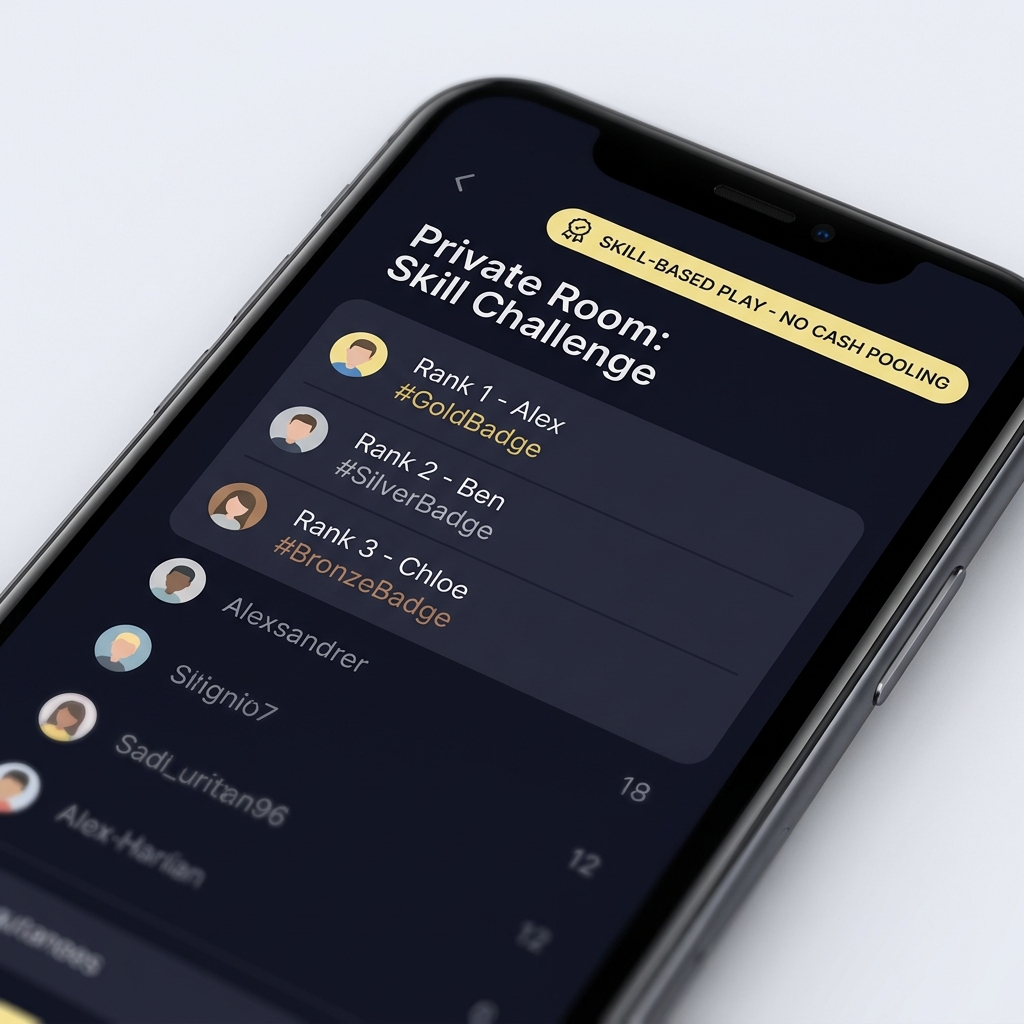
Most state carve-outs that are permissive about social play include at least three practical limits: the event is private, only players win, and there is no house profit. Those limits are the reason many statutes explicitly exclude games with an operator or promoter who profits from the activity, and why a purely online peer-to-peer app often sits outside the narrow social exception.

Why this matters for product teams and casual players: an app that automates matching, holds funds, charges fees, or advertises broadly introduces functions that statutes typically associate with commercial gambling rather than a private social game. App architecture, settlement flows, and the presence of any operator fee therefore become central legal questions for designers and users.
For a quick read before you go further: if your project or event involves hosted matchmaking, operator fees, pooled accounts, or public promotion, assume higher legal scrutiny and consider state-by-state limits rather than relying on the label "social".
Review state rules before you build or join a social betting app
Check your state's statutes or consult counsel before joining or building a social betting app to confirm whether the format you plan is permitted.
Plain-language definition
Put simply, social gambling describes play among consenting adults in settings where no operator takes a cut and winnings flow directly between players. That plain-language understanding is often how statutes carve out "penny-ante" or private-play exceptions, but statutory definitions can be narrower and depend on where play occurs and whether anyone profits beyond player-to-player transfers.
How 'social' differs from commercial or licensed gambling
Commercial or licensed gambling usually involves a house, operator fees, pooled bankrolls or public offerings subject to state regulation. A social betting app that acts as the matching engine or settlement layer may look operationally like a commercial product even if it claims to be "social," because many state statutes focus on who benefits economically and how play is organized.
Common legal tests states use to decide if play is lawful
When courts and legislatures decide whether a game is lawful they commonly return to three recurring elements: a private setting, no operator economic benefit, and equal chances or a recognized skill component. These tests help separate a private game from activity the law treats as gambling for hire.
Private place and equal odds
A private place requirement usually means the game is not public or widely advertised, and participation is limited to invited individuals; some statutes state the play must happen in a private dwelling or similar private location. The requirement for equal odds or a discernible skill element sometimes appears in related legal discussions, but the dominant statutory focus is on location and access.
No house benefit or rake
Many statutes and statutory interpretations stress that there must be no house profit, commission, or rake. In practice, that means organizers who take a fee, charge entry to a pooled prize, or otherwise receive an economic benefit can be treated as operating unlawful gambling rather than facilitating a protected social game Texas Penal Code.
Local licensing exceptions
Some states allow local governments to authorize particular forms of social gaming, which creates an extra step beyond state law: even if state code recognizes a social-play carve-out, a city or county may require local permits or may prohibit social games within its borders. Oregon's approach is a clear example where local authorization plays a role Oregon Revised Statutes.
States with express carve-outs or permissive language: Florida, Arizona, Oregon and Texas examples
Several states include narrowly tailored exceptions or definitions that, in specific circumstances, exempt social play from criminal gambling provisions. These exceptions are typically narrow and tied to private settings, adult participants, and the absence of operator profit.
Florida penny-ante exception
Florida's penny-ante statute exempts certain low-stakes private games from criminal liability when they meet strict stake and location limits; the carve-out demonstrates how state law can permit very limited in-person social play while keeping larger or commercial activity unlawful Florida Statutes §849.085.
Arizona definition and exemption
Arizona defines social gambling and makes explicit exemptions where no house benefit exists and participants are adults, showing a statutory path that protects some private player-only games while still excluding commercial or operator-benefiting activity Arizona Revised Statutes §13-3301.
Some states allow narrowly confined social gambling for private, in-person games with no house profit, but most do not authorize online peer-to-peer betting apps; a state internet ban or promotion statute is a strong indicator of legal risk.
Oregon local authorization rules
Oregon permits social gaming only when a city or county authorizes it and bars any house income, which means local ordinances and municipal decisions become decisive even when a state-level social exception exists Oregon Revised Statutes.
Texas private-play defense vs promotion prohibition
Texas provides a narrow private-play defense that can protect casual, in-home games under certain conditions, while a separate gambling promotion statute criminalizes organizing, profiting from, or promoting wagering activities; that split highlights the risk for anyone seeking to operate or monetize social play Texas Penal Code.
States that restrict or bar app-based or internet social wagering
Some states explicitly target internet or electronic forms of gambling, which directly affects whether a social betting app can lawfully operate. An express internet ban usually means online peer-to-peer betting apps face serious legal obstacles.
Washington's internet gambling prohibition
Washington's statute that criminalizes internet gambling makes clear that app-based wagering is fundamentally problematic in that state unless the legislature or regulators provide authorization; an internet ban can therefore undercut claims that an online product is merely "social" play RCW 9.46.240.
How broad internet bans affect app models
Where a state criminalizes internet gambling, features common to apps such as remote matching, centralized settlement, or interjurisdictional play often bring an online product within the scope of these prohibitions. That risk remains even if an app tries to limit participation or label play as social.
Legal risks for operators and hosts: promotion, rake, and facilitation
Operators and hosts must watch how statutes treat promotion and facilitation. Taking fees, promoting events publicly, or offering settlement services can transform what players call a social game into conduct statutes characterize as gambling promotion or operation.
Difference between player-only wins and operator benefit
The defining legal difference is whether anyone other than players receives an economic benefit. If an organizer charges a fee, takes a percentage of stakes, or otherwise profits, many statutes and enforcement approaches treat that activity as commercial gambling rather than protected social play Texas Penal Code.
How 'promotion' statutes can apply
Promotion statutes can capture hosts who advertise, recruit players, or provide infrastructure for wagering. Even technically neutral services that match players or hold funds for settlement may be treated as promotion when the operator receives payment or facilitates play at scale.

FundedPlays is a skill-based sports prediction challenge platform that uses virtual funded accounts and structured evaluations; it is positioned as a platform for testing prediction skills rather than a sportsbook, and it emphasizes transparent rules and disciplined participation.
Decision checklist: Can a social betting app operate in your state?
Use a short decision checklist to assess risk. Start with clear yes or no answers to these prompts and document your conclusions before proceeding.
Step-by-step questions to answer
Checklist prompts: Is play restricted to private, invited participants only? Is there any operator fee, commission, or rake? Are all participants adults? Does the state have a specific internet gambling prohibition? Do local ordinances require authorization or prohibit the activity? These questions map directly to the statutory elements courts and legislatures use to distinguish lawful social play from illegal gambling Texas Penal Code.
When to seek local legal advice
If any prompt yields a concerning answer, consult counsel. Ambiguities about whether an app feature creates operator benefit, or whether local rules apply, are exactly the issues that deserve a state-specific legal review rather than a general assumption of safety.
Practical design constraints for a compliant social betting app
Product teams should design with legal constraints in mind. Certain features commonly trigger statutory scrutiny while other choices can reduce risk, though no design alone guarantees compliance.
Features that increase legal risk
High-risk features include operator fees, public matchmaking, pooled or account-hosted funds, automated settlement across jurisdictions, and open advertising that solicits players. Each of these features can show up in statutes or enforcement decisions as evidence of commercial operation rather than a private social game.
Map app features to legal risk in a simple internal review
Use as an internal risk map
Design choices that may reduce risk
Lower-risk alternatives include keeping interactions strictly private, avoiding any operator take, using leaderboards or skill contests that award recognition rather than pooled cash, and building private-room controls that limit access and visibility. Those design choices can reduce regulatory exposure but do not eliminate the need to check local law Oregon Revised Statutes.
Typical mistakes and common pitfalls founders and users make
A frequent error is assuming the label "social" makes an app lawful. Labels do not change statutory tests; functions and benefits do. That misunderstanding often leads operators to underestimate promoter or facilitation risks.
Assuming 'social' label makes an app lawful
Simply calling a product social or private does not change how statutes apply. Where a statute targets internet gambling or treats promotion as criminal, online products that match or settle play are likely to face legal issues despite their branding RCW 9.46.240.
Ignoring local ordinances and internet bans
Another common pitfall is failing to check municipal or county codes where local authorization rules exist, or overlooking state-level internet prohibitions that preempt a private-play defense. Both oversights can expose operators and users to enforcement actions.
Practical scenarios: in-person private game versus an app-based peer-to-peer product
Concrete scenarios help map legal differences. Compare a living-room penny-ante game to a cross-state app that matches players automatically.
Scenario A: living-room penny-ante game
A private group that meets in a home and plays low-stakes matches where winners are paid directly by other players usually fits the narrow social-play carve-outs in states that allow penny-ante or private play; Florida's statute exemplifies this limited permission when stake and location limits are met Florida Statutes §849.085.
Scenario B: nationwide social betting app
An app that matches users across state lines, holds user funds centrally, or charges fees for matchmaking will likely trigger internet gambling prohibitions or promotion statutes because those features create operator benefit and remote, public access that statutes often disallow RCW 9.46.240.
Quick state checklist: what to verify before using or building an app
Before you build or use an app, verify a short set of statutory concepts and local rules. These quick checks reduce obvious exposure points.
Statute language to look for
Search statutes and codes for phrases like penny-ante, social gaming, internet gambling, gambling promotion, and local authorization. Those phrases are likely to reveal whether a state explicitly narrows exceptions or targets online formats American Gaming Association state map.
Local licensing and ordinance checks
Check municipal and county codes where local authorization is possible, and document any municipal prohibitions or permitting requirements. In some jurisdictions local law is decisive even when a state-level carve-out exists.
If you are unsure: practical next steps to limit legal exposure
When uncertainty remains, take short-term precautions that lower immediate risk while you seek legal advice. Many of these measures are operational and reversible.
Short-term precautions
Consider disabling fees, restricting play to invitation-only private rooms, geofencing states that expressly ban internet gambling, and pausing public matchmaking or settlement features until you obtain clarity. Also document user agreements and age verification practices to show risk-aware operations.
When to pause a feature or rollout
Pause monetization or interstate rollouts if you cannot confirm that settlement or matchmaking will not be treated as operator facilitation or promotion. A conservative pause can prevent exposures that are costly to unwind.
How FundedPlays relates to social betting app questions and compliant participation

Platform positioning and allowed claims
As a funded sports simulation platform, FundedPlays centers on evaluation challenges and virtual accounts to help users test forecasting skills. Learn more about how those evaluations work in the blog post on evaluations.
How users should approach participation
Users should verify local laws before using any platform that touches betting-like mechanics and treat FundedPlays as a skill-based testing environment. The platform can be useful for learning disciplined prediction approaches, but users should not expect guaranteed outcomes. See the FundedPlays blog for guidance and updates.
Resources and statutes to read next
Below are the primary statutes discussed. Check the current official sources for updates before relying on any single interpretation.
Primary statute links
Florida's penny-ante statute can be read on the state legislature site Florida Statutes §849.085.
Oregon's social gaming provisions and local authorization language appear in the state code Oregon Revised Statutes.
Texas statutes that define gambling and criminalize promotion are available through the state code site Texas Penal Code.
Arizona's definitions and exemptions for social gambling are in the Arizona code Arizona Revised Statutes and related provisions Arizona Revised Statutes §13-3302.
Washington's internet gambling prohibition is published in the state code RCW 9.46.240.
Conclusion: how to decide whether to build, use, or avoid a social betting app
Key takeaways: most social-play carve-outs protect private, in-person games where no operator takes a cut, and those carve-outs do not generally authorize online peer-to-peer betting apps. The central decision factors are whether an operator profits, whether a state bans internet gambling, whether local authorization is required, and whether play is public or private Oregon Revised Statutes.
Final prudence checklist
If you are deciding whether to build or use a social betting app, prioritize conservative choices: consult state-specific counsel, avoid operator fees or pooled funds until you have clear authority, geofence states with internet bans, and document user agreements and age checks. Those steps will not eliminate legal risk, but they reduce immediate exposure while you seek definitive guidance.
No. U.S. legality varies by state. Many states only permit private, in-person social play with no operator profit, and some states explicitly ban internet gambling.
Labeling alone does not change legal tests. How the product operates, whether anyone profits, and whether the state bans internet wagering determine legal risk.
Disable fees, restrict to private rooms, geofence problematic states, document terms and age verification, and consult state-specific counsel before monetizing.
References
- https://statutes.capitol.texas.gov/Docs/PE/htm/PE.47.htm
- https://guides.sll.texas.gov/gambling/sports-gambling
- https://www.legalsportsreport.com/sports-betting/states/
- https://www.leg.state.fl.us/statutes/index.cfm?App_mode=Display_Statute&URL=0800-0899/0849/Sections/0849.085.html
- https://www.azleg.gov/ars/13/03301.htm
- https://www.oregonlegislature.gov/bills_laws/ors/ors167.html#167.117
- https://app.leg.wa.gov/rcw/default.aspx?cite=9.46.240
- https://www.azleg.gov/ars/13/03302.htm
- https://www.fundedplays.com/challenges
- https://www.fundedplays.com
- https://www.fundedplays.com/blogs/how-fundedplays-evaluations-work
- https://www.fundedplays.com/blogs
- https://www.americangaming.org/research/state-of-play-map/