

Quick answer: who needs to win for Ireland to lift the Six Nations
One-paragraph summary
Ireland's path to the title comes down to match points, bonus points and tie-breakers rather than a single opponent needing to lose, so monitoring both results and bonus-point outcomes is essential; this is the same logic used when interpreting six nations odds for likely winners Six Nations table rules.
When to use this guide
Use this article when the final rounds approach or on Super Saturday, because the combination of wins, try bonuses and tight losing margins creates multiple valid routes for Ireland to finish top even if other teams also collect victories BBC Sport permutations and see the BBC analysis Permutations article.
How the Six Nations table works and why bonus points matter
Points for results and bonus points
The tournament awards 4 points for a win, 2 for a draw and 0 for a loss, with a single try bonus point for scoring four or more tries and a single losing bonus point for losing by seven points or fewer; the Grand Slam winner also receives three extra points to ensure an undefeated team tops the table, so any scenario exercise must start with those allocations Six Nations table rules.
Because teams can collect up to two bonus points in a defeat, a narrow loss where a team also scores four tries can still deliver valuable match points that alter title permutations; when you track six nations odds or build live scenarios, include those two-bonus defeats as separate cases rather than assuming all losses are zero points BBC Sport permutations.

Why the Grand Slam bonus exists
The three-point Grand Slam bonus was introduced so that an undefeated team that wins all its matches cannot be leapfrogged by a rival that accumulates more bonus points; this matters when you interpret table positions and six nations odds because an unbeaten Ireland would carry that safeguard in any title calculation Six Nations table rules.
For practical tracking, treat a Grand Slam as a special-case addition to match points rather than a separate statistic: add the extra three points after you total wins, draws and bonus points, and then move to tie-breakers if teams remain level BBC Sport permutations.
Where Ireland's fixtures leave them: using the 2026 schedule
Key rounds and opponents
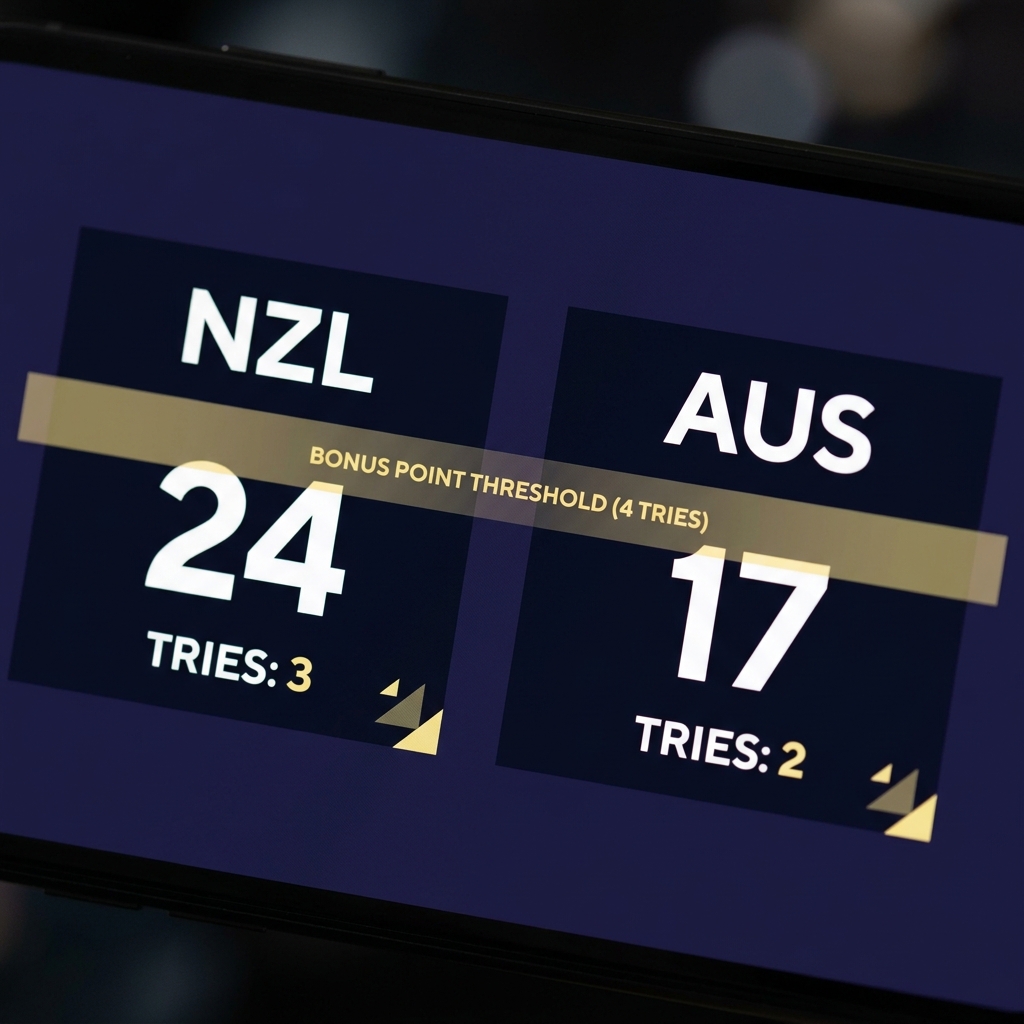
Consult the official 2026 fixtures to map which rounds Ireland must win or draw, and list opponents in order so you can see where home advantage and travel matter most when estimating likely margins 2026 fixtures and results and the 2026 Six Nations page.
When building permutations, identify matches against direct rivals for the top two or three table spots and mark those as higher-impact fixtures; beating a rival directly not only earns match points but denies that team the chance to gain their own bonus points, which shifts six nations odds more than a similar win over a lower-ranked opponent BBC Sport permutations.
Why the final round is decisive
The championship finishes on Super Saturday, when simultaneous games eliminate the advantage of reacting to early scores; that compressed finish concentrates permutations into the last round and makes live monitoring of bonus-point possibilities essential for interpreting six nations odds in real time 2026 fixtures and results.
Because every team plays on the same day in the final round, the final match-ups often include several direct-title contests or matches that can alter points difference dramatically, so prioritize watching games that can swing both match points and scoring margins in your scenario table BBC Sport permutations.
A simple framework for building title scenarios
Step-by-step method
Step 1, calculate match-point outcomes for each result by applying 4 points for a win, 2 for a draw, 0 for a loss, and add try and losing-margin bonus points where earned; always remember to add the three Grand Slam points if a team finishes unbeaten in the schedule you are modelling Six Nations table rules and the championship rules.
Step 2, apply tie-breakers in order: overall points difference and then total tries scored; only if teams remain level for first after those checks is the title shared, so include those fields in your scenario table so you can resolve ties quickly without recalculating from raw scores Six Nations table rules.
Ireland's path depends on match points, bonus points and tie-breakers; winning with try bonuses is the clearest route, but narrow losses that yield bonus points and specific rival results can also produce a title for Ireland.
Step 3, include rival results permutations and mark which cases let Ireland finish top; build a compact list of rival match outcomes that matter and test each for match points first, then break ties by difference and tries as needed Opta Analyst models.
What to include in a scenario table
At minimum, include columns for team, result, match points gained, try bonus, losing bonus, adjusted table points, and points difference change; this lets you tally totals quickly and see which combinations require Ireland to win outright versus relying on rival failures or bonus-point deficits Opta Analyst guidance.
When time is short, reduce the table to the subset of teams still mathematically able to catch Ireland and compute only those permutations; that keeps calculations manageable on Super Saturday and focuses attention on the outcomes that actually change six nations odds for Ireland's title hopes BBC Sport permutations.
Practical routes: must-win, win-with-bonus, and contingency cases for Ireland
If Ireland wins their remaining games
The cleanest route is straightforward: full wins with try bonuses deliver the maximum match points, and if Ireland wins their remaining fixtures while collecting try bonuses they will be positioned to top the table unless another side accumulates a similar haul plus a Grand Slam; structure your checks around total match points first and only use tie-breakers if points align Guardian permutations.
As you tally potential winning runs, remember that try bonuses matter not only for Ireland's points but also in denying rivals those same extra points, so practical tracking should record both sides' try counts and not just the match result when assessing six nations odds during the final rounds BBC Sport permutations.
If Ireland loses but picks up bonus points
A narrow defeat combined with a four-try tally can still produce one or two bonus points, and in some cases two bonus points in a loss are sufficient for Ireland to finish ahead on match points if rivals do not maximise their own tallies; include these two-bonus defeat cases in any realistic scenario table since they alter the thresholds for rival results BBC Sport permutations.
When a loss yields both the try and losing bonuses, the net match points can equal a winning result in marginal permutations, so do not discard defeat scenarios as irrelevant when modelling six nations odds for Ireland; instead, mark them as conditional cases that require specific rival outcomes to succeed Guardian permutations.
Rival-dependent paths
Often Ireland's chance depends on a rival slipping or failing to secure a try bonus; for instance, if a rival team wins but only manages three tries, the lost bonus point can be the difference between Ireland finishing first or second, so model rival scoring patterns as well as final results when interpreting six nations odds BBC Sport permutations.
Use scenario labels like Must-Win, Win-With-Bonus, and Contingent-Loss to keep your options clear during live tracking; each label should include the rival outcomes needed for Ireland to prevail so you can quickly scan which live matches to prioritise on Super Saturday Guardian permutations.
Tie-breakers in practice: points difference and total tries
Why points difference matters
If teams finish level on match points, the first tie-breaker is overall points difference, and this can be swung by either large winning margins or by defending tightly to limit conceding points, so include a realistic estimate for likely margin changes when you project final tables Six Nations table rules.

When the race is tight, points difference often becomes the decisive metric and can be manipulated by teams pushing for late tries or by rotating players to protect a narrow lead; track cumulative scoring through the tournament rather than only match-by-match outcomes to keep an accurate view of this buffer BBC Sport permutations.
When tries decide the title
If points difference is identical between teams, the next tie-breaker is total tries scored, which means attacking intent across all rounds is rewarded; model both points difference and tries scored together because try bonuses not only add match points but also increase the try tally used for tie-breaks Six Nations table rules.
Only after points difference and tries are checked is the title shared if teams remain level, which is rare but possible, so keep a clear running total of tries when using scenario tables to decide whether Ireland must chase an extra score late in a fixture BBC Sport permutations.
How Super Saturday compresses the permutations
Why simultaneous kickoffs matter
Super Saturday's simultaneous kickoffs remove the strategic advantage of pacing reactions to early matches, so the permutations decided on that day are final and require teams and followers to watch multiple game threads at once to understand how points and bonus tallies interact 2026 fixtures and results.

Because several title-relevant matches often occur on the same day, a single late try in one stadium can alter Ireland's required margin elsewhere, which is why spectators tracking six nations odds should prepare a live checklist of scoring thresholds for each relevant game before kickoffs begin BBC Sport permutations.
Recent examples from media coverage
Media coverage of past tournaments shows how bonus points and points difference suddenly reshaped title outcomes in final rounds, and these historical permutations provide templates for 2026 scenario planning even if team forms differ; use these examples to test your table logic rather than as direct forecasts Guardian permutations.
Journalists often publish pre-match permutation grids showing all plausible routes, and reviewing a few reputable past examples will help you recognise common patterns and avoid mistakes when you update your own live scenarios on Super Saturday BBC Sport permutations.
Common mistakes and pitfalls when reading permutations
Ignoring bonus points
One frequent error is ignoring try and losing bonus points, which can lead to underestimating a team's chance to leapfrog rivals; always include both bonus types in your calculations so you do not miss narrow defeat scenarios that still yield crucial points BBC Sport permutations.
Another mistake is treating current points difference as fixed; it changes with every score in remaining fixtures, so factor likely margin swings into your buffer estimates and update them live as matches progress Guardian permutations.
Quick spreadsheet fields to track match points and bonuses
Update each round during Super Saturday
Assuming models are guarantees
Probability models and media permutations are useful guides but not guarantees; treat model outputs as scenario weights or probabilities rather than definitive outcomes, and avoid overreacting to a single model when multiple plausible permutations remain Opta Analyst models.
Finally, avoid relying solely on headline six nations odds without checking the detailed breakdown of match points and bonuses that those odds imply; odds can shift rapidly on Super Saturday and may not reveal the precise combination of bonuses required for Ireland to top the table BBC Sport permutations.
Build-your-own scenario table: a template and worked example
Template fields to include
Include these core columns in a compact table: Team, Result, Match points gained, Try bonus, Losing bonus, Adjusted table points, Points difference change, Tries scored, and Final ranking; keeping the template tidy makes it faster to update during live play Six Nations table rules.
When preparing a live sheet, freeze the subset of teams still in contention and use formulas to add each match's points and bonuses to the running totals so you can immediately see when Ireland moves above or below a rival on pure match points before applying tie-breakers Opta Analyst templates.
Worked example using one plausible final-round set of results
Worked example, scenario A: Ireland wins their final match with a try bonus and gains 5 match points; a rival team wins but fails to secure a try bonus and finishes with 4 match points; after adding results to the running table, Ireland leads on match points and takes the title without needing tie-breakers, so this is a straightforward must-win-and-bonus route BBC Sport permutations.
Worked example, scenario B: Ireland loses narrowly but scores four tries, collecting 2 match points in the defeat, while a rival wins with a try bonus and finishes ahead on match points; in this case Ireland can still overtake the rival only if a different competitor drops points or if points difference swings in Ireland's favour across simultaneous matches, demonstrating why contingency cases matter in six nations odds assessments Guardian permutations.
To update the table quickly during live matches, use cell formulas (see our blog) that add match points and bonuses as separate fields, and keep a live sum for points difference and tries so tie-breakers can be resolved without manual recalculation Opta Analyst guidance.
Conclusion and what to watch next
Key takeaways
Ireland's route to the Six Nations title is determined by match points, bonus points and tie-breakers rather than by one single match result, and a Grand Slam carries a three-point bonus that guarantees an undefeated team's position at the top under current rules Six Nations table rules.
For live updates and to verify any last-minute rule changes, consult the official fixtures and table pages and use the scenario template above to keep a clear view of how six nations odds shift as results and bonus-point swings occur 2026 fixtures and results (or visit Funded Plays).
A win gives 4 match points, a draw 2, and there are additional try and losing-margin bonus points under the tournament rules.
Yes, in some permutations Ireland can still top the table if they pick up bonus points and rivals fail to maximise their points, but this depends on the live table and tie-breakers.
Check the official Six Nations fixtures and live table pages for authoritative standings and any rule updates.
References
- https://www.sixnationsrugby.com/en/news/how-the-guinness-six-nations-table-works
- https://www.bbc.com/sport/rugby-union/68500073
- https://www.sixnationsrugby.com/en/m6n/fixtures-and-results/2026
- https://theanalyst.com/eu/2024/02/six-nations-2024-predictions/
- https://www.theguardian.com/sport/2024/mar/15/six-nations-permutations-2024-title-race-explained
- https://www.fundedplays.com/challenges
- https://www.fundedplays.com/blogs
- https://www.fundedplays.com/blogs/how-fundedplays-evaluations-work
- https://www.fundedplays.com
- https://en.wikipedia.org/wiki/2026_Six_Nations_Championship
- https://www.sixnationsrugby.com/en/m6n/championship-rules
- https://www.bbc.com/sport/articles/cyv99dgl7e4o