
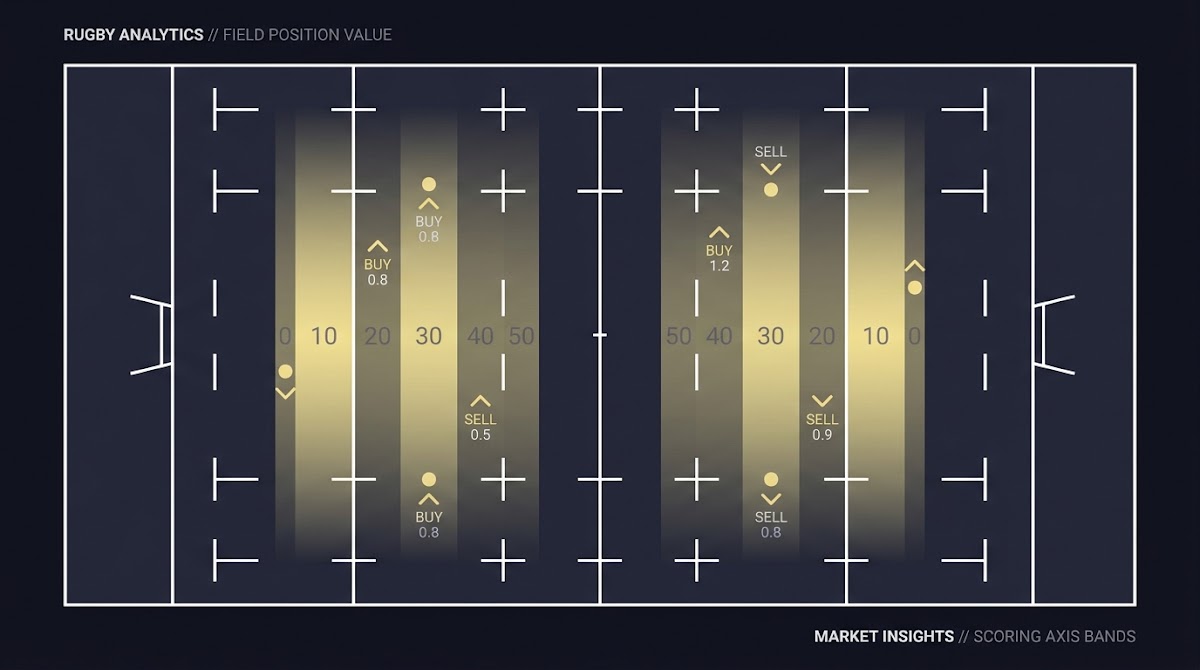
Introduction: what spread betting means for Six Nations betting
Quick definition of spread betting for six nations betting
In spread markets you see a buy price and a sell price and you stake an amount per unit, most often per point in rugby, so your profit or loss equals the stake multiplied by how far the final result finishes above or below the quoted spread; this is the core mechanic that separates spread offers from ordinary fixed odds and helps explain why these markets behave differently in Six Nations matches Sporting Index guide to spread betting
Where that matters practically is that a spread is quoted as a range, not a single fixed payout, and your exposure scales with the points difference between the spread and the outcome rather than with a set odds multiplier
Spread betting offers buy and sell quotes and pays per unit of movement, so outcomes scale with points difference rather than a fixed payout, and it is regulated differently to fixed-odds betting in the UK
Readers used to fixed odds should also note the regulatory split in the UK: spread betting is regulated by the Financial Conduct Authority while fixed-odds wagering is overseen by the Gambling Commission, a distinction that affects which official body handles complaints and what protections apply FCA guidance on CFDs and spread betting
A simple way to picture a rugby spread is to think in stake-per-point terms: if a provider quotes a team total as a spread and you back the buy side you expect the final number to be higher than the quote, and your P/L will be calculated per point above that level
Regulation and consumer protections for Six Nations spread betting
Which regulator covers spread betting and why that split matters
In the UK the regulatory responsibility for spread betting sits with the Financial Conduct Authority, whereas the Gambling Commission oversees conventional fixed-odds betting, and that split means the rules and supervisory frameworks differ between the two product families UK Gambling Commission guide to spread betting
For consumers this split has practical consequences: questions about product design, disclosure and certain suitability assessments for spread products are handled under FCA frameworks, while disputes or licence checks for standard bookmaker offers go through Gambling Commission channels
What protections and processes consumers can expect
The FCA guidance highlights the risks inherent to leveraged products and points readers toward formal risk warnings, while official complaint routes and statutory protections vary depending on which regulator applies to the product in question FCA guidance on CFDs and spread betting
Before using a spread product, it is prudent to check which regulator covers the offering and to read the regulator's published risk information so you understand complaint procedures and which protections apply in your jurisdiction
Common Six Nations spread markets: handicap, totals and team points
Match supremacy and handicap spreads
Market menus for Six Nations fixtures often include match supremacy and handicap-style spreads where a provider quotes a points line as a buy and sell price and you take the side you expect to beat the quote; these are presented as per-point stakes rather than fixed-odds returns Spreadex guide to rugby spread betting
Total match points and team points markets
Totals and team points markets are also commonly shown as buy/sell spreads and priced in points, so a total-match spread will pay or lose per point above or below the quoted number and a team points line works the same way for a single side Sporting Index guide to spread betting

Timing and player performance markets presented as spreads
Some providers extend the spread format to timing windows and player-performance lines, using the same buy and sell mechanics to represent expected outcomes within particular timeframes or player metrics Spreadex guide to rugby spread betting
How buy and sell quotes work in rugby spread markets
What buying versus selling means in practice
Buying a quoted spread means you believe the final outcome will exceed the buy price, and selling means you think it will finish below the sell price; whichever side you take, profit per unit equals your stake multiplied by the points difference between the final result and the quote Sporting Index guide to spread betting
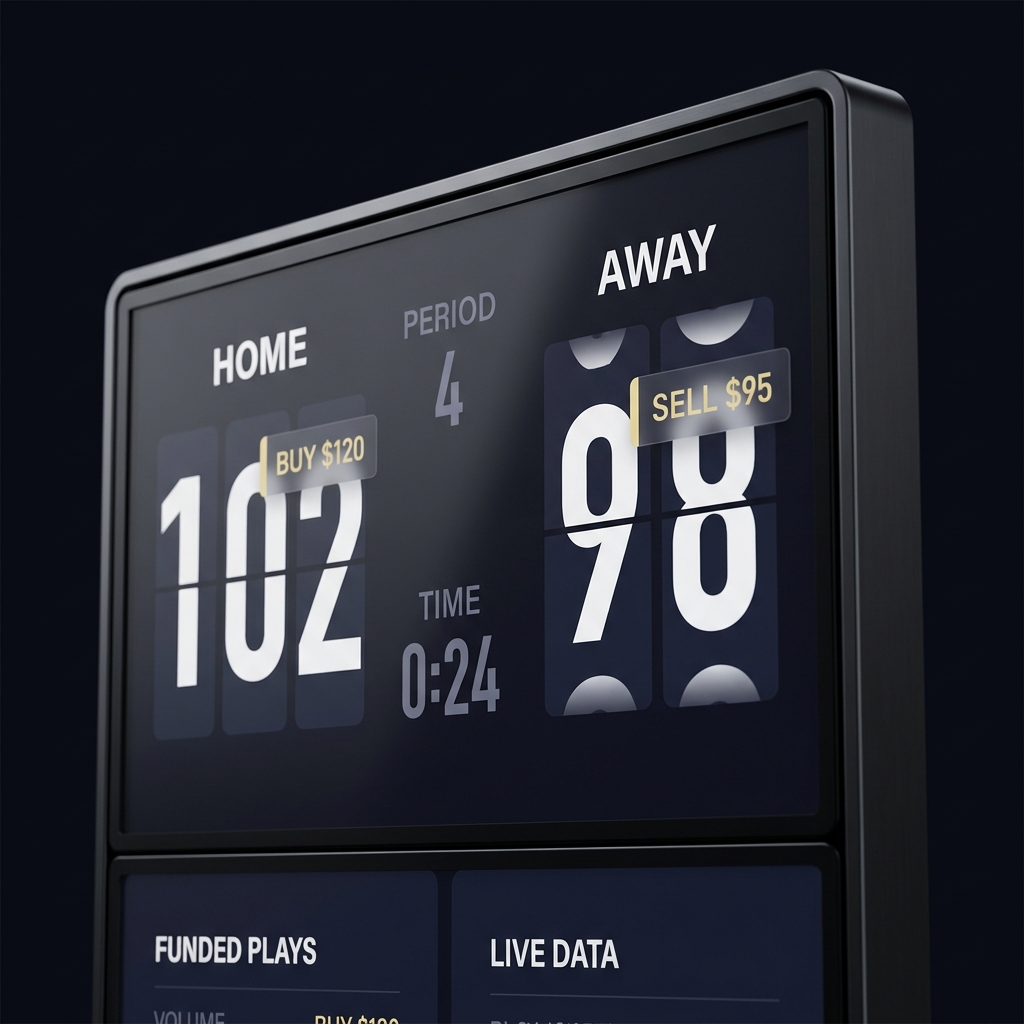
To translate that into practical terms, imagine a quoted points line for total match points; if you buy you are effectively taking a position that the match will produce more scoring than the quote, and your exposure grows with each point of difference
Converting a quoted spread into a potential profit or loss
The arithmetic is straightforward in structure: profit or loss equals stake per point times (final result minus quoted spread) for buys, or stake per point times (quoted spread minus final result) for sells, and understanding that symmetry is the first step to estimating exposure Sporting Index guide to spread betting
When mapping points back to rugby events keep in mind that scoring events are discrete and often move totals in jumps, so your estimate of likely finishing scenarios should reflect how tries and goals accumulate across a match
Estimating exposure: stake per point, stop-loss and capped products
Calculating exposure and potential downside
Begin any exposure estimate by confirming the stake per point, the quoted spread and the plausible range for the final outcome, then calculate the raw P/L as stake times the points difference to see how gains or losses scale with score movement Sporting Index guide to spread betting
It is important to state clearly that for spread bets losses can exceed your initial outlay unless you select a risk-limited variant that caps downside via a stop-loss or capped product feature FCA guidance on CFDs and spread betting
estimate profit or loss from a spread position with a stop-loss option
Use the stop-loss to cap downside
When a stop-loss or capped product is available it limits how far a loss can run, but providers typically reflect that protection in wider spreads or higher costs; that trade-off changes the economics of the position and should be modelled before entering a market BeGambleAware overview of spread betting risks and controls
Risk-limited variants and how they change pricing
Risk-limited options work by attaching a defined exit point to the position so losses are contained, and providers usually adjust the quoted buy and sell prices to account for the capped exposure which means the effective cost or width of the spread will change compared with an uncapped line BeGambleAware overview of spread betting risks and controls
Always simulate the capped scenario using the stake, the adjusted spread and the stop-loss to confirm whether the protected outcome fits your risk tolerance before committing capital
How rugby scoring values shape Six Nations spread markets
Scoring basics: try, conversion, penalty and drop goal values
Rugby union scoring values-try 5 points, conversion 2 points, and penalty and drop goals 3 points-are the arithmetic that underpins totals and team point spreads and explain why many lines land on particular point bands World Rugby laws of the game
Because scoring events come in those discrete increments, totals and team lines often cluster around sums or gaps consistent with one or two scoring plays, and that pattern should inform your projected finishing ranges when estimating P/L Spreadex guide to rugby spread betting
Why scoring increments matter for totals and handicaps
For example, a single converted try adds seven points to a total and can move a match from one pricing band to another, so anticipating likely try and goal counts helps you judge whether a buy or sell position is realistic given how providers construct spreads
Take time to map realistic scoring sequences onto the quoted lines rather than treating points as continuous; that perspective reduces surprise when a single event shifts P/L significantly
A practical decision framework for Six Nations betting
Pre-match checklist: rules, quoted spread, stake and stop-loss
Start with a pre-match checklist that confirms the market rules, who regulates the product, the exact stake-per-point, how the provider defines the quoted spread and whether stop-loss or capped options are offered Sporting Index guide to spread betting
Size positions relative to a risk budget you can tolerate and avoid framing spread positions as short-term ways to chase outsized return because leverage can multiply losses FCA guidance on CFDs and spread betting
Practice with structured challenges before trading real funds
Review the market rules and try simulated or risk-limited products before risking real funds, and consider platforms that let you practise structured prediction challenges under clear rules
In-play considerations and adjusting exposure
In-play dynamics can change the most likely finishing scenarios quickly, so re-calculate exposure after key events and use stop-loss or exit rules to prevent emotional sizing changes that can magnify losses Spreadex guide to rugby spread betting
Manage position sizing as you would in any structured prediction challenge, focusing on consistency and disciplined adjustments rather than reactive doubling-up
Common mistakes and traps to avoid in Six Nations spread betting
Underestimating exposure and ignoring stop-loss fine print
One frequent error is not modelling full downside and assuming losses will be limited by default; official risk guidance warns that losses may exceed initial outlay and that you should verify stop-loss mechanics and execution terms FCA guidance on CFDs and spread betting
Before trading, simulate the worst-case score movements and check whether stop-losses are guaranteed or subject to market conditions
Confusing scoring consequences and misreading quotes
Mistakes also arise when traders forget how tries and conversions change totals in blocks and treat points as single incremental moves, which can make a quoted spread look safe until a single converted try moves the outcome several points against you World Rugby laws of the game
Quick checks to avoid these traps include verifying scoring increments, simulating several scoring scenarios and confirming the provider's P/L rounding and settlement rules

Worked examples: scenarios for common Six Nations spread markets
Example 1: total match points scenario and calculation
Use this labelled calculation approach to replicate outcomes for any stake: list the quoted spread, choose a plausible finishing result range based on scoring patterns and apply the stake-per-point to each outcome to see how P/L moves; the same arithmetic structure applies across providers even if settlement timing differs Sporting Index guide to spread betting

Because rugby scoring often produces jumps of three or five points, run scenario values that include converted tries and penalty clusters to see whether your position flips from profit to loss in realistic match situations
Example 2: team points handicap scenario and stop-loss comparison
When comparing an uncapped position to one with a stop-loss, calculate the raw P/L for a set of finishing results and then apply the stop-loss cap to see the difference in worst-case loss; risk-limited variants will typically reduce the maximum loss but this protection is reflected in adjusted pricing or additional costs BeGambleAware overview of spread betting risks and controls
Follow the same stepwise labelling for any other market: identify quote, map likely scoring sequences, compute per-point P/L and then re-run with capped parameters to compare outcomes
Conclusion: key takeaways and next steps
Summary of the most important points
Spread markets use buy and sell quotes with stake per point and P/L equal to stake times the points difference, they can expose users to losses beyond the initial outlay unless a capped option is used, and rugby scoring values directly shape how totals and handicaps are constructed Sporting Index guide to spread betting
Practical next steps are to read provider rules carefully, consult official regulator guidance and to practise with risk-limited or simulated environments before staking real funds FCA guidance on CFDs and spread betting
Spread betting quotes buy and sell prices and pays per unit of movement, while fixed-odds betting pays a set return for a correct selection; regulatory oversight also differs between the two products.
Yes, unless you use a risk-limited product such as a stop-loss or capped option, losses on spread bets can exceed your initial outlay.
Rugby scoring increments (try 5, conversion 2, penalty and drop goal 3) determine how totals and handicaps shift, so scoring patterns should inform scenario modelling.
References
- https://en.wikipedia.org/wiki/Spread_betting
- https://www.sportingindex.com/spread-betting/what-is-spread-betting
- https://www.fca.org.uk/consumers/cfds-and-spread-betting
- https://www.gamblingcommission.gov.uk/public-and-players/guide/spread-betting
- https://www.spreadex.com/sports-spread-betting/rugby-union-spread-betting/
- https://www.fundedplays.com/challenges
- https://www.begambleaware.org/safer-gambling/safer-gambling-tools/spread-betting
- https://www.world.rugby/the-game/laws
- https://www.fundedplays.com
- https://www.fundedplays.com/blogs
- https://www.fundedplays.com/blogs/how-fundedplays-evaluations-work
- https://www.bbc.com/news/business-38222623
- https://www.asa.org.uk/advice-online/betting-and-gaming-betting-spread-betting-and-offshore-betting.html