
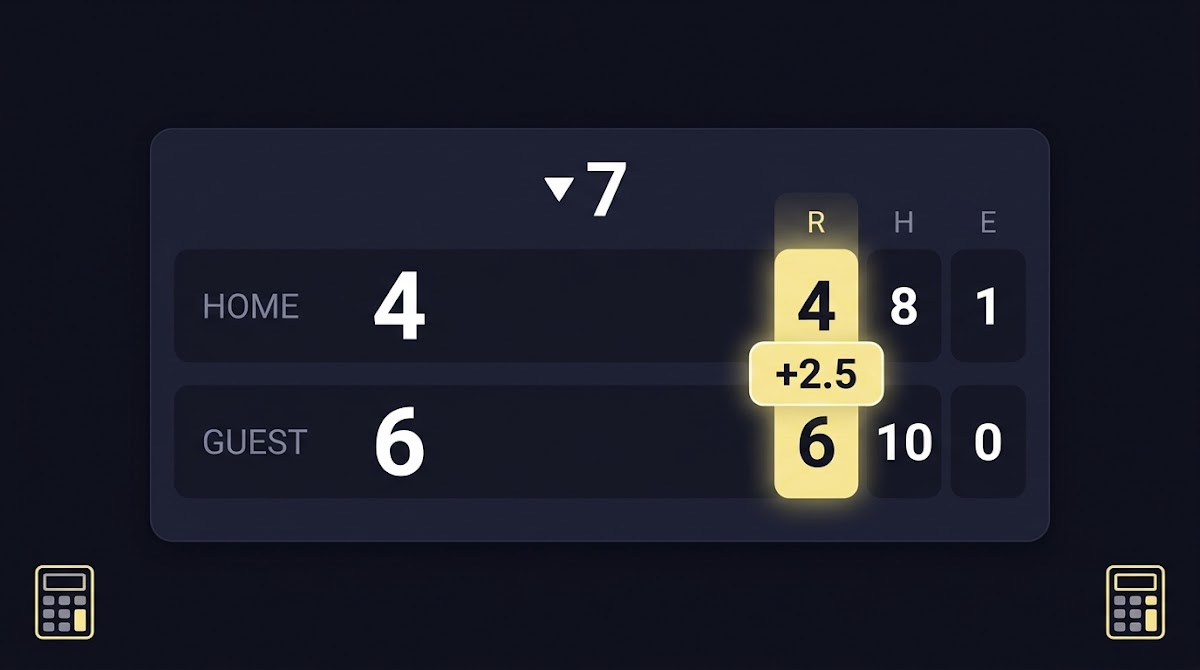
Quick definition: what a +2.5 run line means in plain terms
A +2.5 run line is an alternate form of baseballs spread market that gives the underdog a cushion of two and a half runs so there is no push on common integer outcomes. In simple terms, a bet on an underdog at +2.5 wins if that team wins outright or loses by one or two runs, and it loses only if the team loses by three or more runs, which makes settlement straightforward and avoids ties Action Network run line explainer
By comparison, the more common default in U.S. baseball is the -1.5/+1.5 run line, where a half run is also used to avoid pushes but the margin threshold is different. Sportsbooks also offer alternate lines such as +/-2.5 with odds adjusted to reflect the larger cushion for the underdog TheLines guide to run line and alternates
To make this concrete, imagine a game that ends 5-4 in favor of the favorite. A wager on the underdog at +2.5 wins because the underdog lost by one run; a wager on the favorite at -2.5 loses because the favorite did not reach a three-run margin. Using a specific score like this helps see why the half run removes pushes and forces a clear settlement outcome Covers run line explanation
The core settlement rules are concise: underdog +2.5 wins on a tie to the spread where the actual margin is less than three runs, and favorite -2.5 only pays if the favorite wins by three or more. That contrasts with integer spreads that can push when the margin equals the spread, which is why half-run lines are common in baseball Investopedia run line definition
Calculate gross payout, net profit and ROI for an American odds bet on a run line
Copy into a spreadsheet and replace values
One-sentence rule for +2.5
One-sentence rule: a bet on +2.5 wins if the underdog wins outright or loses by one or two runs; a bet on -2.5 requires a three-run or larger favorite win to cash Action Network run line explainer
How it compares to the standard 1.5 run line
Compared with the default +/-1.5 spread, +2.5 adds a full run of margin to the underdog, which reduces the probability that the underdog loses the bet while also typically shortening the payout price for that side TheLines on alternate run lines
Why there is no push on a 2.5 line
The half run removes the possibility of the final score margin equaling the spread, so the sportsbook never needs to refund stakes for a push; settlement is binary, win or lose, which simplifies accounting for both the book and the bettor Covers run line explanation
How the run line fits into baseball betting markets
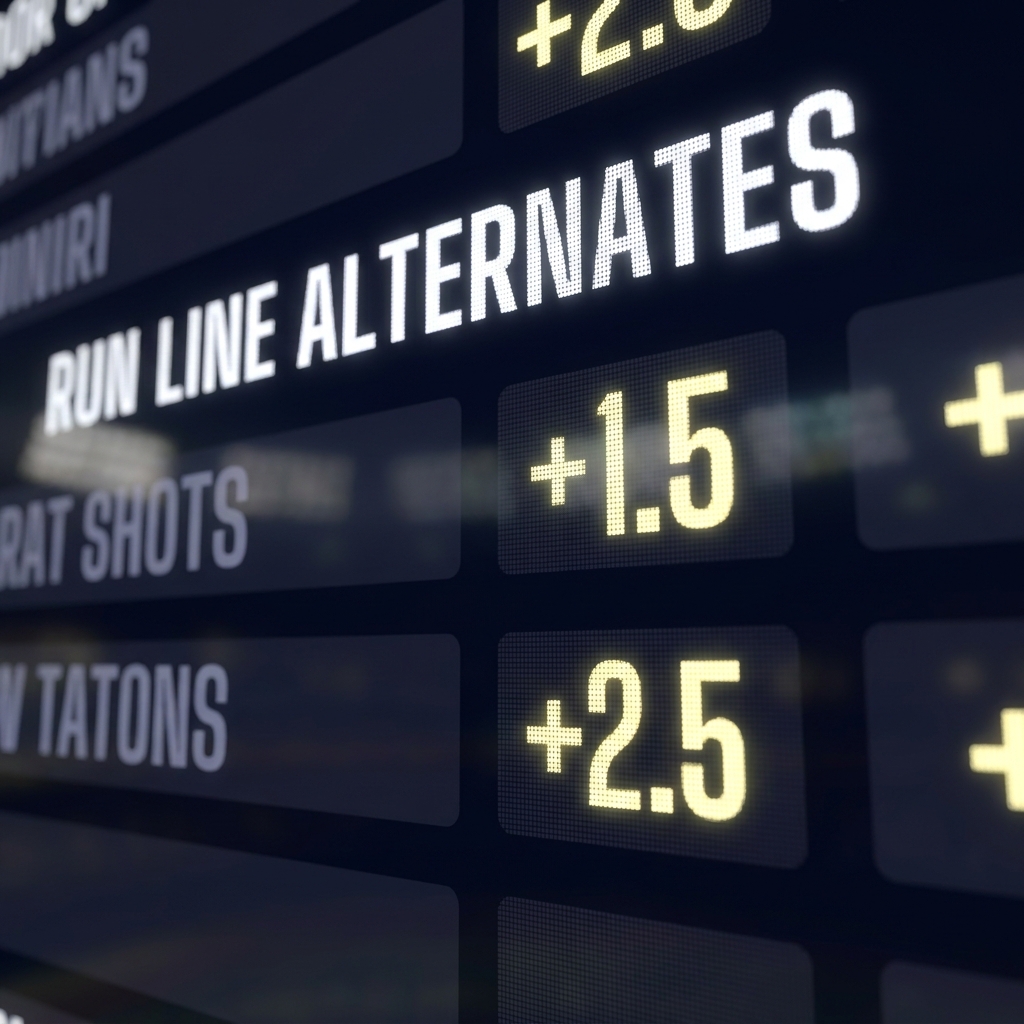
The run line is baseballs version of a point spread, so it functions as a handicap rather than a straight winner pick or a total on combined scoring. Where a moneyline bet simply selects which team wins the game, a run line bet asks whether that chosen team will cover a margin of runs set by the market Investopedia run line definition
Totals, also called over unders, are independent of both moneyline and run line. Totals only care about the combined runs scored by both teams, so a run line result does not automatically determine a totals outcome and vice versa VSiN betting 101 on the run line
Because the run line is a spread market, U.S. sportsbooks commonly keep the default at +/-1.5 while offering alternates like +/-2.5 that let bettors trade margin for price. That makes the run line a flexible tool for adjusting risk and expected return within a single game market TheLines on alternates and market practice
In practice you might pick a moneyline when you want the cleanest exposure to which team wins, choose a total when you have a view on combined scoring, and use the run line when you care about the margin or want to add or remove a cushion around a favorite or underdog Action Network run line explainer

Run line versus moneyline
A moneyline is binary: it wins if your team wins the game and loses otherwise. The run line instead layers a margin requirement on top of the game result, so the underdog can lose the game and still cash if the margin stays within the spread Investopedia run line definition
Run line versus totals
Totals ignore who wins and focus on combined runs. That means a low scoring game can produce a winning totals bet and a losing run line bet depending on the margin and which side you selected VSiN betting 101 on the run line
Why the run line is a handicap market
As a handicap market the run line converts an expected probability of each team winning into a marketable line by shifting runs and adjusting odds; bookmakers set alternates to balance liability and reflect changing expected margins, which is why you see different prices on +1.5 versus +2.5 TheLines on bookmakers and alternates
Step by step run line calculator walkthrough
Before you start, gather three inputs for the calculator: your stake, the American odds offered for the run line you want, and whether you are betting the underdog or the favorite. These three values are sufficient to compute gross payout, net profit and return on investment using standard formulas Investopedia on American odds
Input values the calculator needs
Inputs to enter into a phone calculator or spreadsheet are simple: Stake as a monetary amount, American odds as the price shown by the book, and the bet side as either Underdog or Favorite so you interpret the sign of odds correctly; if you use the included calculator spec you can copy and paste the fields directly Action Network run line explainer
Formulas to convert American odds to payout
Use these two plain formulas: for positive American odds, Gross payout = Stake times (odds divided by 100) plus Stake; for negative American odds, Gross payout = Stake plus Stake times (100 divided by the absolute value of the odds). These formulas convert market prices into exact returns you can compare across lines Investopedia American odds guide
Worked calculation for a sample +2.5 bet - runline calculator
Example: you back the underdog at +2.5 with American odds of +150 and stake 100. Because the odds are positive, apply the positive formula: Gross payout = 100 * (150 / 100) + 100 = 100 * 1.5 + 100 = 250. Net profit = Gross payout minus Stake = 250 - 100 = 150. ROI = Net profit divided by Stake = 150 / 100 = 1.5, or 150 percent. This shows how the same stake yields different absolute returns depending on the odds and the chosen spread Investopedia American odds guide
To flip that for a favorite priced at -130 on a -2.5 line with a 100 stake, use the negative formula: Gross payout = 100 + 100 * (100 / 130) ≈ 100 + 76.92 = 176.92. Net profit ≈ 76.92 and ROI ≈ 76.92 percent. Writing both formulas in your spreadsheet side by side makes quick comparisons simple Investopedia American odds guide
Try your run line calculations on challenge-style practice
Try the numeric example above on your phone calculator or paste the formula into a simple spreadsheet to confirm gross payout, net profit and ROI for your stake
When you test lines on a spreadsheet, label columns clearly: Stake, Odds, Gross Payout, Net Profit, ROI. That structure keeps errors low and makes it easy to copy the calculator across different games or alternate run lines without retyping formulas. You can also try an external odds tool like Covers' odds converter.
How odds and alternate lines change value and risk
Giving an underdog an extra run of cushion, for example moving from +1.5 to +2.5, typically shortens the offered payout because the probability the underdog cashes increases; sportsbooks reduce the price to reflect that higher probability and to balance liability TheLines on alternates and pricing
Odds shorten when cushion increases because the market shifts expected outcomes toward the underdog; that is, adding one run makes some formerly losing margins into winning ones for the underdog, and the price moves accordingly to keep the book profitable Action Network run line explainer
When might +2.5 offer better value than +1.5? Scenarios include games with two aces where you expect a low margin of victory, or when a strong bullpen on one side is questionable late in the game so a single extra run cushion materially increases your probability of cashing. In those cases the smaller price reduction may be worth the extra chance to win TheLines on matchups and value

Sportsbooks set alternates to reflect both expected probabilities and liability management, so books will price a +2.5 line by estimating how often that spread will pay and then adding their margin. Understanding that mechanism helps you judge whether a shorter price still leaves positive expected value for your own estimate of the game TheLines on how lines are priced
Shortening happens because the adjusted spread reduces risk for the underdog. Every extra run of cushion moves more potential game outcomes into the underdogs favor, so the book lowers the payout in line with that shifted probability distribution TheLines on alternates
When a +2.5 can be better value than +1.5
A +2.5 can be better value when your model or read of the game gives a relatively high probability to one or two run losses for the underdog, or when in-play variance such as bullpen uncertainty makes late scoring more likely. The tradeoff is always probability versus price Action Network run line explainer
How books price alternates
Books price alternates by estimating frequency of winning margins and adjusting odds to balance exposure. That means sometimes an alternate will be priced attractively if market demand shifts or if the book changes exposure after new information such as a last minute lineup change TheLines on market pricing
Decision criteria: when to pick a +2.5 run line
Make decisions using a short checklist: evaluate starting pitchers, check bullpen depth and recent workload, consider home and away scoring environments, and review recent team scoring trends. These factors change the expected margin and therefore affect whether the extra cushion is useful Action Network run line explainer See the Funded Plays blog for related posts.
Bankroll and risk management considerations matter: if your staking plan tolerates more variance, you might prefer the higher payout of a thinner cushion; if you need to reduce drawdown risk, the extra run can be worth a lower price because it increases cashing probability for the underdog TheLines on risk and alternates
A simple probability threshold approach helps find value: convert the offered American odds into implied probability, then compare that implied probability to your own estimated probability of the bet cashing. If your estimate exceeds the implied probability by a margin that covers your required edge, the bet may be justified Investopedia on American odds
As a rule of thumb, the extra cushion of +2.5 is attractive when your model predicts a one or two run outcome substantially more often than the market implies, or when late-game variability increases uncertainty about a three or more run result TheLines on matchups and margins

As a rule of thumb, the extra cushion of +2.5 is attractive when your model predicts a one or two run outcome substantially more often than the market implies, or when late-game variability increases uncertainty about a three or more run result TheLines on matchups and margins
Typical mistakes and how to avoid them
Confusing the run line with the moneyline is common; remember the moneyline selects the winner whereas the run line adds a margin requirement, so a losing underdog bet at +2.5 can still cash. Keep the distinction clear when you place bets to avoid unintended exposure Investopedia run line definition
Misreading American odds causes calculation errors. Use the exact formulas provided earlier for positive and negative odds to compute gross payout, net profit and ROI, and test your results on small stakes before you scale up a staking plan Investopedia American odds guide
Another frequent error is overvaluing the cushion without a probability edge. A larger cushion does not automatically guarantee value; check whether the shorter price still leaves an expected value advantage before committing stake TheLines on value and alternates
Finally, ignore settlement rules at your peril. Half run lines like +2.5 remove pushes but that also changes cashing probability in subtle ways; always confirm the exact spread and settlement policy before placing a bet Covers run line explanation
Practical examples and scenarios you can calculate now
Example 1, underdog +2.5 at positive odds: Stake 50, odds +200 on the underdog at +2.5. Gross payout = 50 * (200 / 100) + 50 = 150. Net profit = 100. ROI = 200 percent. This is easy to paste into a two cell spreadsheet and test how the ROI changes with different stakes or slight changes in odds Investopedia American odds guide
Example 2, favorite -2.5 at negative odds: Stake 100, odds -150 on the favourite at -2.5. Gross payout = 100 + 100 * (100 / 150) = 166.67. Net profit ≈ 66.67. ROI ≈ 66.67 percent. Use this to compare whether the favorite needs to win by three or more runs to cash, and weigh the lower ROI against your probability estimate Investopedia American odds guide
A +2.5 run line gives the underdog a two and a half run cushion so there is no push; it wins on an outright underdog victory or a one or two run loss, and the payout follows standard American odds conversions so you compute gross return, net profit and ROI using clear formulas.
Example 3, small stake alternate: Stake 25, odds +120 on an underdog at +2.5. Gross payout = 25 * (120 / 100) + 25 = 55. Net profit = 30. ROI = 120 percent. Because the stake is small, this can be a low cost way to test a model or hedge another position in-play Action Network run line explainer
To recreate any example in a spreadsheet, set up these columns: Stake, Odds, Sign, Gross formula, Net formula, ROI formula. Paste the positive and negative formulas from earlier into the Gross formula column and copy down. That provides an instant comparison across many alternate lines and stakes Investopedia American odds guide. If you prefer an online tool, try a betting odds calculator such as VSiN's calculator. For methodology, see how Funded Plays evaluations work.
Quick decision notes: use Example 1 when you believe the underdog has a reasonable chance to keep the margin under three; use Example 2 when you expect the favourite to produce a multi-run victory; use Example 3 for small experimental stakes or portfolio diversification within a match day card TheLines on match examples
A +2.5 run line means the underdog receives a cushion of two and a half runs and wins the bet if it wins outright or loses by one or two runs; there is no push.
For positive odds, multiply stake by (odds/100) and add the stake; for negative odds, add stake plus stake times (100/absolute odds).
Consider +2.5 when your probability model favors one or two run outcomes or when late-game variance increases the chance of a narrow result, and only if the implied price leaves you an edge.