
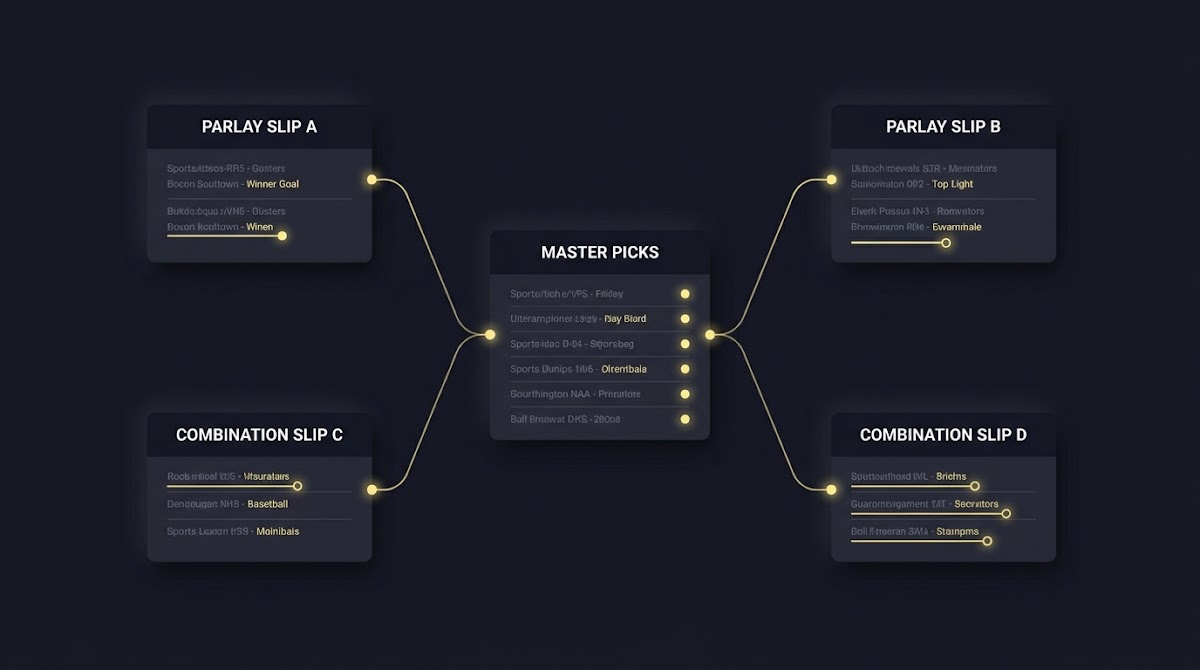
What a round robin bet is and when players use it
A round robin breaks a list of selections into multiple smaller parlays so a bettor can receive partial payouts when some legs win rather than losing an entire multi leg ticket; this construction is standard practice across U.S. sportsbooks through 2026 and is often the first thing to check when you want to smooth an all or nothing idea Action Network explanation.
Practically, players use round robins when they have a set of correlated ideas or several bets they like together but want to reduce the chance that a single missed selection wipes out the whole plan. That trade off is deliberate: you accept paying for multiple parlay margins in exchange for the possibility of partial returns. Common examples are taking three or four game picks and turning them into every two or three leg combination so one losing leg leaves room for some payout.
Limits matter. Books often block or price same game combinations and can treat correlated outcomes differently, so check acceptance rules before assuming every combination will be allowed. These restrictions can change the effective payout a round robin achieves and are part of why bettors use calculators to preview tickets rather than guessing when a ticket will be accepted.
Practice structured prediction with virtual challenges
If you want to practice structured risk management for sports predictions, try a simulation or challenge model that lets you test round robin tickets with a virtual bankroll while keeping the focus on consistent sizing and learning.
Short clarifications help: a parlay refers to a bet where all legs must win for the ticket to pay, a selection leg is one pick inside the parlay, and same game parlays are parlays that combine outcomes from the same event, which many books limit. Understanding these terms makes it easier to interpret calculator outputs and bookmaker rules.
How round robin bets are constructed: combinations and notation
At its core a round robin is combination math applied to parlays. The common notation people use is N choose K to mean how many K leg parlays are made from N total picks. For example, a 3 pick round robin choosing two legs at a time produces three separate 2 leg parlays; this is the practical meaning of 3 choose 2 and it is easy to verify by listing the pairs.
Work through a tiny example: with picks A, B, and C a 2 leg round robin contains AB, AC, and BC. If you set a unit stake of 1 on each combination, your total stake equals the unit stake times the number of combinations, so three combinations at 1 unit each cost 3 units. That multiplication of combinations into total stake is the key mechanical reason round robins increase exposure even when each parlay stake is small.
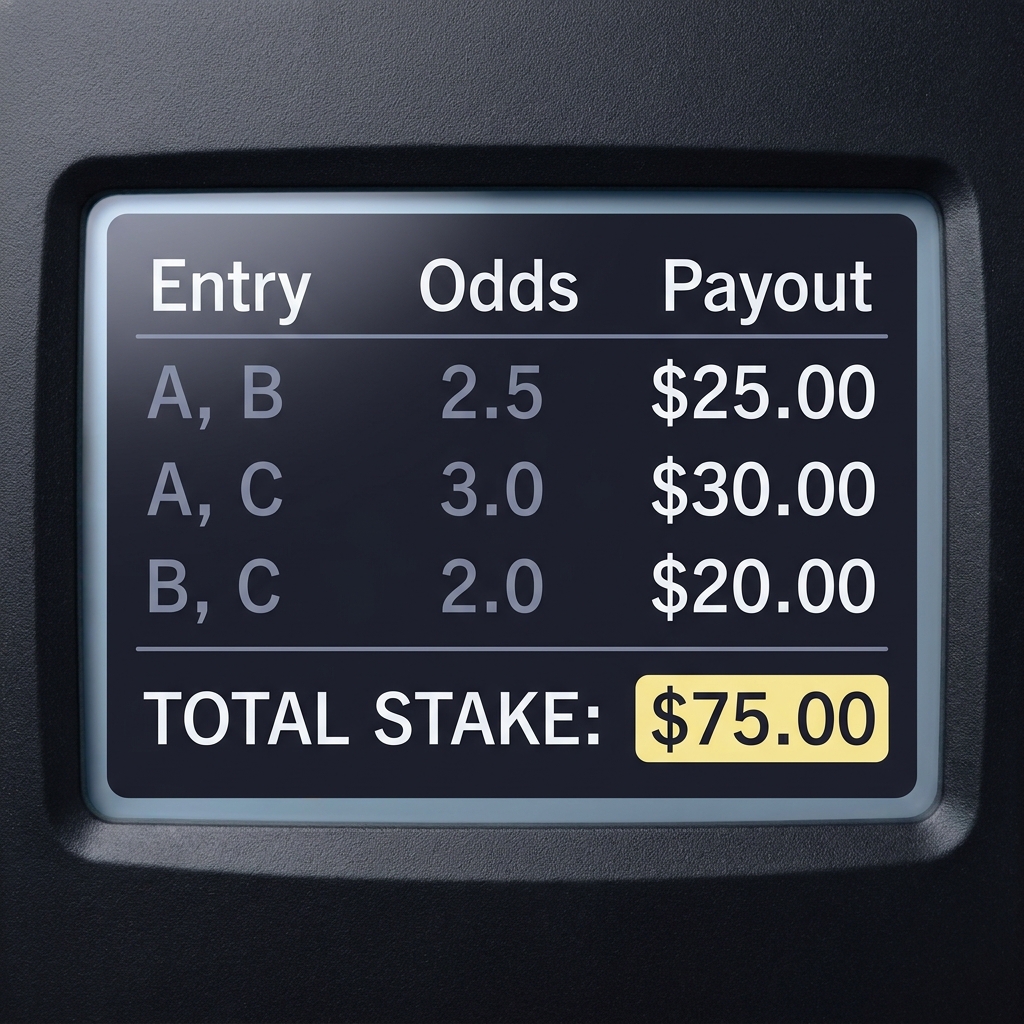
Because calculators compute every combination and apply the quoted odds to each parlay, they remove the need to expand tickets by hand and let you see how much exposure you accept when you pick a unit size. Tools like round robin guides and calculators walk through this process so you can confirm the combination count and the total cost TheLines round robin guide. Calculators like OddsJam provide comparable breakdowns.
Round robin vs parlay vs single bets: risk, variance and use cases
A quick way to think about variance is to rank formats: single bets have the lowest variance because each selection is a stand alone wager, a single big parlay has the highest variance because the payout requires every leg to hit, and a round robin sits between those poles because it converts one idea set into multiple smaller parlays that can pay on partial success. That relative placement explains why some bettors prefer round robins for smoothing volatility.
Ask yourself: how much downside can I accept if one leg busts? A round robin can be a sensible strategy when your goal is risk smoothing and you accept paying multiple parlay margins; it does not generally improve expected value versus singles, so size tickets conservatively and use a calculator to model outcomes before committing.
Cost trade offs follow. Round robins do not restore the expected value that singles provide because each parlay includes bookmaker margins; bundling parlays simply redistributes risk while keeping parlay style margins in place. In short, you trade variance for the sum of multiple parlay margins rather than recapturing the lower house edge of single bets Covers round robin explanation.
Use cases that justify a round robin tend to be behavioral and situational: when you have confidence in the combination as a group but want to avoid a single missed leg voiding your entire profit plan, or when you want to turn one idea set into multiple chances to cash at different payout lines. These are tactical choices rather than value discovery tools.
Expected value and the house edge for parlays and round robins
Parlays increase sportsbook hold because books multiply their margin across combined legs, and round robins are simply bundles of those parlays so the compound margin effect remains in place. Industry reporting and analysis over recent years underline that parlays carry a larger house edge than single bets, which has direct implications for anyone considering many parlay combinations Legal Sports Report overview.
Regulatory data reinforce the pattern. Public reports that separate parlay wagering show operator win rates on parlay categories that are higher than the overall hold for sports wagering, a finding documented in state level reporting and useful when you calibrate how much of your edge is lost to parlay pricing before you consider any predictive advantage New Jersey Division of Gaming Enforcement reports.
What this means practically is that increasing the number of combinations will usually increase the aggregate amount you pay in parlay margins, and that can lower net expected value relative to placing the same selections as singles. Reasoned staking and conservative unit sizing are the only practical buffer available to bettors who choose round robins for variance control.

How to use a round robin odds calculator: step by step
Use a calculator to preview cost, each parlay payout, and the range of outcomes before you place a ticket; this is one of the main practical justifications for running a simulation rather than guessing. Start by entering your selections, then choose the combination sizes you want, and finally set a unit stake so the tool can return total cost and per combination payouts TheLines round robin guide and calculator. You can also try calculator tools such as SportsbookReview's round robin calculator for a quick preview.
Step 1, enter your legs and the odds for each selection. Step 2, pick the combination size or sizes such as every 2 leg or every 3 leg set. Step 3, choose a unit stake that you will multiply across all combinations. The calculator will then produce a payout table showing what each winning combination pays and aggregate returns under different hit counts.
Interpreting the payout table is straightforward but important. Look for best case, which assumes every parlay hits; worst case, which shows the loss if no parlay wins; and intermediate cases that show partial payouts when only a subset of parlays hit. Keep in mind calculators use posted odds and may not reflect bookmaker acceptance rules on correlated legs or same game limitations, so always confirm acceptance policies before assuming the calculator output matches the ticket you can place.

model round robin payouts and total cost for a given set of selections
Use realistic odds for each selection
Sizing and bankroll rules when using round robins
Think in unit sizing and total stake. Because a round robin multiplies combinations, you must count the combined stake across all parlays when you set a unit percent of bankroll rather than focusing on a single parlay ticket. This discipline prevents accidental overexposure when many combinations are created Covers round robin sizing guidance.
Practical heuristics include capping round robin exposure to the same percent of your bankroll you would use for a normal parlay portfolio and treating each parlay as a separate line for risk accounting. For example, if you normally risk 1 percent of bankroll on a parlay and your round robin creates five parlays, consider whether 5 percent total is acceptable under your loss tolerance. The key is counting total stake, not how small each individual combination may look.
Another useful rule is to size round robins conservatively when correlations are present or when you are working with same game markets that might be limited. The extra parlay margins add up quickly as combination counts rise, so keeping unit stakes modest preserves optionality and limits the cumulative impact of the house edge.
Practical staking examples and scenarios
Low risk example. Take four straight game picks and create every 2 leg combination. With picks A, B, C, and D that produces six 2 leg parlays. If you stake 1 unit on each parlay, the total cost is 6 units. A single losing pick will usually only wipe out the combinations that include it while leaving other combinations intact, producing a mix of wins and losses that is easier to absorb than a single 4 leg parlay where one loss means zero return. A calculator helps you see the exact payout table for those six combinations Action Network round robin example.

Higher risk example. With six picks moving into 3 leg combinations the count grows substantially. Six choose three equals 20 three leg parlays, so even tiny unit stakes can add to a large total cost. This setup magnifies the parlay margin exposure and can turn an intended risk spread into significant stake if you do not manage units. Use the calculator to model best case and partial payouts and compare net profit after accounting for total stake before you commit to a ticket TheLines calculator guidance.
These examples show how a single losing leg affects outcomes differently for a full parlay versus a round robin. In a 4 leg single parlay one miss equals no payout. In a 4 pick every-2 round robin one miss will only affect the parlays that include that leg, often leaving several winning combinations that reduce the net loss or deliver a modest profit.
Common mistakes and pitfalls with round robins
Underestimating total stake is the most common operational error. Bettors see a small unit per parlay and forget to multiply by the number of combinations, which inflates expected loss if you treat the ticket as a single unit wager. Good calculator use prevents this error by showing total cost up front TheLines calculator and similar tools at BetHeroSports.
Ignoring correlated-market rules or same game restrictions is another frequent pitfall. Books may restrict or void certain combinations, especially when outcomes are not independent. If you rely on a calculator that does not check bookmaker rules, the ticket you plan may not be accepted or may pay differently than expected.
Emotional mistakes also matter. Partial payouts can feel like wins and encourage larger or more frequent round robins that erode bankroll over time. Treat each round robin as a series of parlays for sizing decisions to keep discipline and prevent chasing small wins with oversized follow ups.
When a round robin might be a sensible tool
Use a round robin when you have a clearly articulated reason to accept paying multiple parlay margins in exchange for smoothing volatility. A short decision checklist helps: a clear multi pick edge, a cap on total bankroll percent risked, acceptance of multiple parlay costs, and tolerance for partial payouts are minimal conditions to make a round robin sensible Covers checklist.
Behavioral advantages can be real. Round robins reduce the regret associated with a single leg busting a larger insight and they encourage thinking in unit sizes across a ticket set rather than treating the whole plan as one high variance bet. That discipline mirrors recommended staking practices on structured prediction platforms where consistent sizing matters.
Keep the core limitation in view: round robins do not turn negative EV ideas into positive EV ones. The extra parlay cost usually outweighs any smoothing benefit unless you have a reasoned edge on the picks and you size the ticket to account for the increased aggregate margin.
How correlated legs and same game rules change outcomes
Correlation matters because parlay pricing and acceptance assume some degree of independence between legs. When outcomes are positively correlated the likelihood of multiple legs hitting together is different from independent pricing, and some books will refuse or reprice combinations that include correlated events. That behavior changes the realized payout from what a generic calculator projects Action Network on correlated outcomes.
Same game parlays are a particular case where bookmakers commonly impose limits. Some books allow same game combinations but reduce or adjust pricing, while others block them entirely. The practical rule is to check bookmaker rules in advance or use a calculator that flags same game or correlated combinations so you do not place a ticket that cannot be accepted or that will be repriced.
When you expect correlation, prefer smaller combination sizes or consider alternative hedging approaches that do not rely on parlay multiplies. That preserves your control over stake and reduces the chance that a technical acceptance rule will invalidate the plan.
Regulatory and industry signals to keep in mind
Industry surveys and regulator reports provide context that parlays contribute meaningfully to operator revenue and that parlay style wagers tend to carry higher house edges. For example, aggregated industry surveys on commercial gaming show how parlay revenue contributes to sportsbook hold and should be part of your strategy calculations when you decide whether to bundle parlays into a round robin AGA State of the States survey.
New Jersey reporting that isolates parlay wagering categories shows higher operator win rates on parlays than the overall sportsbook hold, a practical signal that betting structures relying on many parlays must be sized with that structural disadvantage in mind New Jersey Division of Gaming Enforcement reports.
The practical takeaway is to treat round robins as deliberate risk tools rather than EV enhancers. Use conservative sizing and calculators to see how parlay margins accumulate in aggregate so you do not unintentionally absorb a large portion of your theoretical edge to operator pricing.
Alternatives to round robins for managing risk
One clear alternative is to place the same picks as singles with proportional sizing. This approach typically exposes you to a lower house edge because single bets do not compound parlay margins, and it allows you to manage risk across a portfolio without paying multiple parlay margins for the same idea set Legal Sports Report on parlay comparisons. For information on Funded Plays resources see Funded Plays.
Targeted hedging is another option. Instead of creating many parlays, you can place a smaller hedge bet that protects a larger exposure when a specific leg looks vulnerable. This keeps total stake lower and can be more efficient at preserving bankroll if your goal is protection rather than creating multiple payout lines.
Choose alternatives when EV is the priority and you prefer to minimize total margin costs. Use round robins more when smoothing regret or partial payouts is the tactical objective and you accept the trade off of paying extra parlay margins.
Step checklist before you press send
Run these quick checks every time: confirm the total stake equals the intended percent of bankroll, verify unit sizing across all combinations, and ensure you entered accurate odds into the calculator. Seeing total cost before you submit prevents costly mistakes TheLines calculator checklist.
Confirm bookmaker rules about correlated legs and same game acceptance for the specific market you are using. If a book restricts combinations you planned to include, decide whether to reduce combinations, change the bookmaker, or use singles instead.
Finally, simulate multiple stake sizes and record best case and partial payout outcomes so you have a quantitative sense of variance and worst case loss. This habit supports disciplined bankroll control and aligns with the measured approach favored on structured prediction platforms.
Conclusion: is a round robin a good strategy for you?
Round robins redistribute risk and can reduce volatility compared with placing one large parlay, but they do not improve expected value relative to singles because they bundle multiple parlay margins into the ticket. That distinction is clear in industry and regulatory reporting and is the practical reason to size round robins conservatively New Jersey Division of Gaming Enforcement reports.
Decision rule: use a round robin deliberately when your goal is risk smoothing, you have a clear edge across picks, and you cap total stake to a tested percentage of bankroll. Otherwise prefer singles or targeted hedges to avoid paying multiple parlay margins.
Round robins increase the chance of partial payouts compared with a single big parlay but they do not improve expected value versus singles because you still pay parlay margins across multiple combinations.
Not necessarily. Correlated legs and same game rules can change pricing or acceptance, so check bookmaker rules before relying on a round robin for protection.
Yes. A round robin odds calculator shows total stake, each combination payout, and best and partial outcomes, which helps manage bankroll and avoid surprises.
References
- https://www.actionnetwork.com/education/round-robin-bet
- https://www.thelines.com/betting/round-robin/
- https://oddsjam.com/betting-calculators/round-robin
- https://www.legalsportsreport.com/betting/parlay/
- https://www.njoag.gov/about/divisions-and-offices/division-of-gaming-enforcement-home/financial-and-statistical-information/industry-reports/sports-wagering/
- https://www.sportsbookreview.com/betting-calculators/round-robin-calculator/
- https://www.covers.com/betting/round-robin-betting
- https://www.americangaming.org/resources/state-of-the-states-2025/
- https://betherosports.com/calculators/round-robin
- https://www.actionnetwork.com/education/round-robin-bet
- https://www.fundedplays.com/challenges
- https://www.fundedplays.com/blogs/how-fundedplays-evaluations-work
- https://www.fundedplays.com
- https://www.fundedplays.com/blogs