
What a round robin bet is and when people use it
Basic definition, round robin odds calculator
A round robin bet splits one set of selections into multiple smaller parlays, for example by 2s or by 3s, and each parlay is settled separately by the sportsbook who accepts the wager. This structure is defined in operator help centers as a way to turn a single list of picks into a collection of independent parlay bets DraftKings help center.
People use round robins because they change the risk profile compared with a single all-or-nothing parlay. Instead of needing every selection to win, a round robin can produce partial returns from subsets that cash, while the total cost is the unit stake multiplied by the number of generated parlays.
Because each parlay is its own wager, settlement rules and availability depend on the sportsbook help center or operator guidance that governs eligible markets and handling of special cases.
Notes for using a calculator or spreadsheet to check round robin math
Use this checklist when you build a sheet
The round robin format is useful for testing small changes in a prediction model or for reducing variance when you prefer partial wins instead of a single large parlay loss. It is also a common format discussed by education-focused explainers that describe how the same picks become several separate wagers.
How the number of parlays is calculated using combinations
The binomial coefficient C(n, k) explained in plain language
To count how many k-leg parlays come from n selections you use the binomial coefficient, often read as n choose k. This combination formula gives the number of distinct groups of k picks you can form from n without regard to order, and practical explainers use it to list the parlay counts created by a round robin Action Network explainers.
In plain language, if you have four selections and you choose pairs, you count how many unique pairs you can make. The math behind that uses simple combinatorics, but you can compute many common counts with small mental shortcuts once you understand the idea.
A round robin can include several parlay sizes in the same ticket, for example by 2s and by 3s. To find the total number of parlays, compute C(n,2) and C(n,3) separately and then add them together. Each calculated value is the count of separate wagers you will place as part of the full round robin.
When you select multiple sizes, remember each size creates its own set of combinations so the total stake is the unit stake times the sum of all combination counts you included in the ticket.
Common combination counts with short examples
Typical counts for 3, 4, and 5 selections
Some counts are worth memorizing because they show up often. For three selections, C(3,2)=3 means three unique two-leg parlays. For four selections, C(4,2)=6 and C(4,3)=4 are common counts that explain how many two-leg and three-leg parlays you will have in those setups Action Network explainers.
With five selections, C(5,2)=10 and C(5,3)=10 produce a larger number of parlays, so you can see how combination counts grow quickly as n increases. That growth translates directly into a higher total stake when you include many sizes.
Use small reference rules: pairs are the easiest to visualize because each unique pair is just two picks combined. Triples are slightly more numerous, and once you pass four or five selections the number of generated parlays can make a round robin expensive unless you reduce the unit stake.
How to convert odds formats before pricing parlays
American to decimal conversion rules
Before you price any parlay, convert leg prices into decimal odds, because decimal odds multiply directly across the legs. The standard conversion for American odds is to use 1 + odds/100 for positive odds and 1 + 100 divided by the absolute value for negative odds, which gives the multiplier used to compute parlay price TheLines explainer.
Practice round robin calculations with structured challenges
Try a simple calculator or spreadsheet template to convert American odds to decimal and to price a few sample parlays before risking real funds.
For example, a +150 American price converts to decimal 2.50 by computing 1 + 150/100. A -120 price converts to decimal 1.83 by computing 1 + 100/120. Once you have decimals for each leg you can multiply them to get the parlay decimal price.
Decimal odds represent the total return per unit stake including the original stake, which is why multiplying decimal values across legs gives the combined parlay multiplier. Using the decimal format avoids the extra step of converting American prices on the fly when you multiply legs.
Editorial explainers and tool guides commonly show these conversion steps and recommend that you standardize inputs to decimal when you plan to multiply multiple legs into a parlay price.
How to price each individual parlay and compute total returns
Multiplying decimal leg prices
To price a single parlay, convert each leg to decimal odds and multiply those decimals together to get the parlay decimal price, then multiply by the stake to get the return for that parlay. This pricing process is the accepted method used in payout explainers and calculators TheLines explainer and tools like AceOdds' round-robin calculator.

Because each parlay is an independent wager, if multiple parlays win you add their returns together to find the round robin total. If a parlay loses, its stake is lost, and if a leg is pushed or voided handling depends on the operator rules that govern the ticket.
Compute the return from each winning parlay and then sum those returns. The total stake you risk at the outset equals the unit stake times the number of combinations, so net profit equals summed returns minus the total stake across all parlays.
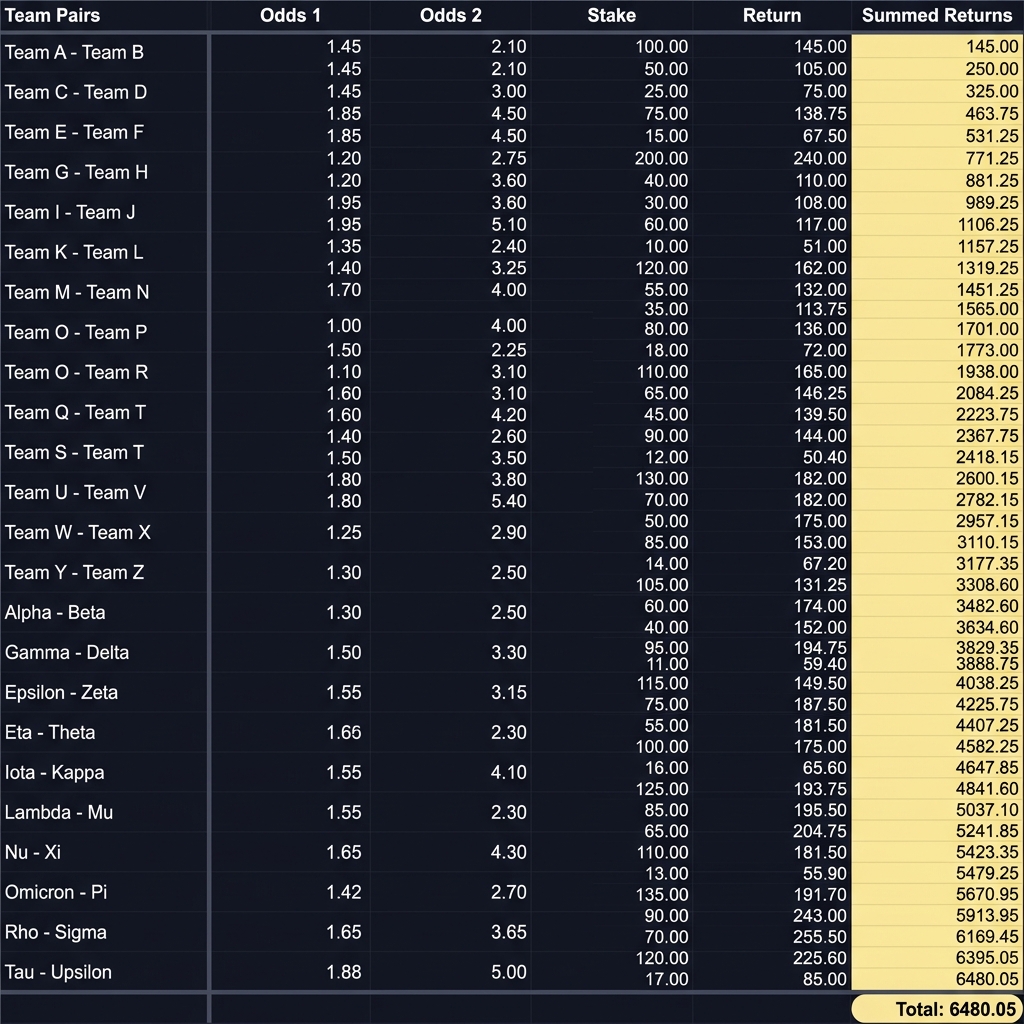
When you catalog returns in a spreadsheet, keep each parlay on its own row with columns for decimal price, stake, return, and net result; then use a single sum to produce the round robin total. This practice makes it clear which parlays produced value and which reduced the overall result.
How stake, bankroll and variance change with round robins
Total stake calculation
The total stake for a round robin equals the unit stake times the number of parlay combinations you created. Because you place each generated parlay as a separate wager, creating many combinations increases total outlay even if each individual stake is small FanDuel support summary.
For bankroll planning, treat the round robin as a series of independent stakes rather than a single aggregate wager. That view helps you measure risk per parlay and to set unit stake sizes that fit your staking plan.
Around robin can reduce variance compared with one all-or-nothing parlay because partial sets of correct picks can still generate returns. At the same time the total amount at risk usually increases because you are staking many parlays. That tradeoff is why many experienced bettors reduce unit size when using round robins.
Editorial analyses note the same balance: you trade higher total outlay for lower chance of a complete loss when only some selections win, and you should always compare the total stake to the expected upside before placing the full ticket.
Settlement rules, pushes, same-game restrictions and why they matter
How pushes or voided legs affect parlays
How pushes or voids are treated differs by operator and can change which parlays pay. Some operators void only the affected leg and treat a parlay as shorter, while others apply different adjustments, so it is essential to check the sportsbook help center for the ticket level rules that apply to your wager DraftKings help center.
These settlement details affect whether a parlay is valid and how its price is recalculated in the event of a push. If your math assumes a specific push rule, verify the operator follows that rule before accepting the ticket.
Calculate combination counts with C(n, k), convert each leg to decimal odds, multiply decimals across the legs for each parlay, multiply by the stake to get each parlay return, then sum returns from winning parlays and subtract the total stake.
Same-game restrictions and market eligibility vary across operators, and those policy differences determine whether two or more selections from the same event can be combined on the same parlay or within the round robin ticket. Check operator guidance because the rules alter which combinations are possible and how payouts are calculated Caesars help center.
Worked example: compute payouts step by step
Set up the picks and unit stake
Use a small, self contained example to follow the steps. Suppose you have four selections and you choose a round robin by 2s only, with a unit stake of 10 units per parlay. Counting combinations shows C(4,2)=6 two-leg parlays, so the total stake up front would be 6 times 10 units.
For the example legs assume these American prices for clarity, noting these are illustrative and not market quotes: Leg A +150, Leg B -120, Leg C +200, Leg D -110. First convert each to decimal, then price each parlay and sum returns to get the total round robin payout.
Convert odds, price each parlay, and sum returns
Convert the American prices to decimal using the standard rules. Leg A +150 becomes 2.50, Leg B -120 becomes 1.83, Leg C +200 becomes 3.00, Leg D -110 becomes 1.91. Multiply decimals across each pair to get parlay decimals, then multiply by the 10 unit stake to get returns.

Calculate each pair separately. For example, pairing Leg A and Leg B gives parlay decimal 2.50 times 1.83 equals 4.575, which pays 45.75 units on a 10 unit stake. Repeat for the other five pairs, then sum returns from those parlays that win to determine the round robin total. Presentations that walk through these steps show the same multiplication then summation approach used in calculator tools such as SportsbookReview's calculator and Covers guide.
Remember net profit equals total returns minus total stake. In this setup the total stake is 60 units, so subtract that from the summed returns to see whether the round robin produced a net gain or loss.
How to use a round robin odds calculator or spreadsheet
What inputs the tool needs
A reliable tool or spreadsheet requires the same core inputs you would use manually: leg odds and their format, the parlay sizes you want to include, your unit stake per parlay, and how the tool should treat pushes or voids. Those inputs let the tool convert odds, generate all combinations, price individual parlays and sum results TheLines explainer and examples like OddsJam's calculator.
To test a calculator, enter a known small example and compare the tool output to manual multiplication and addition. If the results match, you can trust the tool for larger tickets, but always verify unexpected outputs with a manual check.
Build a spreadsheet that lists combinations row by row, includes a column for each leg decimal, multiplies the decimals to get parlay decimal, multiplies by stake for return, and then sums returns. That structure mirrors the steps you would perform on a calculator and helps catch input errors or formatting mismatches.
When you deploy a calculator or spreadsheet in regular use, label fields clearly, freeze the key input rows, and include example rows you can use for quick verification whenever you change the parlay sizes or unit stake.
Common mistakes and pitfalls to avoid
Miscounting combinations
The most frequent errors are miscounting C(n, k) when creating combinations and forgetting to multiply your unit stake by the total number of generated parlays. Both mistakes lead to incorrect total stake and skewed net results, so verify the combination counts before you place the ticket Action Network explainers.
A second common error is using American odds directly in multiplication. Always convert to decimal first to avoid large mispricing mistakes.
One line verification checks
Quick checks include: confirm the number of rows equals the combination count, check one parlay manually from the list, and ensure total stake in the spreadsheet equals unit stake times number of rows. These steps catch most simple setup errors.
Practical scenarios and suggested use cases
When a round robin is a good fit
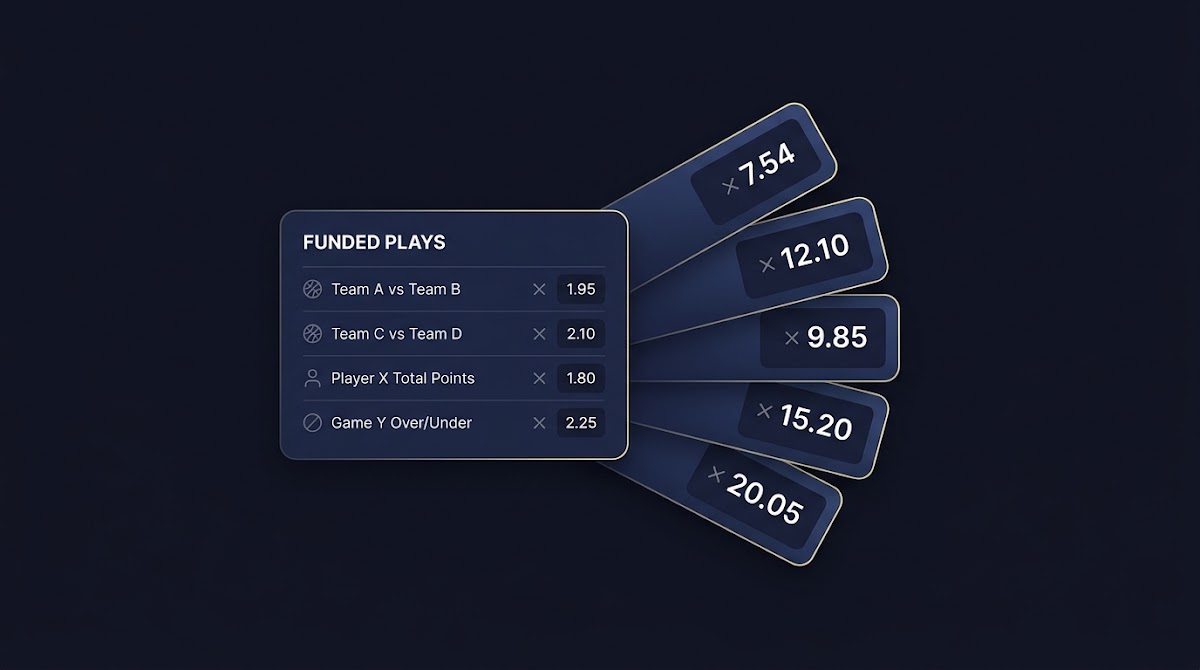
Round robins are useful when you want to test several related predictions and prefer partial returns if only some picks win, or when you want to evaluate small strategy tweaks across multiple combinations. They are also a fitting training tool for people building prediction skills in simulation environments and funded challenge platforms.
For players practicing prediction discipline in a funded sports simulation, a round robin can demonstrate how consistent small edges translate into returns across many smaller parlays without risking a single large all-or-nothing wager.
When it is not appropriate
Around robin is less appropriate when the total stake becomes large relative to bankroll, or when the picks are highly correlated so many parlays are unlikely to produce independent outcomes. In such cases a carefully sized single parlay or different staking approach may be preferable.
As always, treat round robins as a tool for structured testing and disciplined staking rather than a shortcut to guaranteed returns.
Conclusion and next steps for readers
Summary of core steps
Checklist: convert all leg odds to decimal, compute combination counts using C(n, k), multiply decimal legs to price each parlay, multiply by unit stake to get returns, and sum winning parlay returns. Subtract total stake to find net profit, and verify settlement rules before placing the ticket TheLines explainer.
Practice these steps in a spreadsheet or a trusted calculator with small example tickets until you can reproduce results manually. When you feel confident, use the method to analyze strategy variations in a controlled, disciplined way.

A round robin takes one set of selections and creates multiple smaller parlays that are settled independently. Each generated parlay is a separate wager.
Treatment of a push or voided leg depends on the operator; it can shorten the parlay or be voided, so check the sportsbook rules before calculating payouts.
Yes, convert American odds to decimal using standard formulas, then multiply decimals to price parlays.