
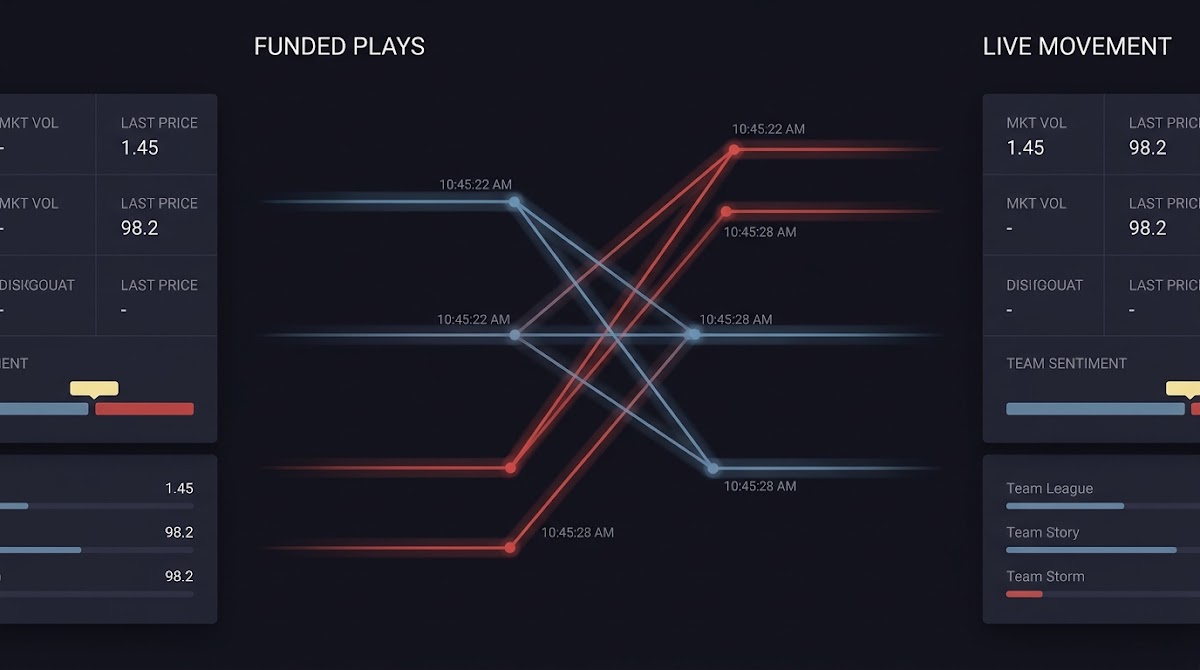
What reverse line movement means and why it matters
Simple definition (reverse line movement)
Reverse line movement describes a market change where the odds or point spread shift away from the side that is receiving the majority of public bets, implying that larger or more respected money is moving in the opposite direction. This one-sentence definition puts the focus on the contrast between raw public splits and the direction of price movement, and it highlights that the move can signal opposition from bettors considered more influential.
When you watch lines before kickoff, a clear RLM pattern is a signal to pause and investigate rather than to act mechanically. Market participants use the term to flag situations where the implied probability that the market assigns to each outcome is changing against the public consensus, which can mean informed money, hedging by a bookmaker, or new information that arrived after initial bets were placed. See an introductory explainer for the concept and common uses in bettor education Action Network guide to reverse line movement.
Why bettors and traders pay attention
Bettors and traders monitor reverse line movement because it can be an early indicator that a market is reacting to heavier, more respected stakes rather than the volume of small tickets. That reaction can point toward sharper opinions or risk management behavior from bookmakers and exchanges, which in turn changes the expected value calculus for remaining positions. This practical distinction between ticket counts and the quality of money is central to why RLM gets attention among experienced players, and it helps explain why sharp money is a frequently cited signal in trading communities.
However, RLM is a signal, not a guarantee of an outcome, and should be treated as one piece of context within a broader process of pregame analysis.

How bookmakers and exchanges move lines
Ticket counts versus handle (money)
Bookmakers may track ticket counts, handle, or both, but the distinction matters: ticket counts measure how many individual bets are placed, while handle measures how much money is at stake. A heavy ticket split can look like public consensus even when the money backing it is small, and conversely a few large bets can move the market despite being a minority of tickets. For a clear explanation of the mechanics and why operators prioritize money over tickets in many cases, consult the bookmaker resources Pinnacle's explanation of what causes odds to move.
Because of that practical difference, only comparing ticket percentages without verifying whether the same split is true for handle can produce false impressions about where the market pressure really lies.
Treat reverse line movement as contextual information that can indicate informed money or risk balancing, and integrate it into pre-defined staking and hedging rules rather than making reactive decisions.
Why respected or large bets move lines more
Sportsbooks and exchanges price risk and exposure, and they will often move lines in response to larger or 'respected' bets that could materially affect their liability. Those moves can be defensive, aiming to balance books and limit potential losses, or they can reflect an accumulation of information from informed bettors and syndicates. Exchange platforms also allow participants to lay off positions or trade out, so heavy lay-side activity can produce quick price shifts that look like RLM on the surface. Betfair's education material lays out how exchanges respond to sharp money and trading flows Betfair guide to what moves odds on exchanges.
Understanding which metric a particular book reports and how it handles risk is therefore a practical first step to interpreting any line change.
Practical checklist: how to spot reverse line movement in real time
Data you need: splits, line timing, multiple books
To spot potential reverse line movement, collect three basic data points: public betting splits (noting whether they represent tickets or handle), timestamped line changes, and quotes from multiple books or exchanges for cross-checking. Without those data you risk treating ordinary variance as a meaningful signal. Several educational pieces for bettors emphasize combining public percentages with live quotes to reduce false positives and to confirm whether movement is consistent across prices and venues Covers' guide to reverse line movement.
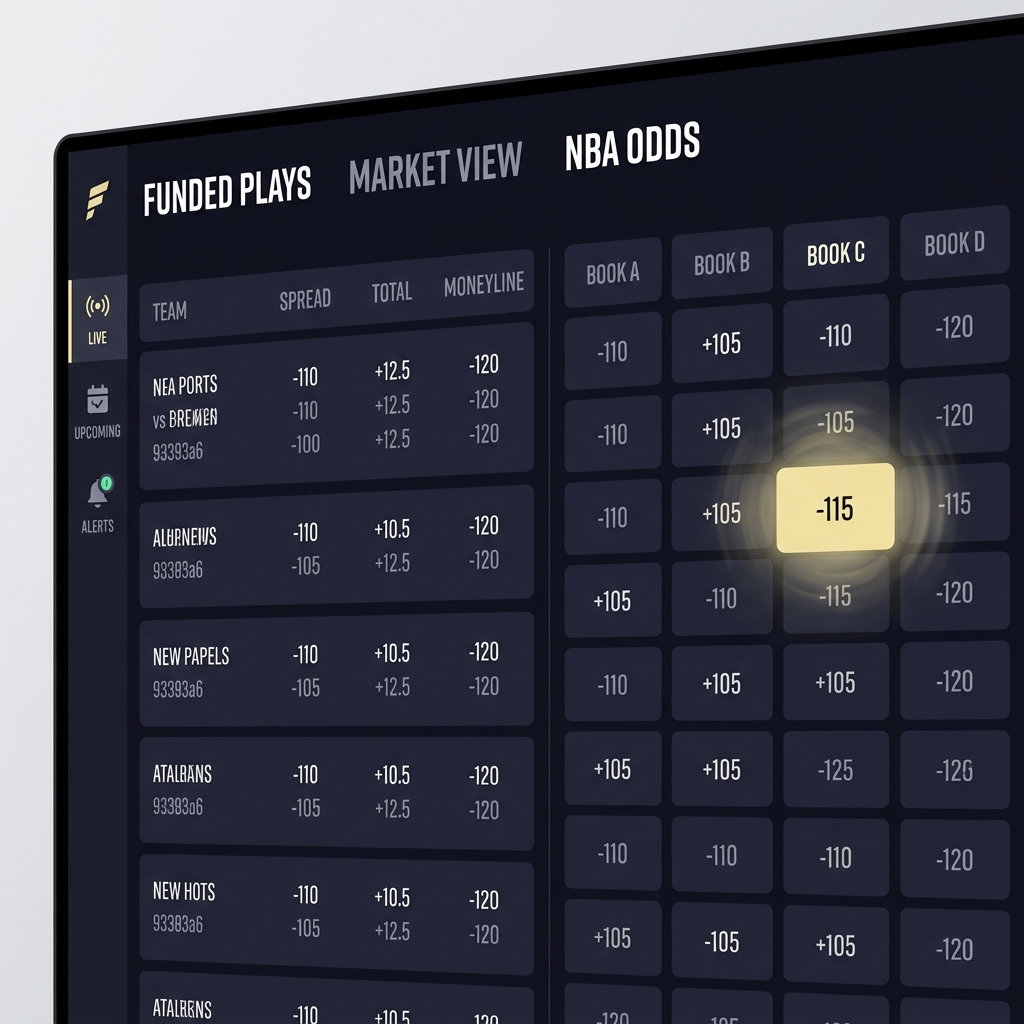
Keep your data feed time-synced so you can compare the exact moments when splits and prices changed; even short delays can make it hard to know what moved first.
Step-by-step detection process
1) Record the pregame public split and make sure you know whether the provider reports tickets or handle.
2) Capture the initial line and note the exact timestamp of any change you observe.
3) Watch for a movement that goes against the side showing the larger public percentage and verify whether the move appears at several major books or on an exchange.
4) If a reverse move is visible, search for corroborating context, such as late injury reports or weather updates, before concluding the move indicates sharp money.
This simple checklist prioritizes observable, time-stamped data and reduces reliance on noisy signals. When possible, prefer handle-based splits because they better reflect where the money is coming from and why the line might be moving.
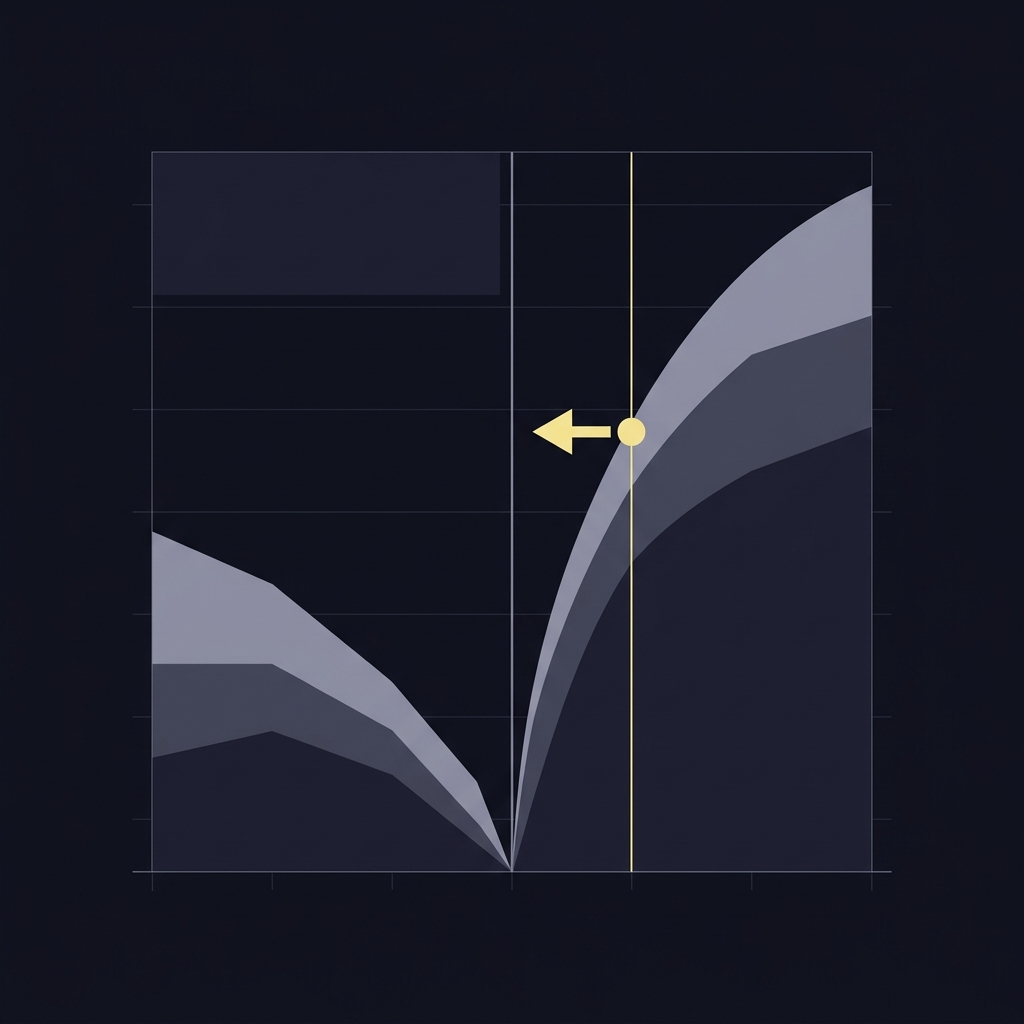
Interpreting signals: what reverse line movement can and cannot tell you
When RLM likely indicates sharp/informed money
RLM most plausibly points to sharp or informed money when several conditions align: the movement is immediate and sizable relative to typical volatility for that market, the change is replicated across multiple books or on an exchange, and the public split reflects ticket-based volume while handle-based reporting shows a different picture. Those combinations raise confidence that larger-stake or more respected bettors are influencing the market rather than simple retail consensus. For a practical discussion of this distinction and how bettors use it, see Action Network's overview Action Network guide to reverse line movement.
Even then, interpret the signal cautiously because other explanations are possible.

When RLM is noisy or misleading
Reverse line movement can be noisy when the reported public split is ticket-based only, when a single large bookmaker adjusts lines for internal risk reasons, or when legitimate new information emerges after the public pushed a line. Academic work on market efficiency warns that markets incorporate information quickly, so a one-off RLM signal rarely creates a persistent edge on its own foundational work on market efficiency in betting markets.
In short, RLM signals are useful as context but rarely decisive without corroborating data such as handle-based splits, consistent replication across books, or linked pregame developments like injuries or confirmed weather impacts.
A decision framework: using RLM alongside bankroll rules and hedging
Integrating RLM into pregame discipline
Treat reverse line movement as one input in a pregame checklist that already includes your value assessment, staking rules, and situational research. Use a simple rule set: if RLM appears but your model still shows value above your staking threshold, consider reducing stake size rather than abandoning the position; if RLM contradicts your model and you lack corroborating evidence, reduce exposure or step aside. See Funded Plays evaluations for more on structured decision processes.
This practical approach preserves discipline and prevents a single market signal from overriding your established bankroll management plan. For context on why market moves reflect risk balancing and respected bets, see Pinnacle's resource on odds movement Pinnacle explanation of odds movement.
Use a disciplined checklist for market signals
Use a short checklist to treat reverse line movement as context: verify handle, confirm across books, add pregame info, then apply your staking rules.
When to hedge or reduce exposure
If you already hold a position and observe strong RLM against it, consider predefined actions: reduce stake size, place a partial hedge on an exchange, or wait for clearer information if the market appears to be reacting to new news. Exchanges provide mechanisms to trade out of exposure quickly, and educational guides explain how to execute lay or hedge trades when a market turns sharply Smarkets help on hedging and trading out.
Make hedging decisions according to rules you set in advance, not by instinctive reactions, and remember that hedging reduces variance at the cost of potential upside.
Common mistakes bettors make with reverse line movement
Overreliance on ticket counts
A common mistake is treating ticket-only splits as proof of where the real money lies. Ticket counts capture sentiment but not the size or quality of those bets. When a market shows many small tickets on one side, a few large bets on the opposite side can move lines without reflecting the same distribution of support in the books' handle.
Practical guides recommend confirming the metric behind public percentages before making decisions based on RLM, so always ask whether a data provider reports tickets or handle rather than assuming both are equivalent Covers guide on how RLM can mislead.
Chasing late moves without context
Chasing a late reverse move is a frequent error. A late move may reflect a justified information update, a strategic hedge by a bookmaker, or a single large position that does not represent sustained market opinion. Without timestamped confirmation and cross-book replication, following a late move can convert uncertainty into unnecessary risk.
Instead of chasing, document the move, look for corroborating information, and apply your staking rules before adding or reducing exposure.
Short, realistic examples and scenarios
Example: early public on Team A, lines move toward Team B
Scenario: Early tickets favor Team A at -3.5 with 70 percent of early tickets, but within a few hours several books shift the line to -2.0 in favor of Team B. You record the initial line, the timestamps, and the books where the move occurred, and you notice that handle-based data shows two large bets on Team B that coincide with the price change. That pattern fits a classic RLM case where larger stakes pushed the market against the public split Action Network's RLM overview.
With that evidence you can raise your confidence that the market priced information or risk differently from the initial public consensus, but you should still check for injury news or other last-minute developments.
A simple log to record splits, timestamps, and book quotes for each game
Use one row per observed change
Exchange scenario: heavy lay-side trading
Scenario: On an exchange, you see heavy lay-side liquidity cluster at a price that shortly after becomes the market price, while public-facing books show heavier backing for the opposite side via many small bets. Exchange trading often shows where traders are willing to lay off a selection, and a sudden flow against the public can move prices more rapidly on an exchange than across retail books. Educational exchange material explains how trade flow and lay activity drive price on exchanges Betfair on exchange price movement.
Record the exchange volumes and match them to timestamped book quotes to see whether the exchange move preceded retail line shifts; that timing helps establish causality when interpreting RLM.
How traders and exchanges manage sharp moves and hedge exposure
Trading out and lay strategies
Traders use laying and trading out to reduce exposure when markets move sharply. On exchanges this can mean offering the opposite side to lock in a smaller loss or even a guaranteed profit, depending on how the market moves and the timing of trades. Those techniques are common risk-management responses when a market faces concentrated stakes from informed actors, and exchange help centers provide step-by-step guidance on executing such trades Smarkets help on how to hedge and trade out.
For retail bettors, the practical lesson is to plan for these possibilities in advance by deciding when you will accept a partial hedge and how that action fits into your bankroll rules.
Exchange tools and risk reduction
Exchanges often offer richer tools for dynamic position management than retail books, including live matching, partial fills, and the ability to see depth of market. Traders can scale out of positions incrementally or use counter-trades to reduce delta while preserving upside. Learning how these tools work in demo or low-stakes environments helps bettors apply hedging rules sensibly when RLM signals indicate a strong market reaction Betfair education on exchange mechanics.
Keep in mind that hedging and trading involve costs and can reduce long-term profitability if used without a disciplined framework.
Summary, practical next steps, and responsible use
Quick checklist for using RLM responsibly
Quick checklist: verify whether public splits represent tickets or handle; confirm that line moves are timestamped and consistent across multiple books or exchanges; check for relevant information updates such as injuries or weather; apply your staking rules; consider hedging only according to pre-set rules. See Funded Plays blogs for related reading.
Reverse line movement can be a useful contextual input, but it should supplement, not replace, solid pregame analysis and disciplined bankroll management. For ongoing learning, practice tracking markets and compare ticket and handle reports to build experience with how RLM behaves in different sports.
Further reading and how to keep learning
Good next steps include practicing the detection checklist in low-risk settings, using exchange demo accounts to learn trade-out mechanics, and reading bookmaker and exchange education resources about how markets incorporate information. For more, see the Funded Plays blogs. Remember that markets tend toward efficiency, so RLM is rarely a standalone lasting advantage and is best used alongside robust process controls and record keeping Pinnacle on why odds move.
Adopt a measured approach: document each observed RLM instance, note whether handle or tickets were reported, and compare outcomes over time to calibrate how much weight you give the signal.
Reverse line movement is when odds or spreads move away from the side attracting most public bets, often because larger or more respected wagers push the market in the opposite direction.
No, RLM should be used as a contextual input alongside value assessment, staking rules, and corroborating information rather than as a stand-alone strategy.
Use predefined rules: consider reducing stake size, place a partial hedge if appropriate, or hold when you have corroborating reasons to expect value to remain, but avoid ad hoc decisions.
References
- https://www.actionnetwork.com/education/reverse-line-movement
- https://www.pinnacle.com/en/betting-articles/Betting-Strategy/what-causes-odds-movement
- https://betting.betfair.com/education/what-moves-odds-exchange-betting/
- https://www.covers.com/betting/reverse-line-movement
- https://papers.ssrn.com/sol3/papers.cfm?abstract_id=566324
- https://www.fundedplays.com/challenges
- https://help.smarkets.com/hc/en-gb/articles/115000840205-How-to-hedge-your-bets
- https://www.fundedplays.com/blogs
- https://www.fundedplays.com
- https://www.fundedplays.com/blogs/how-fundedplays-evaluations-work