
Why line movement is a market signal, not a command
What odds represent in regulated markets
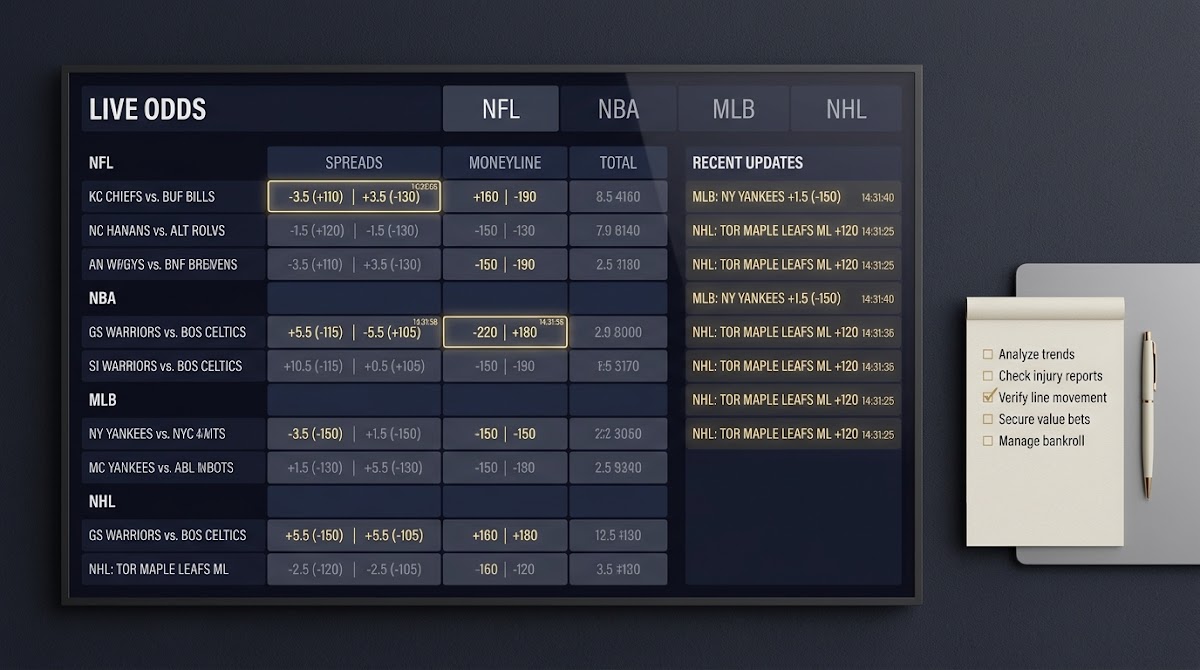
Odds are market prices that reflect the interplay of information, risk limits, and supply and demand across books and bettors. In regulated U.S. markets the growth of commercial betting has increased liquidity and speed of information flow, so a move often encodes new information rather than simply telling you to place a wager, Reading Line Movement Without Following It Blindly should start from that premise.
Interpreting an odds change means asking who moved the price and why, not reacting to direction alone. That approach recognizes that sportsbooks set lines to manage exposure and attract balanced action, so a mid day or pre game shift can reflect hedging, limit adjustments, or genuine information shocks.
How liquidity and information combine to move prices
As regulated markets expand, larger pools of money and faster reporting make lines quicker to reflect news and large tickets; this evolution changes how an individual should read movement. The AGA analysis of market growth shows the broader commercial market expansion that underlies faster moves, and it is useful to treat that as context when weighing any single change AGA State of the States 2025. Action Network market movement analysis.
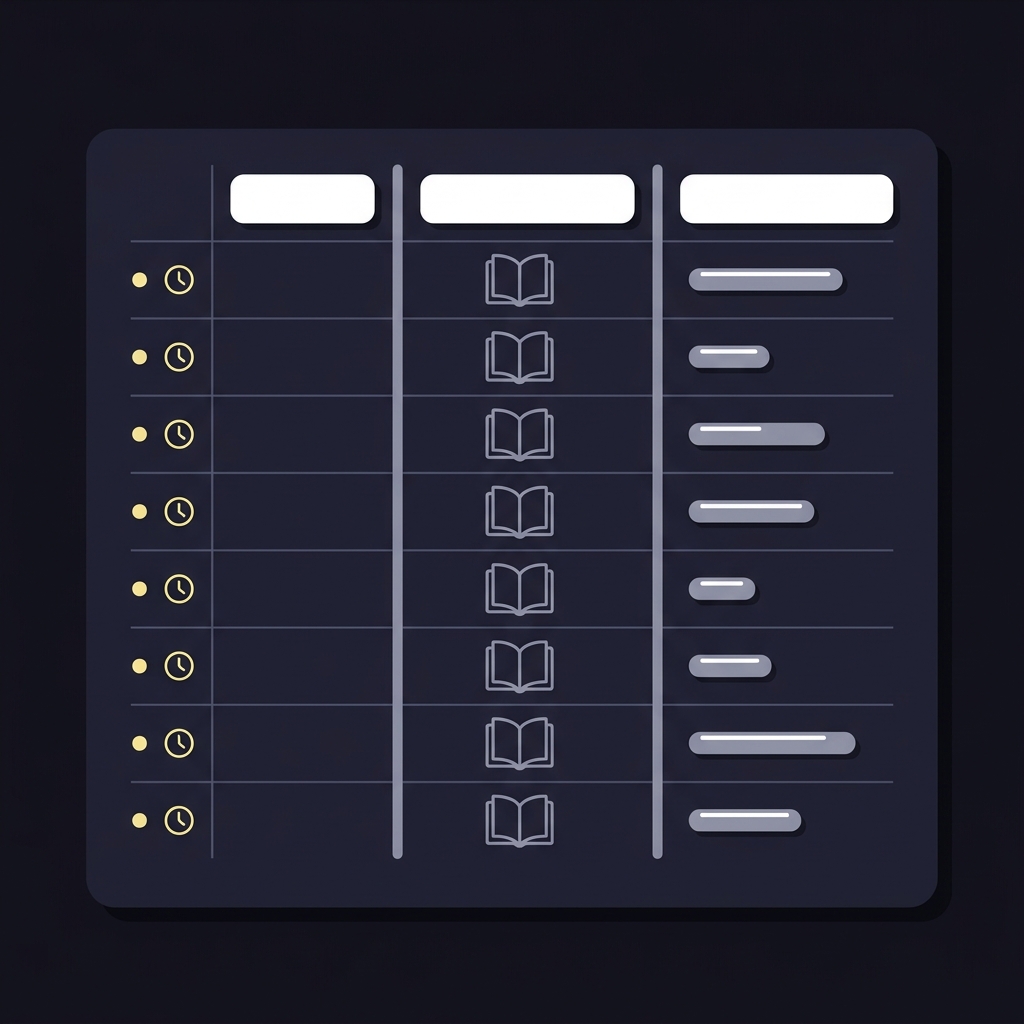
timestamped notes column to track moves
Keep entries brief
That simple tracker idea helps you capture the basic facts every time a line shifts, including when the move happened and which book reported it. See the Funded Plays blog for templates.
Recording these elements repeatedly builds a habit of verification, which is the core alternative to blind following.

Key drivers that move lines quickly
Official injury news and team reports
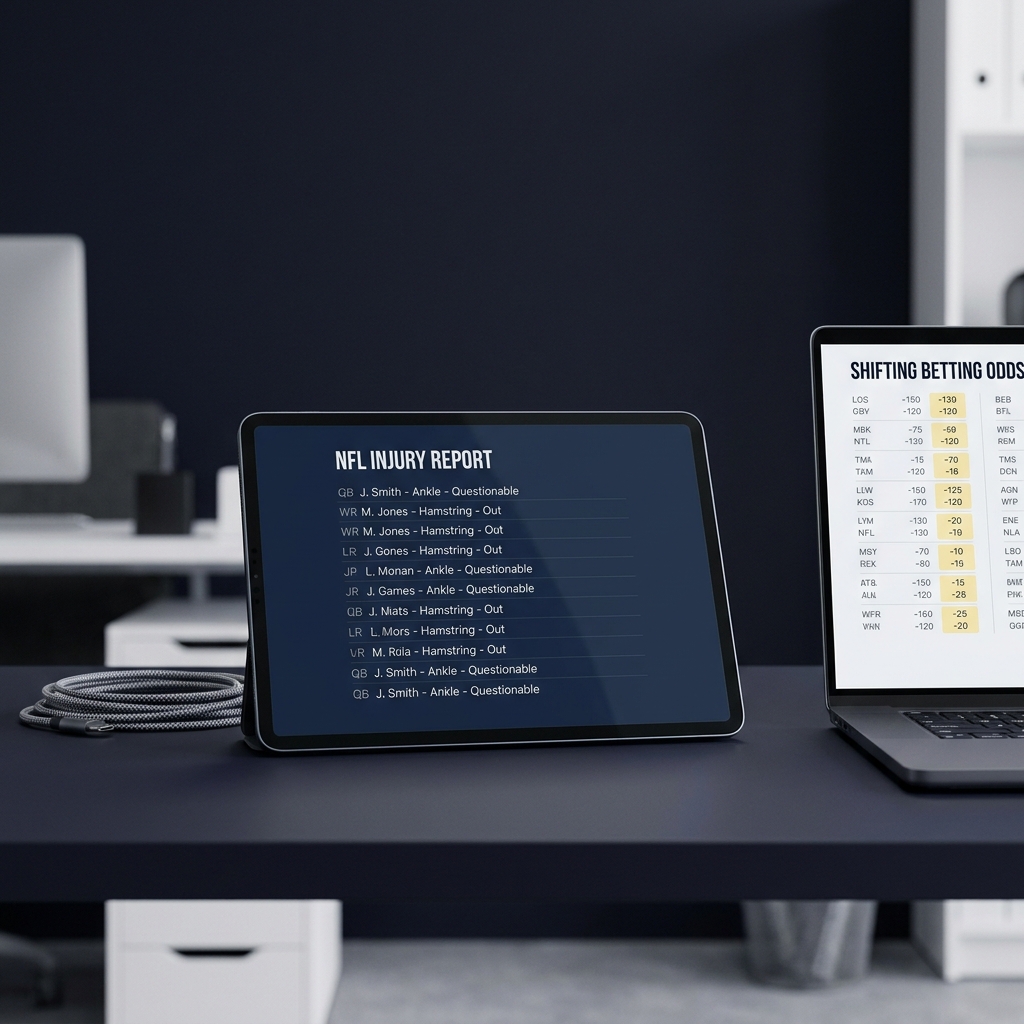
Official, time sensitive injury disclosures are a primary catalyst for rapid pre game line moves in major U.S. leagues, and you should always check team reports and league policies before assuming a move is public sentiment alone. The NFL injury report policy explains how and when official disclosures are published, which is why timing a move against those timestamps matters in pro football NFL injury report policy. The OddsIndex guide on injury impact explains these effects How Injuries Impact Betting Lines and Odds.
When a starter is downgraded or ruled out, books often adjust quickly to protect limits and balance action, and that adjustment is a legitimate market response that reflects verifiable new information rather than noise.
Sharps, limits, and large single tickets
Books will also hedge or lay off exposure with other operators, and that liquidity flow is part of the movement process; an individual bettor should separate noise from genuine risk management moves by looking for corroborating evidence.
Public money and publicity effects
Public volumes and media driven attention push retail lines at individual books, but public splits often reflect ticket counts at a single book rather than the broader handle, so they can mislead if used alone. Commentary from betting education sources warns about interpreting single book splits as market consensus, and emphasizes cross book checks VSiN on betting splits.
Media stories and trending narratives amplify retail flows, and those effects can temporarily change prices even when sharp money is not present. That dynamic is why source checks and market breadth matter before acting on a move.
A practical framework for evaluating line movement
Step 1: Check the timing
First, time stamp when you saw the move and compare it to official news timelines. If a change aligns closely with a verified announcement you have higher confidence that the move is information driven rather than speculative.
Timing also reveals whether a shift occurred during a liquidity event such as market open or a late pregame window, and those windows often have different explanations and implications for bettors.
Step 2: Confirm the source
Next, identify where the signal came from, for example an official team report, a single retail book, or a sharp rebate. Single book splits may show heavy ticket counts, but they do not prove a market wide position or larger handle without cross confirmation.
Download the verification checklist and scenario templates on the FundedPlays Challenges page
If you want a quick printable checklist for timing and source checks, download a short verification list you can use before reacting to any move.
When possible check multiple books and look for matching moves in the same direction, within a short window, as that increases the chance the move reflects real information rather than idiosyncratic book risk adjustments.
Step 3: Assess magnitude and market context
Measure the size of the move relative to typical pre game fluctuations and think about whether limits or hedging could explain it. Small ticks often mean little, while abrupt multi point shifts deserve investigation for related news or large tickets.
Also consider whether the move is accompanied by reverse line movement or unusual integrity signals, both of which change how much weight you should assign to the change in price.
How reverse line movement should be interpreted
What reverse line movement means
Reverse line movement occurs when the market price moves against the side receiving the majority of public tickets, and that pattern implicates different possible explanations than a standard directional move. It is a market phenomenon that can point to higher quality or larger size bets arriving on the other side, rather than simply retail pressure.
Because it reflects a divergence between ticket counts and price moves, reverse movement should prompt questions about who is driving the change and when the bets were placed.
When it can indicate sharper or higher stakes action
When reverse moves coincide with large ticket reports or cross book shifts, they can indicate sharper or higher stakes action that prompted a protective price change at one or more books. Education on reverse line movement describes such scenarios, and treating the phenomenon as suggestive rather than conclusive is prudent Action Network on reverse line movement.
Confirming sharper activity means checking timing, asking whether the move is present across books, and attempting to estimate size based on reported limits and market depth before attributing an edge to the pattern.
Why it is not an automatic edge
Reverse line movement is informative, but not an automatic green light. Without context on bet size or market origin, acting on reverse movement alone risks following noise or one book's risk management decision rather than a durable mispricing.
It is safer to fold reverse movement into a broader checklist, and to treat it as one input among timing, source, magnitude, and integrity signals before increasing exposure.
Decision criteria: when to act and when to stand aside
Checklist for actionable moves
Five criteria tend to increase confidence in a move: verified news that matches timing, matching movement across multiple books, move size beyond normal variance, transparency on whether the action was ticket or handle based, and no integrity red flags.
Use these checks to separate moves worth evaluating from those that should be ignored or logged for CLV tracking.
Time stamp the move, check official reports and multiple books, assess move size and integrity indicators, and only change a stake if the combined evidence meaningfully alters expected value.
A common reader doubt is whether a single large move should override your pre game model, and the short answer is that you should only change a planned stake when multiple verification points pass.
What satisfies a credible movement signal
A credible signal usually includes an official source or corroborated market moves across multiple books within a narrow time window. When these elements align you can treat the move as actionable information rather than just noise.
Also weigh whether the move materially changes your expected value after transaction costs, limits, and bankroll considerations, and if it does not, logging the event for CLV may be the better choice.
How to weigh public splits versus handle
Ticket based public splits can mislead because they may overrepresent small ticket counts rather than overall handle. When available, handle or cross book confirmation is a stronger indicator than a single site's ticket split VSiN on betting splits.
To reduce error, favor signals that show breadth, such as similar moves at multiple reputable books or changes in market depth that suggest larger committed stakes.
Common mistakes and cognitive traps
Chasing movement without context
One predictable error is chasing directional moves without verifying source, timing, or magnitude, which converts short term noise into losses when the underlying cause was a small retail surge or a late hedge.
Discipline requires that you pause, check facts, and avoid reacting to direction alone, particularly in fast moving pre game windows.
Overweighting single book splits
Relying on a single book's public split can produce false signals because that metric often tracks ticket counts not handle, and it may not reflect broader market exposure. Betting education material cautions strongly about using single book splits as a primary input VSiN on betting splits.
Instead, use splits as an early flag to investigate further rather than as a standalone reason to bet or hedge.
Confusing short term noise with structural edge
Short term moves are common and do not equal a durable edge, so avoid interpreting a single successful reaction to movement as proof of long term skill. Closing line value is a useful process metric to measure that skill over time, but it does not guarantee profit on any one wager Pinnacle on closing line value.
Keep a long term view and use systematic tracking to uncover whether your reads on movement actually add value over many bets.
Practical examples and scenario walkthroughs
Example 1: pregame injury disclosed on NFL report
Imagine an NFL starter is downgraded to questionable on the official report, and shortly after several books shift the spread or total. The first step is to verify the timestamp on the injury disclosure and compare it to the timing of the moves, because official disclosures are a frequent cause of rapid pre game changes NFL injury report policy. Webopedia also outlines how injury news moves football betting markets How Injury News Moves Football Betting Markets.
If the timing lines up and multiple books move substantially, the change likely reflects genuine new information, and you can assess whether that new information alters your expected value enough to adjust a stake.

Example 2: late sharp ticket causing reverse movement
In a second scenario, a late large ticket hits the market and the line moves opposite to where retail money was piling up, creating reverse line movement. Before reacting, ask whether the reverse move appears across books, and whether limits or hedging explain the change rather than a misprice.
When reverse movement is paired with cross book corroboration and reasonable estimates of size, it can inform a decision, but absent that context it is safer to remain neutral or log the event for CLV tracking.
Example 3: public media driven move on large market
A third example is a widely circulated injury rumour or lineup leak that triggers a surge of small retail bets at one book and a corresponding move there. Because such moves may be contained to a single operator, you should check other books and official sources before treating the change as a market wide shift VSiN on betting splits.
Often the correct response to a single book move tied to publicity is to stand aside until you have verification, because acting on incomplete information increases risk.
Measuring process: closing line value and long term edge
What CLV measures and what it does not
Closing line value measures whether your bet performed better than the market by the close, and beating it consistently is associated with a likely long term edge, but CLV is a process metric and not proof of profit on any single wager Pinnacle on closing line value.
Use CLV to evaluate your read quality over samples of bets, and avoid equating a single successful bet that beat closing with durable skill unless the sample supports it.
How to track CLV as a process metric
Log your opening, your bet price, and the closing line for each wager so you can compute CLV over time. Tracking these entries helps you see whether your reads on movement and timing actually improve your market performance.
Log your opening, your bet price, and the closing line for each wager so you can compute CLV over time. Tracking these entries helps you see whether your reads on movement and timing actually improve your market performance.
Regularly review periods of consistent CLV gains or losses, and adjust how much weight you give movement signals in your decision rules based on those outcomes.
Limitations of CLV for single bets
CLV is not a guarantee for individual outcomes, because variance, market friction, and timing can still generate losing bets that beat the close. Treat CLV as a diagnostic tool rather than a guarantee of short term success.
Combine CLV tracking with bank roll management and clear stake sizing rules to protect your process while you learn from market movement signals.
Integrity signals and when to be extra cautious
What integrity reports reveal
Integrity reporting shows that abrupt, unusual price movements often cluster around information shocks or suspicious activity, and those reports underscore the importance of checking source and timing when assessing a move IBIA annual integrity report 2024.
When a move coincides with patterns flagged by integrity monitors you should step back and prioritize verification over quick action.
Red flags that suggest suspicious activity
Red flags include rapid, unexplained shifts at specific books with no matching official news, repeated patterns on the same markets, and activity that lacks plausible public information as a cause. Those signs merit caution and often suggest pausing rather than wagering.
If you see multiple red flags, avoid placing bets until you can confirm the source and the legitimacy of the movement.
How to respond if a move looks integrity related
If a shift looks integrity related, pause, check official sources, and prefer logging the event for analysis rather than betting into an opaque move. Reporting suspicious patterns to integrity bodies helps preserve market health.
Conservative responses protect your bankroll and maintain discipline when markets behave unusually.
How the expanding U.S. market changes movement dynamics
More liquidity and faster dissemination
Growth in regulated U.S. commercial markets has increased liquidity and accelerated news transmission, which can make moves larger and faster than in the past. The AGA survey on market growth explains the structural changes that affect this dynamic AGA State of the States 2025.
With broader liquidity some mispricings close more quickly, while other inefficiencies persist depending on timing, event profile, and market depth.
Consequences for pre game and live markets
For pre game markets, faster information flow means you must be quicker to verify official sources before altering stakes. For live markets, greater liquidity can move prices rapidly and increase the importance of execution and slippage management.
Both environments reward disciplined verification and measured stake adjustments rather than reflexive chasing of movement.
Practical implications for individual bettors
Practically, monitor multiple reputable books and reliable official sources, and reduce reliance on single site ticket splits. As markets become more fluid, process and documentation gain value over gut reactions.
Refining how you read movement in this context improves long term decision quality and protects your capital from avoidable noise.
Putting it together: a short decision checklist
Quick verification steps before reacting
Timestamp the move, confirm an official source if present, check two or more books for matching movement, measure the move size relative to typical variance, and scan integrity signals for red flags. These steps form a quick screen to decide whether to act or log.
When all five checks align you have a stronger case to change your plan, otherwise record the event for CLV analysis instead.
When to log the movement for CLV tracking instead of betting
If you lack cross book confirmation, or if the move is small relative to normal noise, or if no verified source exists, prioritize logging the event for CLV tracking. Over time you will learn which combinations of signals are predictive for your process.
Recording borderline moves builds a database you can analyze for false positives and true edges.
Suggested watchlist items
Monitor official injury reports, market consensus moves across books, ticket versus handle splits when available, and integrity bulletins. Keep the list short and actionable so checking remains fast under live conditions.
Making these checks routine keeps your decisions disciplined and reduces the chance of chasing unverified noise.
How to track and document your reads for improvement
What to log and why
Log time stamped moves, the source claimed, books checked, direction, stake, and outcome. This set of fields helps you compute CLV and analyze whether reading movement added value for each decision.
Consistent logging turns anecdote into data, and data informs how much weight to assign different signals in future situations.
Simple templates for tracking CLV and movement signals
A basic template includes date, event, entry price, close price, source, books checked, stake, and result. Keep it simple so you can keep the habit without excessive effort. See how FundedPlays evaluations work how FundedPlays evaluations work.
Over months this dataset will show whether your movement reading improves expected value, and it will reveal which signals to trust more or less.
Using outcomes to refine your signal weighting
Analyze your logged events periodically and note which combinations of timing, source, and magnitude tended to predict favorable outcomes. Gradually allocate more weight to those reliable patterns and less to noisy signals.
That iterative approach converts experience into a clearer, evidence based decision process.
Final summary: reading movement with discipline and verification
Key takeaways you should remember
Movement is a market signal that needs verification, not a command to bet. Always check timing, confirm the source, assess magnitude and market breadth, and consider integrity signals before acting.
Use CLV to measure your process over time, and keep logging to refine which signals are truly predictive for you. Visit Funded Plays Funded Plays for related resources.
How to keep improving without chasing noise
Prioritize verification, maintain a short watchlist of reliable sources, and use a simple logging habit to convert event reaction into measured skill. Discipline beats reflexive chasing in fast, liquid markets.
Reading line movement without following it blindly is a practiced skill, and the steps in this article provide a framework to build that skill over time.
Appendix: sources and further reading
Primary references used in this article
This article is built on public reports and educational pieces that explain market growth, injury reporting, reverse movement, splits, CLV, and integrity findings, including the AGA survey, NFL policy, IBIA integrity report, Action Network analysis, VSiN explanations, and Pinnacle on CLV.
Consult those sources directly for original timelines, policies, and deeper methodological discussion when you need to verify a specific event.
Verify the official injury timestamp and check multiple books, then decide if the move materially changes expected value before altering a stake.
No, reverse movement can indicate sharper action but requires corroboration on timing, size, and market origin before acting.
CLV helps measure whether your prices were better than the market close over time, serving as a process metric rather than a guarantee of profit.
References
- https://www.americangaming.org/resources/state-of-the-states/
- https://www.actionnetwork.com/education/how-injuries-affect-betting-lines-a-guide-to-market-movement
- https://www.fundedplays.com/blogs
- https://operations.nfl.com/football-ops/integrity-of-the-game/nfl-injury-report-policy/
- https://oddsindex.com/guides/injury-impact-betting-guide
- https://www.actionnetwork.com/education/reverse-line-movement
- https://www.vsin.com/betting-education/betting-splits/
- https://www.fundedplays.com/challenges
- https://www.webopedia.com/crypto-gambling/sportsbooks/how-to/football-injuries-betting-markets/
- https://www.pinnacle.com/en/betting-articles/educational/closing-line-value
- https://ibia.bet/wp-content/uploads/2025/02/IBIA-Annual-Integrity-Report-2024.pdf
- https://www.fundedplays.com/blogs/how-fundedplays-evaluations-work
- https://www.fundedplays.com