

Quick answer: What a puckline means
A puckline is a hockey betting line that sets a required goal differential for a wager to win. In plain terms, the puckline assigns the favorite a negative goal handicap and the underdog a positive goal handicap, most commonly in 1.5-goal steps so a bet cannot push.
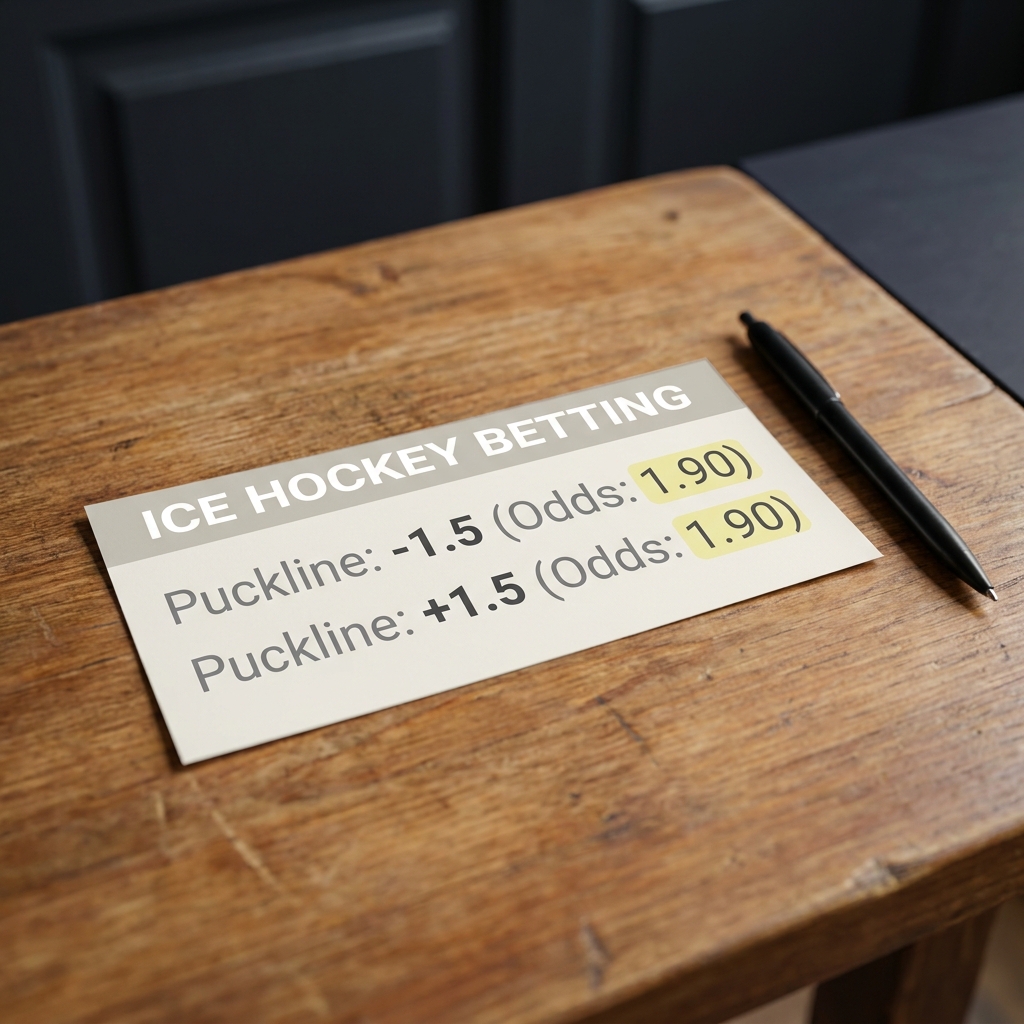
That 1.5-goal gap means a favorite must win by at least two goals for a bet on the favorite to succeed, while a bet on the underdog wins if the underdog loses by one goal or wins outright. For example, you might see a quote read as the favorite -1.5 and the underdog +1.5; a bettor would interpret that as the favorite needing a two-goal victory to cover the puckline.
Quick takeaway, the puckline changes the outcome condition, not the basic identity of the teams. It is a goal-differential rule layered on top of the match result that alters risk and potential reward compared with a straight win bet.
How puckline works in hockey: the mechanics
Bookmakers present a puck line by listing a team with a minus number and the opponent with a plus number, most often in 1.5 increments. A typical display might show Team A -1.5 and Team B +1.5; the minus sign denotes the favorite must win by more than the number shown for that side of the bet to be a winner. This format is similar in concept to point spreads used in other sports, but with goal-based units that reflect hockey scoring.

Because hockey games can go to overtime, pucklines are usually set in half-goal steps to avoid ties, or pushes, on settled tickets. When a line is at -1.5, the half-goal prevents a push if the score margin is exactly one goal, which clarifies ticket settlement for sportsbooks and bettors alike.
Unlike moneyline bets that simply pay for which team wins, the puckline alters the margin required. That means a puckline bet can be a way to express confidence in not just the winner but the size of the win. It also shifts implied risk: backing a favorite on the puckline requires a larger margin, while backing an underdog can pay off when the underdog keeps the game close.
Try structured prediction challenges to practice puckline decisions
If you want to practice reading and tracking lines without risking real funds, consider observing challenge-style prediction platforms that use simulated accounts to teach disciplined decision making.
Odds attached to a puckline answer the question of payout for that conditional outcome, and bookmakers often offer alternate pucklines with different margins for bettors who want to vary risk and potential return. Reading the odds together with the puckline margin gives a complete picture of the wager you are considering.
Puckline versus moneyline and spread: deciding which to use
Compare the three common bet types by what they measure. A moneyline pays for which team wins the match outright. A spread or puckline adjusts the result by a margin so the bet depends on the final score relative to that margin. A spread typically refers to points in sports like football while puck line refers specifically to hockey goal margins and often uses 1.5 increments.
Which is better depends on your expectation. If you think a team will simply win, the moneyline is cleaner. If you believe a favorite will win by multiple goals, the puckline can offer better value by letting you stake on a larger margin rather than high moneyline juice. Conversely, if you expect a close game, backing the underdog on the puckline can produce a winning ticket even if the underdog loses by a single goal.
A puckline requires a bettor to predict not only which team will win but whether the final goal differential will meet or exceed the signed margin for the side they back.
When comparing these markets, remember that a puckline changes the payoff profile: favorites risk more because they must cover a margin, and underdogs offer a cushion in the margin but may carry lower odds in some books. Consider whether you are forecasting only the winner or also the margin before choosing between moneyline and puckline.
Calculating a puckline bet: step-by-step examples
Example 1: Favorite covers the puckline. Suppose Team X is listed as the favorite with a puckline of -1.5 and Team Y is +1.5. If you place a puckline bet on Team X and the final score is 4-2, Team X wins by two goals and your puckline bet succeeds. If Team X wins 3-2, that is a one-goal win and a puckline wager on Team X would lose because the margin did not exceed 1.5.
Labelled steps to interpret the ticket: identify the side you backed, note the signed puckline margin, compare the final goal differential to that signed margin, and determine whether the margin requirement was met.

Example 2: Underdog covers the puckline. If you back the underdog at +1.5 and the underdog loses 2-1, your ticket wins because the underdog lost by only one goal, which is within the +1.5 cushion. If the underdog wins outright, the ticket also wins because the margin is in their favor.
Alternate pucklines change the required margin. Some books let you take an alternate like -2.5 or -0.5. A -0.5 puckline makes it enough for the favorite to win by any margin to cover; a -2.5 makes the favorite need at least a three-goal win. Alternate lines trade margin probability for different payout levels.
When to choose the puckline: decision criteria
Use the puckline when your model or read of the game includes a margin expectation, not just a binary win probability. If matchup indicators suggest a measurable goal differential in favor of one side, a puckline bet can capture that insight more efficiently than betting the moneyline with heavy juice.
Consider these matchup heuristics when evaluating a puckline opportunity.
A brief checklist to track puckline decision points
Check items before placing a puckline bet
Bankroll and bet sizing matter. Because puckline bets often involve different odds and higher variance, allocate stake sizes consistent with your risk tolerance and the probability edge you estimate. Treat puckline wagers like any other market: size bets relative to confidence and follow a tracking plan to measure long-term ROI.
Also account for line movement. If the puckline shifts after news such as an unexpected scratch or goalie change, reassess whether the new margin or odds still reflects your original edge. Line movement can present value or reveal that the market disagrees with your initial read. For rules on settlement related to overtime and shootouts, see how operators commonly treat puckline settlement.
Common mistakes and pitfalls with puckline bets
Overconfidence in favorites is a common error. Betting favorites on the puckline because a team is simply stronger ignores variance in hockey, where even clear favorites can lose by a single goal due to late game events or a hot opposing goalie.
Ignoring situational factors reduces accuracy. Injuries, goalie matchups, travel, short rest, and recent roster changes all affect the likelihood of a multi-goal victory and should be considered when assessing a puckline bet.
Another mistake is neglecting overtime and league-specific settlement rules. While the half-goal tradition avoids pushes, some operators settle differently for special wagers or international competitions. Confirm settlement conventions before placing large puckline bets.
Worked scenarios: three practical puckline examples
Scenario 1: Underdog covers the puckline. Imagine Team A is a modest favorite and Team B is +1.5. You back Team B at +1.5 because you expect a low-scoring, close game where the favorite may struggle to build a two-goal lead. The match ends 2-1 in favor of Team A. Your underdog puckline bet wins because Team B kept the margin within the cushion. Takeaway, the puckline can deliver profit from accurate predictions of close games even when the underdog does not win outright.

Scenario 2: Favorite covers narrowly. You back Team C at -1.5, believing their offense and special teams will produce multiple goals against a weaker defense. The game ends 4-1 and the favorite covers. The ticket pays because the margin exceeded the 1.5 threshold. Takeaway, puckline bets reward conviction about margin, not just the winner.
Scenario 3: Overtime and edge cases. If the match goes to overtime and the final winner decides the game by a single goal in overtime, the puckline outcome depends on the margin at final whistle. Since pucklines are designed to avoid pushes, a one-goal overtime win typically does not meet a -1.5 favorite requirement, so a favorite puckline bet at -1.5 would lose in that case. Always verify with the operator how overtime and shootouts are treated for settlement of puckline tickets. Takeaway, special rules and settlement timing matter.
Puckline and similar markets across sports
The puckline is analogous to the baseball run line, which commonly uses a 1.5 or 1.0 run margin depending on the sport and operator. Both markets apply a margin to the favorite and underdog to balance wagers and create distinct risk profiles compared with the moneyline. For more on run line comparisons see this explanation.
Sports with higher scoring totals will use different typical margins. For example, football spreads use multiple-point steps because scoring is more frequent; hockey uses goals and tends to operate in 1.5 increments to prevent pushes and reflect the scale of scoring.
Alternate lines and related props let bettors target specific margins or outcomes. Some operators offer props tied to exact goal margins, while others offer alternate pucklines that expand or contract the required differential for correspondingly adjusted payouts. Settlement rules, such as how overtime or shootouts are counted, can also differ across sports and operators and should be confirmed before placing bets.
Summary and next steps: using puckline responsibly
In summary, puckline betting sets a goal-differential condition that alters what it means to win a wager. It is useful when you have an opinion about margin and want to capture value beyond a simple moneyline choice.
Three practical next steps: try small stakes or simulated challenges to test your margin predictions, track every puckline wager and the factors that led to the decision, and refine your criteria by reviewing results over time. Remember that variance is high in single-game hockey outcomes and no strategy guarantees consistent profits.
A puckline sets a goal-differential requirement for a bet to win, typically giving the favorite a -1.5 handicap and the underdog a +1.5 cushion.
A moneyline pays for which team wins outright, while a puckline changes the required margin so the bet depends on the final score relative to that margin.
You can include puckline bets in a bankroll plan, but treat them like any market: size stakes to confidence, track results, and avoid overconcentration.
References
- https://www.actionnetwork.com/education/puck-line
- https://www.fundedplays.com/blogs
- https://www.fundedplays.com/blogs/how-fundedplays-evaluations-work
- https://www.fundedplays.com/challenges
- https://www.foxsports.com/stories/betting/puck-line-betting
- https://www.pinnacleoddsdropper.com/blog/puck-line
- https://www.fundedplays.com