
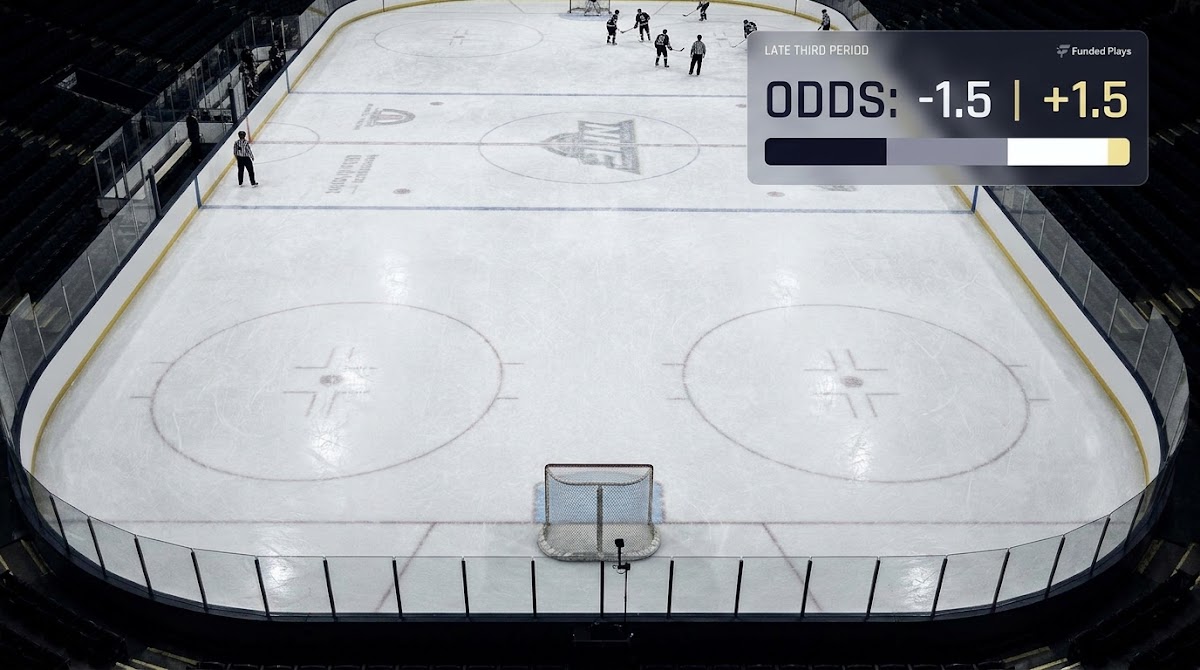
What the puck line is and how it works
The puck line is hockey's point spread, most commonly set at +/-1.5 goals. In practice the favorite at -1.5 must win by two or more to cover, while the underdog at +1.5 can lose by a single goal and still cover; this basic mechanics summary is central to understanding puck line betting and when it changes the play versus a straight moneyline TheLines puck line guide.
How this plays out for a bettor is simple to visualize. A favorite listed at -1.5 requires a two-goal margin for the ticket to cash. If you take the underdog at +1.5, a one-goal loss still results in a winning puck line outcome. Because the puck line converts a win margin into a binary result, payouts are typically larger than the moneyline but the hit rate is lower, which increases short-term variance.
Practice puck line decisions with FundedPlays Challenges
Practice puck line decisions with a clear checklist and small stakes so you can learn how situational factors change outcomes without overexposing your bankroll.
Comparing a straight moneyline with a puck line is helpful. A moneyline bet on a favorite wins if the team wins in regulation or overtime, regardless of margin. A puck line bet on the same favorite only wins if that team wins by two or more. That tradeoff - higher payout for lower hit probability - means puck line choices should be intentional rather than reflexive.
Basic mechanics and example outcomes
To make the mechanics concrete, imagine a favorite listed at -1.5 with better odds than the moneyline; if that team wins by two goals the puck line returns a payout. If the same favorite wins by one goal, the moneyline wins but the puck line loses. This simple example shows why assessing the likelihood of a two-goal margin is crucial before taking the puck line.
How odds differ from the moneyline
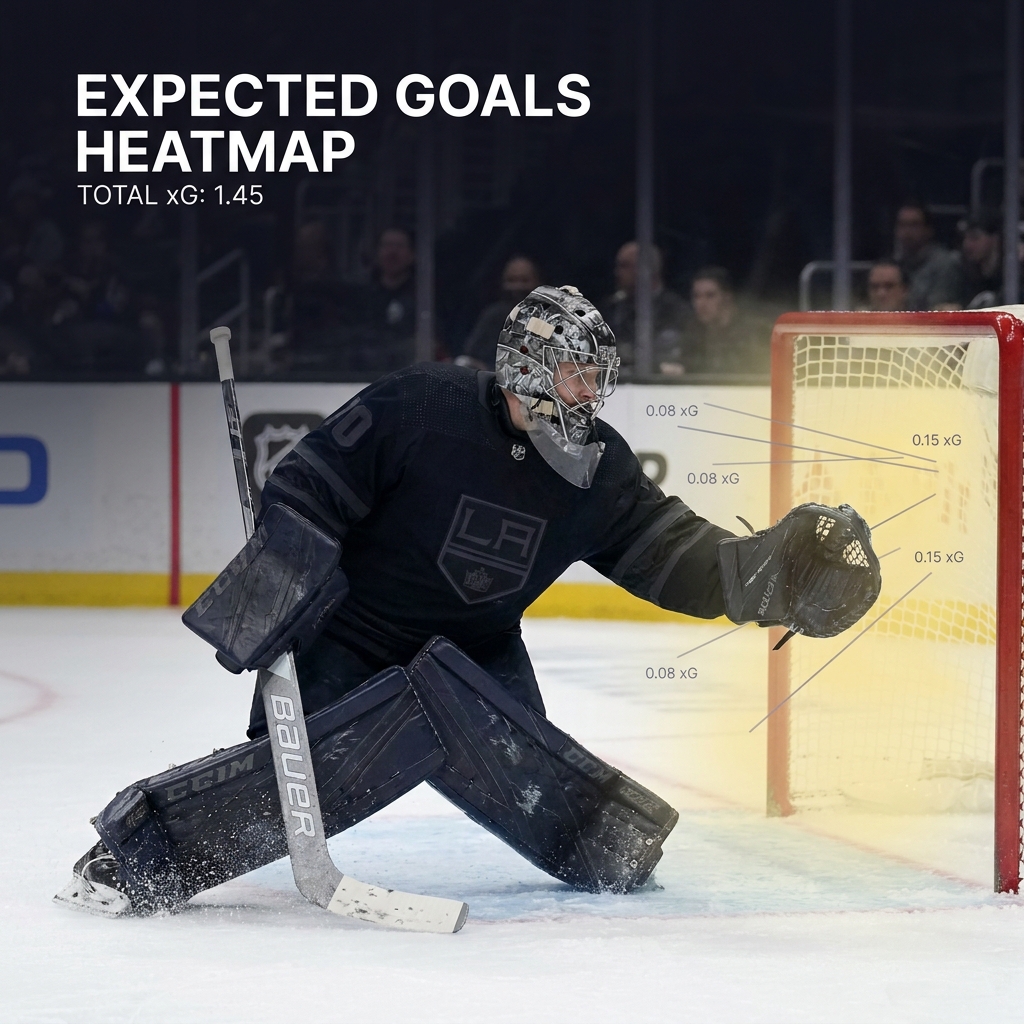
Bookmakers price puck lines to reflect the smaller probability of a two-goal victory, which often means a bettor receives a more attractive payout on the puck line than on the moneyline. That pricing incorporates market expectations for margin, goalie matchups, and game context, so reading the number alone is not enough; you need to translate odds into implied probabilities and compare them to your model or judgment.
When to prefer the puck line over the moneyline
The core decision point is value: the puck line is worth a wager when its implied probability understates the true chance of a two-goal margin. Because you trade a higher payout for a lower hit rate, you should take puck lines only when your assessment of two-goal likelihood materially exceeds the market's implied probability. This process-first thinking is more useful than rules of thumb.
Empty-net and late-game dynamics often change the distribution of final margins, increasing the chance of two-goal outcomes when the trailing team pulls the goalie late in regulation. That situational effect is a concrete reason to favor a puck line in some matchups SSRN paper on pulling the goalie.
Situations that increase two-goal outcomes
Empty-net chances, decisive special-team advantages late in games, and predictable late offensive push patterns are the clearest game-level signals that favor puck line exposure. When you can reasonably expect a trailing team to pull the goalie and increase scoring variance, the market's standard pricing for +/-1.5 may understate the real chance of a two-goal final margin.

Price sensitivity and expected value thinking
Convert the puck line odds to implied probability and compare that figure to your model. If your model or read gives a materially higher two-goal probability than the market, you have positive expected value. Because puck line bets carry higher variance, also scale stake size down relative to your usual moneyline units to preserve capital through inevitable losing streaks.
Key situational factors that change puck line value
Empty-net scenarios, decisive special-team advantages late in games, and predictable late offensive push patterns are the clearest game-level signals that favor puck line exposure. When you can reasonably expect a trailing team to pull the goalie and increase scoring variance, the market's standard pricing for +/-1.5 may understate the real chance of a two-goal final margin.
Rest and travel also change how you should think about puck line risk. The NHL schedule for 2024-25 includes many back-to-back sets and travel demands, which keeps fatigue a relevant handicapping input when deciding whether to take a puck line or stick with the moneyline NHL schedule announcement.
Use a process-first approach: start with a base model, adjust for goaltender metrics and situational factors like empty-net and rest, convert odds to implied probability, and size stakes to edge and variance.
Penalty minutes, power-play efficiency, and late-game tendencies also matter. A team that struggles on the penalty kill or is prone to taking late penalties raises in-game variance and can tilt the expected margin away from tight single-goal outcomes toward larger margins that favor certain puck line plays.
Empty-net and late-game pulling of the goalie
When a trailing coach pulls the goalie, the expected scoring rates shift enough that games that would otherwise finish as one-goal affairs can become two-goal or wider results. That is why many puck line decisions hinge on whether late-game goalie pulls are likely in a specific matchup, especially if one team routinely deploys aggressive strategies in the final minutes.
Schedule, rest, and travel
Teams on the second night of a back-to-back or in the midst of a long road trip face elevated fatigue risk, which can reduce defensive resilience and increase the likelihood of concessions that create two-goal differences. Use schedule context as an adjustment term to your base margin projection rather than as a sole decision driver.
Special teams and penalty impacts
Power plays and penalty-killing trends affect margin in predictable ways. If a team carries a strong power-play advantage into a matchup where penalties are likely, the chance of a multi-goal swing rises and that can justify puck line exposure at the right price.
How to read goaltender metrics for puck line bets
Goaltender performance is a primary driver of margin outcomes, and advanced metrics like goals saved above expected and expected goals provide a clearer picture of true goalie effect beyond raw save percentage. Incorporating these metrics helps you decide when a -1.5 favorite is likely to deliver a two-goal margin or when a weak goaltender makes the underdog's +1.5 more appealing NHL EDGE metrics overview.

GSAx and xG are particularly useful because they adjust for shot quality and location. A goalie who outperforms on quality chances may suppress expected goals against, which lowers the chance of multi-goal losses for his team. Conversely a goalie with poor GSAx makes larger margins more probable and can flip your puck line preference toward the underdog.
GSAx, xG and why goalie adjustments matter
Expected goals models and GSAx show whether a goalie is preventing or allowing goals relative to shot quality. When you see a material GSAx advantage for one side, treat that as a margin adjustment in your model. Small differences may not justify a puck line bet; large ones can be decisive in close-priced matchups.
Practical thresholds to watch
Rather than fixed cutoffs, use relative comparisons. If a goalie’s GSAx over a meaningful sample is clearly worse than the opponent's, and the other contextual inputs line up, that tilt can make the underdog at +1.5 worth considering. Always combine goalie signals with schedule, special teams, and late-game strategy inputs before changing stake size.
Pricing and probability: spotting edges on the puck line
Converting odds into implied probability is the first technical step. Use decimal odds or American odds conversion so you can compare market-implied two-goal probabilities to your model. When the market price understates your model's probability by a margin that exceeds expected variance, you have an edge worth sizing carefully.
Lines can misprice two-goal margins when public money skews prices or when late information about goalies or scratches has not fully moved the market. Watch for patterns where favorites consistently attract public backing that compresses moneyline value while leaving puck line odds comparatively rich.
Convert decimal odds and model probability into a simple edge
Compare Edge to your risk threshold
Checklist to apply before placing a puck line bet: 1) Convert odds to implied probability, 2) Adjust your model for situational factors, 3) Compare the adjusted probability to the market and only stake if you have positive edge and an appropriate stake size. This stepwise check keeps choices repeatable and disciplined Action Network puck line guide.
Converting odds to implied probability
For decimal odds, implied probability is 1 divided by decimal odds. For American odds, convert accordingly. The key is a consistent conversion so you can compare market-implied two-goal probabilities to your internal estimate and only act when the difference justifies betting under your staking rules.
Where lines frequently misprice two-goal margins
The market sometimes misprices two-goal margins around goalie confirmations, injury news, or sharp short-term public bias. Early lines and late movement can both present opportunities; always check closing price movement and avoid chasing lines that have already moved away from value.
Bankroll and staking: managing higher variance on the puck line
Puck line bets exhibit higher variance than moneyline bets, which makes flat, aggressive staking prone to larger and longer drawdowns. A practical response is to scale stake size to the perceived edge and volatility rather than using a fixed unit size for every wager.
Fractional Kelly is a mathematical approach that scales stakes to edge and variance, which can help protect capital, but it requires accurate probability estimates and comfort with volatility. For most readers a simple substitute is to reduce standard unit size by a fixed fraction when taking puck lines, for example betting half or one third of your normal moneyline unit when variance is materially higher Kelly criterion reference.
Why traditional flat stakes can fail
Flat stakes ignore changing odds and variance, which means a series of unlucky puck line losses can deplete bankroll faster than the model anticipates. Staking must acknowledge higher puck line variance by shrinking unit sizes or limiting the number of active puck line wagers at any time.
Fractional Kelly and practical staking rules
If you do not run Kelly calculations, use simple practical rules: reduce unit size for puck lines, cap exposure to a small percentage of bankroll, and tie maximum stake to the assessed edge. A conservative approach preserves capital to exploit future edges rather than chasing immediate recovery through larger bets.
A step-by-step puck line decision framework
1) Start with your base model probability for the game outcome and for expected margins. 2) Adjust that projection for goalie metrics, rest, travel, and special teams. 3) Convert the market puck line odds to implied two-goal probability. 4) If your adjusted probability exceeds the market by a margin that covers variance and transaction costs, place a scaled stake. This flow keeps decisions systematic and repeatable.
Include a stop rule: if goalie status, scratches, or sudden uncertainty increase volatility beyond your comfort, skip the puck line even if the price looks attractive. Pausing is an acceptable and often correct decision in unstable situations TheLines puck line guide.
Practice and structured evaluation are helpful when building a puck line process.

Final stake decision should reflect both edge and bankroll rules. If you take a puck line, record the rationale and the specific adjustments you made so you can review them later. A process that records intentions reduces outcome bias and improves learning over time.
Pre-game checklist
Use a short pre-game checklist: confirm goalie status, check special teams, adjust for rest and travel, consider empty-net likelihood, and convert odds to implied probability. Only proceed if the checklist supports an edge and you have an appropriate stake size.
Final decision flow before placing a wager
Last-minute checks matter: confirm line movement, evaluate liquidity, and ensure the stake fits your unit sizing limits. If any of these items fail, skip the puck line and consider alternative plays that better match your risk tolerance.
Common mistakes and cognitive traps to avoid
Chasing moved lines and increasing stakes after a loss are classic bankroll-damaging habits. Treat each decision as independent and follow your staking rules rather than letting recent outcomes dictate stake size Action Network puck line guide.
Overweighting single-factor narratives is another common error. For example, reacting solely to a single poor goalie start or a back-to-back result without adjusting for sample size and other variables can lead to systematic mistakes. Keep a balanced checklist that forces multiple inputs before changing behavior.
Chasing last-minute lines
Lines can move for valid reasons or because the market is noisy. If you chased the market often you may be buying worse prices than your model implies. Record movement and learn whether chasing historically improved or harmed your ROI.
Overweighting single-factor narratives
Confirmation bias makes narrow stories feel compelling, but puck line decisions should aggregate multiple signals. Use predefined adjustments for each input and avoid changing them ad hoc after a memorable result that fits your narrative.
Practical examples and scenarios
Example 1: A favorite with a high-quality goalie. If the favorite’s goalie has strong GSAx numbers and the opponent has weak expected-goals generation, the favorite is less likely to concede multiple goals and a -1.5 puck line can look reasonable if the model projects a clear margin advantage and the market price understates that margin NHL EDGE metrics overview.
Example 2: An underdog with travel fatigue. If the favorite is on the second night of a back-to-back and the underdog is rested, fatigue can reduce defensive clarity late in games and create conditions where the underdog at +1.5 is attractive because the trailing team may avoid a two-goal loss or the favorite may be vulnerable to conceding additional goals.
Scenario logic without exact probabilities
Apply the earlier checklist in each scenario: start with your base margin estimate, adjust for goalie and schedule, convert the market price, and only place a puck line stake if the adjusted probability comfortably exceeds the market after accounting for variance and stake sizing rules.
How schedule and rest influence puck line outcomes
The 2024-25 NHL schedule includes many back-to-backs and travel demands, which keeps rest a valid handicapping input for puck line choices. Teams on heavy travel stretches often show reduced defensive discipline late in games, which can increase the probability of multi-goal margins NHL schedule announcement.
When evaluating schedule effects, downgrade expected margin on short rest or on the road after long travel. Make rest a modifier rather than the deciding factor, because team depth and rotation choices create meaningful variability in how much rest actually impacts outcomes.
Interpreting back-to-back effects
Back-to-back games increase fatigue risk. If one team is on the second night while the opponent is rested, favor reducing expected margin and be conservative about taking a puck line against the rested side.
Travel and time-zone considerations
Long travel and multiple time-zone shifts can subtly impair performance. Use travel distance and recent itinerary to adjust projections, especially for teams that historically show sharper drops in defensive performance under travel stress.
Live betting and late-game considerations for puck lines
Live betting can present opportunities after goals or momentum swings, but volatility rises and liquidity can drop. If you act in live markets, reduce stake sizes and be explicit about how much extra uncertainty you accept when a pulled goalie or late penalty alters expected margins SSRN paper on pulling the goalie.
When a team pulls the goalie late, the distribution of final margins changes quickly. That creates short windows where the market may lag the new realities, but the higher variance means you should scale stakes conservatively and prefer small, well-justified live plays.
Using live shifts in probability
After a late goal the market recalibrates. If the live odds imply a two-goal probability that your adjusted read still considers undervalued, a small live puck line stake can be sensible. Limit size and respect liquidity.
How pulled-goalie endings change value
Pulled-goalie endings systematically increase scoring rates and the chance for two-goal margins. When teams regularly pull the goalie or when a matchup suggests a high chance of a late pull, incorporate that into live and pre-game decisions.
Tracking results and improving your puck line process
Log every puck line wager with date, opponent, line taken, stake, closing line, situational adjustments, and result. Recording intent and the adjustments you made lets you separate process errors from variance and improves long-term learning.
Track ROI, strike rate, average odds, and variance. These metrics will show whether your edge is real or whether noise explains results. Periodic reviews help you refine adjustments and staking. Remember that puck line bets can have long streaks of variance, so use statistical checks over meaningful samples before changing core rules Kelly criterion reference.
What to log and why
At minimum record lineup, goalie status, your adjusted probability, stake, and the market closing price. This data lets you test whether your adjustments consistently predict margins and whether you capture expected value over time.
How to run simple performance reviews
Review results monthly or after a fixed sample size and focus on process metrics rather than short-term profit or loss. If your strike rate is materially different from expected but ROI is negative, reassess staking. If your edge estimate consistently fails, revisit your model inputs.
Conclusion: disciplined, evidence-based puck line betting
The core tradeoff with the puck line is clear: larger payouts come with higher variance. To make puck line betting a repeatable part of your workflow, focus on process. Use goalie metrics, empty-net dynamics, schedule context, and price sensitivity to adjust margin estimates and only act when you find a clear edge.
Track bets, size stakes to edge and variance, and treat puck line choices as one tool among many. No method guarantees success. Sustained improvement comes from disciplined decision-making, careful tracking, and conservative bankroll rules that protect you while you test and refine your approach.
The puck line is hockey's spread, usually +/-1.5 goals; the favorite at -1.5 must win by two or more to cover, while the underdog at +1.5 can lose by one and still cover.
Consider the puck line when your adjusted probability of a two-goal margin exceeds the market-implied probability after accounting for goalie quality, rest, and empty-net likelihood.
Use smaller stakes than on moneylines, scale to perceived edge, and consider a fractional Kelly or a fixed fraction of your usual unit to limit variance.
References
- https://www.thelines.com/nhl/puck-line/
- https://papers.ssrn.com/sol3/papers.cfm?abstract_id=2550823
- https://www.nhl.com/news/nhl-announces-2024-25-regular-season-schedule
- https://www.foxsports.com/stories/betting/puck-line-betting
- https://hockeybettips.com/articles/empty-net-goals-and-late-game-betting-puck-line-strategies/
- https://www.nhl.com/edge/about
- https://www.actionnetwork.com/nhl/what-is-the-puck-line
- https://archive.org/details/bstj35-4-917
- https://www.fundedplays.com/challenges
- https://www.pinnacle.com/betting-resources/en/hockey/how-often-do-empty-net-goals-affect-puck-line-results-in-the-nhl
- https://www.fundedplays.com/blogs/how-fundedplays-evaluations-work
- https://www.fundedplays.com/blogs
- https://www.fundedplays.com