
What pre-market and live (regular-session) trading are, and why it matters
Pre-Game vs Live Trading: Which Fits Your Style is a practical question for active traders deciding when to place orders and what risks they can tolerate. The U.S. regular trading session on major exchanges runs from 9:30 a.m. to 4:00 p.m. Eastern Time, and knowing that window is the baseline for comparing earlier or later activity New York Stock Exchange trading hours, and brokerages publish guidance on their own extended-hours windows TD on after-hours trading.
Outside those hours there are pre-market and after-hours sessions that are often called extended-hours trading. Regulators and investor-education resources point out that trading off-hours typically has lower displayed liquidity, wider bid-ask spreads, and higher execution risk, so the practical experience of placing orders can change substantially when you step outside the core session SEC guidance on extended-hours sessions.
Practice session matching with a structured challenge
Try a short checklist or simulated session to see how wider spreads and thinner books change your fills without committing real capital.
On many electronic venues Nasdaq documents show a much longer pre-market window, with trading that can begin as early as 4:00 a.m. ET and after-hours that extend toward 8:00 p.m. ET, which matters because the range of available times affects how often you might encounter thin liquidity and fragmented quotes Nasdaq trading hours, and brokerage windows vary by firm Schwab extended-hours trading.
Keeping these basic session definitions in mind helps you match your personal schedule and risk tolerance to the market environment you expect when placing trades; see our blog for related guidance Funded Plays blog.
Definitions: pre-market, regular session, after-hours
Pre-market refers to trading that happens before the 9:30 a.m. ET open, and after-hours or post-market refers to trades executed after the 4:00 p.m. ET close. Many brokerages offer order routing into these windows, but the mechanics and protections are not identical to the regular session FINRA on after-hours trading.
How trading hours affect order types and execution
Because extended-hours sessions often show lower liquidity, many venues and brokers recommend or restrict order types to limit orders instead of market orders. That recommendation exists because market orders can face poor fills or no fills when displayed interest is thin SEC guidance on extended-hours sessions.
How session characteristics change the way you trade
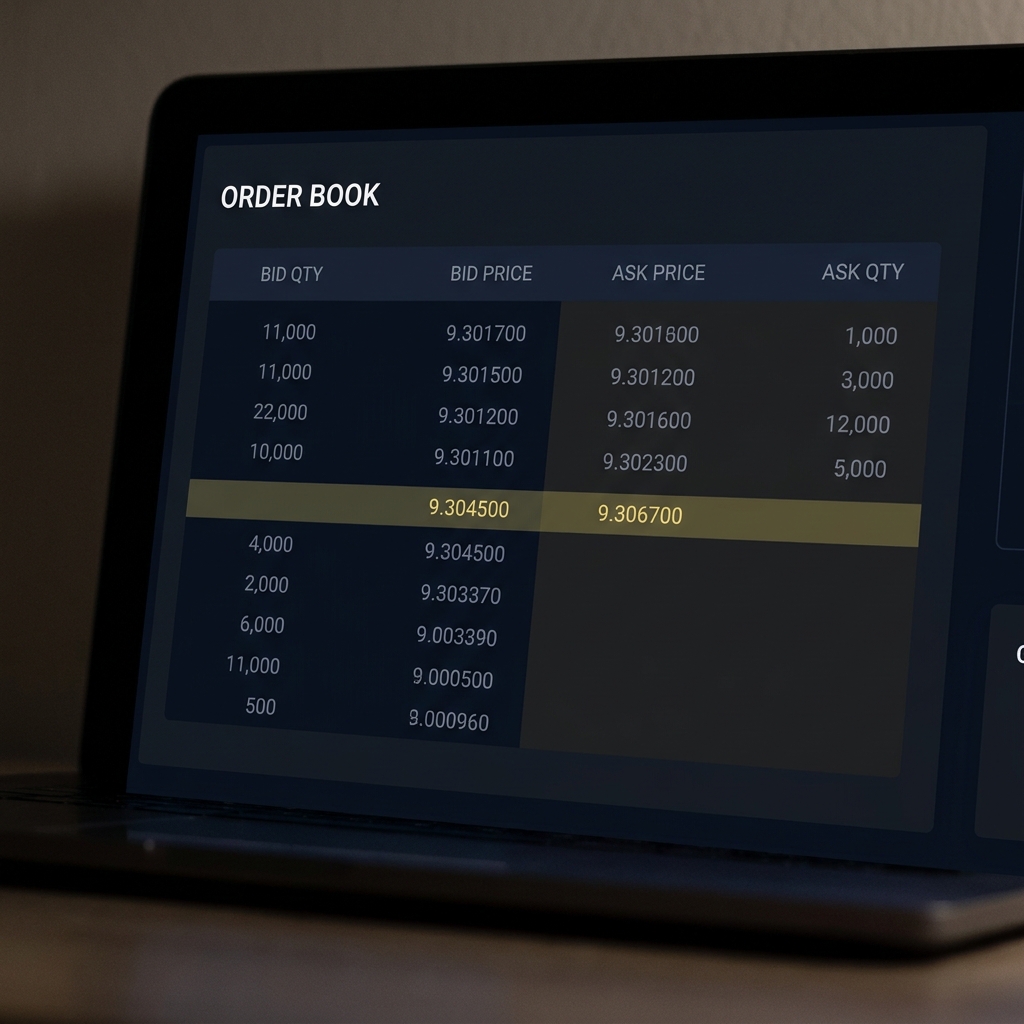
The difference between pre-market and regular-session trading is most visible in two market microstructure features: liquidity and bid-ask spread. In thin sessions you may see wide spreads and small displayed sizes, which raises the effective cost of entering and exiting positions compared with the regular session.
One clear implication is that strategies that assume quick, tight fills will perform differently before the open. For example, short-term scalps that rely on narrow spreads and fast execution typically work best during the regular session when participation and displayed depth are greater SEC guidance on extended-hours sessions.
Fragmented quotes are another consequence of extended hours. Price discovery can be dispersed across venues and liquidity providers, which means the best quoted price on one venue may not be accessible to your broker at the same size. That fragmentation raises execution risk and can result in fills that differ significantly from the quoted midpoint FINRA on after-hours trading.
Choose pre-market if you can monitor closely, accept wider spreads, and trade news-driven setups; choose regular-session trading if you need tighter execution, deeper liquidity, and lower slippage.
Price moves in extended hours are often driven by discrete news items such as earnings or corporate announcements, so trades executed off-hours may not reflect the price at the next regular-session open and that gap risk is a practical consideration for position sizing Investopedia on after-hours trading, see Trading212's overview of extended-hours trading Trading212 extended-hours guide.
All of these features mean you should choose order types deliberately and expect different fill behavior when you trade before the open or after the close.
Liquidity and spreads: what to expect
Expect lower displayed liquidity when trading off-hours. That means both smaller tradable quantities at quoted prices and wider spreads, which increase slippage relative to the regular session. In practice this often translates to needing larger limit tolerances or reduced position sizes when you use extended hours SEC guidance on extended-hours sessions.
Price discovery, fragmented quotes, and execution risk
Because price discovery is less continuous before the open, quotes can be fragmented and the best displayed price on one venue may not be executable through your broker. Regulators advise using limit orders in many off-hours situations to avoid unexpected fills or no fills from market orders FINRA on after-hours trading.
A step-by-step framework to choose pre-game or live trading for your style
Deciding between pre-game and live trading starts with a few structured questions about schedule, speed, and tolerance for execution variability; see our detailed post on how evaluations work how Funded Plays evaluations work.
Start by assessing four practical inputs: when you can monitor markets, how fast you need to react to news, how much slippage you can accept, and whether you prefer smaller, controlled positions or larger, active sizes. Those factors align directly with session characteristics and help narrow the choice SEC guidance on extended-hours sessions.
Checklist to evaluate quickly
- Availability: Can you watch price moves live at the open and during the day
- Reaction time: Are you able to act within seconds or minutes of a new signal
- Risk tolerance: Can you accept wider spreads and the chance of no fill
- Strategy fit: Is your approach news-driven, scalping, or swing oriented

Map typical strategies to session features: news-driven plays that target pre-open announcements can be run in pre-market if you accept thin liquidity and place limit orders, while scalping typically benefits from the regular session's deeper liquidity and tighter spreads Nasdaq trading hours.
Also consider a hybrid approach: monitor key names in pre-market for direction but place larger entries after the open when spreads compress and execution quality improves.
Match your schedule and reaction time
If your schedule only allows periodic checks, the regular session tends to be safer because liquidity is higher and price discovery is continuous. Conversely, if you can monitor markets early and you want to trade earnings-driven moves before the open, pre-market trading can provide early access to directional moves at the cost of execution variability SEC guidance on extended-hours sessions.
Map strategy requirements to session features
Scalping and strategies that require tight spreads typically belong to the regular session. Swing trades or event-driven positions that accept some slippage can be placed in pre-market with conservative limit orders. When in doubt, prioritize controlled order types and smaller size in thin conditions FINRA on after-hours trading.
Decision criteria and a quick self-assessment checklist
Use a rapid self-assessment to convert abstract preferences into a session recommendation. The core axes are risk tolerance, monitoring ability, position sizing rules, and information access.
Risk tolerance questions focus on acceptable slippage and gap risk. For example ask whether a single trade that fills poorly by a few cents is acceptable or whether that level of slippage would exceed your predefined drawdown. Answers point to preferring the regular session or limiting extended-hours exposure SEC guidance on extended-hours sessions.
Operational questions include whether you can monitor price action in real time or must rely on preset orders, and whether your broker supports reliable routing into the venues active in pre-market windows. Those operational details determine whether you should trade off-hours or wait for the open FINRA on after-hours trading.
match trader attributes to a recommended session
use honest answers only
Printable checklist guidance: if you can monitor tightly and accept variable fills, check the boxes for pre-market access; if you cannot monitor or you prefer tighter spreads, check the boxes for regular-session preference.
Finally, map your answers: most traders who answer yes to fast reaction and low concern about slippage are candidates for selective pre-market trades, while those who prefer stable execution and lower slippage generally favor the regular session SEC guidance on extended-hours sessions.
Risk tolerance and bankroll sizing
Because extended-hours fills can be more expensive, consider starting with smaller size when trading pre-market. Smaller position sizing reduces the impact of wider spreads and limits the effect of a single poor fill on your drawdown rules FINRA on after-hours trading.
Information access, latency, and order execution
High-quality information and low latency matter more when you trade pre-market because price discovery can move quickly after news releases. Also confirm whether your brokerage accepts limit orders only during certain off-hours and whether order routing is likely to reach the venues displaying the best quotes Nasdaq trading hours.

Common mistakes and how to avoid them
One common error is using market orders in extended hours. Market orders can execute at far worse prices than expected or not at all when displayed interest is thin. For most off-hours situations, prefer limit orders and accept that you may need to miss some trades to preserve execution quality SEC guidance on extended-hours sessions.
Another mistake is over-interpreting thin-market moves. A large move shown in the pre-market may reflect a small executed size that would not hold once the regular session begins and deeper liquidity arrives Investopedia on after-hours trading.
Controls to adopt include smaller position sizes in thin markets, wider limit tolerances to reflect realistic fills, and pre-defined stop rules that account for possible opening gaps. These controls help you limit the risk from unpredictable fills or overnight gaps FINRA on after-hours trading.
Practical example: if a pre-open earnings print pushes a stock sharply higher, place a conservative limit if you want exposure and avoid a market order that may clear the visible book and leave you with a worse average fill Nasdaq trading hours.
Also avoid assuming that extended-hours price action always predicts the open. While off-hours direction can inform your bias, it is not a guaranteed signal for regular-session behavior because liquidity and participants change at the open SEC guidance on extended-hours sessions.
Order type misuse and poor execution
Don’t send market orders when the venue or broker guidance suggests limit-only. If you see a broker advisory to use limits during extended hours, follow it. Market orders are a practical tool in the regular session when liquidity is deep, but they are frequently inappropriate off-hours FINRA on after-hours trading.
Over-interpreting thin-market moves
Thin markets amplify noise. Avoid changing your entire position sizing rules based on a single small off-hours trade that may have been executed at a price few counterparties would accept once the day session begins Investopedia on after-hours trading.
Practical scenarios: picking a style for common situations
Scenario 1, earnings announced pre-open. If a company issues results before the open, pre-market prices can move sharply on limited liquidity. If you need exposure immediately, use a conservative limit and smaller size, or wait for the regular session where liquidity typically improves and spreads tighten SEC guidance on extended-hours sessions.
Scenario 2, late-breaking overnight news. When overnight events create uncertainty, consider placing protective limit orders or waiting until the open. Opening auctions and the early regular-session minutes often reveal more reliable pricing as more participants show interest Investopedia on after-hours trading.
Scenario 3, high-volume regular-session events. When a macro release or major market news hits during the regular session, deeper liquidity usually supports tighter spreads and more reliable fills, which is why many short-term traders prefer to act during the core hours for these kinds of catalysts Nasdaq trading hours.
In each scenario match tactics to the session. If you must trade off-hours, use limits, reduce size, and accept that you may need to wait for the regular session for larger or more precise entries.
Putting it together: a concise recommendation and next steps
Practical recommendation by profile: disciplined, fast-reacting traders with reliable access to news and tolerance for slippage can add selective pre-market trades to their toolkit. Traders who need stable execution, prefer tighter spreads, or cannot monitor frequently should favor the regular session. For more about Funded Plays visit Funded Plays.
Immediate next steps include paper-trading your chosen approach, testing limit-orders in extended hours, confirming your broker’s rules, and using smaller size when you first trade off-hours. These steps let you evaluate execution quality without exposing large capital to thin markets FINRA on after-hours trading.
Remember that execution quality differs by session and outcomes are not guaranteed. Favor disciplined testing and clear risk controls as you decide whether pre-market or live trading fits your style.

The regular session has higher liquidity and tighter spreads, while pre-market typically has thinner books, wider spreads, and higher execution risk.
Generally no, brokers and regulators recommend limit orders in extended hours to avoid poor fills or no execution.
Pre-market direction can inform bias, but it often reflects thin liquidity and should not be treated as a guaranteed indicator of the open.
References
- https://www.nyse.com/markets/hours-calendars
- https://www.td.com/ca/en/investing/direct-investing/articles/after-hours-trading
- https://www.investor.gov/introduction-investing/investing-basics/how-stock-markets-work/trading-extended-hours-sessions
- https://www.schwab.com/stocks/extended-hours-trading
- https://www.fundedplays.com/blogs
- https://www.finra.org/investors/learn-to-invest/advanced-investing/after-hours-trading
- https://www.nasdaqtrader.com/Trader.aspx?id=TradingHours
- https://www.investopedia.com/terms/a/afterhourstrading.asp
- https://www.trading212.com/learn/investing-101/extended-hours-trading
- https://www.fundedplays.com/challenges
- https://www.fundedplays.com
- https://www.fundedplays.com/blogs/how-fundedplays-evaluations-work